Fyr-Pak
Operation and Maintenance Manual
5
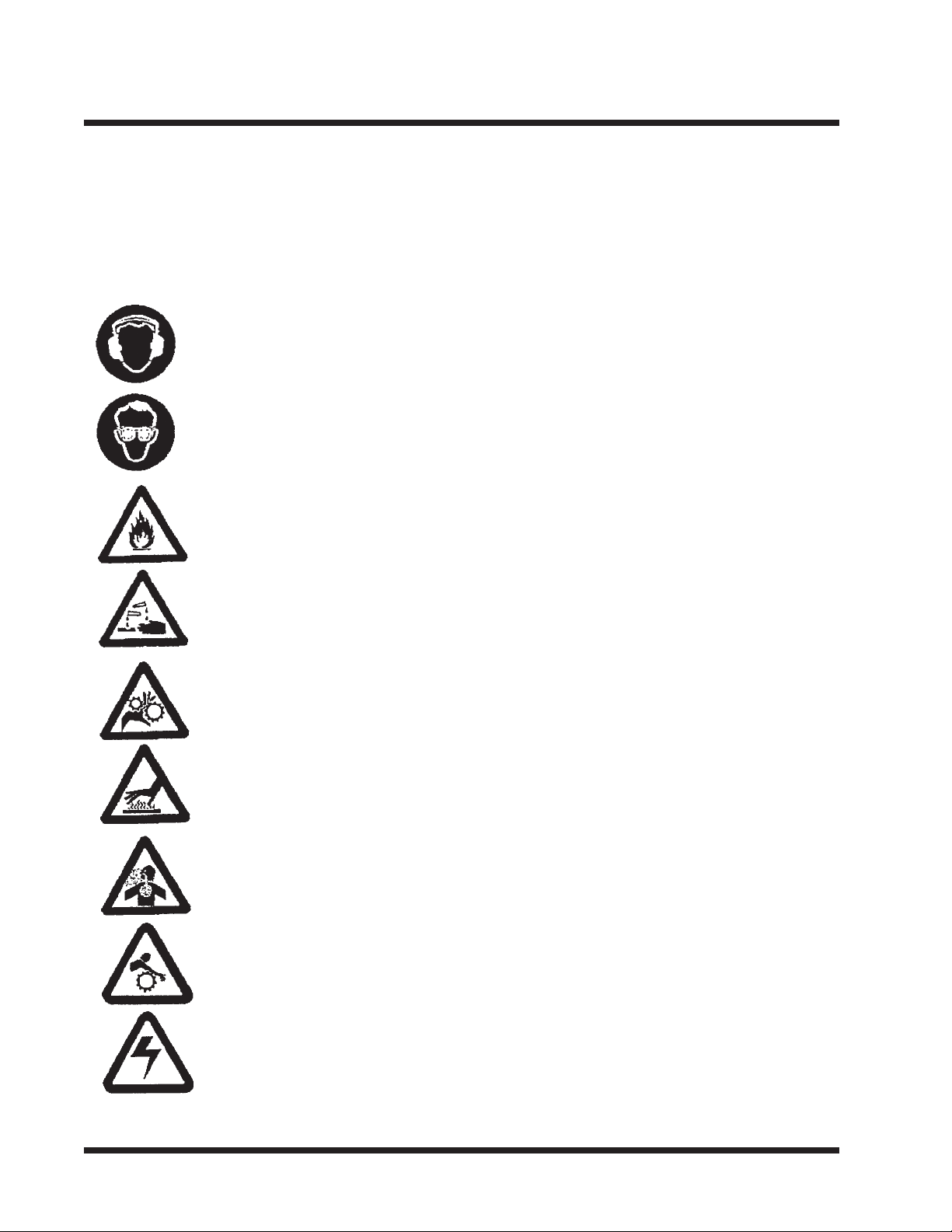
SAFETY PRECAUTIONS
Failure to follow the operating, maintenance and lubrication requirements set forth In this operating and Instruction
manual may result in serious personnel injury and/or damage to equipment. These “WARNING” statements
indicate potentially hazardous conditions for operator or equipment.
TAKE NECESSARY STEPS TO PROTECT PERSONNEL AND EQUIPMENT.
1 Carefully read “Engine Operating Instructions,” (page 23) before attempting to operate, service, or
disassemble the engine or any of its parts.
2Warning - Gasoline is a highly combustible fuel. The Improper use, handling, or storage of gasoline can
be dangerous. Prevent accidents by following these safety rules:
A Use gasoline only as a fuel, never as a cleaning fluid.
B Use only an approved container to hold or store gasoline. Never store gasoline in familiar
containers such as milk containers or soda pop bottles.
C Store gasoline in a cool location, out of the reach of children. Never store gasoline near heat
or an open flame.
D Do not refuel with the engine running. Add fuel to a cool engine only. Spilled fuel on a hot
engine or muffler may cause a fire or an explosion. Fill fuel tank out-of-doors and wipe up any
spills.
E Make sure all fuel lines and connectors are secure.
F Provide a fire extinguisher nearby when working with gasoline. Be sure extinguisher Is In
operating condition; check the pressure gauge or indicator. Be familiar with its proper use.
Consult local fire department for the correct type of extinguisher for your application.
Extinguishers rated ABC by the NATIONAL FIRE PROTECTION ASSOCIATION are
appropriate for most applications.
G. POSITIVELY NO SMOKING!!
3DO NOT RUN THE ENGINE IN AN ENCLOSED AREA!! Exhaust fumes contain carbon monoxide that is an
odorless poisonous gas. If equipment is located in an enclosed area with an exhaust line to the outside,
regularly check the exhaust system for leaks. Be sure the area is well ventilated.
4 Do not operate equipment when mentally or physically fatigued.
5 Stay away from moving parts, avoid wearing loose jackets, shirts and ties.
6 Keep the equipment and surrounding area clean. Cluttered areas invite accidents. Remove all oil deposits f
from equipment and surrounding area. Accumulations of grease and oil may present a hazard.
7 All visitors should be kept at a safe distance from work area. Keep children away from equipment and
discharge hose. Do not allow children to hold discharge hose.
8 Be careful not to touch the exterior of a hot engine, especially the muffler and the surrounding area. The
engine is hot enough to be painful or cause injury.
9 Keep power shields and guards in place. Do not make adjustments and repairs while engine is running,
unless specified for in repairs. Use extreme caution around hot manifolds and moving parts.
10 Prevent accidental starting by always removing spark plug or by disconnecting and grounding spark plug wire
before working on engine or the equipment driven by engine.
11 Maximum speed of the engine is set. Do not tamper with the controls to adjust to run at higher speeds.
Excessive speed increases the hazard of personal injury and reduces engine life
12 Familiarize yourself with all controls, learn how to stop engine quickly In a emergency.
13 When shutting off a gasoline engine, be sure It is completely stopped before leaving the work area.