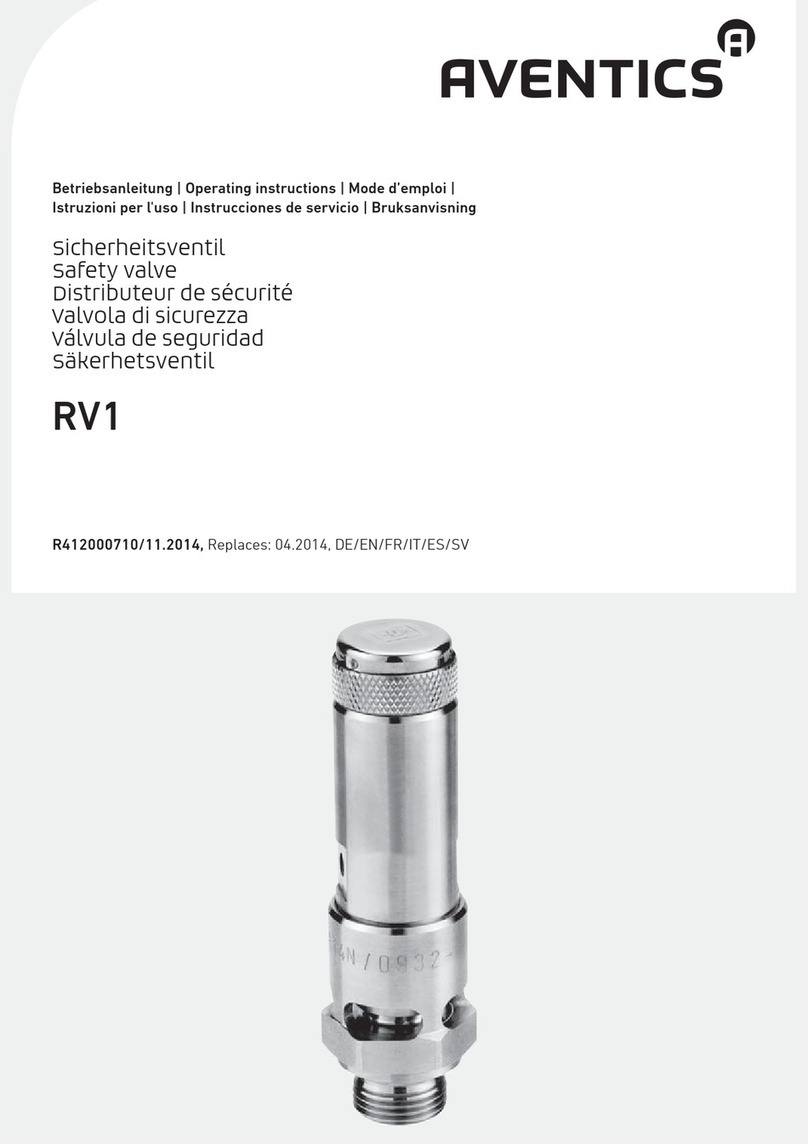
HIGH PRESSURE CONTROL VALVEHIGH PRESSURE CONTROL VALVE
Model: R2L ACTUATOR
Installation, Operation & Maintenance Guide
Model: R2L ACTUATOR
Installation, Operation & Maintenance Guide
7
www.kimray.com
1 Installation
If the Actuator has been shipped separately for installation
on a Kimray Valve Body, or if the Actuator was removed
for maintenance, mount the Actuator by following the
instructions presented in this section. Inspect the surface
of the Mounting Yoke and clean the mating valve surface
to remove scale, chips and debris.
The Kimray R2L is used with Kimray High Pressure
Control Valves such as through or angle body valves. In
the R2L Actuator, the spiral rotation of the Rotary Shaft
by means of a rotary Actuator is translated into linear
motion, opening and closing the valve. The stroke length
is achieved with a 90° rotation of the shaft, clockwise to
close. As the Plug contacts the seat, a series of Springs
become loaded to ensure valve closure in the event of
seat creep or wear.
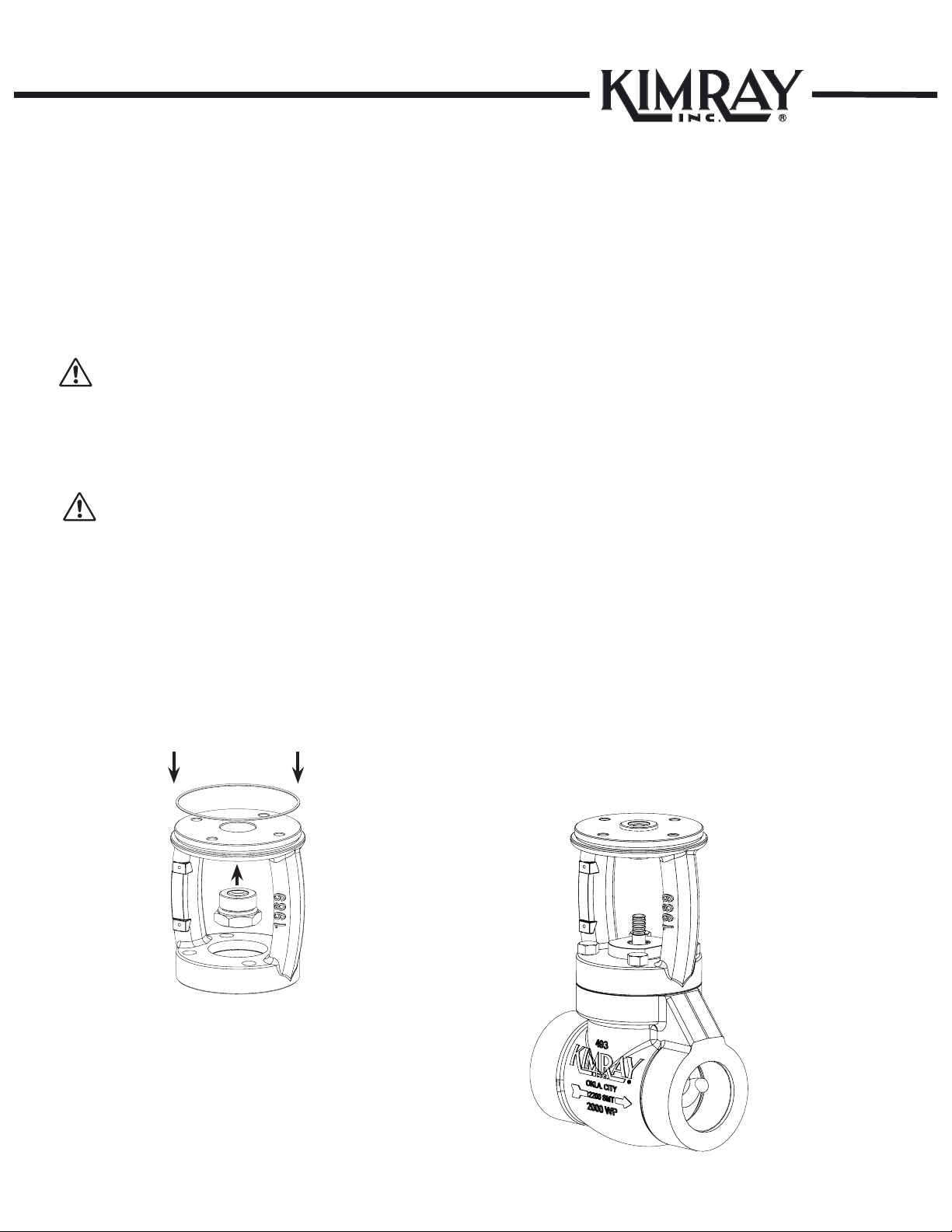
1. Mount the Actuator onto the Valve using supplied bolts
and tighten.
NOTE:
Tighten the bolts in a criss-cross pattern to avoid any miss
alignment. DO NOT OVER TIGHTEN. For 1in. and 2in.
tighten bolts from 25-30 ft/lbs torque.
2. Install Travel Indicator Assembly on Stem and tighten
the bolts in the Coupling Block with a socket. Align
the open or close line on the Indicator Scale with
the Travel Indicator and secure the Indicator Scale by
driving in the u-drive screws. Adjust the Travel
Indicator as needed to ensure it does not catch or
drag against the Indicator Scale.
NOTE:
For the quarter turn Actuator, follow manufacturer
recommendation for the installation and operation notes.
3. Install the valve using good piping practice. For anged
bodies remove the masking sticker from the raised face of
each end connection & use a suitable gasket between the
body and the pipeline anges. For threaded (NPT) bodies,
use TFE Tape or pipe thread sealant on external pipe
threads.
4. Install the valve using good piping practices. For
anged bodies use a suitable gasket between the
body and the pipeline anges. For threaded (NPT)
bodies, use TFE tape or pipe thread sealant on
external pipe threads. Use good practices.
NOTE:
Use good electrical wiring practices and consult with
electrican.
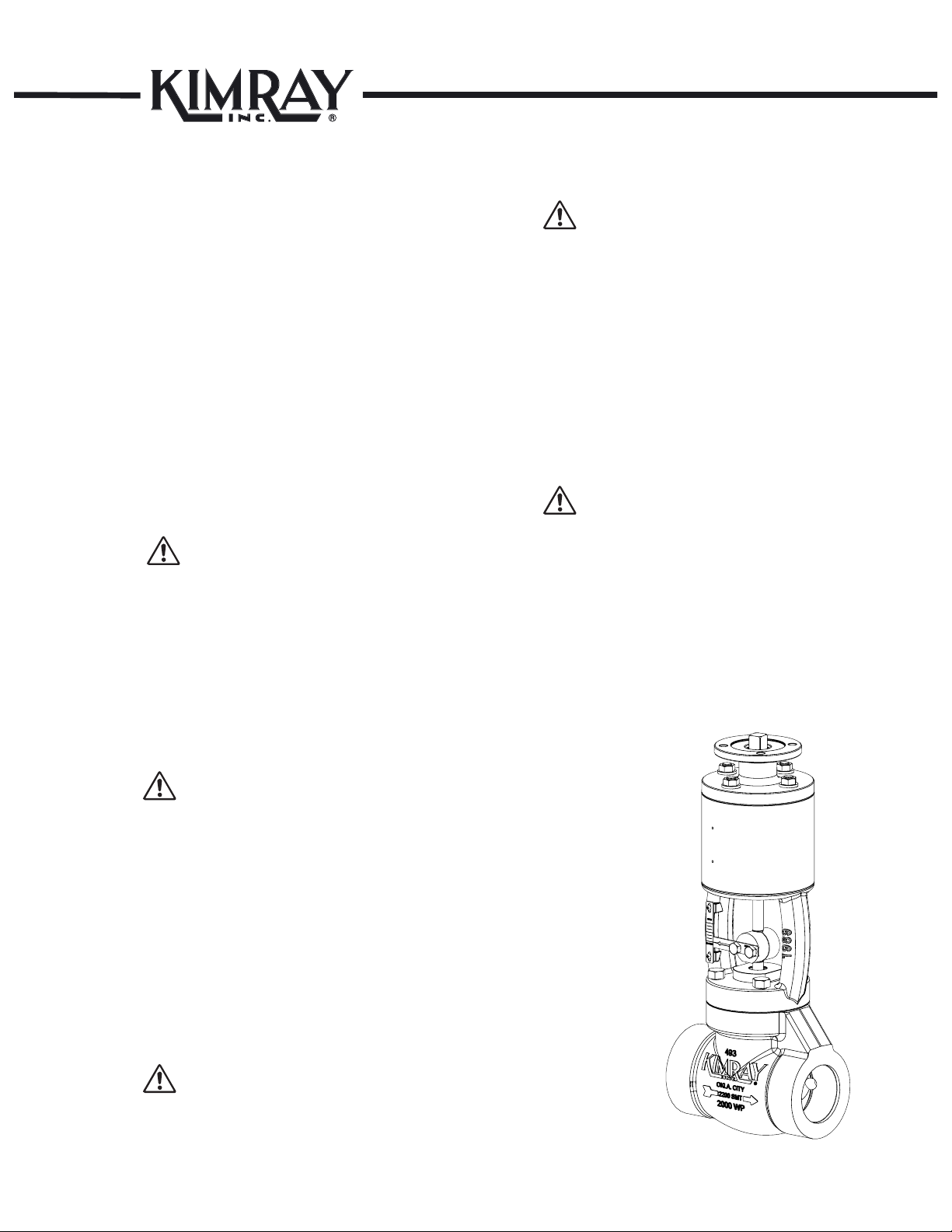
See Fig. 1-1
2Start-up & Test
WARNING:
Before any service, be certain that the valve is fully
isolated and that all pressure upstream and downstream
has been relieved. Use bypass valves or fully shut off
the process. Be sure that any operating or instrument
gas lines have been disconnected. Never assume that
a check valve is fully blocking the downstream line.
Never tighten any tting or the main connections to the
regulator while there is pressure on the line. A leaking
valve indicates that service is required. Failure to take the
valve out of service immediately may create a hazardous
condition.
Verify all pressure connections are tight before
pressurizing the system.
NOTE:
When a gasket seat is disturbed during disassembly a
new gasket should be installed during re-assembly to
ensure proper sealing.
Repair kits are available. See Section E1 of catalog or
the packing slip enclosed with each valve for the correct
repair kit numbers.
Fig. 1-1