manuals.online logo
Brands
  1. Home
  2. •
  3. Brands
  4. •
  5. Kirisun
  6. •
  7. Two-way Radio
  8. •
  9. Kirisun GP700 User manual

Kirisun GP700 User manual

Other Kirisun Two-way Radio manuals

Kirisun DP586 User manual

Kirisun

Kirisun DP586 User manual

Kirisun PT4208 User manual

Kirisun

Kirisun PT4208 User manual

Kirisun DP77001 User manual

Kirisun

Kirisun DP77001 User manual

Kirisun DP485 User manual

Kirisun

Kirisun DP485 User manual

Kirisun UP405S Instruction manual

Kirisun

Kirisun UP405S Instruction manual

Kirisun DP770 Quick start guide

Kirisun

Kirisun DP770 Quick start guide

Kirisun DP770 User manual

Kirisun

Kirisun DP770 User manual

Kirisun DP580-01 User manual

Kirisun

Kirisun DP580-01 User manual

Kirisun PT6500-02 User manual

Kirisun

Kirisun PT6500-02 User manual

Kirisun DP990 User manual

Kirisun

Kirisun DP990 User manual

Kirisun FP520 User manual

Kirisun

Kirisun FP520 User manual

Kirisun Omni Pro T65 User manual

Kirisun

Kirisun Omni Pro T65 User manual

Kirisun PT558 User manual

Kirisun

Kirisun PT558 User manual

Kirisun DP99001 User manual

Kirisun

Kirisun DP99001 User manual

Kirisun FP460 User manual

Kirisun

Kirisun FP460 User manual

Kirisun DP480 User manual

Kirisun

Kirisun DP480 User manual

Kirisun FP520 User manual

Kirisun

Kirisun FP520 User manual

Kirisun DP480 User manual

Kirisun

Kirisun DP480 User manual

Kirisun DP480-01 User manual

Kirisun

Kirisun DP480-01 User manual

Kirisun DP580 User manual

Kirisun

Kirisun DP580 User manual

Kirisun FP560 User manual

Kirisun

Kirisun FP560 User manual

Kirisun DP580 User manual

Kirisun

Kirisun DP580 User manual

Kirisun PT7200-02 User manual

Kirisun

Kirisun PT7200-02 User manual

Kirisun UP305 User manual

Kirisun

Kirisun UP305 User manual

Popular Two-way Radio manuals by other brands

West Marine VHF85 owner's manual

West Marine

West Marine VHF85 owner's manual

Wouxun KG-UV9G manual

Wouxun

Wouxun KG-UV9G manual

Motorola T7100 Series user guide

Motorola

Motorola T7100 Series user guide

Motorola TLKR T40 user manual

Motorola

Motorola TLKR T40 user manual

DNT Space100 owner's guide

DNT

DNT Space100 owner's guide

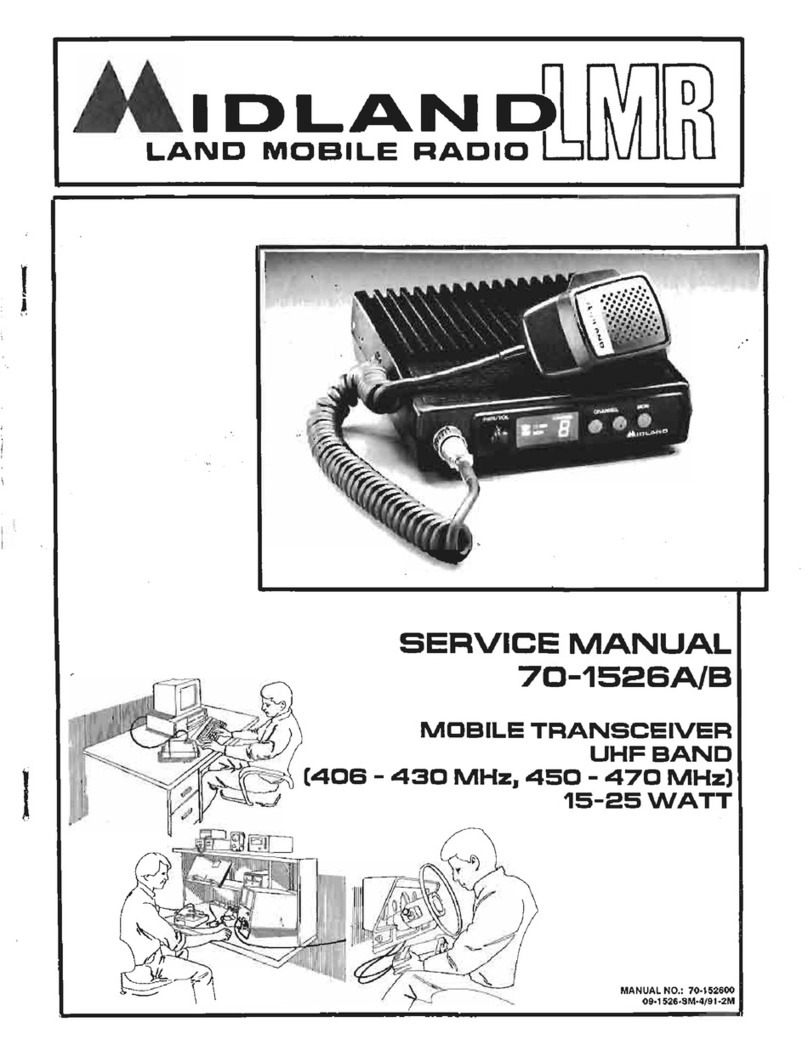
Midland 70-1526A/B Service manual

Midland

Midland 70-1526A/B Service manual

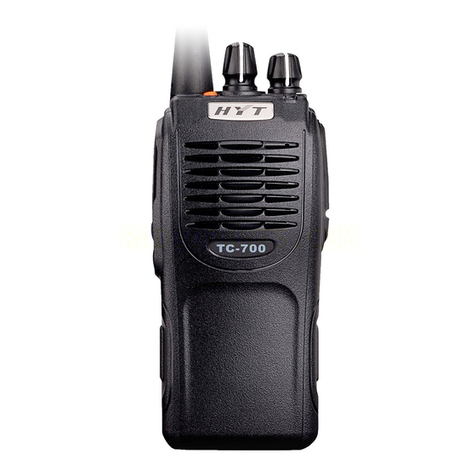
HYT TC700 Service manual

HYT

HYT TC700 Service manual

Legacy ProLine Series operating instructions

Legacy

Legacy ProLine Series operating instructions

Evolveo FreeTalk XM2-2 manual

Evolveo

Evolveo FreeTalk XM2-2 manual

AWC AWR1688+ manual

AWC

AWC AWR1688+ manual

Motorola XT665d quick start guide

Motorola

Motorola XT665d quick start guide

Cobra 2-Way Radio operating instructions

Cobra

Cobra 2-Way Radio operating instructions

Klutch KR-400 user manual

Klutch

Klutch KR-400 user manual

Garmin Rino 655t owner's manual

Garmin

Garmin Rino 655t owner's manual

Midland MXT275J manual

Midland

Midland MXT275J manual

Motorola DTR410 - On-Site Digital Radio Feature

Motorola

Motorola DTR410 - On-Site Digital Radio Feature

Cobra CXT645 owner's manual

Cobra

Cobra CXT645 owner's manual

Tait TM9100 user guide

Tait

Tait TM9100 user guide

manuals.online logo
manuals.online logoBrands
  • About & Mission
  • Contact us
  • Privacy Policy
  • Terms and Conditions

Copyright 2025 Manuals.Online. All Rights Reserved.

Charging the Battery
Installing the Battery
Installing/Uninstalling the Battery
Installing/Uninstalling Belt Clip
To install the antenna, plug the threaded end into the antenna interface, and
rotate the antenna clockwise until it is tight.
To uninstall the antenna, rotate it counterclockwise.
Installing a SIM Card
①②
③④
LED Indicator
Icon
Description
Received signal strength indication
2G/3G/4G network
Wi-Fi received signal strength indication
Searching GPS satellite signals
GPS signals acquired and locked up
In group call
In individual call
In all call
Under dispatching
Remaining battery capacity
Short message
Bluetooth on
Bluetooth device paired
Alarm message
In emergency alarm
1.Powering On/Off
To power on/off the device, hold down the Power/Volume knob and
release after 2 seconds.
The screen and green LED indicator light will be on, and the message
“initializing” will be displayed.
Note: If no SIM card is installed or the card is unregistered or invalid,
you will hear the voice prompt “No SIM card”
2.Adjusting the Volume
3.Initiating a Call
Hold down the PTT key to initiate a call on the selected channel.
4.Receiving a Call
Power-on failed
Low voice during
a call
PTT service
unavailable
1. The battery is out. Charge or replace
the battery.
2. The volume knob is faulty, or there is
another problem. Get the device repaired
at an authorized service station.
1. Speak too far from the microphone.
Please keep a distance of 3 ~ 10cm.
2. Inappropriate volume setting. Increase
the volume by rotating the volume knob
clockwise.
1. The SIM card is expired. Refill or
replace it.
2. Incorrect group setting. Choose a
correct group and try again.
3. The device is expired. Renew it.
Take the following steps to charge the battery.
1. Plug the power adapter into an AC power socket of the required specifications.
2. Connect the power adapter to the charger, and green power indicator
light will be on.
3. Put a battery solely or attached to the device into the charger.
4. Ensure the battery contacts well with the charging terminals.
Red charging indicator light is on.
5. After charging for about 6 hours, the charging indicator will turn green.
The battery is fully charged.
6. After the indicator light turns green, wait 1 to 2 hours before taking
out the battery, so as to achieve the best battery performance.
7. Disconnect the power adapter from the socket.
1. Press the upper part of the belt clip gently so that it goes up. (Figure ①)
2. Align the battery with the battery holder at the back of the device, and insert
the battery. (Figure ②)
3. Push the battery in the direction indicated until the latch is in position. (Figure ③)
4. Press the lower part of the battery until it is latched. (Figure ④)
To install the belt clip, align the two screw holes on the belt clip with the two at
the back of the device, and fasten the screws.
To uninstall the belt clip, loosen the screws, and then take off the belt clip.
Note: Please use a standard Nano-SIM card.
1. Unscrew the screw on the TF card cover using the supplied screwdriver,
open the cover, and take out the instructions card.
2. Insert a SIM card into the slot of the card holder (Figure ①), and close the
card holder cover. (Figure ②)
3. Lock the card holder cover by sliding it in the indicated direction. (Figure ③)
4. Close the TF card cover and screw up the screw (Figure ④)
Installing an Accessory
To use an audio accessory or the programming cable, screw down the screw
on the earphone cover, take down the accessory cover, plug the accessory or
cable into the interface, and screw up the screw.
Indicator state Device State
Red light on
Green light on
Yellow light on
Red light flashing fast
A. No SIM card is installed, or it is installed
improperly. There is a voice prompt “No SIM card”.
B. Fail to unlock the PIN code of the SIM card.
Green light flashing slow
Idle
A. During a call (i.e. individual/group/all call).
B. A voice record is being downloaded/played.
A. The device is in individual-call standby state.
B. The device is in call setup state.
C. The device is unregistered or expired, so that it
is not deployed on the server.
Network registration fails because the SIM card is
inactivated or a bill is unpaid.
Device registration fails because of poor wireless
network connection.
The device is registered to a network successfully
and enters standby state.
The device is idle or powered off.
After power-on, rotate the Power/Volume knob clockwise to increase
the volume or counterclockwise to decrease it.
When a call is received, green indicator light will be on.
5.Network Type
To choose a network type, in the standby interface, press the Menu/OK
key to enter the menu, select Setting – Network Type.
成型 尺寸:165*95mm
Main unit
Battery
Antenna
Power adapter
User manual
Safety Information
Strap
Desktop charger
Belt clip
Battery
Accessory
interface
Battery
latch
Programmable
top key
LED
indicator
Power/volume knob
Speaker
LCD
screen
Numeric
keypad
Pick-up key
Menu/OK
key
Navigation keys
Back
key
Hang-
up key
Micro-
phone
12
3
4
2G,3G,4G
6.Low-Power Alert
To choose a network type, in the standby interface, press the Menu/OK
key to enter the menu, select Setting – Network Type.
7.Positioning
To enable/disable positioning, in the standby interface press the
Menu/OK key to enter the menu, and select Setting – GPS.
The built-in GPS module locates the device and reports position
information to the network management system. The real-time location
and movement track of the device can be displayed on a GIS map on
the network management system or dispatcher software.
8.Wi-Fi
To enable/disable Wi-Fi, in the standby interface press the Menu/OK
key to enter the menu, and select Setting – Wi-Fi.
After enabling Wi-Fi, you can search and connect to a nearby Wi-Fi
network in real time and set a password.
9.Bluetooth
To enable/disable Bluetooth, in the standby interface press the
Menu/OK key, and select Setting – Bluetooth.
After enabling Bluetooth, you can scan for and pair with a BT
earphone that is in pairing mode.
10.Short Message
To send the message, in the standby interface press the Menu/OK
key, select Message – Short Message, write a message, select a
contact, and send the message.
To view the short messages received/sent, press the Menu/Ok key,
and select Inbox/Outbox.
11.Advanced Functions
Via dispatcher software, you can revive, stun or kill the device, play
back voice, or perform background monitoring on another device.
12. Others
【*】key: Press it to turn off the screen and enter Power Saver mode;
hold it down for seconds to lock/unlock the keypad.
Programmable side key 1: By default, press it to announce the
selected channel; hold it down for seconds to announce remaining
battery capacity.
Programmable side key 2: By default, press it to announce the user
name; hold it down for seconds to enter individual-call mode.
PoC Trunked Two-way Radio
GP700
Quick Guide
Please read carefully the Safety Information before using the product.
Appearance
Antenna
PTT key
Programmable
side key 1
Programmable
side key 2
Aluminum-shelled battery holder
Stop block at the edge of the battery
167W06000213
Version:V1.0
This document is only for reference, and actual product prevails.
Kirisun reserves the right to the final interpretation of this document.
No. Name
Attachments
TroubleshootingBasic Operation
Icons
No. Problem Solution

IC Warning
This device complies with Industry Canada’s licence-exempt RSSs. Operation is subject to the following two conditions:
(1)This device may not cause interference;
(2)This device must accept any interference, including interference that may cause undesired operation of the device.
Le présent appareil est conforme aux CNR d'Industrie Canada applicables aux appareils radio exempts de licence. L'exploitation est autorisée aux deux conditions suivantes:
(1) l'appareil ne doit pas produire de brouillage, et (2) l'utilisateur de l'appareil doit accepter tout brouillage radioélectrique subi, même si le brouillage est susceptible d'en compromettre le fonctionnement.
The information listed above provides the user with information needed to make him or her aware of a RF exposure, and what to do to assure that this radi o operates within the FCC exposure limits of this radio.
The device complies with RF specifications when the device used at 10mm from the body without belt-clips, 0mm from the body with the belt-clips, 25mm from the face.Third-party belt-clips, holsters, and similar accessories used by this device should not
contain any metallic components. Body-worn accessories that do not meet these requirements may not comply with RF exposure requirements and should be avoided. Use only the supplied or an approved antenna.
FCC Warning
15.19 Labeling requirements.
This device complies with part 15 of the FCC Rules. Operation is subject to the following two conditions: (1) This device may not cause harmful interference, and (2) this device must accept any interference received, including interference that may
cause undesired operation.
15.21 Information to user.
Any Changes or modifications not expressly approved by the party responsible for compliance could void the user's authority to operate the equipment.
15.105 Information to the user.
Note: This equipment has been tested and found to comply with the limits for a Class B digital device, pursuant to part 15 of the FCC Rules. These limits are designed to provide reasonable protection against harmful interference in a residential
installation. This equipment generates uses and can radiate radio frequency energy and, if not installed and used in accordance with the instructions, may cause harmful interference to radio communications. However, there is no guarantee that
interference will not occur in a particular installation. If this equipment does cause harmful interference to radio or television reception, which can be determined by turning the equipment off and on, the user is encouraged to try to correct the interference
by one or more of the following measures:
-Reorient or relocate the receiving antenna.
-Increase the separation between the equipment and receiver.
-Connect the equipment into an outlet on a circuit different from that to which the receiver is connected.
-Consult the dealer or an experienced radio/TV technician for help.
Absorption Rate (SAR) information:
This device meets the government's requirements for exposure to radio waves. The guidelines are based on standards that were developed by independent scientific organizations through periodic and thorough evaluation of scientific studies. The
standards include a substantial safety margin designed to assure the safety of all persons regardless of age or health.
FCC RF Exposure Information and Statement The SAR limit of USA (FCC) is 1.6 W/kg averaged over one gram of tissue. This device was tested for typical body-worn operations with the back of the device kept 10mm from the body without belt-clips,
0mm from the body with the belt-clips, 25mm from the face. To maintain compliance with FCC RF exposure requirements, use accessories that maintain a appropriate separation distance between the user's body and the back of the device. The use of
belt clips, holsters and similar accessories should not contain metallic components in its assembly. The use of accessories that do not satisfy these requirements may not comply with FCC RF exposure requirements, and should be avoided. Use only
the supplied or an approved antenna.
CE Warning
1. Risk of explosion if battery is replaced by an incorrect type. Dispose of used batteries according to the instructions.
2. The product shall only be connected to a USB interface of version USB2.0 or higher.
3. Adapter shall be installed near the equipment and shall be easily accessible.
4. The operating temperature of the device can’t exceed 40℃and shouldn’t be lower than -20℃.
5. The plug considered as disconnect device of adapter.
6. The device complies with RF specifications when the device used at 5mm from the body without belt-clips, 0mm from the body with the belt-clips, 25mm from the face.
7. The band 5150-5350MHz indoor use only.
Hereby, Kirisun Communication Co.,Ltd. declares that this product is in compliance with essential requirements and other relevant provisions of Directive 2014/53/EU. This product is allowed to be used in all EU member
states.