manuals.online logo
Brands
  1. Home
  2. •
  3. Brands
  4. •
  5. Ledco
  6. •
  7. Remote Control
  8. •
  9. Ledco Easy RGB(Y) User manual

Ledco Easy RGB(Y) User manual

Other Ledco Remote Control manuals

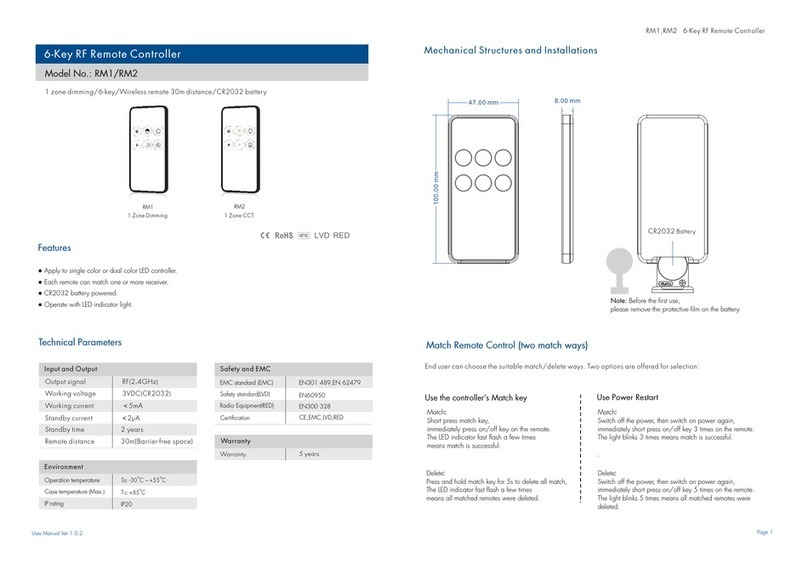
Ledco RM1 User manual

Ledco

Ledco RM1 User manual

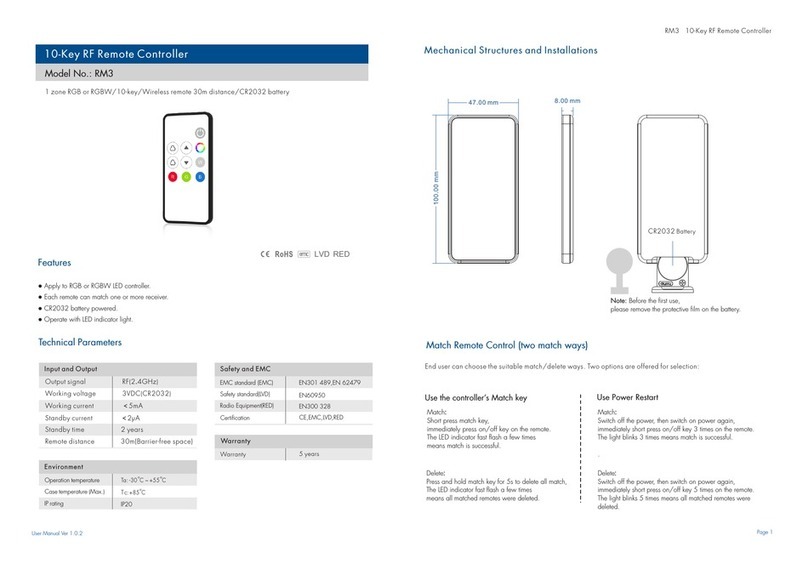
Ledco RM3 User manual

Ledco

Ledco RM3 User manual

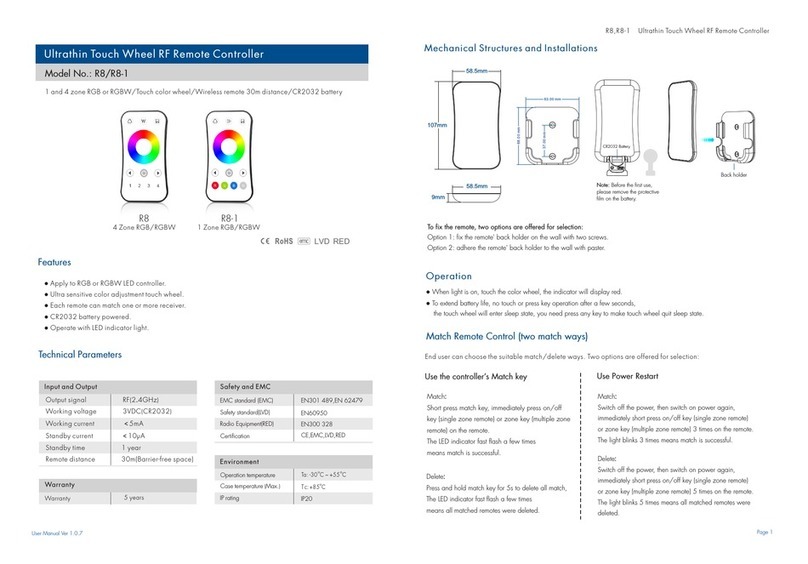
Ledco R8 User manual

Ledco

Ledco R8 User manual

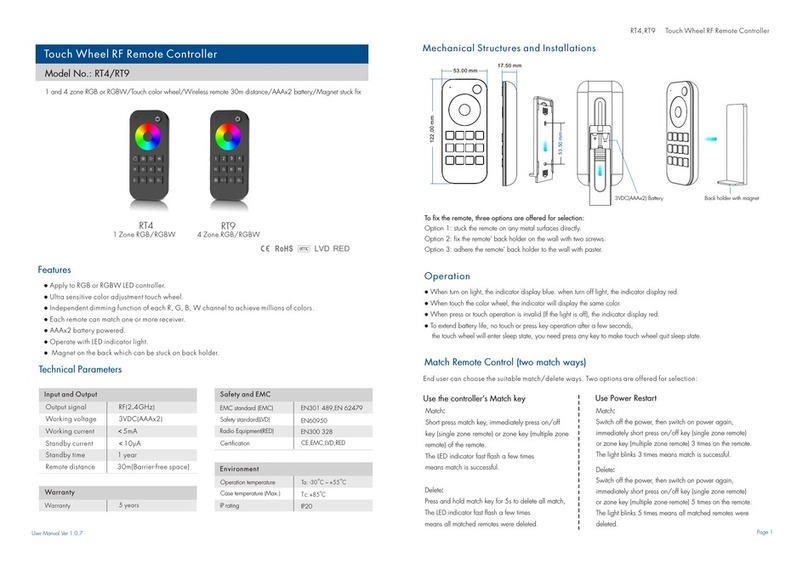
Ledco RT4 User manual

Ledco

Ledco RT4 User manual

Popular Remote Control manuals by other brands

Bircher Reglomat RC Duo 2 user guide

Bircher Reglomat

Bircher Reglomat RC Duo 2 user guide

Emerson RCBT100 owner's manual

Emerson

Emerson RCBT100 owner's manual

BILDA Element-6 user manual

BILDA

BILDA Element-6 user manual

Absima CR7P manual

Absima

Absima CR7P manual

Mitsubishi Electric PAR-32MAAG Instruction book

Mitsubishi Electric

Mitsubishi Electric PAR-32MAAG Instruction book

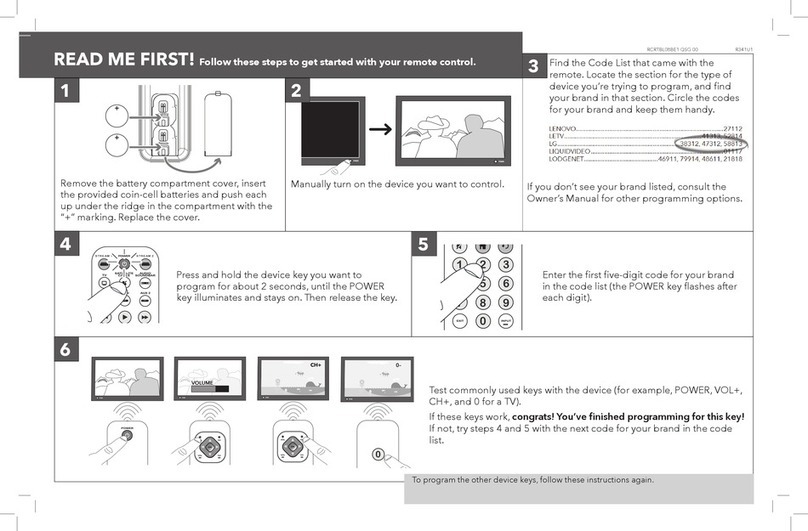
RCA RCRTBL08BE1 quick start guide

RCA

RCA RCRTBL08BE1 quick start guide

US Electronics NOVARI user guide

US Electronics

US Electronics NOVARI user guide

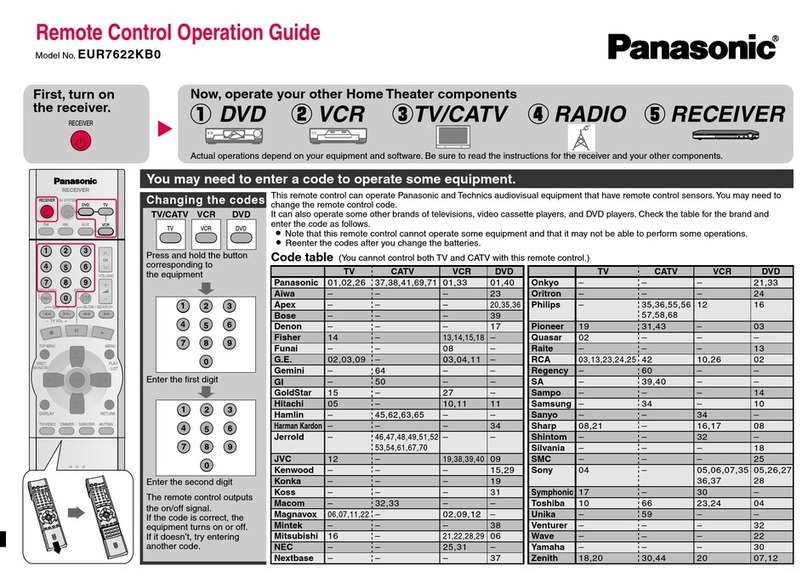
Panasonic EUR7622KB0 Operation guide

Panasonic

Panasonic EUR7622KB0 Operation guide

Bang & Olufsen Beo4 user manual

Bang & Olufsen

Bang & Olufsen Beo4 user manual

Marantz RC101 user guide

Marantz

Marantz RC101 user guide

FUTABA 9ZAP - PART2 manual

FUTABA

FUTABA 9ZAP - PART2 manual

HR Matic HR MULTI 3 quick start guide

HR Matic

HR Matic HR MULTI 3 quick start guide

Anritsu MP1777A Operation manual

Anritsu

Anritsu MP1777A Operation manual

Niles WVC100 Installation & operating guide

Niles

Niles WVC100 Installation & operating guide

Bang & Olufsen BEO6 Getting started

Bang & Olufsen

Bang & Olufsen BEO6 Getting started

GE 94901 instruction manual

GE

GE 94901 instruction manual

FUTABA R7108SB Full manual

FUTABA

FUTABA R7108SB Full manual

Invacare G91S user manual

Invacare

Invacare G91S user manual

manuals.online logo
manuals.online logoBrands
  • About & Mission
  • Contact us
  • Privacy Policy
  • Terms and Conditions

Copyright 2025 Manuals.Online. All Rights Reserved.

1
Easy RGB(Y) Remote controller User Manual
1. Product introduction
Easy RGB(Y) remote controller is a wireless color control system that
consists a sender and a receiver or several receivers, as shown in Figure 1, 2:
By selecting switch status, you can set the system as RGB 3-channel
output, or RGBY 4-channel output. Using Easy RGB(Y) remote controller,
you can get whatever color you want; you can choose any color from RGB(Y)
to adjust so as to mix more than 100 million kinds of colors. With built-in 10
kinds of color changing modes, you can easily switch color changing modes
and adjust speed and brightness. “Function Pause” enables RGBY LED to stay
at your favorite color under the situation of color changing modes, which
operation is simple but functional.
Three working frequencies are available: 434MHZ,868MHZ or
915MHZ,which are suitable for Europe, Americas and elsewhere in the
world .All products completely comply with European CE regulations and
American FCC regulations.
Fig.1
2
Fig.2
2. Performance parameters
2.1Sender: (model:SR-2806)
Working temepature:4.5V(3×1.5V 7 AAA battery)
Working current:<22mA
Dormancy current:<20μA
Working frequency:434MHZ/868MHZ/915MHZ (optional)
Transmit power :≥5dBm
2.2 Receiver (model:SR-1003RC/SR-1012RC/SR-1022RC model)
Input Voltage:12-36VDC
Output Voltage:12-36VDC
Input Current:4CH×3A max (SR-1003RC)
4CH×350mA (SR-1012RC)
4CH×700mA (SR-1022RC)
Output power:4CH×(36-108W) max (SR-1003RC)
4CH×(4.2-12.6W) (SR-1012RC)
4CH×8.4-25.2W) (SR-1022RC)
Working Frequency:434MHZ/868MHZ/915MHZ (optional)
3. components description:
3.1 Sender (model:SR-2806)
“ R” button and indicator。
3
“G” button and indicator。
“B” button and indicator。
“Y” button and indicator。
Working status indicator, the sender is in dormant status when the indicator is
off. The sender is under working when the indicator is flashing rapidly. If the
indicator continues flashing at the frequency of 1 second, it indicates that the
sender batteries low and needs to replace new batteries.
Slow down the speed when color is changing
Speed up when color is changing.
Multifunction button, used for selecting, Synchronous or asynchronous
mode.
Brightness down
Brightness up
Multifunction button, used for turn ON/OFF and white output .
Figure 1-10 is for selecting receiver’s ID and ID itself to turn
ON/OFF.
4
Touch wheel for selecting R/G/B colors.
3.2 Receiver (Model:-1003RC/SR-1012RC/SR-1022RC)
J1---power input socket
J2---RGB(Y) output socket
J3—RGB/RGBY output switch, closed circuit is RGB 3
channel output, open circuit is RGBY 4 channel
output.
Receiver ID code learning Button
Receiver ID code learning indicator and for receiving message
4. Basic Usage
4.1 Install battery
Initial using easy RGB(Y) remote controller, open the battery cover on the
back of the sender, load 3pcs 7 AAA (1.5V) batteries. Please pay attention to
the battery’s negative and positive, otherwise it will fail to work.
5
4.2 Receiver learning ID
Initial using easy RGB(Y) remote controller must learn the ID of the receiver,
the purpose of learning ID code is to make a certain receiver which can
correspond the sender.
The method of Receiver learning ID is as follows: press the ID learning
button on the sender, the ID learning indicator is on, then press
one of the number button on the sender, press the number
that you want this receiver to be, E.g. If you want this receiver to be No. 1,
please press button first, then touch the wheel , or you can press
any functional button on the sender, such as
etc. to transmit signal to the Sender,
after Receiver receives the signal from the sender, the indicator will flash a few
times and then turns off, then receiver ID is activated. If the ID activation is
failed at the first time, please repeat the previous procedures.
Attention: The receiver ID learned by touching color wheel is different from
the reciever that learned by pressing function button
。The receiver ID learned by touching color
wheel that we define it as SLAVE receiver, the receiver ID learned by
6
pressing function button that we define it as
MASTER receiver. The purpose of learning these two kinds of receivers is to ensure
the receivers and color changing synchronously to avoid the color changing out of
order. This point will be noted later.
4.3 Delete ID and ID re-learning
If you need to delete the ID learned in the receiver, press ID learning
button for more than 5 seconds, when learning indicator is off, then the
learned ID is deleted. If you need the receiver learn a new ID, repeat the
operation of 4.2 (Receiver learning ID).
4.4 Choose color by touching color wheel
After the receiver learned the ID, you can change each receiver’s color
by touching color wheel. If you want to change the color of receiver NO.1..
Press button , then make rotating touch on color wheel by
your figures, at this time, the color of receiver No.1 will be changed
constantly , when your favorite color appears, stop rotating and leave the
color wheel .
If you need change color of several receivers at the same, just choose a
number for these several receivers first, then touch color disc . For
example, change color for receivers NO.1, 2, 3,4,5,6 at the same time, you
7

need press number 1 to 6 button first, then touch the color
wheel .
4.5 Change color by R, G, B, Y button
In addition to change the color by touching color wheel , but you can
also change the color through R,G, B, Y buttons
.For example, you choose a color by touching color
wheel and still want add a bit more brightness to red color, just
press R button , then the indicator of R will be on and red is selected,
make clockwise rotation on the color wheel by figure, then
the brightness of red will be increased. If you want the red color to be
darker, just make counter clockwise rotation on the color
wheel . If need to adjust the color brighter or dim several colors at
same time, also just choose the colors , such as R,G, then make clockwise
rotation or counterclockwise rotation , it can
simultaneously adjust the brightness for both colors. If you want to cancel
the selected color, just press selected button, the corresponding color will
be off, this color is abandoned.
8
By pressing of R ,G, B, Y button ,you can turn
on/off the corresponding color. For example under a certain mode, turn off the
red color, press Rfor 2 seconds, then the red color will be turn off. If you
want to turn on red again, press R for another 2 seconds, the red will be
on again.The same operation for other colors.
In short, using R, G, B, Y buttons and operating color
wheel , you can mix more than 100 million colors or any color you want.
Attention:The receiver is under single or multi-color adjustment
condition when any single or multi-color is selected. Under this condition, you
can only make clockwise rotation or counterclockwise
rotation operation to adjust the color. A direct touch on color
wheel will not work. Only after exiting from the single or multi- color
condition, a direct touch on color wheel will work.
4.6 Choose color changing mode
Selecting the mode button , receiver change colors according to
different modes, a total of 10 built-in color changing modes.
9
If you want one or several receivers under color changing mode, press
number button , and choose receiver number, then press
button again. For first press of button , receiver will change
according to mode 1, one more time press of button , the receiver will
be paused, it will stay at one color under mode 1 condition. Press
button again, the color will change according to mode 2, press button
one more time , it will be paused at one color under mode 2. Press
button for seconds, the receiver will keep changing as follows:
MODE1—STOP---MODE2---STOP---MODE3---STOP---MODE4---STOP-
--MODE5---STOP---MODE6---STOP----MODE7---STOP---MODE8---STO
P---MODE9---STOP---MODE10---OFF----MODE1……..
The receiver will be at one of static colors by touching the color wheel in color
changing modes. Then press M button again, receiver will be changed as Mode 1
again.
4.7 Brightness adjustment
Underthe static color status or color changing status, you can adjust
the brightness by press B and pressing button to increase the
brightness. The brightness is divided into 8 levels, the minimum is 10%, and
10