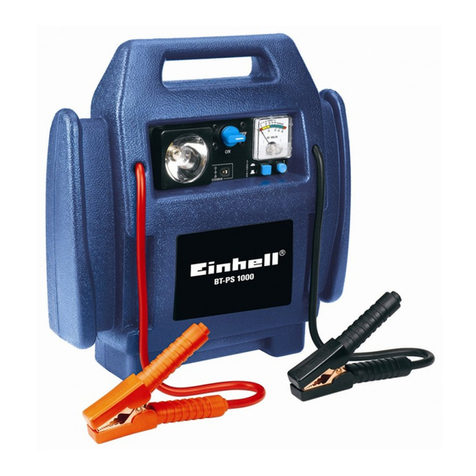
THUNDERBOLT JUMP STARTER
MA8000 MANUAL2 |
To avoid any personal injury, please read the safety instructions below.
This manual contains important safety and operating instructions for
the MA8000 Thunderbolt Jump Starter. Consider ALL safety, warning and
caution instructions carefully.
WARNING
1. The equipment is intended for use by adults and should not be operated by children
2. The jump starter described in this manual is suitable for portable and emergency power applications.
DO NOT exceed ratings nominated in the specications
3. DO NOT attempt to charge or boost a frozen lead-acid battery
4. The jump start is equipped with polarity protection in the OFF position - prevent clamps from touching each
other or contacting metal to stop accidental arcing
5. Only use attachments supplied with the equipment - failure to do so may result in personal injury or
equipment damage or void warranty
6. When disconnecting power, pull by the plug - DO NOT pull on the power lead
7. Replace a damaged charger power lead immediately. Do not attempt to recharge the jump start if the
equipment is damaged
8. Prevent submersion in water
9. Dispose of any faulty batteries in an environmentally responsible manner
10. DO NOT leave the jump start in a total discharge state for any period of time - permanent battery damage can
result. When not in use, leave the jump start connected to the supplied battery charger, or recharge monthly
and after every jump start performed.
11. DO NOT over crank the jump starter.Wait for 3-5 minutes between each crank
Avoid contact with battery acid - it is highly
corrosive, causing burn injuries and
equipment damage
Wear safety glasses to prevent eye injuries.
If acid contacts eyes - ush immediately with cold
water for 10 minutes, and seek medical attention
Avoid contact with lithium.
Wear protective clothing to prevent acid
contacting the skin
If battery acid contacts skin - wash immediately
with soap and fresh water
Remove all jewellery and personal metal items
when working with a lead-acid batteries
Avoid contact with lithium.
A lead-acid battery can generate explosive
gases during normal battery operation.
To reduce risk of explosion, follow these
instructions, those of the battery manufacturer
and of any equipment being used in vicinity
of battery
Use the jump start in a well ventilated area.
DO NOT operate in the vicinity of ammables
such as petrol etc.
DO NOT allow sparks or ame near the battery
Short circuiting the contacts can generate a
spark, creating a potentially explosive
situation - take care with tools and components
Never smoke while working with a
lead-acid battery