2 3GB GB
APPLICATION
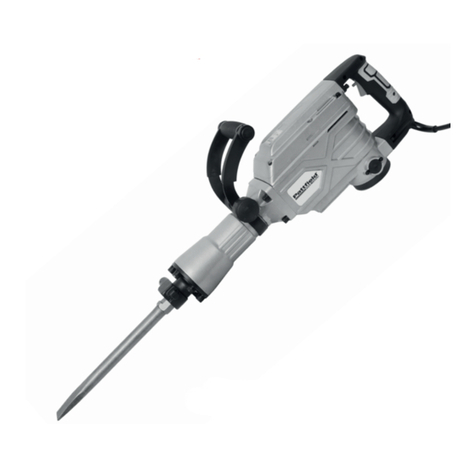
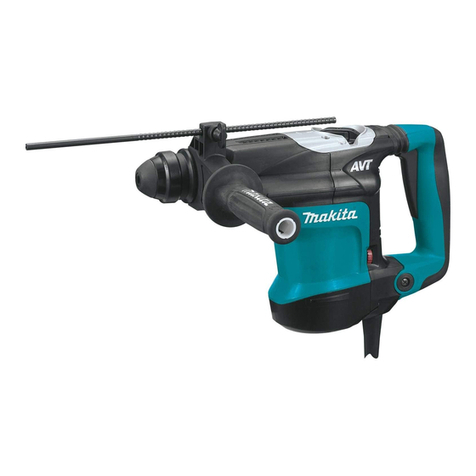
This tool is intended for impact drilling in concrete, brick and stone as well as for light chiseling work; for
drilling in wood, metal and plasc as well as for screwdriving specific accessories should be used.
are devoted to connuously improving and perfecng the exisng products. Therefore,
the technical performance and design concept of products mayvarywithout anyprior noce; our apology
for anypossible incurrence of inconvenience therefrom. Read and follow the operang instrucons and
safety informaon before using for the first me. Save this manual.
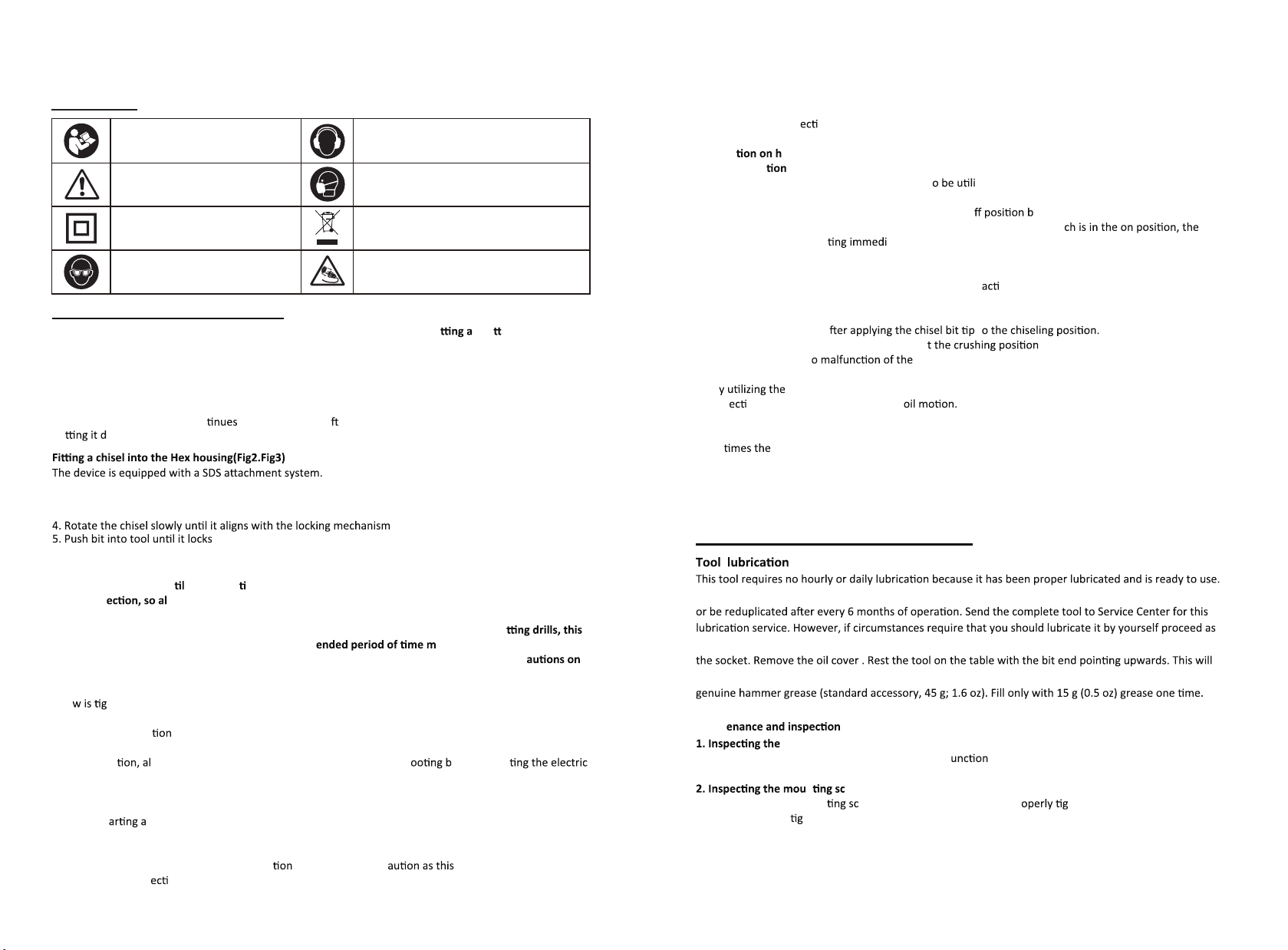
WARNING
Remove the plug from the socket before carrying out anyadjustment, servicing or maintenance. Read all
safetywarnings and all instrucons. Failure to follow the warnings and instrucons mayresult in electric
shock, fire and/or serious injury. Make sure the voltage corresponds to the type label on the unit. Packing
materials are no toys! Children must not play with plasc bags! Danger of suffocaon! The power tool noise
output may exceed 85dB(A) at the workplace. In this instance, wear ear protecon.
GENERAL SAFETY
Read all safety warnings and all instrucons. Failure to follow the warnings and instrucons mayresult in
electric shock, fire and/or serious injury.
Save all warnings and instrucons for future reference.
The term “power tool” in the warnings refers to your mains-operated (corded) power tool or baery-
operated (cordless) power tool.
1) Work area safety
a) Keep work area clean and well lit. Cluered or dark areas invite accidents.
b) Do not operate power tools in explosive atmospheres, such as in the presence of flammable liquids,
gases or dust. Power tools create sparks which may ignite the dust or fumes.
c) Keep children and bystanders away while operang a power tool. Distracons can cause you to lose
control.
2) Electrical safety
a) Power tool plugs must match the outlet.Never modify the plug in any way.Do not use any adapter
plugs with earthed (grounded) power tools.Unmodified plugs and matching outlets will reduce risk of
electric shock.
b) Avoid body contact withearthed or grounded surfaces, such as pipes, radiators, ranges and
refrigerators. There is an increased risk of electric shock if your body is earthed or grounded.
c) Do not expose power tools torain or wet condions. Water entering a power tool will increase the risk
of electric shock.
d) Do not abuse the cord. Never use the cord for carrying, pulling or unplugging the power tool. Keep
cord away from heat, oil, sharp edges and moving parts. Damaged or entangled cords increase the risk of
electric shock.
e) When operang a power tool outdoors, use an extension cord suitable for outdoor use. Use of a cord
suitable for outdoor use reduces the risk of electric shock.
f) If operang a power tool in a damp locaon is unavoidable, use a residual current device (RCD)
protected supply. Use of an RCD reduces the risk of electric shock.
3) Personal safety
a) Stay alert, watch what you are doing and use common sense when operang a power tool. Do not use
a power tool while you are red or under the influence of drugs, alcohol or medicaon.A moment of
inaenon while operang power tools may result in serious personal injury.
b) Use personal protecve equipment. Always wear eye protecon. Protecve equipment such as dust
mask, non-skid safety shoes, hard hat, or hearing protecon used for appropriate condions will reduce
personal injuries.
c) Prevent unintenonal starng. Ensure the switch is in the off-posion before connecng topower
source and/or baery pack, picking up or carrying the tool. Carrying power tools with your finger on the
switch or energising power tools that have the switch on invites accidents.
d) Remove any adjusng key or wrench before turning the power tool on. A wrench or a keyleaached
to a rotang part of the power tool may result in personal injury.
e) Do not overreach.Keep proper foong and balance at all mes.This enables beer control of the
power tool in unexpected situaons.
f) Dress properly.Do not wear loose clothing or jewellery.Keep your hair, clothing and gloves away from
moving parts.
Loose clothes, jewellery or long hair can be caught in moving parts.
g) If devices are provided for the connecon of dust extracon and collecon facilies, ensure these are
connected and properly used. Use of dust collecon can reduce dust-related hazards.
4) Power tool use and care
a) Do not force the power tool. Use the correct power tool for your applicaon. The correct power tool
will do the job beer and safer at the rate for which it was designed.
b) Donot use the power tool if the switchdoes not turn it on and off. Anypower tool that cannot
be controlled with the switch is dangerous and must be repaired. c) Disconnect the plug from the
power source and/or the baery packfrom the power tool before making any adjustments, changing
accessories, or storing power tools. Such prevenve safety measures reduce the risk of starng the power
tool accidentally.
d) Store idle power tools out of the reach of children and do not allow persons unfamiliar with the power
tool or these instrucons tooperate the power tool. Power tools are dangerous in the hands of untrained
users.
e) Maintain power tools. Check for misalignment or binding of moving parts, breakage of parts and any
other condion that may affect the power tool’s operaon. If damaged, have the power tool repaired
before use. Many accidents are caused by poorly maintained power tools.
f) Keep cung tools sharp and clean. Properly maintained cung tools with sharp cung edges are less
likely to bind and are easier to control.
g) Use the power tool, accessories and tool bits etc. in accordance with these instrucons, taking into
account the working condions and the work to be performed.
Use of the power tool for operaons different from those intended could result in a hazardous situaon.
5) Service
a) Have your power tool serviced by a qualified repair person using only idencal replacement parts. This
will ensure that the safety of the power tool is maintained.
SAFETY INSTRUCTION FOR DEMOLITION HAMMER
Wear ear protectors. Exposure to noise can cause hearing loss.
Hold power tool by insulated gripping surfaces, when performing an operaon where the cung
accessory may contact hidden wiring or its own cord. Cung accessory contacng a “live” wire may make
exposed metal parts of the power tool “live” and could give the operator an electric shock.
Use suitable detectors to determine if ulity lines are hidden in the work area or call the local ulity
company for assistance. Contact with electric lines can lead to fire and electric shock. Damaging a gas line
can lead to explosion. Penetrang a water line causes property damage or may cause an electric shock.
When working with the machine, always hold it firmly with both hands and provide for a secure stance.
The power tool is guided more secure with both hands. Secure the work piece. A work piece clamped with
clamping devices or in a vice is held more secure than by hand.
Products sold in GB only: Your product is fied with a BS 1363/A approved electric plug with internal fuse
(ASTA approved to BS 1362). If the plug is not suitable for your socket outlets, it should be cut off and an
appropriate plug fied in its place by an authorized customer service agent. The replacement plug should
have the same fuse rang as the original plug.
The severed plug must be disposed of to avoid a possible shock hazard and should never be inserted into a
mains socket elsewhere.
Products sold in AUS and NZ only: Use a residual current device (RCD) with a rated residual current of 30mA
or less.