manuals.online logo
Brands
  1. Home
  2. •
  3. Brands
  4. •
  5. McIntosh
  6. •
  7. Amplifier
  8. •
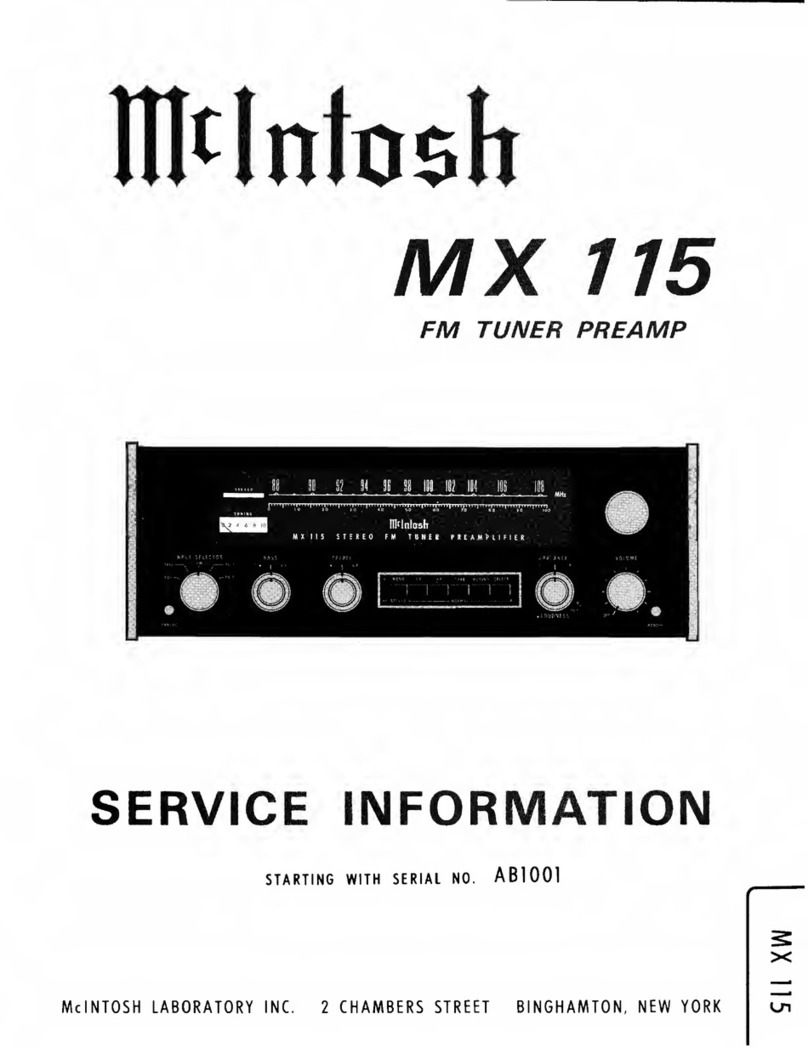
  9. McIntosh MX 110 User manual

McIntosh MX 110 User manual

Other manuals for MX 110

3

Other McIntosh Amplifier manuals

McIntosh MCP 1 User manual

McIntosh

McIntosh MCP 1 User manual

McIntosh MCC222 User manual

McIntosh

McIntosh MCC222 User manual

McIntosh C47 User manual

McIntosh

McIntosh C47 User manual

McIntosh MCC602TM User manual

McIntosh

McIntosh MCC602TM User manual

McIntosh C34V User manual

McIntosh

McIntosh C34V User manual

McIntosh MA6200 User manual

McIntosh

McIntosh MA6200 User manual

McIntosh MC602 User manual

McIntosh

McIntosh MC602 User manual

McIntosh MA7000 Instruction manual

McIntosh

McIntosh MA7000 Instruction manual

McIntosh MX113 User manual

McIntosh

McIntosh MX113 User manual

McIntosh MC452 User manual

McIntosh

McIntosh MC452 User manual

McIntosh MA7000 User manual

McIntosh

McIntosh MA7000 User manual

McIntosh C1000 User manual

McIntosh

McIntosh C1000 User manual

McIntosh MA6600 User manual

McIntosh

McIntosh MA6600 User manual

McIntosh C15 User manual

McIntosh

McIntosh C15 User manual
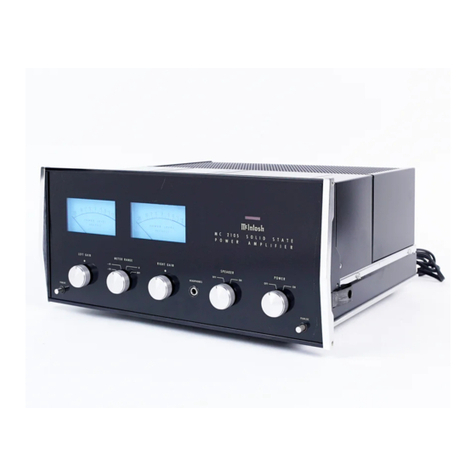
McIntosh MC500 User manual

McIntosh

McIntosh MC500 User manual

McIntosh Power Amplifier MC303 User manual

McIntosh

McIntosh Power Amplifier MC303 User manual

McIntosh C27 User manual

McIntosh

McIntosh C27 User manual

McIntosh MA352 User manual

McIntosh

McIntosh MA352 User manual

McIntosh C22 User manual

McIntosh

McIntosh C22 User manual

McIntosh MC2300 User manual

McIntosh

McIntosh MC2300 User manual

McIntosh MX136 User manual

McIntosh

McIntosh MX136 User manual

McIntosh MC7150 User manual

McIntosh

McIntosh MC7150 User manual

McIntosh AE-2 User manual

McIntosh

McIntosh AE-2 User manual

McIntosh MC7106 User manual

McIntosh

McIntosh MC7106 User manual

Popular Amplifier manuals by other brands

Magnat Audio EDITION FOUR Owner's manual/warranty document

Magnat Audio

Magnat Audio EDITION FOUR Owner's manual/warranty document

Inter-m PA-2000A Operation manual

Inter-m

Inter-m PA-2000A Operation manual

Yamaha TX6n owner's manual

Yamaha

Yamaha TX6n owner's manual

Peavey TNT 150 user guide

Peavey

Peavey TNT 150 user guide

Bosch LBB 1903/10 Installation and user instructions

Bosch

Bosch LBB 1903/10 Installation and user instructions

Avocent Emerge DA1200D Installer/user guide

Avocent

Avocent Emerge DA1200D Installer/user guide

Redgum RGi35 operating instructions

Redgum

Redgum RGi35 operating instructions

Cambridge Audio AXA25 user manual

Cambridge Audio

Cambridge Audio AXA25 user manual

Alpine MRP-M200 owner's manual

Alpine

Alpine MRP-M200 owner's manual

Technical Pro H1502UrBT user manual

Technical Pro

Technical Pro H1502UrBT user manual

FMS EMGZ307 operating manual

FMS

FMS EMGZ307 operating manual

Racal Instruments 5601 user manual

Racal Instruments

Racal Instruments 5601 user manual

Valcom V-1094A Technical specifications

Valcom

Valcom V-1094A Technical specifications

Cambridge Audio 851D user manual

Cambridge Audio

Cambridge Audio 851D user manual

QSC 3800 Specifications

QSC

QSC 3800 Specifications

NAD C300 owner's manual

NAD

NAD C300 owner's manual

Rotel RMB-1077 owner's manual

Rotel

Rotel RMB-1077 owner's manual

Peavey Monitor 300 Series operating guide

Peavey

Peavey Monitor 300 Series operating guide

manuals.online logo
manuals.online logoBrands
  • About & Mission
  • Contact us
  • Privacy Policy
  • Terms and Conditions

Copyright 2025 Manuals.Online. All Rights Reserved.

CONTENTS
GENERAL
DESCRIPTION.
1
TECHNICAL
DESCRIPTION.
1
INTRODUCTION.
3
FM
ALIGNMENT.
4
MULTIPLEX
ALIGNMENT.
6
SCHEMATIC.
8
DIAL
STRINGING.
11
PARTS
LIST.
12
SPECIFICATIONS..
16
CHASSIS
LAYOUT.
.
18
OPERATING
CURVES.
20
M
AND
X
SERIES
SCHEMATICS.POCKET
2
CHAMBERS
ST.
BINGHAMTON,
N.Y.
WARRANTY
STATION
MX
110
SERVICE
MANUAL
nWntosh
mx
MX
110
TUNER
PREAMPLIFIER
GENERAL
DESCRIPTION
The
MX
110
combines
in
one
unit
an
extremely
low-distortion
preamplifier
with
a
highly
sensitive
FM
multiplex
stereo
tuner.
Every
desirable
feature
of
a
tuner
and
a
preamplifier
is
included
in
this
design.
Interstation
noise
suppression,
tuning
indicator,
FM
multiplex
indicator,
indi¬
vidual
channel
bass
controls,
individual
channel
treble
controls,
electronic
phase
switch
have
all
been
engineered
into
the
MX
110.
The
INPUT
SELECTOR
gives
you
a
choice
of
six
different
program
sources.
The
MODE
SELECTOR
is
a
newly
developed
control
which
makes
it
very
easy
to
balance
a
stereo
system.
It
is
designed
to
add
left
to
right
for
monophonic
operation,
to
control
the
left
to
right
stereo
perspective
or
to
compare
the
left
and
right
channels
of
a
stereo
program.
The
loudness
of
the
phono
channels
and
the
auxiliary
channel
may
be
balanced
to
the
TECHNICAL
The
radio-frequency
amplifier
of
the
MX
110
is
a
“cascode”
type
circuit.
The
circuit
is
specially
designed
to
amplify
weak
signals
with
less
noise
and
distortion.
By
carefully
tuning
this
RF
amplifier
during
manufacturing
and
controlling
other
circuit
constants,
spurious
response
rejec¬
tion
is
improved.
The
high-frequency
oscillator
mechanical
layout
is
engineered
for
minimum
response
to
temperature
variations.
In
fact
the
combination
of
mechanical
and
electronic
design
is
so
unusually
good
in
this
circuit
that
automatic
frequency
control
is
not
needed
in
the
MX
110.
The
mixer
output
is
amplified
by
four
inter¬
mediate
frequency
amplifiers.
The
transformers
used
in
the
I.F.
amplifiers
are
designed
for
max¬
imum
adjacent
channel
rejection,
for
electrical
stability,
and
for
electrical
and
mechanical
resistance
to
shock
and
vibration.
tuner
loudness.
These
adjusting
controls
are
located
on
the
top
of
the
MX
110
behind
the
front
panel.
By
releasing
the
PANLOC
buttons
on
the
front
panel,
you
can
slide
the
MX
110
out
of
its
mounting
until
the
second
latch
en¬
gages.
The
top
mounted
LEVEL
set
controls
are
now
available.
The
McIntosh
designed
PANLOC
system
is
the
first
professional
installation
technique
to
be
used
on
stereo
instruments.
The
PANLOC
sys¬
tem
gives
you
absolute
ease
of
installation,
operation,
and
maintenance.
The
McIntosh
MX
110
is
a
beautifully
engi¬
neered
control
center
for
the
finest
stereo
sound
systems.
The
extreme
care
in
manufacturing,
in
layout
design
and
in
thermal
engineering
prom¬
ises
the
usual
McIntosh
extra
values
of
reliability,
performance,
and
long
life.
DESCRIPTION
The
R.F.
and
I.F.
circuits
of
the
MX
110
are
completely
shielded
and
exceed
the
FCC
requirements
for
suppression
of
oscillator
radia¬
tion.
Either
a
300
ohm
or
75
ohm
antenna
may
be
used
with
the
MX
110.
A
VHF
television
antenna
which
is
suitable
for
FM
reception
can
be
connected
to
the
MX
110.
In
the
MX
110,
a
new
type
of
mechanical
tuning
assembly
gives
smooth
flywheel
tuning.
By
controlling
the
relations
between
mass
and
mechanical
resistance,
and
dividing
work
loads
in
the
dial
drive
system,
it
becomes
nearly
impossi¬
ble
to
detect
any
backlash.
Yet
the
entire
dial
drive
is
a
model
of
mechanical
stability.
For
smooth,
quiet
action
and
extended
life
with
virtually'
no
wear,
a
teflon
lined
dial
pointer
carriage
and
nylon
pulleys
are
used
in
the
dial
cord
assembly.
1
MULTIPLEX
DECODER
The
multiplex
decoder
uses
a
special
McIntosh
developed
detecting
circuit.
One
of
the
advan¬
tages
of
this
circuit
is
the
elimination
of
the
critical
adjustments
necessary
with
commonly
used
matrixing
methods.
This
circuit
detects
the
L+R
sidebands
and
automatically
matrixes
the
recovered
information
with
the
L+R
main
carrier
signal.
This
circuit
then
yields
the
left
and
the
right
program
with
maximum
separation.
A
temperature
stabilized
19KC
amplifier
locks-in
a
highly
stable
push-pull
synchronous
oscillator.
Apart
from
other
advantages,
this
method
provides
greatest
noise
immunity.
Bal¬
anced
detectors
cancel
the
38KC
component
in
the
output
and
insure
low
distortion.
A
three-section
sharp
cut
off
filter
rejects
SCA
interference
and
reduces
susceptibility
to
spuri¬
ous
signals.
The
MX
110
has
an
MPX
stereo
indicator
that
lights
when
the
dial
pointer
crosses
a
station
broadcasting
MPX
stereo.
A
unique
circuit
using
a
transistor
operates
the
MPX
stereo
indicator.
The
transistor
is
controlled
by
a
differential
detecting
circuit
that
amplifies
the
19KC
pilot
signal.
This
circuit
automatically
discriminates
between
the
19KC
signal
and
noise.
AUDIO
The
MX
110
audio
amplifier
consists
of
three
negative-feedback
amplifying
sections
in
dupli¬
cate
for
the
left
and
right
stereo
channels
and
a
separate
L+R
monophonic
amplifier.
The
first
section
in
each
channel
is
a
feedback
preamplifier
used
to
amplify
and
compensate
for
the
input
signals
coming
from
phonograph
pickups
or
tape
heads.
Level
set
controls
are
connected
into
the
output
circuit
of
this
preamplifier
section
when
the
INPUT
SELECTOR
is
switched
to
PHONO
1
or
PHONO
2.
These
controls
may
be
used
to
maintain
uniform
loudness
between
phono
and
tuner
inputs.
Skillful
layout,
grounding,
and
shielding
for
low-hum
pickup,
metal
film
resistors,
low-noise
tubes
and
extreme
care
in
manufactur¬
ing
combine
to
reduce
noise
and
hum
in
t
input
amplifiers.
octave)
rumble
and
high-frequency
filters
are
associated
with
this
section.
The
third
amplifier
section
is
a
two
stage
negative
feedback
amplifier.
The
variable
bass
and
treble
controls
are
included
in
the
feedback
loop
to
maintain
the
lowest
possible
distortion.
For
example
a
wave
meter
analysis
of
the
three
amplifier
sections
of
the
MX
110
shows
less
than
1/10
of
1%
distortion
at
3
volts
output.
The
MODE
SELECTOR,
balance
controls
and
left
and
right
outputs
are
associated
with
the
third
amplifier
section.
The
L+R
monophonic
amplifying
section
is
a
feedback
summing
amplifier.
It
supplies
mono¬
phonic
output
as
well
as
L+R
output.
The
second
amplifier
section
in
each
channel
is
a
cathode
follower.
The
sharp
cut-off
(18db
per
POWER
SUPPLY
The
power
supply
of
the
MX
110
has
received
very
special
design
attention.
Two
separate
rectifier
circuits
are
used.
A
full-wave
rectifier
supplies
D.C.
to
the
heaters
of
all
audio
stages.
A
bridge
rectifier
supplies
D.C.
to
the
anodes
of
the
audio
stages.
A
half-voltage
tap
on
the
bridge
rectifier
supplies
D.C.
to
the
tuner
stages.
This
elaborate
power
supply
design
insures
the
lowest
possible
background
hum
level
and
also
the
maximum
stability.
In
addition
to
this
care¬
ful
work
the
power
transformer
uses
special
magnetic
shielding
to
minimize
possible
hum
pickup
in
the
MX
110
as
well
as
in
any
other
equipment
used
with
it.
Hi
2
INTRODUCTION
All
McIntosh
tuners
are
carefully
aligned
and
tested
at
the
factory
using
the
finest
available
test
equipment.
All
McIntosh
tuners
will
meet
their
published
specifications
when
shipped
from
the
factory.
After
extensive
operation,
especially
when
tubes
have
been
replaced,
it
may
be
desirable
to
realign
the
tuner
circuits
for
best
performance.
This
manual
gives
complete
information
on
the
circuit
realignment
procedure
for
the
MX
110
tuner-preamplifier.
The
test
equipment
listed
below
(or
its
equivalent)
is
necessary
to
properly
align
an
MX
110.
The
accuracy
of
the
alignment
will
be
directly
related
to
the
accuracy
and
calibration
of
the
test
equipment
used.
FM
Signal
Generator
(Measurements
210A
or
equivalent)
VTVM
Multiplex
Generator
(RCA
WR-51A
or
equivalent)
10.7
MC
Generator
(Preferably
crystal
controlled)
Oscilloscope
(Hewlett-Packard
120B
or
equivalent)
Harmonic
Distortion
Analyzer,
desirable
but
not
essential—(Hewlett-
Packard
330B
or
equivalent)
If
the
necessary
test
equipment
is
not
available,
alignment
should
not
be
attempted.
You
may
contact
the
McIntosh
Customer
Service
Department
for
additional
information.
Customer
Service
McIntosh
Laboratory,
Inc.
2
Chambers
Street
Binghamton,
New
York
Our
telephone
number
is
723-5491
The
direct
dial
area
code
is
607
T
MX
110
FM
STEPS
TUNER
DIAL
SETTING
SIGNAL
GENERATOR
INDICATOR
FREQ
COUPLING
MODULATION
TYPE
CONNECTED
TO
Point
of
no
interference
or
signal
10.7MC
Through
external
.01
MF
cap
to
pin
7
of
12AT7
mixer
cw
VTVM
TP
#1
SAME
SAME
SAME
SAME
MX
110
tuning
eye
SAME
SAME
SAME
SAME
VTVM
TP
#2
or
(discriminator
output
on
"M"
series)
SAME
SAME
SAME
SAME
SAME
Pin
6
of
discriminator
transformer
105MC
105MC
300
ohm
antenna
terminals
with
*
matching
network
400
cycles
75KC
deviation
(100%
modulation)
VTVM
connected
to
TP1
and
scope
connected
to
L
or
R
audio
output
90MC
90MC
SAME
SAME
SAME
105MC
105MC
SAME
SAME
SAME
90MC
90MC
SAME
SAME
SAME
Point
of
no
interference
Scope
L
or
R
output
105MC
105MC
SAME
400
cycles
75KC
deviation
(100%
modulation)
attenuated
to
2.5
microvolts
output
VTVM
connected
to
TP
#1
and
Scope
connected
to
L
or
R
audio,
output
ANTENNA
MATCHING
NETWORK
FM
SIGNAL
GENERATOR
100
OHMS
-AAA—
-O
-AAA—
150
OHMS
TUNER
300
OHM
ANTENNA
°
TERMINALS
*
IF
SIGNAL
GENERATOR
HAS
OTHER
THAN
50
OHM
INTERNAL
IMPEDANCE,
USE
A
RESISTOR
OF
150
OHMS,
LESS
INTERNAL
GENERATOR
IMPEDANCE.
1
]
ALIGNMENT
ADJUST
TEST
LIMITS
REMARKS
Top
(secondary)
and
bottom,
(primary)
of
1st,
2nd
and
3rd
IF
transformers
Maximum
possible
negative
voltage
Shunt
to
ground
the
winding
not
being
adjusted
with
a
.01
MF
capacitor
in
series
with
a
1
K
resistor.
Attenuate
signal
generator
until
output
voltage
at
TP
#1
is
less
than
1.5
volts
with
one
IF
transformer
winding
shunted.
IF
transformers
have
terminal
#1
marked
with
a
green
dot
and
are
numbered
clockwise.
4th
IF
transformer,
top
and
bottom.
Eye
should
close
to
approx,
’/is”
with
strong
signal.
Make
additional
adjustments
of
eye
closure
by
varying
the
length
of
parallel
conductors
connected
to
pins
1
and
4
of
the
4th
IF
transformer.
(This
changes
the
capacitive
coupling
between
pins
1
and
4.)
Discriminator
transformer
upper
core
(secondary)
Adjust
for
0
volts
!
-
-
Discriminator
transformer
lower
core
(primary)
Maximum
negative
voltage
Repeat
step
3
if
a
large
change
is
made
in
the
setting
of
the
lower
core.
i
Oscillator
trimmer
cap.
Maximum
negative
voltage
As
output
increases,
attenuate
signal
generator
to
keep
maximum
output
at
TP
#1
to
less
than
2
volts.
Oscillator
coil
tuning
slug
SAME
Repeat
steps
5
and
6
until
dial
calibration
is
accurate.
j
Mixer
trimmer
and
RF
trimmer
SAME
1
|
Mixer
coil
tuning
slug
and
RF
coil
tuning
slug
SAME
Repeat
steps
7
and
8
until
output
is
as
high
as
possible.
Muting
adj.
control
Turn
muting
switch
to
"in''
position.
Adjust
muting
control
until
background
noise
just
disappears.
i
IHFM
sensitivity
2.5
microvolt
for
3
%
total
noise
and
distortion
Step
10
is
an
overall
sensitivity
check,
and
requires
a
distortion
analyzer
and
i
FM
signal
generator
with
attenuator.
With
2.5
microvolts
input
at
the
300
ohm
antenna
terminals,
TP
#1
voltage
should
be
.6
volts
or
more.
MX
IIO
MULTIPLEX
TUNER
SIGNAL
GENERATOR
_
INDICATOR
STEPS
DIAL
SETTING
FREQ.
COUPLING
MODULATION
TYPE
CONNECTED
TO
i
Point
of
no
interference
or
signal
Audio
generator
set
to
67KC,
0.5
volts
output
or
less
TP
H2
(MPX
input
on
"M"
series)
Audio
VTVM
Pin
6
of
38KC
transformer
(yellow
wire
connected
at
this
pin)
2
SAME
MPX
generator
with
19KC
pilot
attenuated
to
approx.
5%
level
(5%
level
is
14
of
normal
10%
level)
1
9KC
pilot
must
be
attenuated
for
correct
alignment
SAME
SAME
Pin
3
or
8
of
12AU7
MPX
oscillator
100MC
100MC
modulated
300
ohm
antenna
1
KC
100%
SAME
Pin
1
or
2
of
by
MPX
generator,
terminals
with
19KC
pilot
at
approx.
1000
normal
output
microvolt
signal
modulation
(34KC
deviation)
modulating
left
or
right
only
38KC
transformer
4
SAME
SAME
SAME
SAME
Audio
VTVM
and
scope
L
or
R
output
jack
5
SAME
SAME
SAME
SAME
SAME
SAME
6
SAME
SAME
SAME
SAME
SAME
SAME
7
SAME
SAME
SAME
Turn
off
1
KC
audio
modulation
SAME
SAME
8
SAME
SAME
SAME
Same
as
step
3
SAME
SAME
DECODER
ALIGNMENT
ADJUST
TEST
LIMITS
REMARKS
67KC
trap
Adjust
for
minimum
voltage
1
9KC
phase
coil
and
1
9KC
transformer
1.
Disable
local
38KC
oscillator
by
placing
a
jumper
wire
across
6.8K
resistor
connected
to
pins
1
and
6
of
12AU7
MPX
oscillator.
2.
Shunt
pin
2
of
19KC
transformer
to
ground
with
.01
capacitor
in
series
with
1
K
resistor.
3.
Adjust
19KC
phase
coil
for
maximum
output.
Proper
adjustment
places
core
approx.
%"
from
bottom
of
coil
form.
4.
Adjust
lower
core
of
19KC
transformer
for
maximum
output.
5.
Shunt
pin
3
of
19KC
transformer
to
ground
with
.01
capacitor
in
series
with
1
K
resistor.
6.
Adjust
upper
core
of
19KC
transformer
for
maximum
output.
7.
Remove
jumper
used
in
step
1
above.
38KC
transformer
bottom
core
Adjust
for
maximum
voltage
38KC
transformer
upper
core
Adjust
for
stable
scope
display
1.
Turn
off
19KC
pilot
on
MPX
generator.
2.
Adjust
upper
core
of
38KC
transformer
to
obtain
a
stable
and
uniform
1
KC
signal
scope
display.
This
adjustment
may
be
critical,
so
turn
core
very
slowly.
3.
Turn
19KC
pilot
back
on.
19KC
phase
coil
30db
separation
or
more
Modulate
left
channel
and
measure
right
channel
output.
Adjust
19KC
phase
coil
for
minimum
right
channel
output
(maximum
separation).
Remove
all
test
leads
from
TP
#2
for
separation
checks.
SAME
Modulate
right
channel
and
measure
left
channel
output.
Separation
in
steps
5
and
6
should
be
at
least
30db
This
step
checks
the
rejection
of
19KC
and
38KC
frequencies.
Residual
output
should
be
at
least
40db
below
modulated
output.
1
'
'
.
Check
for
MPX
indicator
light
1.
MPX
light
should
turn
on
with
MPX
signal
2.
Tuning
slowly
across
dial,
MPX
light
should
turn
on
only
with
MPX
signal.