EXPLANATION OF CONTROLS
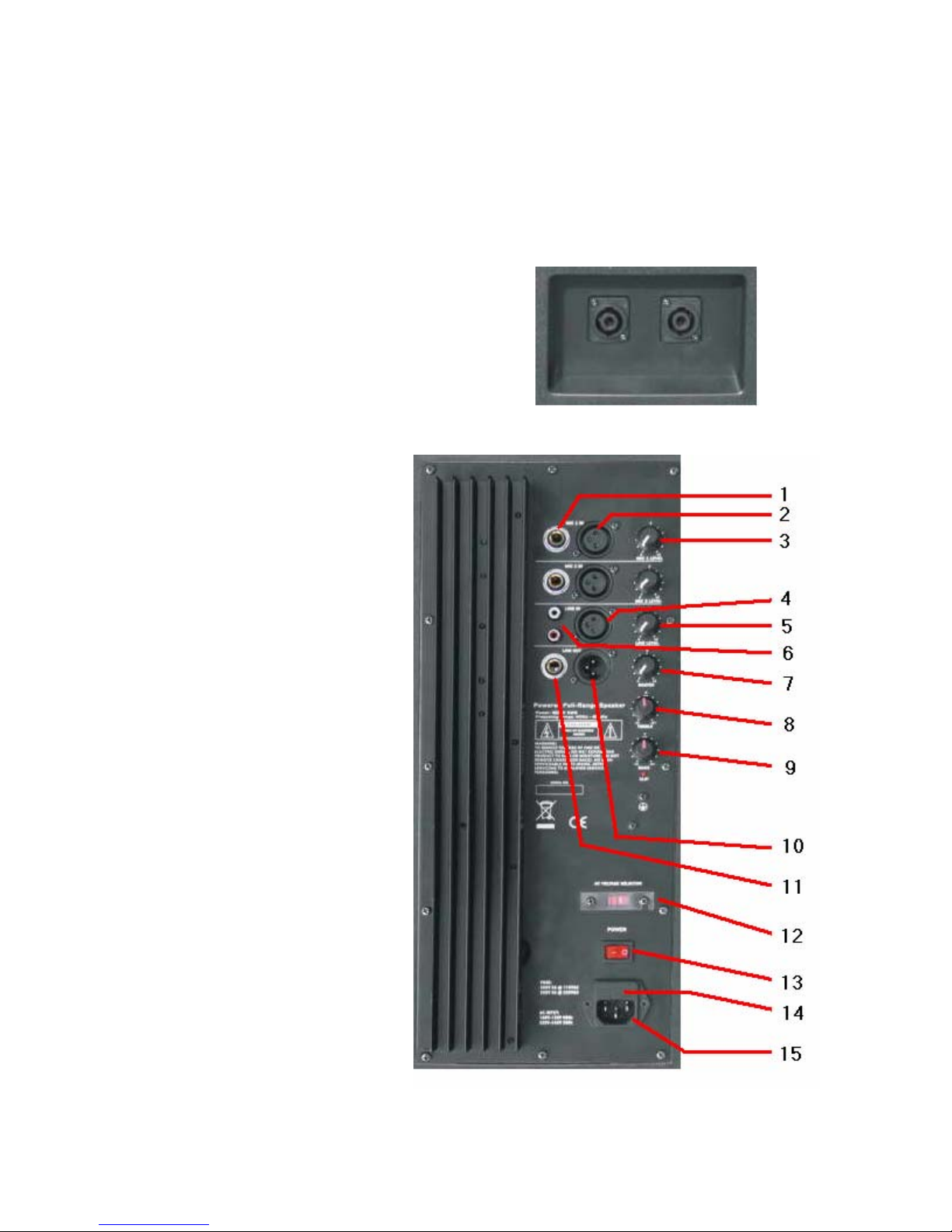
1. 1/4" Microphone Input
Accepts balanced or unbalanced microphone input signal level. Level of this input is adjusted by the control immediately
to the right. Ch1 and Ch2 inputs function exactly the same.
2. XLR Microphone Input
Accepts balanced or unbalanced microphone input signal level. Level of this input is adjusted by the control immediately
to the right. Ch1 and Ch2 inputs function exactly the same.
3. Ch1 Level
Controls level of signal entering either 1/4" or XLR input. Ch1 and Ch2 level controls function exactly the same. Note that
the 1/4" and XLR input on a single channel should not be used at the same time.
4. XLR Line Level Input
Accepts balanced or unbalanced line level input. Typical sources for this input may be an MP3, CD or DVD player,
keyboard or other electronic instrument, computer sound card or mixing console output. Level of this input is adjusted by
the control immediately to the right.
5. Ch3 Level
Controls level of signal entering either RCA phono or XLR input. Note that the RCA and XLR input on this channel should
not be used at the same time.
6. Dual RCA Line Level Input
Accepts unbalanced line level input. Two connections are provide to accommodate common connections from consumer
stereo equipment, such as tape decks, CD players, tuners and similar. Note that the two inputs are internally summed
mono.
7. Master Level
Provides adjustment of the overall output level of the system.
8. Treble Control
Provides high frequency adjustment of the overall output level of the system. This control provides ±10dB adjustment of
a frequency band centered at 10KHz
9. Bass Control
Provides low frequency adjustment of the overall output level of the system. This control provides ±10dB adjustment of a
frequency band centered at 100Hz
10. XLR Line Level Output
Provides pre-amplified, balanced line level output, unaffected by the Master Level or Bass and Treble controls. This is
ideal for driving a second amplified speaker or input on a recording device.
11. 1/4" Line Level Output
Provides pre-amplified unbalanced line level output, unaffected by the Master Level or Bass and Treble controls. This is
ideal for driving a second amplified speaker or input on a recording device.
12. Input Voltage Selector
Allows selection of 110VAC or 220VAC operation. 110VAC is correct setting for use in North America, be certain the
switch is in the correct position prior to use.
13. Master Power Switch
Turns power to the internal amplifier ON or OFF. "–" represents the ON position.
14. Power Fuse Access
Accepts 5mm (dia) x 20mm (L) fuse. Only replace fuse with the exact same size. With 110VAC supply voltage, correct
fuse size is 555-10600 – 2.5A, 555-10601 – 4A, 555-10602 – 5A, all slow blow type.
15. Power Cord Inlet
For connection of supplied power cord. This connection accepts industry standard IEC type cords.
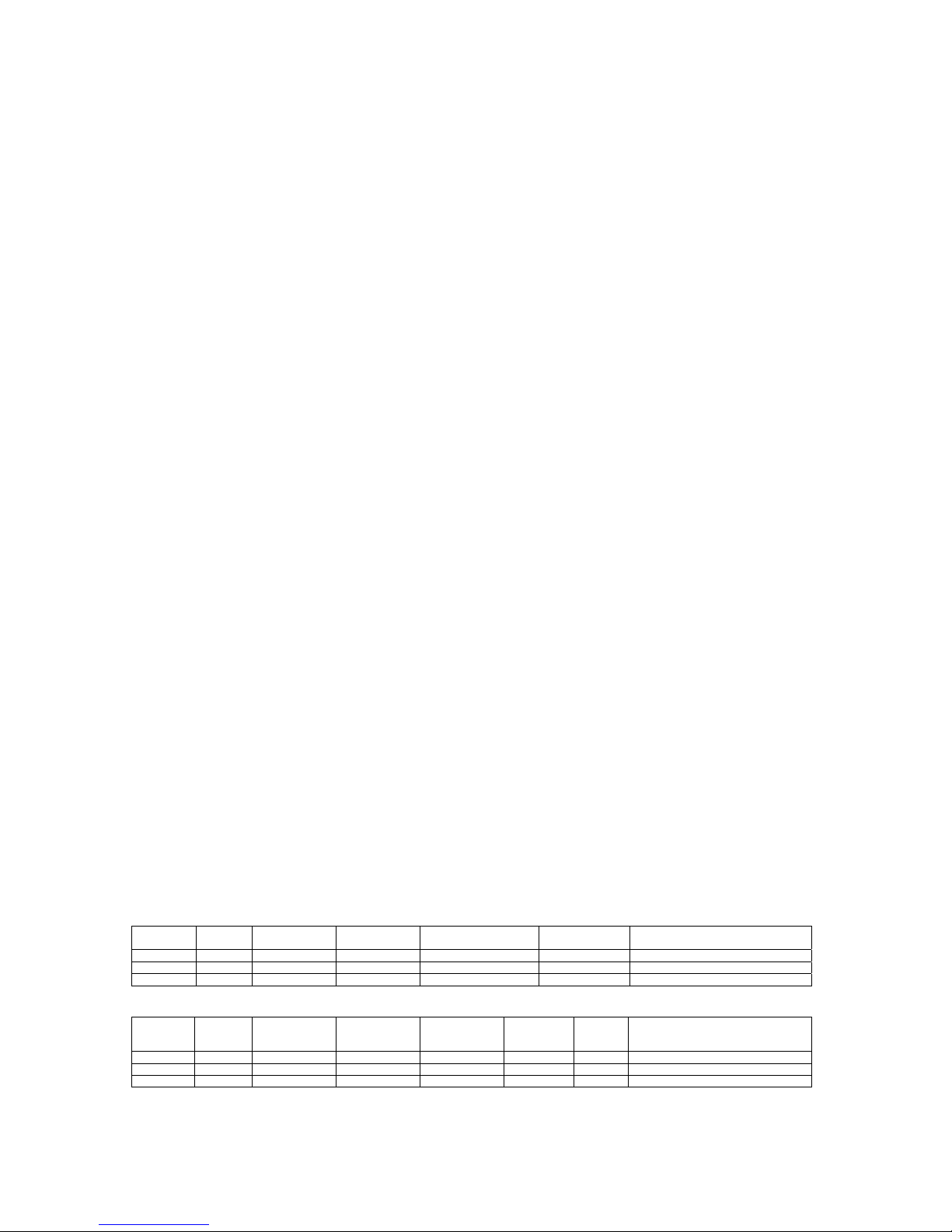
Specifications (Active Models)
Model Woofer
Compression
Tweeter Power Output Frequency Response Power
Requirements Dimensions
555-10600 10" 1-3/8" 80W RMS 35Hz ~ 20KHz 110 / 220 VAC 20.5" (H) x 13.5" (W) x 12.25" (D)
555-10601 12" 1-3/8" 120W RMS 30Hz~20KHz 110 / 220 VAC 24.5" (H) x 17" (W) x 13.4" (D)
555-10602 15" 1-3/8" 140W RMS 20Hz~20KHz 110 / 220 VAC 27.5" (H) x 19" (W) x 15.4" (D)
Specifications (Passive Models)
Model Woofer
Compression
Tweeter
Power
Capacity
(RMS/peak) Frequency
Response Sensitivity
(W/M) Imped-
ance Dimensions
555-10605 10" 1-3/8" 200W / 400W 35Hz ~ 20KHz 90dB 8Ω20.5" (H) x 13.5" (W) x 12.25" (D)
555-10606 12" 1-3/8" 300W / 600W 30Hz~20KHz 91dB 8Ω24.5" (H) x 17" (W) x 13.4" (D)
555-10607 15" 1-3/8" 350W / 700W 20Hz~20KHz 92dB 8Ω27.5" (H) x 19" (W) x 15.4" (D)