manuals.online logo
Brands
  1. Home
  2. •
  3. Brands
  4. •
  5. Panasonic
  6. •
  7. Measuring Instrument
  8. •
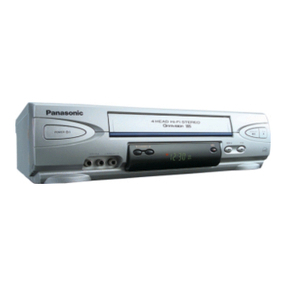
  9. Panasonic ShowStopper PV-SS2710 User manual

Panasonic ShowStopper PV-SS2710 User manual

Other Panasonic Measuring Instrument manuals

Panasonic KC2S Eco-COUNT METER User manual

Panasonic

Panasonic KC2S Eco-COUNT METER User manual

Panasonic DMR-UBT1GL-K User manual

Panasonic

Panasonic DMR-UBT1GL-K User manual

Panasonic AJ-PG50EJ User manual

Panasonic

Panasonic AJ-PG50EJ User manual

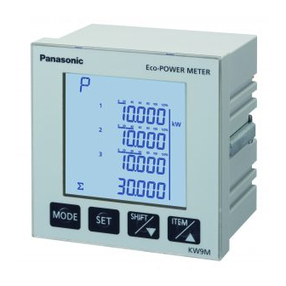
Panasonic KW9M Eco-Power Meter User manual

Panasonic

Panasonic KW9M Eco-Power Meter User manual

Panasonic AG-HPG20P Technical manual

Panasonic

Panasonic AG-HPG20P Technical manual

Panasonic Omnivision PV-V4600 User manual

Panasonic

Panasonic Omnivision PV-V4600 User manual

Panasonic KW1M-H User manual

Panasonic

Panasonic KW1M-H User manual

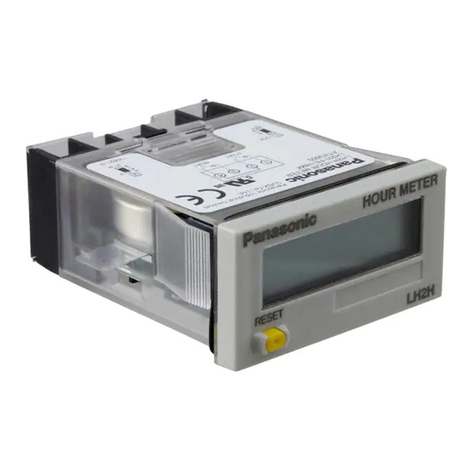
Panasonic LH2H preset User manual

Panasonic

Panasonic LH2H preset User manual

Panasonic NA1-11 User manual

Panasonic

Panasonic NA1-11 User manual

Panasonic k-nl304k User manual

Panasonic

Panasonic k-nl304k User manual

Panasonic KW9M Eco-Power Meter User manual

Panasonic

Panasonic KW9M Eco-Power Meter User manual

Panasonic LC2H preset User manual

Panasonic

Panasonic LC2H preset User manual

Panasonic NV-8950 User manual

Panasonic

Panasonic NV-8950 User manual

Panasonic KW2M-A User manual

Panasonic

Panasonic KW2M-A User manual

Panasonic FM-252-4(-P) User manual

Panasonic

Panasonic FM-252-4(-P) User manual

Panasonic RRQR100 - IC RECORDER User manual

Panasonic

Panasonic RRQR100 - IC RECORDER User manual

Panasonic LH2H preset User manual

Panasonic

Panasonic LH2H preset User manual

Panasonic AG6124 User manual

Panasonic

Panasonic AG6124 User manual

Panasonic DMRE20 - DVD VIDEO RECORDER User manual

Panasonic

Panasonic DMRE20 - DVD VIDEO RECORDER User manual

Panasonic KW2G Eco-POWER METER User manual

Panasonic

Panasonic KW2G Eco-POWER METER User manual

Panasonic Omnivision VHS PV-7453 User manual

Panasonic

Panasonic Omnivision VHS PV-7453 User manual

Panasonic KW9M Eco-Power Meter User manual

Panasonic

Panasonic KW9M Eco-Power Meter User manual

Panasonic TH13 Series User manual

Panasonic

Panasonic TH13 Series User manual

Panasonic FZ-VNP001U User manual

Panasonic

Panasonic FZ-VNP001U User manual

Popular Measuring Instrument manuals by other brands

Powerfix Profi 278296 Operation and safety notes

Powerfix Profi

Powerfix Profi 278296 Operation and safety notes

Test Equipment Depot GVT-427B user manual

Test Equipment Depot

Test Equipment Depot GVT-427B user manual

Fieldpiece ACH Operator's manual

Fieldpiece

Fieldpiece ACH Operator's manual

FLYSURFER VIRON3 user manual

FLYSURFER

FLYSURFER VIRON3 user manual

GMW TG uni 1 operating manual

GMW

GMW TG uni 1 operating manual

Downeaster Wind & Weather Medallion Series instruction manual

Downeaster

Downeaster Wind & Weather Medallion Series instruction manual

Hanna Instruments HI96725C instruction manual

Hanna Instruments

Hanna Instruments HI96725C instruction manual

Nokeval KMR260 quick guide

Nokeval

Nokeval KMR260 quick guide

HOKUYO AUTOMATIC UBG-05LN instruction manual

HOKUYO AUTOMATIC

HOKUYO AUTOMATIC UBG-05LN instruction manual

Fluke 96000 Series Operator's manual

Fluke

Fluke 96000 Series Operator's manual

Test Products International SP565 user manual

Test Products International

Test Products International SP565 user manual

General Sleep Zmachine Insight+ DT-200 Service manual

General Sleep

General Sleep Zmachine Insight+ DT-200 Service manual

Sensa Core Lacto Spark user manual

Sensa Core

Sensa Core Lacto Spark user manual

VOLTCRAFT UTS-1980 operating instructions

VOLTCRAFT

VOLTCRAFT UTS-1980 operating instructions

EBCHQ 94915 Operation manual

EBCHQ

EBCHQ 94915 Operation manual

Balluff BIP LD2-T017-01-EP-S4 Series user guide

Balluff

Balluff BIP LD2-T017-01-EP-S4 Series user guide

Pulsar IMP Lite Series instruction manual

Pulsar

Pulsar IMP Lite Series instruction manual

ETCR 6800 user manual

ETCR

ETCR 6800 user manual

manuals.online logo
manuals.online logoBrands
  • About & Mission
  • Contact us
  • Privacy Policy
  • Terms and Conditions

Copyright 2025 Manuals.Online. All Rights Reserved.

ORDER NO. MKE0101751C1
B6
TV/Hard Disk Recorder Combination
PV-SS2710
SPECIFICATIONS
2001 Matsushita-Kotobuki Electronics Industries LTD. All rights
1
www.manualscenter.com
reserved. Unauthorized copying and distribution is a violation of law.
1. SAFETY PRECAUTIONS
1.1. GENERAL GUIDELINES
1. IMPORTANT SAFETY NOTICE
There are special components used in this equipment which are
important for safety. These parts are marked by in the Schematic
Diagrams, Circuit Board Layout, Exploded Views and Replacement
Parts List. It is essential that these critical parts should be replaced
with manufacturer’’s specified parts to prevent X-RADIATION, shock,
fire, or other hazards. Do not modify the original design without
permission of manufacturer.
2. An Isolation Transformer should always be used during the servicing
of HDR Combination whose chassis is not isolated from the AC power
line. Use a transformer of adequate power rating as this protects the
technician from accidents resulting in personal injury from electrical
shocks. It will also protect HDR Combination from being damaged by
accidental shorting that may occur during servicing.
3. When servicing, observe the original lead dress, especially the lead
dress in the high voltage circuits. If a short circuit is found, replace all
parts which have been overheated or damaged by the short circuit.
4. After servicing, see to it that all the protective devices such as
insulation barriers, insulation papers, shield, and isolation R-C
combinations are properly installed.
5. Before turning the receiver on, measure the resistance between B+
line and chassis ground. Connect (-) side of an ohmmeter to the B+
lines, and (+) side to chassis ground. Each line should have more
2
resistance than specified, as follows :
B+ Line
Minimum Resistance
130 V
1 k (Hot chassis ground)
27 V
180 (Cold chassis ground)
17 V
110 (Cold chassis ground)
6. When the TV set is not used for a long period of time, unplug the
power cord from the AC outlet.
7. Potentials, as high as 32.0 kV are present when this TV set is in
operation. Operation of the TV set without the rear cover involves the
danger of a shock hazard from the TV set power supply. Servicing
should not be attempted by anyone who is not thoroughly familiar with
the precautions necessary when working on high voltage equipment.
Always discharge the anode of the picture tube to the CRT ground of
receiver before handling the tube.
8. After servicing make the following leakage current checks to prevent
the customer from being exposed to shock hazards.
1.2. LEAKAGE CURRENT COLD CHECK
1. Unplug the AC cord and connect a jumper between the two prongs on
the plug.
2. For physically operated power switches, turn power on. Otherwise
skip step 2.
3. Measure the resistance value, with an ohmmeter, between the
jumpered AC plug and each exposed metallic cabinet part on the
receiver, such as screwheads, connectors, etc. When the exposed
metallic part has a return path to the chassis, the reading should be
between 1 M and 12 M . When the exposed metal does not have a
return path to the chassis, the reading must be infinity.
1.3. LEAKAGE CURRENT HOT CHECK
1. Plug the AC cord directly into the AC outlet.
Do not use a isolation transformer for this check.
3
www.manualscenter.com
2. Connect a 1.5 k , 10 W resistor, in parallel with a 0.15 F capacitor,
between each exposed metallic part on the set and a good earth
ground , as shown in Figure 1.
3. Use an AC voltmeter, with 1 k /V or more sensitivity, to measure the
potential across the resistor.
4. Check each exposed metallic part, and measure the voltage at each
point.
5. Reverse the AC plug in the AC outlet and repeat each of the above
measurements.
6. The potential at any point should not exceed 0.75 V RMS.
A leakage current tester (Simpson Model 229 equivalent) may be used
to make the hot checks. Leakage current must not exceed 1/2 mA. In
case a measurement is outside of the limits specified, there is a
possibility of shock hazard, and the receiver should be repaired and
rechecked before it is returned to the customer.
Figure 1
2. X-RADIATION
WARNING:
1. The potential source of X-Radiation in TV sets is the High Voltage
section and the picture tube.
2. When using a picture tube test fixture for service, ensure that the
fixture is capable of handling 32.0 kV without causing X-Radiation.
NOTE :
It is important to use an accurate periodically calibrated high voltage
meter.
1. Reduce the brightness to minimum.
2. Set the SERVICE switch to SERVICE .
4
3. Measure the High Voltage. The meter reading should indicate 30.0 kV±
2.0 kV.
If the meter indication is out of tolerance, immediate service and
correction is required to prevent the possibility of premature
component failure.
4. To prevent an X-Radiation possibly, it is essential to use the specified
picture tube.
HORIZONTAL OSCILLATOR DISABLE CIRCUIT TEST SERVICE WARNING:
The test must be made as a final check before set is returned to the customer.
1. With the rear cover removed, supply about a 120 V AC power source
to the set, turn on the set.
2. Set the customer controls to normal operating positions.
3. Short between TP891 and TP892 on the Main circuit board with a
jumper wire. Confirm that the picture goes out of horizontal sync.
4. If this does not occur, the horizontal oscillator disable circuit is not
operating. Follow the Repair Procedures of horizontal oscillator
disable circuit before the set is returned to customer.
REPAIR PROCEDURES OF HORIZONTAL OSCILLATOR DISABLE CIRCUIT
1. Connect a DC voltmeter between capacitor C513 (+) on the Main
circuit board and chassis ground.
2. If approximately +21.9 V is not present at that point when 120 V AC is
applied, find the cause. Check R503, R5342, C5325, C513 and D503.
3. Carefully check above specified parts and related circuits and parts.
When the circuit is repaired, try the horizontal oscillator disable circuit
test again.
CIRCUIT EXPLANATION
HORIZONTAL OSCILLATOR DISABLE CIRCUIT
The positive DC voltage, supplied from the D503 cathode for monitoring high voltage, is applied to the
IC5301 Pin11 through R503 and R5341. Under normal conditions, the voltage at IC5301 Pin 11 is less
than approx 3 V. If the high voltage at Flyback Tr Pin 5 exceeds the specified voltage, the positive DC
voltage which is supplied from the D503 cathode also increases. The increased voltage is applied to
IC5301 Pin11 through R503 and R5341. Due to the increased voltage at IC5301 Pin11, the horizontal
oscillator frequency increases, the picture goes out of horizontal sync, the beam current decreases
and the picture becomes dark in order to keep X-radiation under specification.
Figure 2
5

www.manualscenter.com
3. PREVENTION OF ELECTROSTATIC DISCHARGE
(ESD) TO ELECTROSTATICALLY SENSITIVE (ES)
DEVICES
Some semiconductor (solid state) devices can be damaged easily by static electricity. Such
components commonly are called Electrostatically Sensitive (ES) Devices. Examples of typical ES
devices are integrated circuits and some field-effect transistors are semiconductor "chip"
components. The following techniques should be used to help reduce the incidence of component
damage caused by electrostatic discharge (ESD).
1. Immediately before handling any semiconductor component or
semiconductor-equipped assembly, drain off any ESD on your body
touching a known earth ground. Alternatively, obtain and wear a
commercially available discharging ESD wrist strap, which should be
removed for potential shock reasons prior to applying power to the
unit under test.
2. After removing an electrical assembly equipped with ES devices, place
the assembly on a conductive surface such as aluminum foil, to
prevent electrostatic charge buildup or exposure of the assembly.
3. Use only a grounded-tip soldering iron to solder or unsolder ES
devices.
4. Use only an antistatic solder removal device. Some solder removal
devices not classified as "antistatic (ESD protected)" can generate
electrical charge sufficient to damage ES devices.
5. Do not use freon-propelled chemicals. These can generate electrical
charges sufficient to damage ES devices.
6. Do not remove a replacement ES device from its protective package
until immediately before you are ready to install it. (Most replacement
ES devices are packaged with leads electrically shorted together by
conductive foam, aluminum foil or comparable conductive material).
7. Immediately before removing the protective material from the leads of
a replacement ES device, touch the protective material to the chassis
or circuit assembly into which the device will be installed.
CAUTION:
6
Be sure no power is applied to the chassis or circuit, and observe all
other safety precautions.
8. Minimize bodily motions when handling unpackaged replacement ES
devices. (Otherwise harmless motion such as the brushing together of
your clothes fabric or the lifting of your foot from a carpeted floor can
generate static electricity (ESD) sufficient to damage an ES device).
"NOTE to CATV system installer :
This reminder is provided to call the CATV system installer’s attention
to Article 820-40 of the NEC that provides guidelines for proper
grounding and, in particular, specifies that the cable ground shall be
connected to the grounding system of the building, as close to the point
of cable entry as practical."
4. OPERATION GUIDE
5. SERVICE NOTES (PLEASE READ)
5.1. SERVICE NOTES
5.1.1. SERVICE POSITION
5.1.1.1. Service Position
CAUTION:
HOT CIRCUIT (Primary circuit) exists on the TV Main C.B.A. and the
Power Supply C.B.A. Use extreme care to prevent accidental shock
when servicing.
5.1.1.1.1. Service Position (1)
Fig. 1-1-1
7
Check the signal at the following wires and TPs. / Refer to “Check points and Waveforms for service
position (1).”
Fig. 1-1-2
Fig. 1-1-3
8
www.manualscenter.com
5.1.1.1.2. Service Position (2)
1. Remove the Rear Cover and the TV/Video/Power/HDR Unit. Then,
remove the C.B.A.s from the Bottom Frame.
2. Remove the PCB Holder Piece from the Bottom Frame as shown.
Fig. 1-2-1
9
3. Place the Main C.B.A. and TV Main C.B.A. on the Table. Then, connect
the Connector P7004 and P551.
4. In order to stabilize C.B.A.s, attach the PCB Holder Piece to both
C.B.A.s as shown.
Fig. 1-2-2
5. Place it along with Guide ribs on the Bottom Frame.
Service Position (2)
Fig. 1-2-3
10