standardsolderorsolderthat contains lead.
We will use PbF solderwhendiscussing the leadfree solderusedinourmanufacturing process
whichis made fromTin, (Sn), Silver, (Ag), and Copper, (Cu).
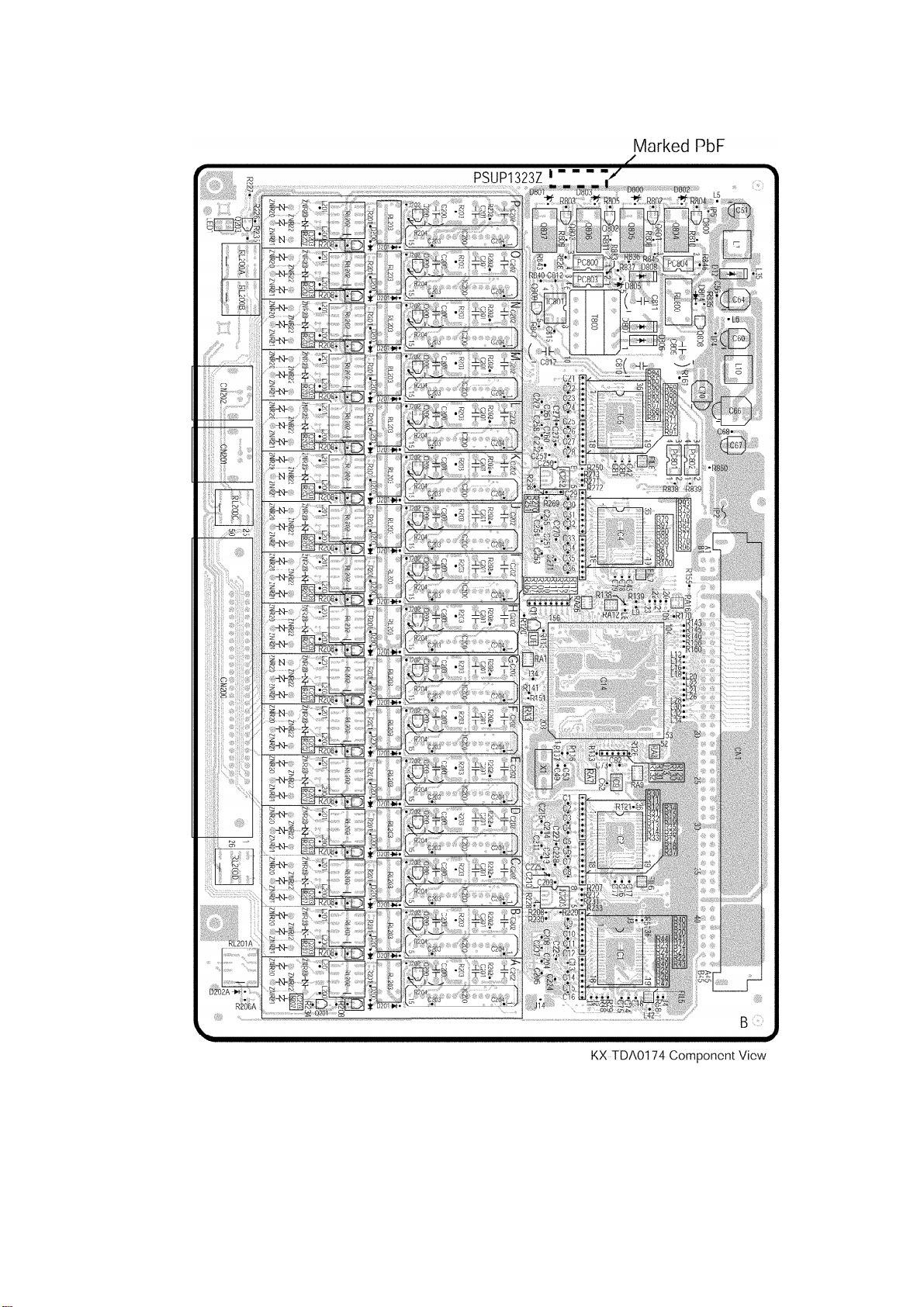
This model, and others like it, manufacturedusing leadfree solderwill have PbF stampedon
the PCB. Forservice and repairwork we suggest using the same type of solderalthough, with
some precautions, standardPbsoldercanalsobe used.
Caution
-PbF solder has amelting point that is50° ~ 70° F, (30° ~ 40°C)
higher than Pb solder. Please use asoldering iron with
temperature control and adjust itto 700° ± 20° F, (370° ± 10°C). In
case of using high temperature soldering iron, please be careful
not to heat too long.
-PbF solder will tend to splash ifitisheated much higher than its
melting point, approximately1100°F, (600°C).
-Ifyou must use Pb solder on aPCB manufactured using PbF
solder, remove as much of the original PbF solder as possibleand
be sure that anyremaining ismelted prior to applying the Pb
solder.
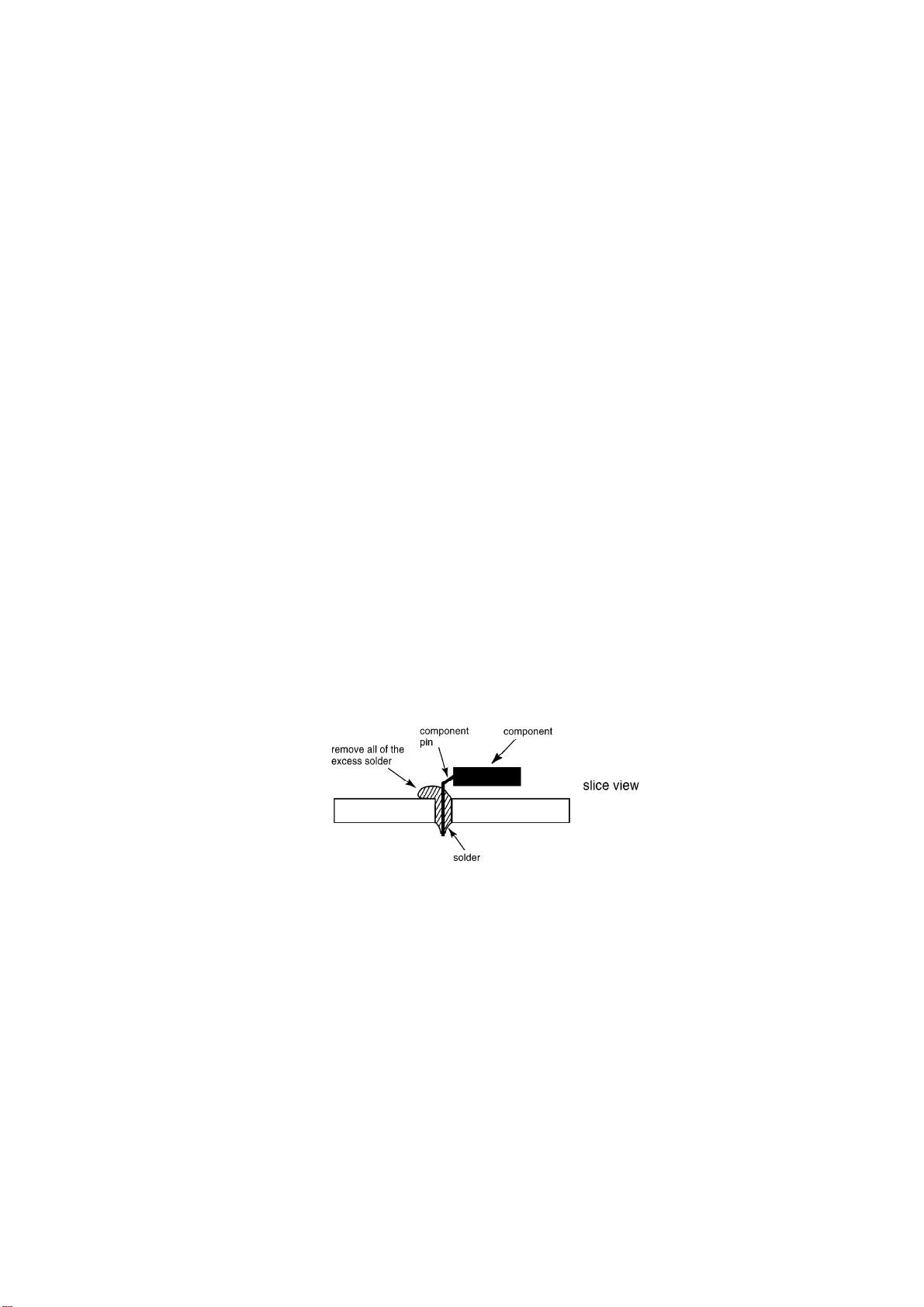
-When applying PbF solder to doublelayered boards, please check
the component side for excess which mayflow onto the opposite
side (See figure, below).
1.1. SUGGESTEDPbF SOLDER
There are several types of PbF solderavailable commercially. While this product is
manufacturedusing Tin, Silver, and Copper,(Sn+Ag+Cu), you canalsouse Tinand Copper, (Sn+
Cu), orTin, Zinc, and Bismuth, (Sn+Zn+Bi). Please check the manufacturer’s specific
instructions forthe melting points of theirproducts and anyprecautions forusing theirproduct
withothermaterials. The following leadfree (PbF) solderwire gauge are recommendedfor
service of this product: 0.3mm, 0.6mm and 1.0mm.
2