4
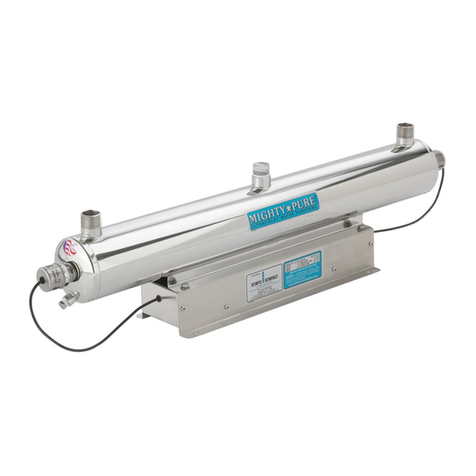
The unit's UV-C unit emits dangerous ultraviolet radiation. These rays are dangerous
to both eyes and skin. The UV-C lamp must never be kept lit without being fitted. The
lamp must never be lit so you can see it immediately, but if a check is to be made, it
must be done according to the instructions in the instructions. A pressure filter with
UV-C must always be placed at least 2 meters from the dam so that it cannot fall into
the water. The UV-C unit must not be switched on unless water is flowing through.
Therefore, always switch on the pump before the UV-C unit.
Never open the UV-C housing or its parts unless recommended directly in this manual.
Interventions intended to manipulate or change the filter's electronics pose a danger.
The components must be assembled exactly according to production, so as not to be
damaged or stop working completely. If such interventions are made in the electronics,
all warranty is void.
When the filter is set to the "FILTER" position, the cleaning outlet and possibly outlet
hose that is connected, be closed with the included gasket and shut-off valve. This is to
avoid leakage and emptying of the dam. The crane also functions as a safety measure
if the function knob is accidentally set to "CLEAN". Make sure that the function knob is
always in the "FILTER" position during normal operation when the pump is running.
The function knob should only be in the "CLEAN" position when the filter sponges are
cleaned with the handle function or backwashed.
Before starting the filter, always check the connections so that they are seated correctly.
The pressure filter must not be used with liquids other than water. The filter must be
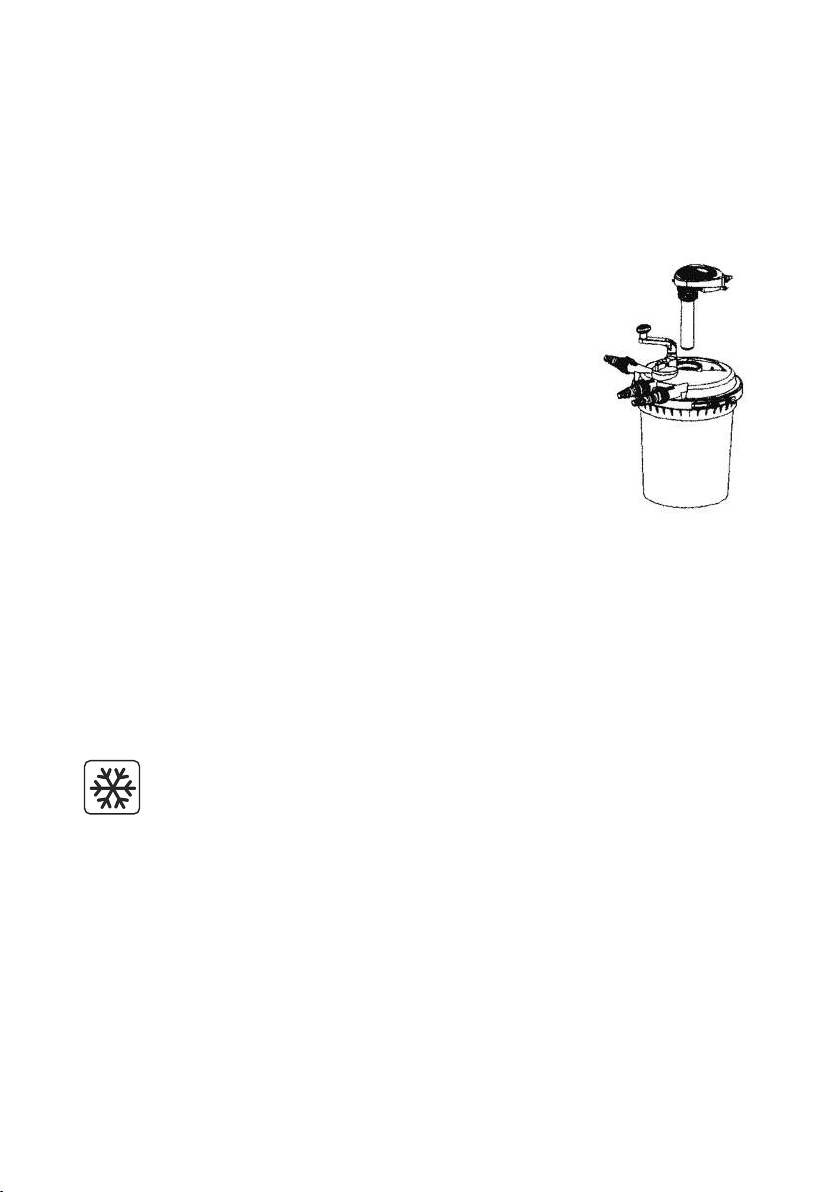
emptied and placed frost-free during the winter (winter storage page 8).
Always place the pressure filter so that it is not exposed to direct sunlight.
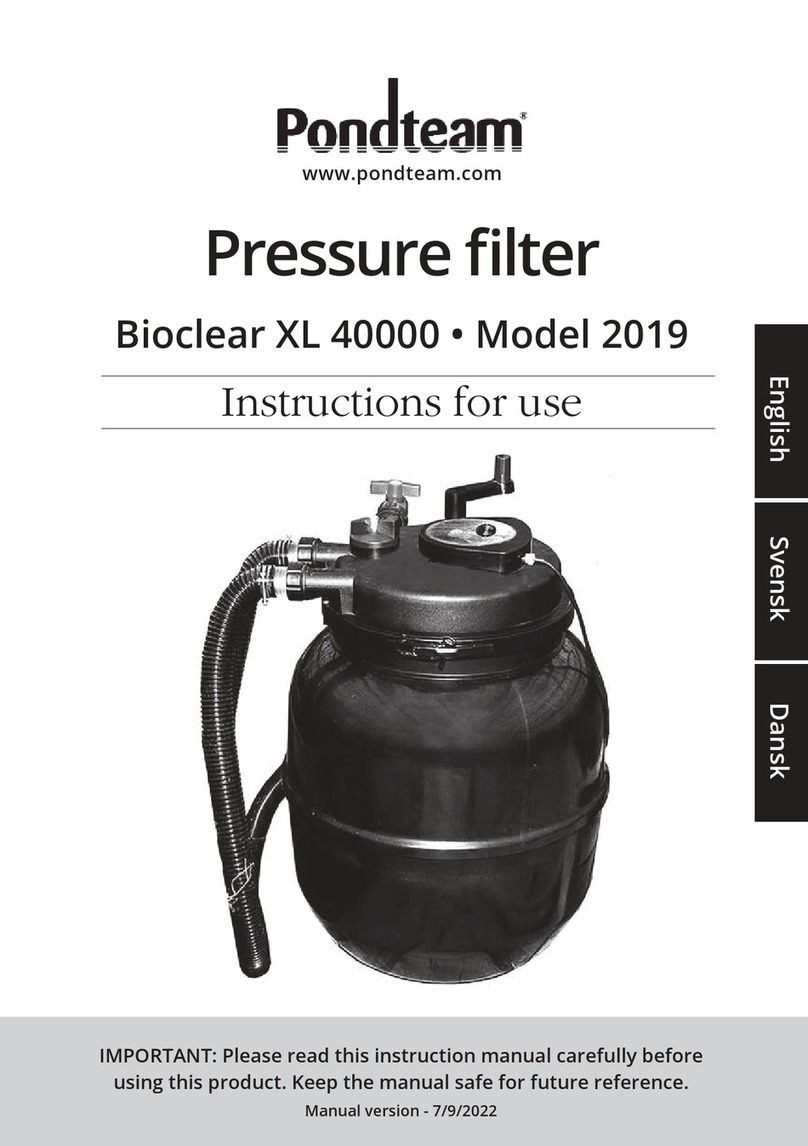
How the pressure lter works
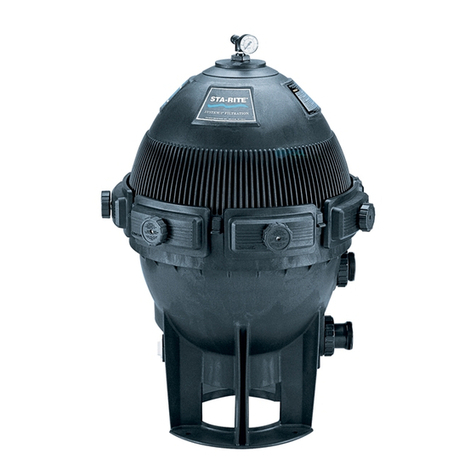
Pressure filter with built-in UV-C is a closed filter system for
mechanical and biological purification of garden ponds.
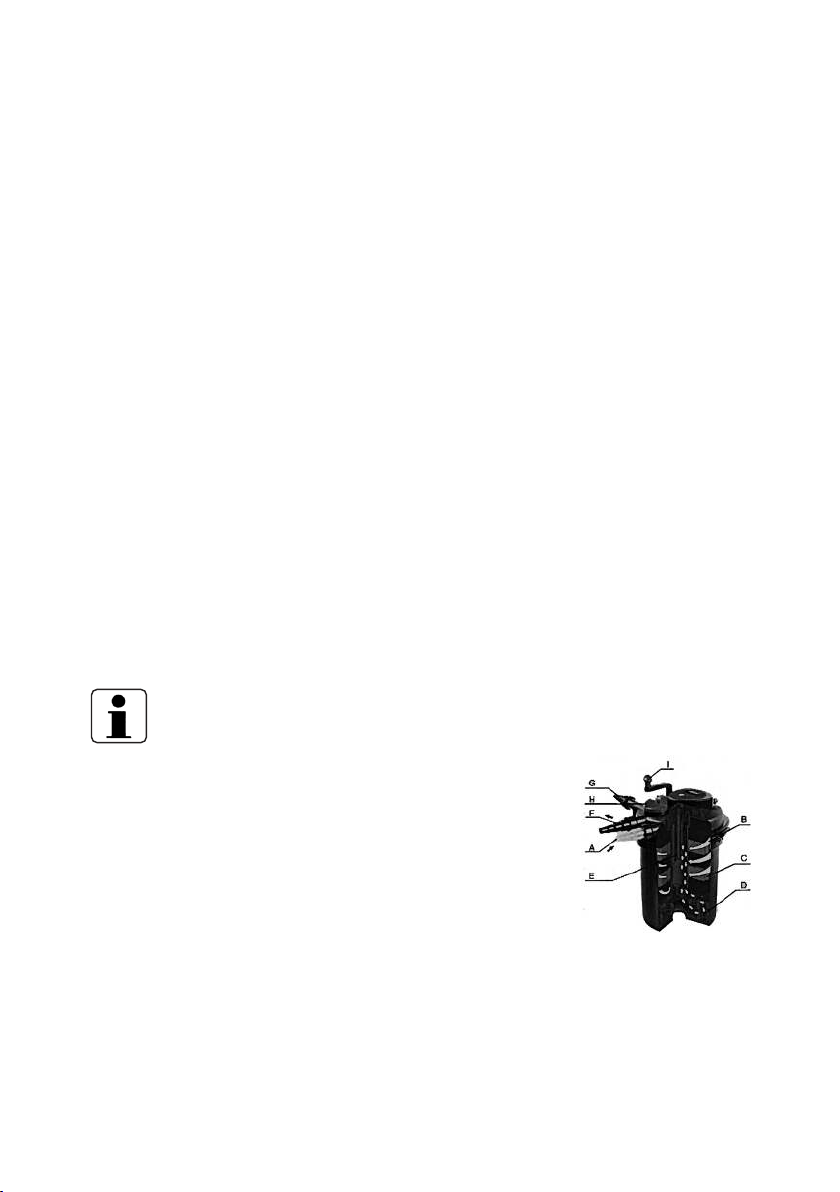
A: Water inlet
The pump must be connected to the inlet with a pressure hose.
B. Vortexsystem
Absorbed particles and sludge are precipitated by
centrifugal and gravity.
C: Mechanical lter
Dirt particles are caught by the filter sponges before
the water continues into the inner chamber of the filter.
D: Biological cleaning
The pores of the filter sponges create a large biological surface where the beneficial
decomposing bacteria take root. The yellow and blue filter sponges have different port
densities. It creates zones with different permeability and oxygen content for different
kinds of bacteria. Zones with a high permeability (blue sponges) are suitable for oxygen-
demanding bacteria that break down ammonia into nitrite via a decomposition process.
Zones with low flow (yellow sponges) are suitable for bacteria in an anaeotobic (oxygen-
poor) environment that reduces nitrate to nitrogen.