manuals.online logo
Brands
  1. Home
  2. •
  3. Brands
  4. •
  5. Postek
  6. •
  7. Printer
  8. •
  9. Postek PPLE Installation instructions

Postek PPLE Installation instructions

Other Postek Printer manuals

Postek TW Series User manual

Postek

Postek TW Series User manual

Postek G2000 User manual

Postek

Postek G2000 User manual

Postek V6 User manual

Postek

Postek V6 User manual

Popular Printer manuals by other brands

Evolis Elypso user guide

Evolis

Evolis Elypso user guide

Lexmark 522n - C Color Laser Printer Service manual

Lexmark

Lexmark 522n - C Color Laser Printer Service manual

Panduit COUGAR LS9Q Operator's manual

Panduit

Panduit COUGAR LS9Q Operator's manual

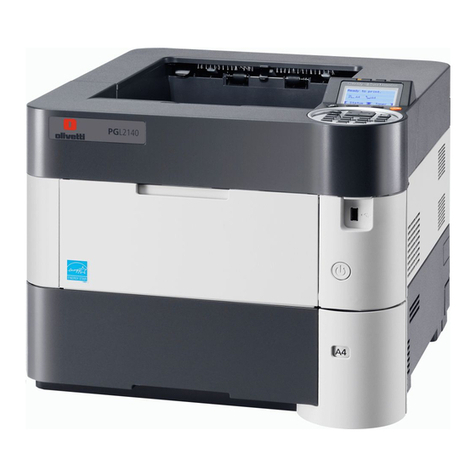
Olivetti PG L2140 Operation guide

Olivetti

Olivetti PG L2140 Operation guide

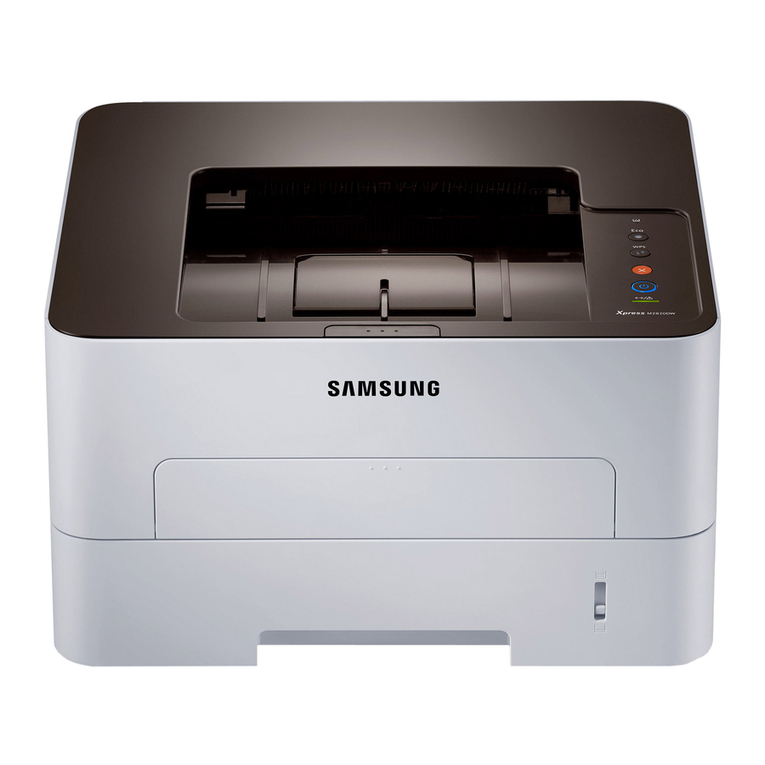
Samsung SL-M2820DW user manual

Samsung

Samsung SL-M2820DW user manual

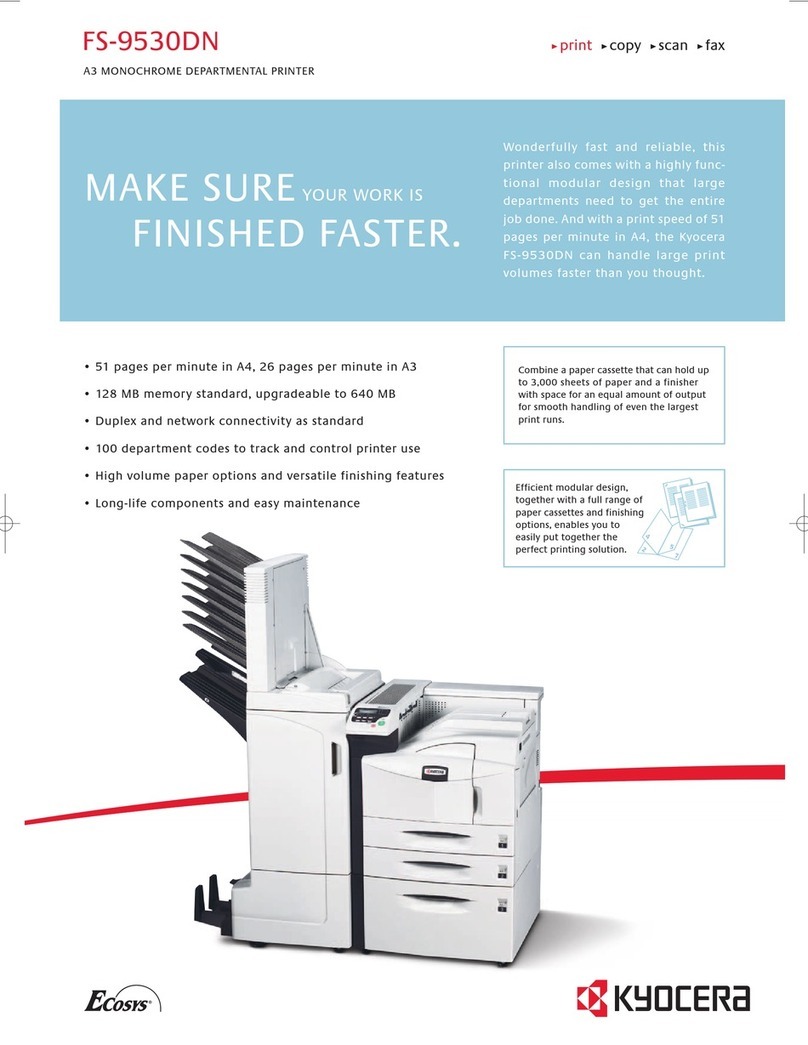
Kyocera FS-9530DN specification

Kyocera

Kyocera FS-9530DN specification

Canon LASER SHOT LBP-1210 Specifications

Canon

Canon LASER SHOT LBP-1210 Specifications

Canon PIXMA PRO-1 Series Getting started

Canon

Canon PIXMA PRO-1 Series Getting started

Canon LBP113w Getting started

Canon

Canon LBP113w Getting started

Lexmark Infoprint 1332 user manual

Lexmark

Lexmark Infoprint 1332 user manual

Epson M1120 user guide

Epson

Epson M1120 user guide

TransAct POSJET 1500 Spare parts

TransAct

TransAct POSJET 1500 Spare parts

Telpar MTP-1500 user manual

Telpar

Telpar MTP-1500 user manual

Star DP8340 SERIES user manual

Star

Star DP8340 SERIES user manual

MGI JETVARNISH 3DS user manual

MGI

MGI JETVARNISH 3DS user manual

Kyocera TASKalfa PA4500ci Operation guide

Kyocera

Kyocera TASKalfa PA4500ci Operation guide

Emaar EP-360 user manual

Emaar

Emaar EP-360 user manual

Fujitsu DL7400 user manual

Fujitsu

Fujitsu DL7400 user manual

manuals.online logo
manuals.online logoBrands
  • About & Mission
  • Contact us
  • Privacy Policy
  • Terms and Conditions

Copyright 2025 Manuals.Online. All Rights Reserved.

POSTEK PPLE COMMAND MANUAL
1
Introduction
Barcode label printer
POSTEK PPLE
Command Manual
V3.04
Postek Electronics Co., Ltd.
2015
POSTEK PPLE COMMAND MANUAL
2
Introduction
B1. Command Syntax
- Generally speaking, command names consist of 1 or 2 (case sensitive) alphanumeric characters.
- Some commands require one or more optional parameters and/or optional commands to perform special
functions.
-All command lines should be concluded by a “LF-0AH”or “CR-0DH+LF-0AH”via “enter”to a new line.
1. Basic command format.
Format 1: Commands without parameters
Syntax
Description
X<LF> or X <CR><LF>
Command with single alpha character
XX<LF> or XX<CR><LF>
Command with two alpha characters
Format 2: Commands with a fixed number of parameters
Syntax
Description
Xp1, p2, p3,…, pn <LF> or
Xp1, p2, p3,…, pn<CR><LF>
Command with a single leading alpha character
XXp1, p2, p3,…, pn <LF> or
XXp1, p2, p3,…, pn <CR><LF>
Command with two leading alpha characters
Format 3: Commands with optional parameters
X [p1, p2, p3…, pn] <LF>
2. String
In command sets, we can use data strings with the following characteristics:
Name: for graphics, soft fonts and forms.
Data: for fonts and bar code
The quotation mark character (“) designates the beginning and ending of a string.
The backslash (\) character designates that the following character(s) is literal and will be encoded into the
data field. Please refer to the following
Examples:
Character input
To Print
Input
“
\”
\
\\
0x00 –0x7F
\x00 - \x7F
Note: All commands and names are case sensitive.
POSTEK PPLE COMMAND MANUAL
3
Introduction
B2. Fonts
Based on their storage mediums, the command set has defined 3 kinds of Fonts.
- Internal Fonts
- Soft Fonts
- Externally Stored Fonts
1. Internal fonts
Five kinds of internal fonts reside within the printers ROM, and unlike soft fonts, they cannot be deleted. Each
font has a unique ID number.
ID #
Font Size
Comment
1
20 cpi, 6 pts
2
17 cpi,7 pts
3
14.5 cpi,10 pts
4
13 cpi,12 pts
5
5.6 cpi,24 pts
Uppercase characters only
2. Soft Fonts
Soft fonts can be downloaded from the host through application software. If the internal font cannot meet the
requirements, soft fonts are another possible solution.
Advantages of Soft Fonts:
- Saves memory space (graphics occupy more memory space)
- Better performance (may be called repeatedly)
- May carry out the automatic Increase/Decrease function
- Similar to internal fonts, they can be scaled, rotated or reversed
- May be saved into either RAM or Flash memory (permanent storage)
- May be deleted, when no longer required or the storage capacity is insufficient
Soft fonts may be downloaded, as per your individual needs. Each soft font has a unique ID number. And based
on the ID number, you may download, choose or delete the soft fonts as required. The soft font ID number may
range fromA to Z.
3. Externally Stored Fonts
The font board and/or font carrier are optional items. The ID number reserved for external storage fonts ranges
from 7 to 10. 7 and 8 are for Chinese character Fonts, 9 and 10 are for Korean Character Fonts.
1. Character Set
POSTEK PPLE COMMAND MANUAL
4
Introduction
The code table may be redefined as another kind of character set or code page.
8 Bit character
7 Bit character
Character Set
Code page 437
Code page 850
Code page 852
Code page 860
Code page 863
Code page 865
USASCII, British,
Danish, French,
German, Italian,
Spanish, Swedish,
Swiss
B3. Command Set
Command sets can be categorized into the following four groups:
-Setting commands
-Label formatting commands
-Interaction commands through the serial port.
-Object downloading commands
Command
Description
Command
Description
T
Print text
N
Clear image buffer
B
Print 1D barcode
O
Option select **
b
Print 2D barcode
W
Print label
C
Counter
WA
Print automatic
H
Print darkness setting
Q
Set label and media gap length
EI
Print soft font name
q
Set label width
EK
Delete soft font
R
Set reference point
ES
Download soft font
S
Set printing speed
FE
End form store
TD
Set date format
FI
Print form name
TS
Set RTC date & time
FK
Delete form
TT
Set time format
FR
Execute form
U
Print Configuration
FS
Store form
UN
Disable error reporting
GG
Print graphic information
US
Enable error reporting
GI
Print graphic list
V
Define variable
GK
Delete graphic
X
Box draw
GM
Store graphic
Z
Print direction
GW
Print binary graphic
ZS
Enable download to Flash memory
I
Character set Selection *
ZN
Enable download to RAM
JB
Disable back feed **
?
Download variable
JF
Enable back feed **
^ee
Immediate Error Report
LE
Line draw exclusive
^@
Reset the Printer **
LO
Line draw Black
LW
Line draw White
* Incomplete Commands
** Reserved Commands
POSTEK PPLE COMMAND MANUAL
5
B4. Command reference
This section contains a complete listing of all commands in alphabetical order.
The coordinates system for the barcode label printer is shown below:
Note: <LF> is decimal “10”of USASCII, or hexadecimal “OAH”, also called “enter”
Dots are equal to one inch divided by the maximum resolution of the printer.
For example: 1 inch = 25.4mm or 1000mil
203 DPI Printers: 1 dot = 25.4mm / 203 = 0.125mm (1dot = 1000mil / 203 = 5mil)
300 DPI printers: 1 dot = 25.4mm / 300 = 0.085mm (1dot = 1000mil / 300 = 3mil)
T command: Print a text string, counter and variable
Description: Prints a text string, variable or counter.
Syntax:
Tp1, p2, p3, p4, p5, p6, p7, “DATA”<LF>
Tp1, p2, p3, p4, p5, p6, p7, Cn<LF>
Tp1, p2, p3, p4, p5, p6, p7, Vn<LF>
Tp1, p2, p3, p4, p5, p6, p7, “DATA”Cn<LF>
Tp1, p2, p3, p4, p5, p6, p7, “DATA”Vn<LF>
Tp1, p2, p3, p4, p5, p6, p7, Combo <LF>
Parameter explanation:
P1: Horizontal start position (X) in dots.
Label
feed
direction
方向
(0,0)
X
Y
Print line
0dot
864/1248dot
POSTEK PPLE COMMAND MANUAL
6
B4. Command reference
P2: Vertical start position (Y) in dots.
P3: Select rotation. 0 - no rotation; 1 - rotate 90 degrees; 2 - rotate 180 degrees; 3 - rotate 270 degrees.
P4: Font selection. 1-5: Internal fonts; A-Z: downloaded soft fonts.
a: built-in 24*24 dot matrix Chinese fonts.
Value
Description
1
Western language font 1
2
Western language font 2
3
Western language font 3
4
Western language font 4
5
Western language font 5
a
24*24 dot matrix Chinese font
A~Z
Soft fonts
P5: Horizontal multiplier,expands the text horizontally. Value range: 1-24
P6: Vertical multiplier,expands the text vertically. Value range: 1-24
p7: Choosing ‘N’prints normal text (i.e. black characters on a white background)
Choosing ‘R’prints reversed text (i.e. white characters on a black background)
“DATA”: A fixed data field.
Cn: Defines a counter value. Please refer to the C order
Vn: A string of variable characters; please refer to V order.
Combo:A combined string of characters using “DATA”, Cn and/or Vn parameters
Example: “data1”CnVn”data2”.
A combined string cannot surpass a length of 100 characters.
Note: Use the syntax below when using a counter value and variable strings:
Vn [st, len] Cn [st, len]
Note: n is the ID of the counter value or variable string;
st indicates the starting position. Usually it is 0;
Len indicates the length of the sub-string.
Example:
N
T50, 30, 0, 1, 1, 1, N, “This is font 1.”
T50, 7, 0, 2, 1, 1, N, “This is font 2.”
T50, 110, 0, 3, 1, 1, N, “This is font 3.”
T50, 150, 0, 4, 1, 1, N, “This is font 4.”
T50, 200, 0, 5, 1, 1, R, “FONT 5”
W1
Printout:
POSTEK PPLE COMMAND MANUAL
7
B4. Command reference
B command: Print barcode
Description: Prints a specific barcode.
Syntax:
Bp1, p2, p3, p4, p5, p6, p7, p8, “DATA”<LF>
Bp1, p2, p3, p4, p5, p6, p7, p8, Cn<LF>
Bp1, p2, p3, p4, p5, p6, p7, p8, Vn <LF>
Bp1, p2, p3, p4, p5, p6, p7, p8, “DATA”Cn <LF>
Bp1, p2, p3, p4, p5, p6, p7, p8, “DATA”Vn<LF>
Bp1, p2, p3, p4, p5, p6, p7, Combo <LF>
Parameter explanation:
P1: Horizontal start position (X) in dots.
P2: Vertical start position (Y) in dots
P3: Select printing direction. 0 - no rotation; 1 - rotate 90°; 2 - rotate 180°; 3 - rotate 270°
P4: barcode selection.
P4 Value
Barcode type
0
Code 128 UCC (shipping container code)
1
Code 128 AUTO
1A
Code 128 subset A
1B
Code 128 subset B
1C
Code 128 subset C
1E
UCC/EAN
2
Interleaved 2 of 5
2C
Interleaved 2 of 5 with check sum digit
2D
Interleaved 2 of 5 with human readable check digit
2G
German Postcode
2M
Matrix 2 of 5
2U
UPC Interleaved 2 of 5
3
Code 3 of 9
3C
Code 3 of 9 with check sum digit
3E
Extended Code 3 of 9
3F
Extended Code 3 of 9 with checksum digit
9
Code93
E30
EAN-13
E32
EAN-13 2 digit add-on
E35
EAN-13 5 digit add-on
E80
EAN-8
E82
EAN-8 2 digit add-on
E-85
EAN-8 5 digit add-on
K
Codabar
P
Postnet
UA0
UPC-A
UA2
UPC-A 2 digit add-on
UA5
UPC-A 5 digit add-on
UE0
UPC-E
UE2
UPC-E 2 digit add-on
UE5
UPC-E 5 digit add-on
p5: Establishes the narrow bar width, in dots.
POSTEK PPLE COMMAND MANUAL
8
B4. Command reference
p6: Establishes the wide bar width, in dots
p7: Establishes the barcode height, in dots
P8: Choosing 'N' prints normal text (i.e. black characters on a white background)
Choosing 'R' prints reversed text (i.e. white characters on a black background)
“DATA”: A fixed data field.
Cn: Defines a counter value. Please refer to the C order
Vn: A string of variable characters. Please refer to V order.
Combo: A combined string; using “DATA”, Cn and/or Vn parameters
Example: “data1”CnVn”data2”.
A combined string cannot surpass a length of 100 characters.
Note: Use the syntax below when using a counter value and variable strings:
Vn [st, len] Cn [st, len]
Note: n is the ID of counter value or variable string;
st indicates the starting position. Usually it is 0;
Len indicates the length of the sub-string.
Example:
N
B20, 20, 0, E80, 3, 3, 41, B, “0123459”
B20, 120, 0, K, 3, 5, 61, B, “A0B1C2D3”
B190, 300, 2, 1, 2, 2, 51, B, “0123456789”
B20, 330, 0, UA0, 2, 2, 41, B, “13579024680”
W1
Printout:
b command: Prints 2D bar code
Description: Prints a specific 2D barcode.

POSTEK PPLE COMMAND MANUAL
9
B4. Command reference
Syntax:
bp1, p2, p3, [specific parameters and data]
Parameter Explanation:
p1: Horizontal start position (X) in dots.
p2: Vertical start position (Y) in dots.
p3: barcode selection.
p3 value
Bar Code type
P
PDF-417
M
Maxi Code
DX
DataMatrix ECC200
D0
DataMatrix ECC000
D1
DataMatrix ECC050
D2
DataMatrix ECC080
D3
DataMatrix ECC100
D4
DataMatrix ECC140
QR
QR
Maxi Code
1. UPS format data:
[Mode, 1], “Data”
Mode: Represents mode 2 - 4.
1: Printing in UPS format.
2. Data in other formats:
[Mode, 0, Cl, Co, Po], “Data”
Mode: Represents mode 2 - 4.
0: Print in formats other than UPS.
Cl: 3 digit numeric.
Co: 3 digit numeric.
Po: Suppose the current mode is 3, PostalCode should be Alphanumeric within 6 characters (A –Z, or 0
–9). If the current mode is 2, then PostalCode should be numeric with 9 digits.
Note: The control character RS is used for detaching the data stream formats, denoted by ‘_IE’, GS is used
for separating the data fields, denoted by ‘_1D’, EOT indicates the end of the data stream, denoted by
‘_04’. The maximum capacity of the data is 93 characters, 138 if all numeric characters.
UPS standard format is as follow:
Message Header: [)>RS
Transportation Data
Format Header: 01GSyy <yy denotes the number of the year>
Package n/x: GS<n/x>
Package Weight: GS<weight>
Address Validation: GS<validation>
Ship to StreetAddress: GS<street address>
POSTEK PPLE COMMAND MANUAL
10
B4. Command reference
Ship to City: GS<city>
Ship to State: GS<state>
RS: RS
End of Message: EOT
(* Mandatory Data for UPS must be assigned)
Tracking Number: *<tracking number>
SCAC: GS<SCAC>
UPS Shipper Number: GS<shipper number>
Julian Day of Pickup: GS<day of pickup>
Shipment ID Number: GS<shipment ID number>
Example:
N
b10, 10, M,4,0,1Z000A7&dajc_iaj-3=+~#^$5&#fe[{:'s;fk.,LAKFalkdgjoiu12815/w35::'./dfoi38&*^}!+
W1
Printout:
PDTF-417:
[w, v, s, c, p, x, y, r, l, t, o], “Data”
w: Maximum printing width in dots
v: Maximum printing height in dots
s: Error correction scope: 0-8
c: Data compression scope: 0 or 1. Default is 0.
x: Module width: 2-9 in dots
y: Module height: 4-99 in dots
r: Maximum row count.
l: Maximum column count.
t: Intercept symbol: 0 = no intercept 1 = intercept
o: Rotation: 0 - 0, 1- 90, 2 - 180, 3 - 270°.
Example:
N
b50, 30, P, 00, 00, s0, c0, x3, y6, r0, l0, t0, o0, “ABCabc12345”
W1