3
Care and Cleaning
Before initial use and after each subsequent use, remove the heat control and wash the skillet and cover in hot, soapy water. Rinse and
dry thoroughly. Clean the underside of the pan, as necessary.
The nonstick surface may be cleaned with a non-metal cleaning pad, such as Scotch-Brite* Multi-Purpose Scrub Sponge or Scotch-Brite*
Dobie* Cleaning Pad. Firm pressure can be applied, if necessary.
Do not use steel wool or abrasive kitchen cleaners. Do not immerse the Control Master®heat control in water or let it come in
contact with any liquid.
NOTICE: To maintain the appearance of the skillet, do not wash the skillet body in the dishwasher. The decorative trim and the bottom
of the skillet will likely discolor due to the caustic nature of the dishwasher detergent. In addition, a gray residue may form on the trim
and outside bottom of the skillet which can transfer to towels or to skin.
Soaking the skillet to loosen food residue is not necessary. However, if soaking the skillet is desired, do not soak for more than two hours.
Soaking it for more than two hours may damage the nonstick finish.
In time, the nonstick finish may darken over the heating element. To remove this discoloration, bring four cups of water to a boil in the
skillet and then reduce the heat to the simmer level (between WARM and 200º) by turning the heat control down until the pilot light goes
out. Slowly stir in four tablespoons of automatic dishwasher detergent. Simmer uncovered for 20 minutes. Drain the solution and wash
the skillet in warm, soapy water. Rinse and dry thoroughly. After treating the skillet, it is recommended that the cooking surface be wiped
lightly with vegetable oil before using.
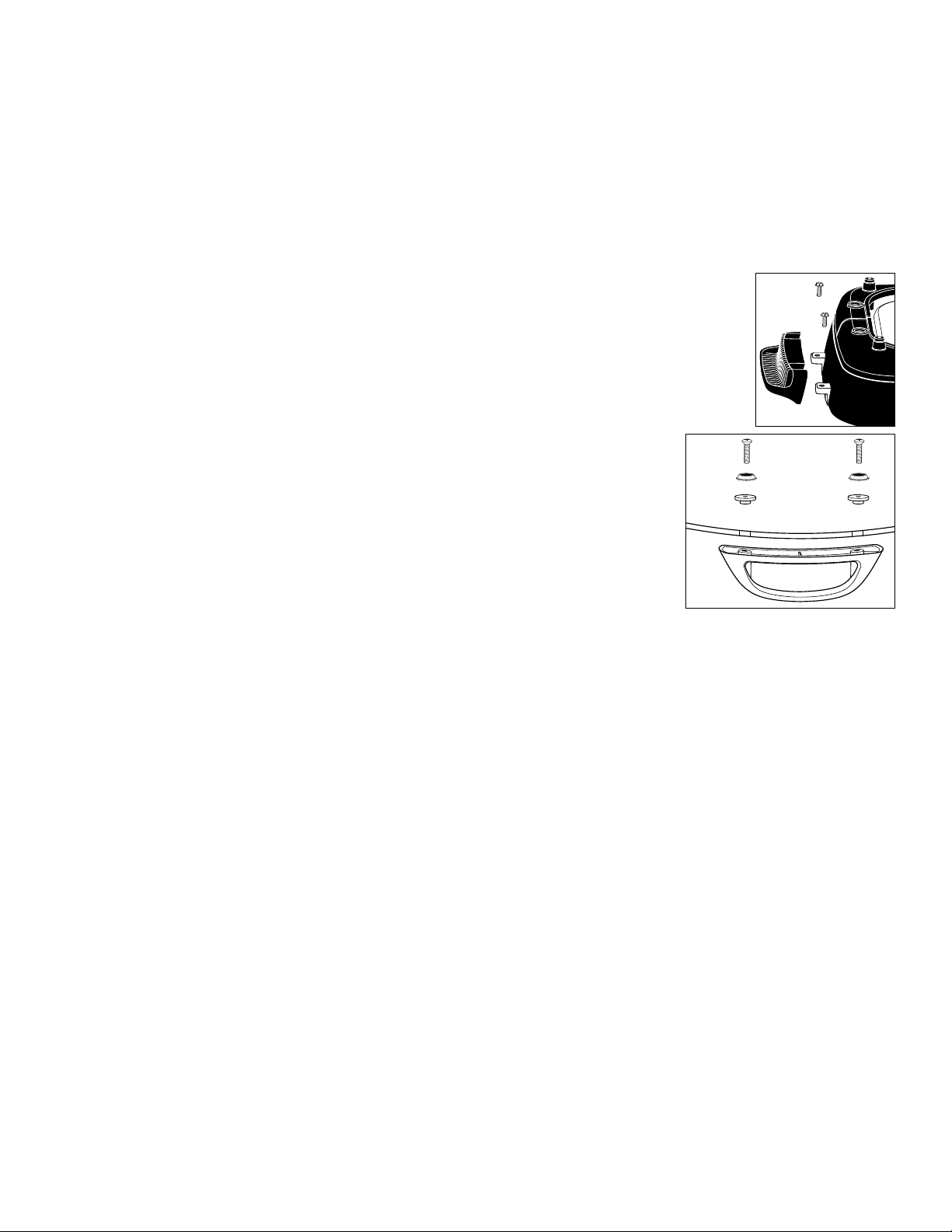
Periodically check the screws of the cover and skillet handles for looseness. Retighten, if necessary. NOTICE: Continuing to tighten, once
secure, can result in the stripping of screws or cracking of handles.
IMPORTANT: To ensure continued accuracy of the Control Master®heat control, avoid rough handling in use and storage.
Glass Cover Care and Use Instructions
CAUTION! Your glass cover may break for no apparent reason if you fail to follow these instructions. Broken glass can cause personal
injury or property damage.
Handle the cover carefully. Do not scrape or gouge the glass with hard or sharp utensils. Do not handle a hot cover with a wet towel
or place it on a cold or wet surface. Sudden, extreme changes in temperature may cause the glass to break. Do not use the cover if it is
chipped or cracked. Avoid rough handling in use and storage. Keep the cover clean. Allow the cover to cool before washing. This cover
is dishwasher safe. Do not use steel wool cleaning pads or abrasive powders which can scratch or weaken the glass. Nonabrasive pads
or powders may be used if necessary.
TEMPERATURE-TIMETABLE
Food Setting Cooking Time Simmering
Bacon 300°–325° 8–10 minutes In an electric skillet, foods simmer at some point
between WARM and 200°. Heat the skillet at 350°
until the food boils, place the cover on, and reduce
the heat by turning the heat control down until the
pilot light goes out. Add additional liquid during
cooking, if necessary, to obtain desired consistency.
Canadian bacon 275°–300° 3–4 minutes
Chicken 325°–350° 25–40 minutes
Eggs, fried 250°–275° 3–5 minutes
Eggs, scrambled 250°–275° 3–5 minutes
Fish 325°–375° 5–10 minutes
French toast 300°–325° 4–6 minutes
Ham, ½ inch thick 325°–350° 10–12 minutes Braising or Pot Roasting
Ham, ¾ inch thick 325°–350° 14–16 minutes This cooking method involves browning food,
usually meat or vegetables in oil, butter, margarine,
etc., and then simmering in a small amount of liquid
over low heat. To brown meat or vegetables, use a
temperature between 325° and 350°. After browning,
simmer as instructed above.
Hamburgers, ½ inch thick 325°–375° 8–12 minutes
Minute steak 375°–400° 4–5 minutes
Pancakes 350°–400° 2–3 minutes
Pork chops, ½ inch thick 325°–375° 15–20 minutes
Pork chops, ¾ inch thick 325°–375° 20–25 minutes
Potatoes, cottage fried 300°–350° 10–12 minutes
Sandwiches, grilled 300°–325° 5–10 minutes Holding Temperature
Sausage, link 300°–325° 20–30 minutes (after cooking period) WARM
Sausage, precooked 300°–350° 10–12 minutes
Steak, beef, 1 inch thick, rare 350°–400° 6–7 minutes
Steak, beef, 1 inch thick, medium 350°–400° 10–12 minutes
Steak, beef, 1½ inches thick, rare 350°–400° 8–10 minutes
Steak, beef, 1½ inches thick, medium 350°–400° 18–20 minutes
* Scotch-Brite and Dobie are trademarks of 3M Company. Presto is not affiliated with this company.