10 www. uantumrehab.com Vibe
II. SAFETY
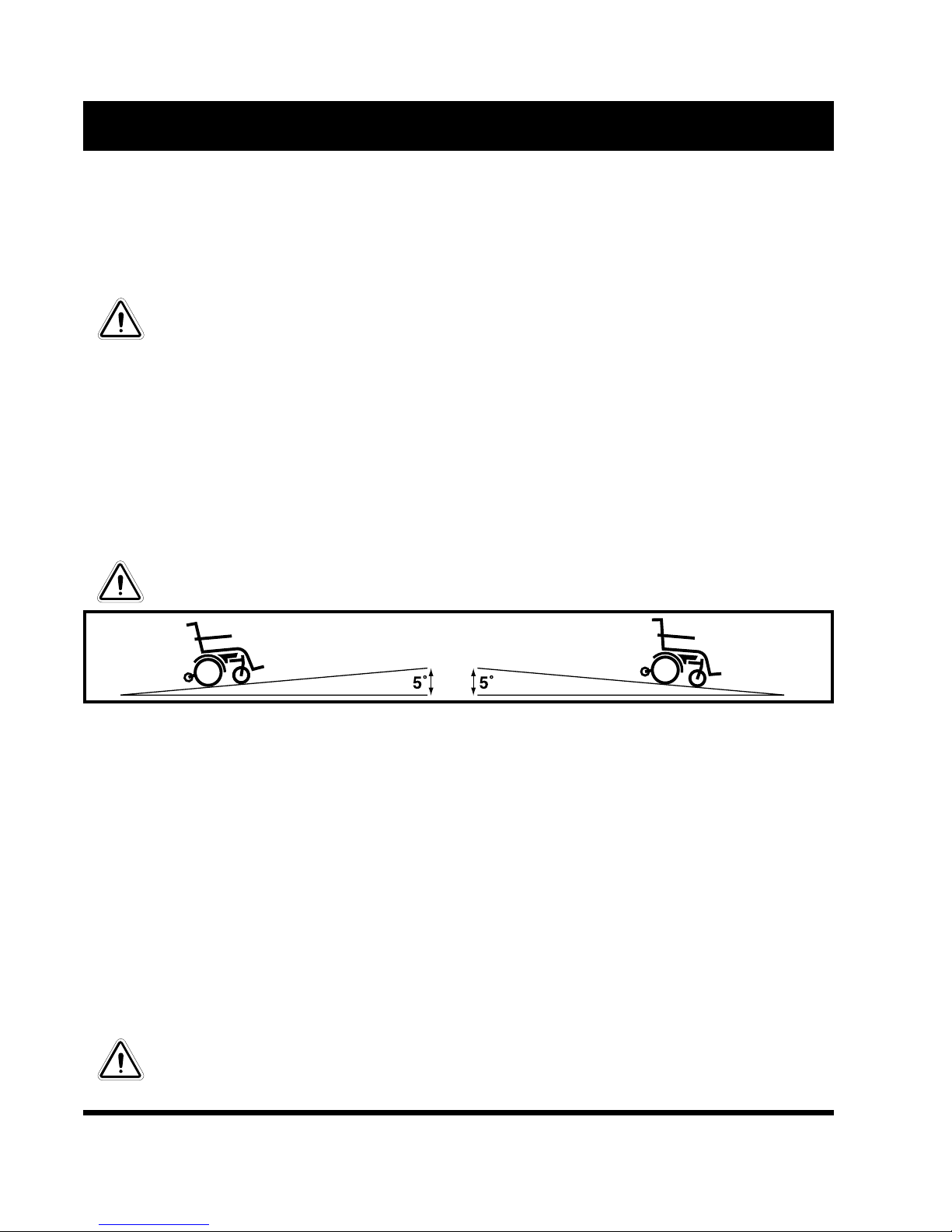
Figure 1. Maximum Safe Slope (Ascending and Descending)
WARNING! W en climbing an incline, do not zigzag or drive at an angle up t e face of t e incline.
Drive your power c air straig t up t e incline. T is greatly reduces t e possibility of a tip or a fall.
Always exercise extreme caution w en negotiating an incline.
WARNING! You s ould not travel up or down a potentially azardous incline (i.e., areas covered
wit snow, ice, cut grass, or wet leaves).
WARNING! W en on any sort of an incline or decline, never place t e power c air in freew eel
mode w ile seated on it or standing next to it. Doing so may result in personal injury and/or
damage to your power c air.
WARNING! Never travel down an incline backward. T is may result in personal injury.
WARNING! Even t oug your power c air is capable of climbing slopes greater t an t ose illustrated in
figure 1, do not, under any circumstances, exceed t e incline guidelines or any ot er specifications
presented in t is manual. Doing so could cause instability in your power c air, resulting in personal injury
and/or damage to your power c air.
In compliance with the Americans with Disabilities Act of 1990, all handicap public access ramps are required to have a
maximum slope of 5°. Therefore, Pride recommends that the maximum slope of an incline you attempt to safely ascend or
descend on your power chair does not exceed 5°. See figure 1.
WARNING! Any attempt to climb or descend a slope steeper t an 5° may put your power c air in
an unstable position and cause it to tip, resulting in personal injury.
Braking Information
Your power chair is equipped with two powerful brake systems:
1. Regenerative uses electricity to rapidly slow the vehicle when the oystick returns to the center/stop position.
2. Disc Park Brake activates mechanically after regenerative braking slows the vehicle to near stop, or when power is
removed from the system for any reason.
Cornering Information
While your power chair is equipped with caster wheels and anti-tip wheels, excessively high cornering speeds can still
create the possibility of tipping. Factors which affect the possibility of tipping include, but are not limited to: cornering
speed, steering angle (how sharply you are turning), uneven road surfaces, inclined road surfaces, riding from an area of
low traction to an area of high traction (such as passing from a grassy area to a paved area especially at high speed while
turning), and abrupt directional changes. High cornering speeds are not recommended. If you feel that you may tip over in
a corner, reduce your speed and steering angle (i.e., lessen the sharpness of the turn) to prevent your power chair
from tipping.
WARNING! W en cornering s arply, reduce your speed. T is greatly reduces t e possibility of a
tip or fall. To avoid personal injury and/or property damage, always exercise common sense w en
cornering.