6 - Installation and Commissioning
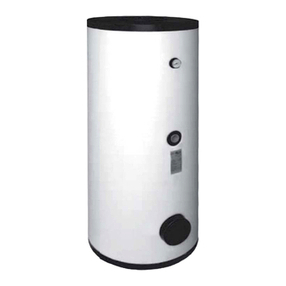
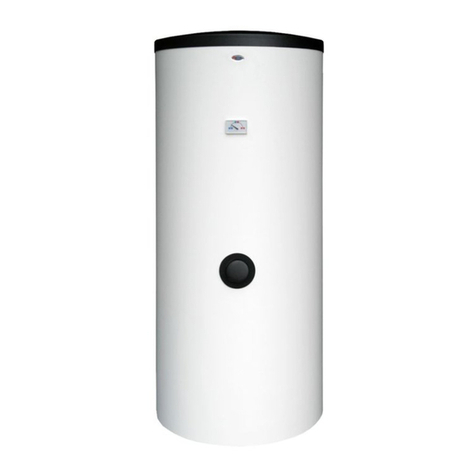
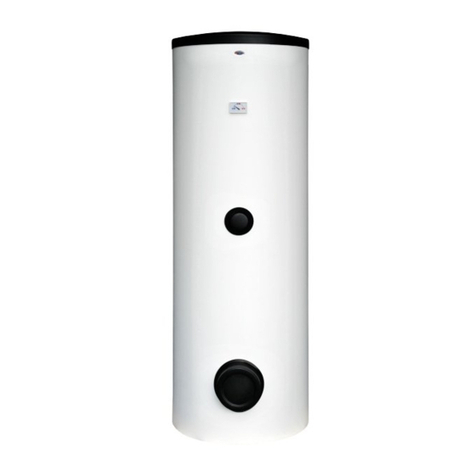
Installation must meet valid rules and may be done only by qualied staff. The tank shall be placed on the
oor, as close to the heat source as possible.
Defects caused by improper installation, use or handling are not covered by warranty.
6.1 - Connection to heat sources
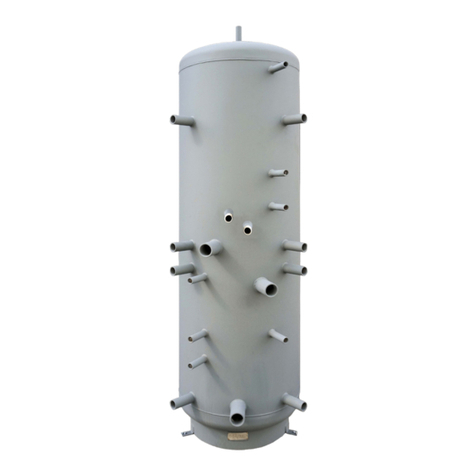
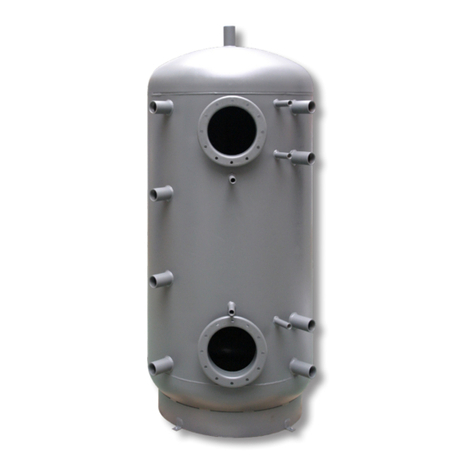
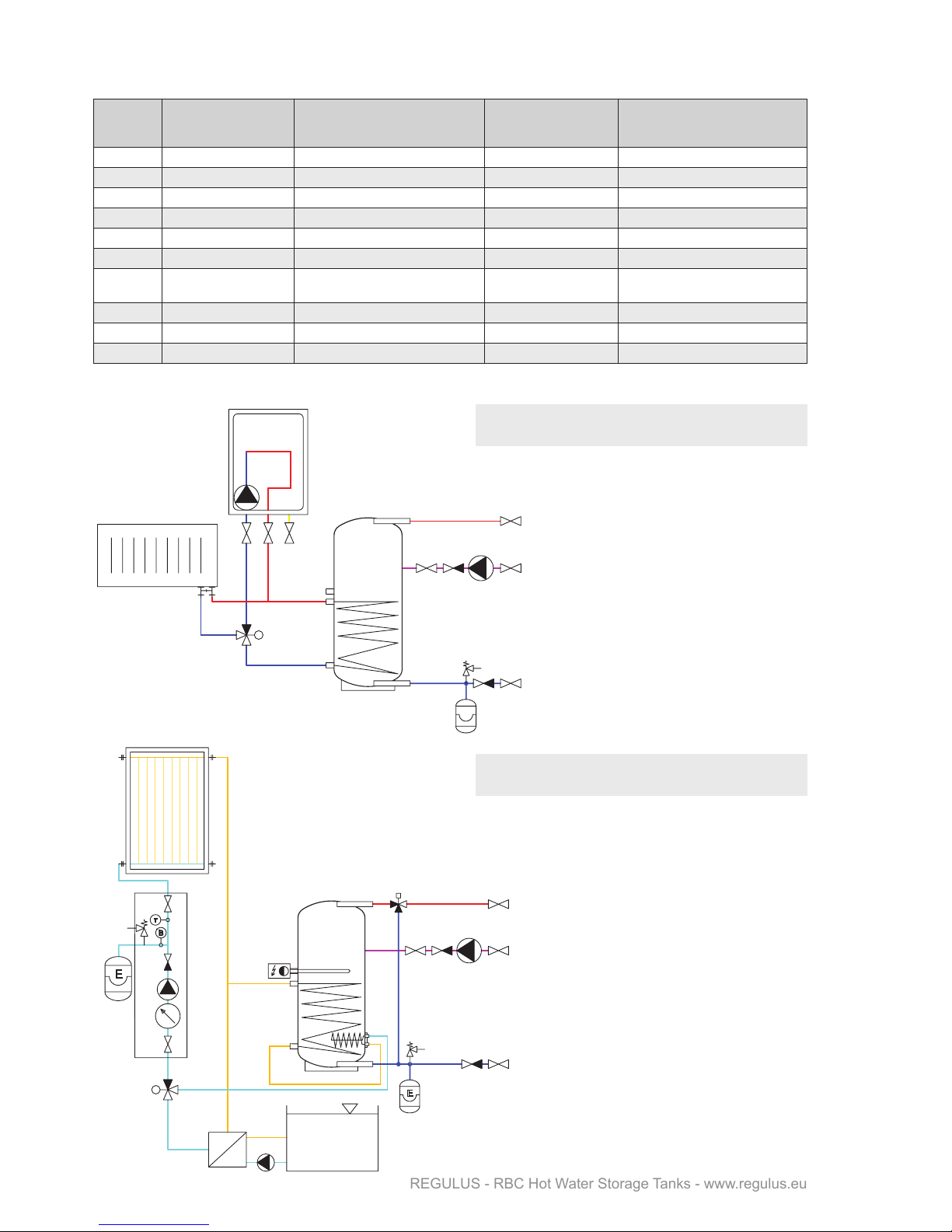
Connect heating circuits to the inlets to and outlets from heating coils. The heat source for the tank - an
enameled coil - connects with G 5/4” couplings.
6.2 - Connection to a solar thermal system
The tank can be used with a solar thermal system. In such a case, the inlet for hot heat-carrying liquid coming
from the solar thermal system shall be connected to the upper sleeve of the heating coil (G 5/4”) and the lower
outlet to the return piping to the solar thermal system. Insulate all the piping between the tank and the solar
thermal system.
6.3 - Heating element installation
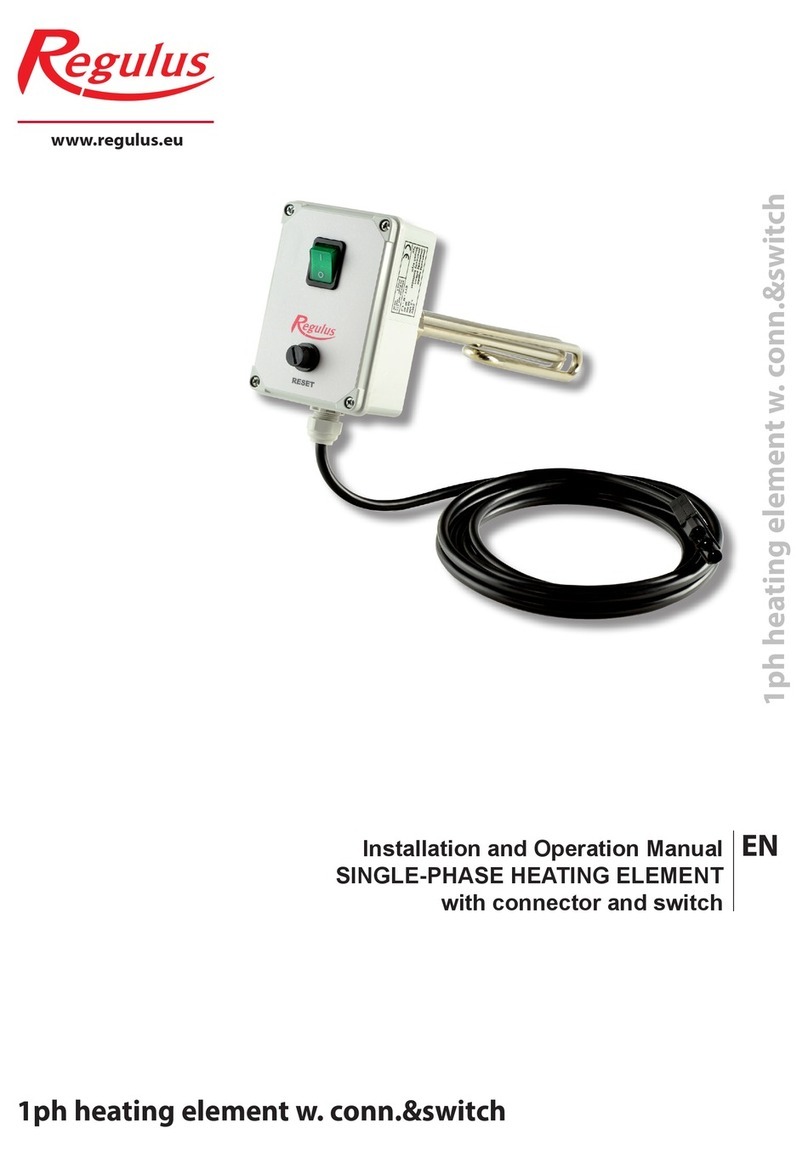
The G 6/4“ side sleeve is designed to accommodate an electric heating element. Heating elements of output
up to 12 kW can be used (depending on the tank diameter and element length), connected either directly to
the mains (thermostat-equipped elements), or to a heating system controller. The installation may be done by
qualied staff only.
Warning: Electric heating elements shall be protected by a safety thermostat.
6.4 - Connection to water mains
DHW piping shall be done according to valid rules.Threaded couplers are used to connect the tank to a cold
water inlet and hot water outlet. A 6bar safety valve shall be installed at the cold water inlet. Installation of
a reducing valve to the tank inlet is recommended. If the pressure from water mains exceeds 6 bar, a reducing
valve is necessary. In order to prevent water loss, an expansion tank should be installed at the cold water inlet
as well (8 l volume for RBC 200, 12 l volume for RBC 300 and 400, 18 l volume for RBC 500, 24 l volume for
RBC 750, 35 l volume for RBC 1000, 60 l volume for RBC 1500, 80 l volume for RBC 2000, 100 l volume for
RBC 2500 and 2×60 l volume for RBC 3000).
Should the water be too hard, install a water softener before the tank. In case the water contains mechanical
impurities, install a strainer.
A suitable thermostatic mixing valve should be installed at the hot-water outlet from the tank, preventing too
hot water from entering the taps.
Install a drain valve to the lowest point of the tank.
Complete DHW piping shall be properly insulated.
6.5 - Electronic anode rod installation
A so called electronic anode can be used instead of the magnesium one. Its principle advantage is that its
proper function is signaled by a control lamp while a magnesium anode rod needs to be taken out for check. In
such a case, just visual check of the electronic anode is sufcient.
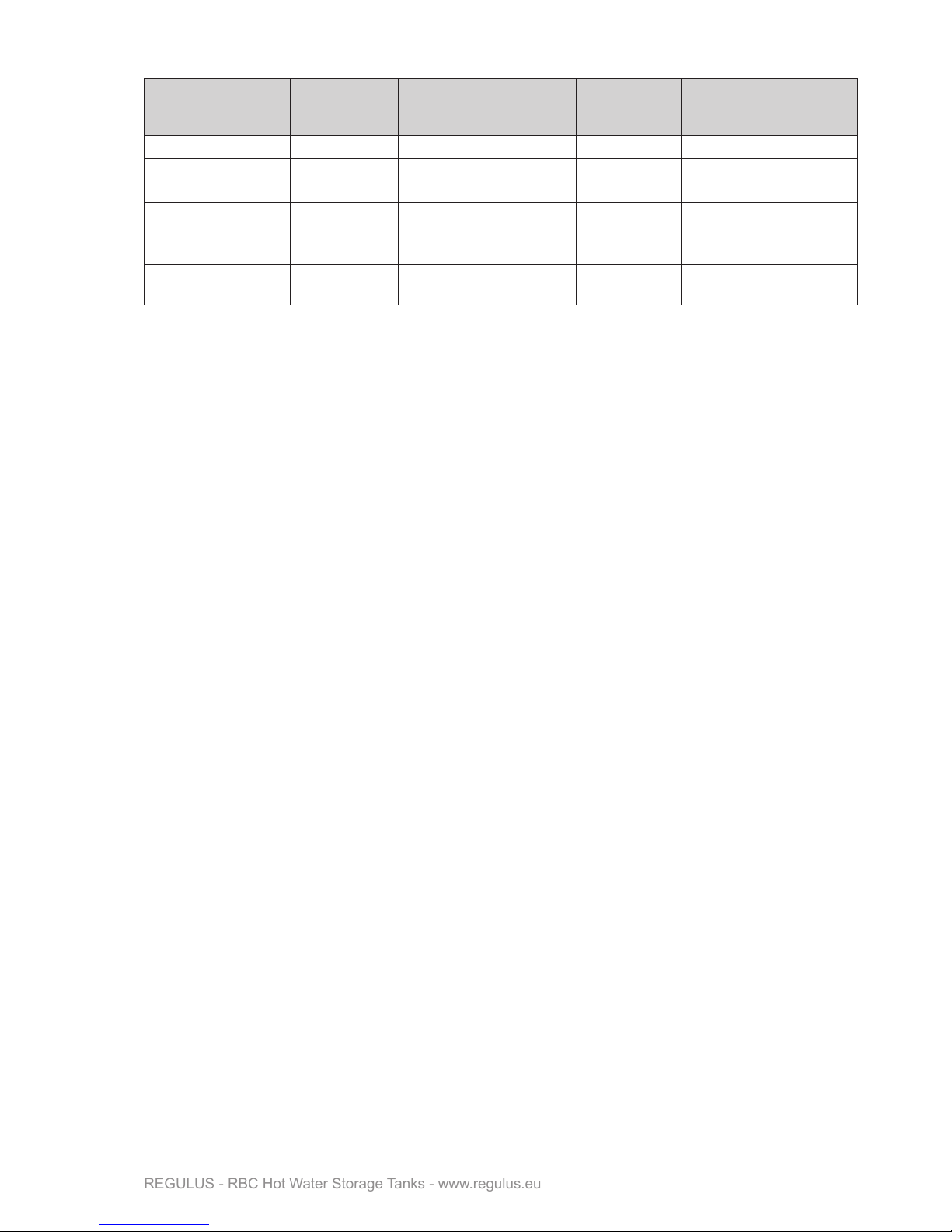
A space equal to the anode length (see the table below) is needed between the tank top and ceiling to install/
exchange the electronic anode rod. In order to protect the tank properly and meet its warranty conditions,
select an anode from the table below.