2
Table of Contents
Section Page Section Page
Introduction................................................. 4
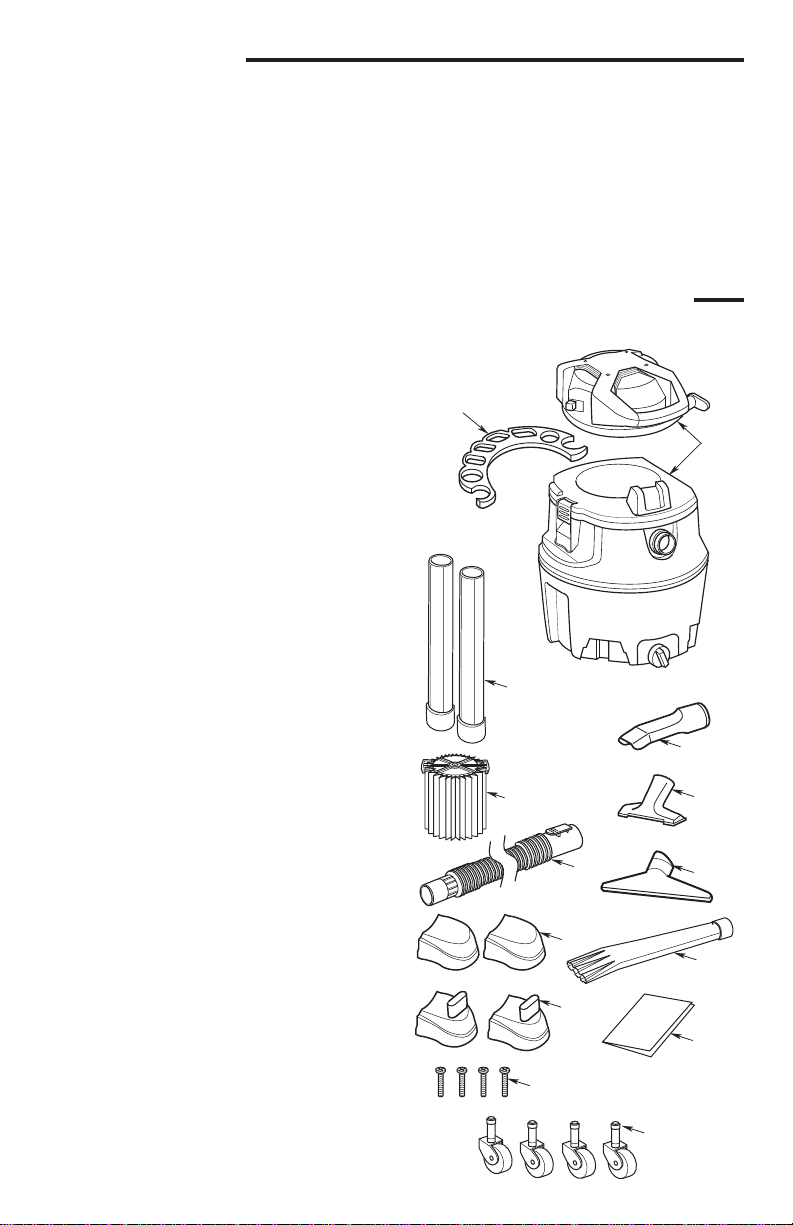
Unpacking and Checking
Carton Contents...................................... 4
Drum/Caster Foot Assembly....................... 5
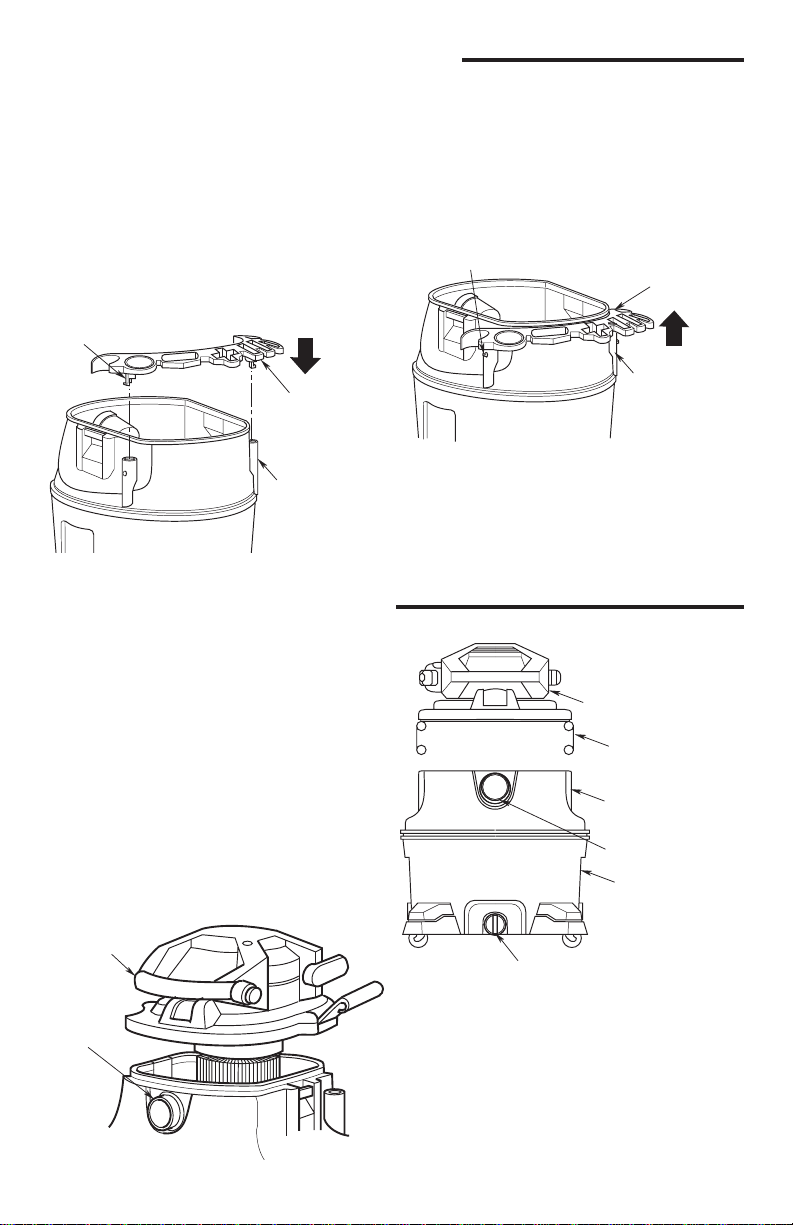
Accessory Storage Holder.......................... 6
Wet/Dry Vac Assembly ............................... 6
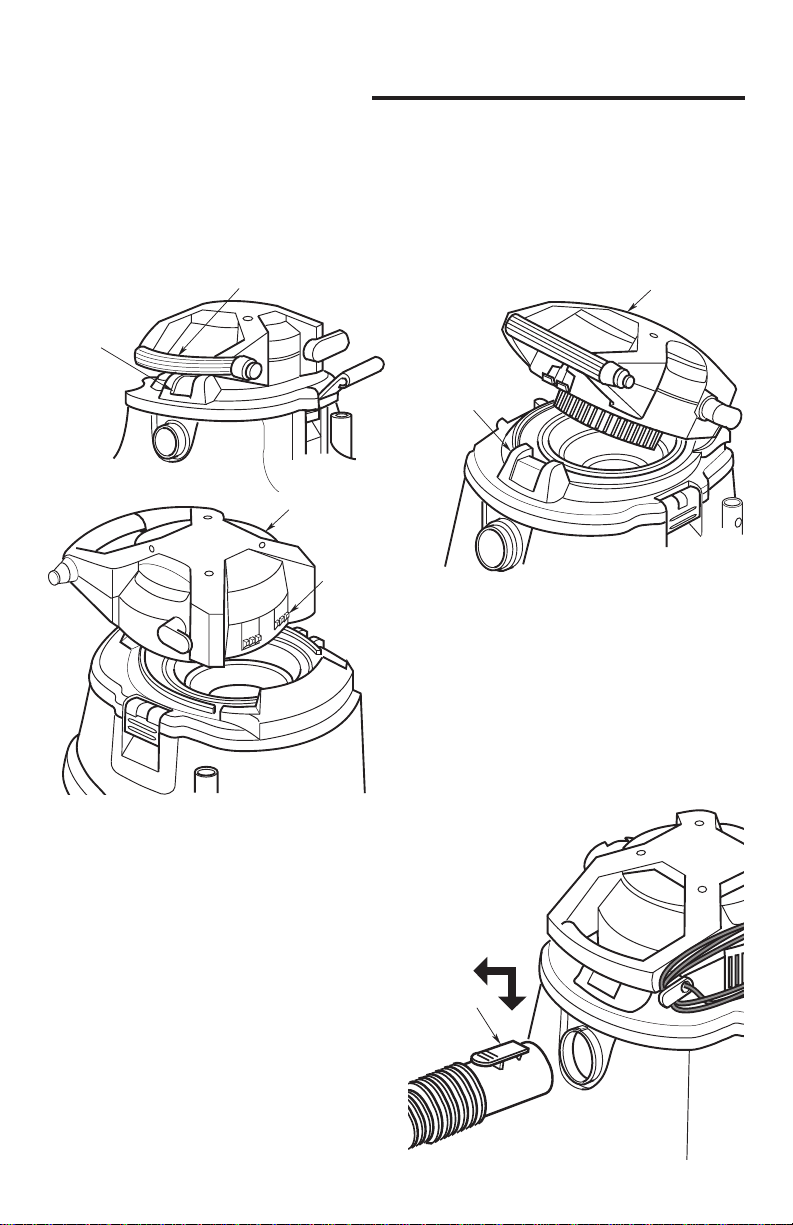
Positioning Detachable Blower
(Power Head Assembly) ......................... 7
Operation............................................... 8-11
Vacuuming Dry Materials........................ 9
Vacuuming Liquids.................................. 9
Emptying the Drum................................. 9
Blowing Feature.................................... 10
Using the Detachable Blower
for “Blowing”........................................11
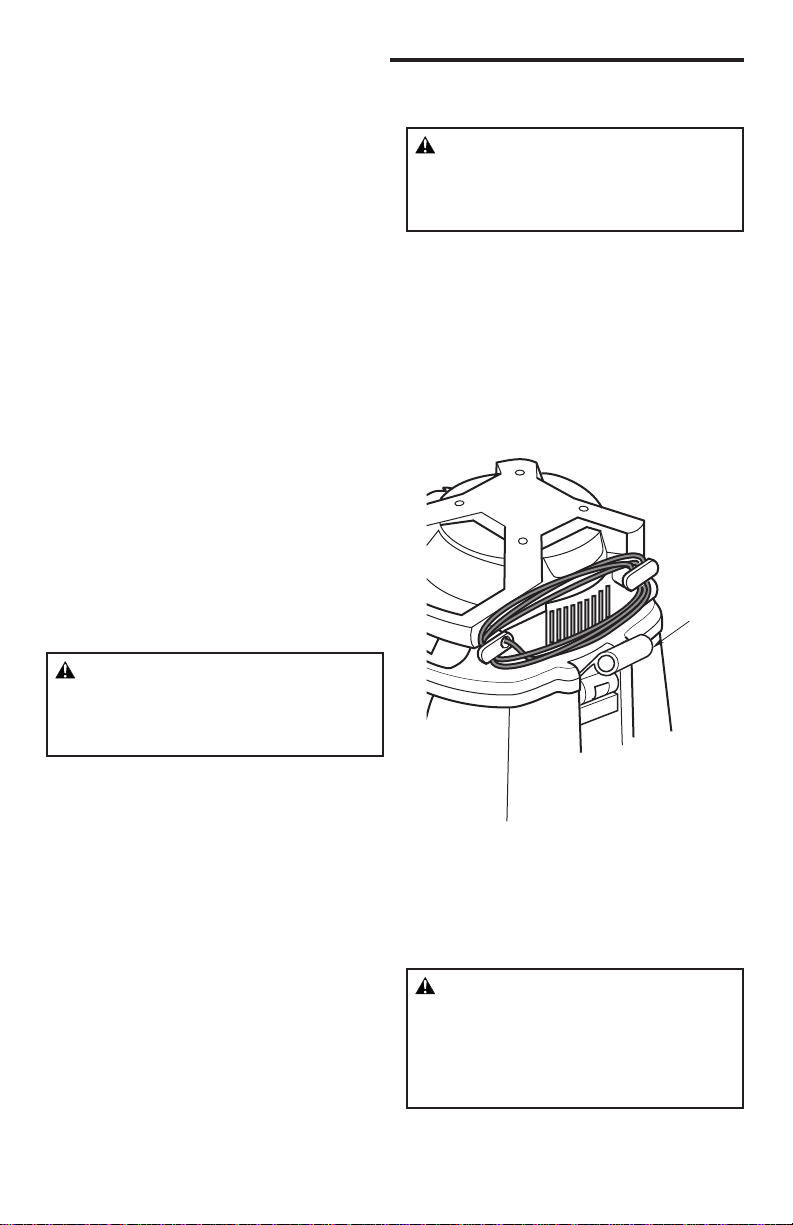
Accessory Storage ................................... 12
Maintenance........................................ 13-16
Removal and Installation
of the Qwik Lock Filter ......................... 14
Repair Parts......................................... 18-19
Servicing of Double-Insulated
Wet/Dry Vac.......................................... 19
IMPORTANT SAFETY INSTRUCTIONS
Safety is a combination of using common
sense, staying alert and knowing how your
Wet/Dry Vacuum Cleaner (“Vac”) works.
Safety Signal Words
DANGER: Indicates a hazardous
situation which, if not avoided, will result
in death or serious injury.
WARNING: Indicates a hazardous
situation which, if not avoided, could
result in death or serious injury.
CAUTION: Indicates a hazardous
situation which, if not avoided, could
result in minor or moderate injury.
When using your Vac, always follow basic
safety precautions including the following:
WARNING
– To reduce the risk of fire, electric shock,
or injury:
• Read and understand this manual and
all labels on the Wet/Dry Vac before
operating.
• Use only as described in this manual.
• Do not leave the Vac running while
unattended – you may fail to notice
important signs indicating abnormal
operation such as loss of suction, debris/
liquid exiting the exhaust or abnormal
motor noises. Immediately stop using the
Vac if you notice any of these signs.
• Do not leave the Vac plugged in when not
in use and before servicing.
• Sparks inside the motor can ignite
inammable fumes or dust. To reduce the
risk of re or explosion, do not vacuum or
use near inammable liquids, gases, or
dusts, such as petrol or other fuels, lighter
uid, cleaners, oil-based paints, natural
gas, coal dust, magnesium dust, grain
dust, aluminum dust, or gunpowder.
• Do not vacuum anything that is burning or
smoking, such as cigarettes, matches or
hot ashes.
• Do not vacuum plasterboard or plaster
dust, cold replace ash or other ne dusts
with the standard lter. These may pass
through the lter and be exhausted back
into the air. Use a ne dust lter instead.
• To reduce the risk of inhaling toxic fumes,
do not vacuum or use near toxic or
hazardous materials.
• To reduce the risk of electric shock, do not
expose the Vac to rain or allow liquid to
enter motor compartment. Store the Vac
indoors.
• This vacuum cleaner is not intended for
use by persons (including children) with
reduced physical, sensory or mental
capabilities, or lack of experience and
knowledge, unless they have been given
supervision or instruction concerning
use of the vacuum cleaner by a person
responsible for their safety.
• Do not allow the Vac to be used as a toy.
Close attention is necessary when used by
or near children.
• Do not use with a torn lter or without the
lter installed except when vacuuming
liquids as described in this manual. Dry
debris ingested by the impeller may
damage the motor or be exhausted into
the air.
• Turn off the Vac before unplugging.
• To reduce the risk of injury from accidental
start-up, unplug power cord before
changing or cleaning the lter.