4 | Low pressure indoor copper owner and installer guide: 20733-C 03-13
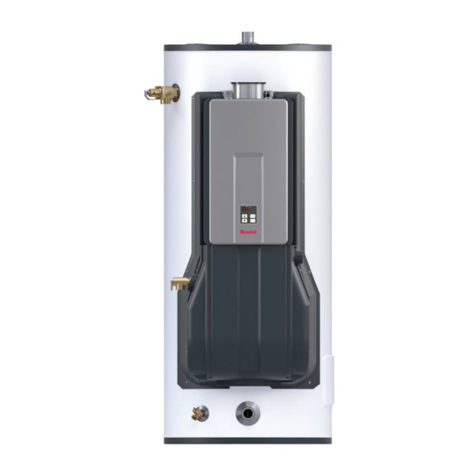
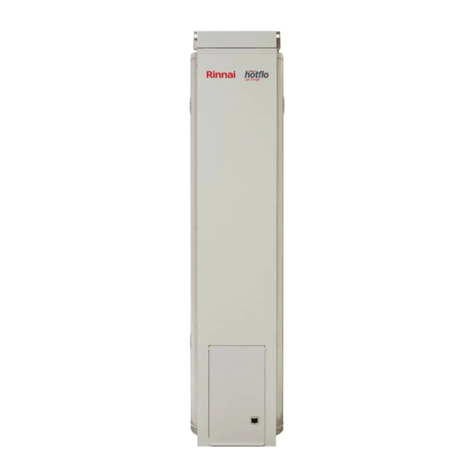
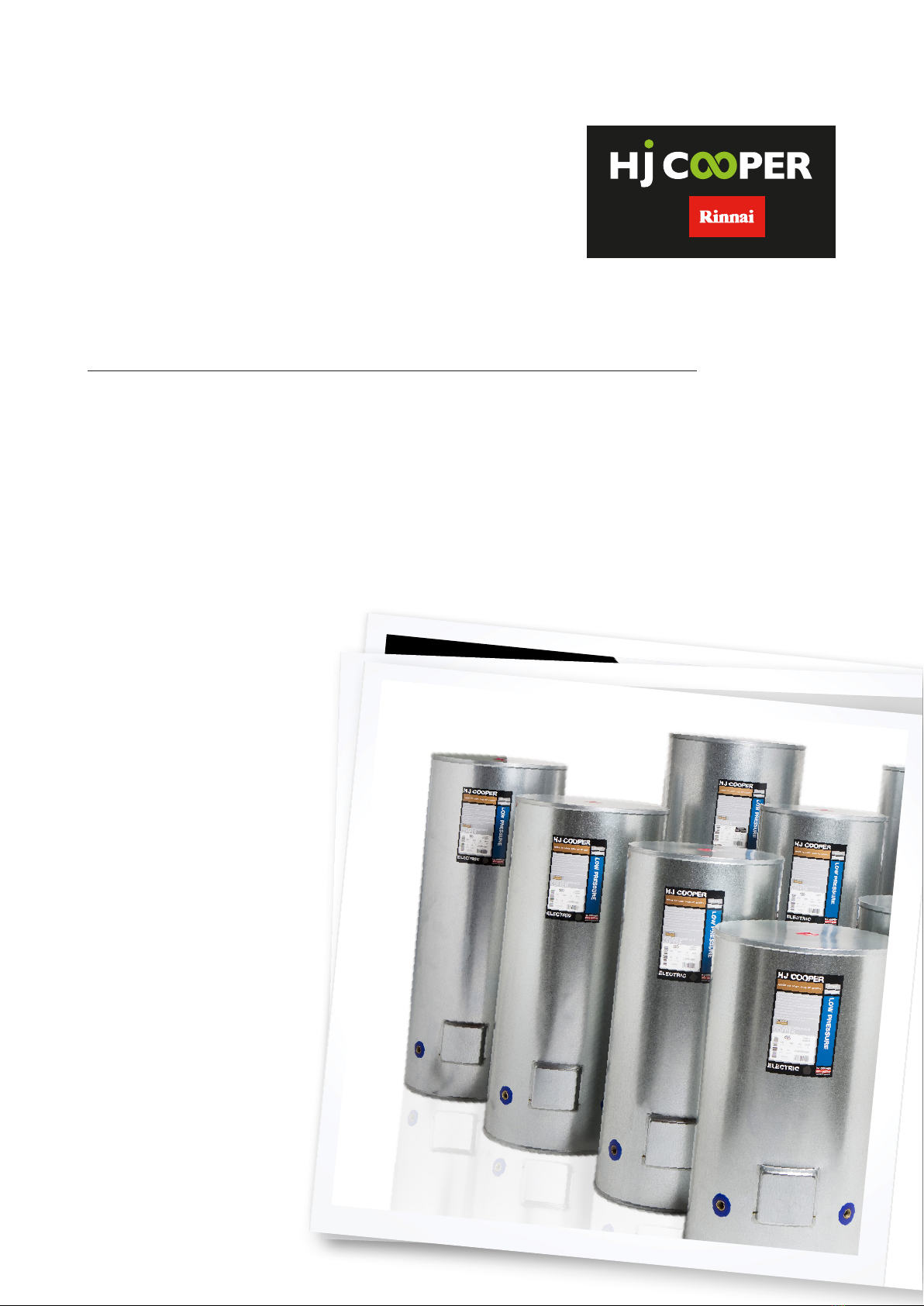
About your HJ Cooper tank
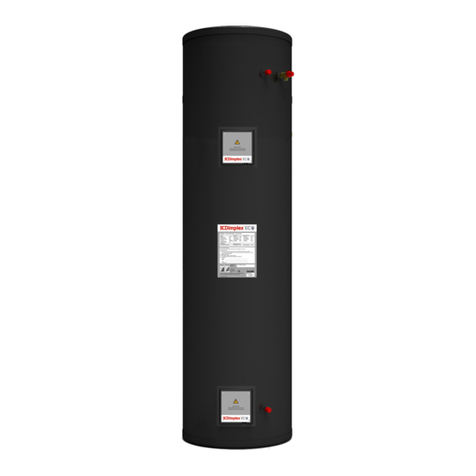
Water is heated by an electric element located at the base of the tank. The temperature
of the water is controlled by an automatic thermostat that is set by your installer, usually
to 65 °C to disinfect the water for legionella1.
1Legionella is a bacterium that can cause Legionnaires’ disease―a severe form of pneumonia
2 Not applicable for an open vented system connected to a wetback—this uses a standard thermostat (no over-temperature cut-out)
Your system must be installed,
commissioned, and serviced
by an authorised person
in accordance with all the
applicable statutory regulations.
Safety messages
• Element cover
Do not remove the element
cover as this will expose
230 V wiring and must
only be removed by an
authorised person.
• Damagedcomponents
If any component is
damaged, it must be
replaced by an authorised
person using Rinnai
replacement parts.
• Child supervision
Children should be
supervised to ensure they
do not play with any part of
the tank.
• Hot pipe work
Care should be taken not to
touch the pipe work from
the tank as this could be
very hot.
Safety devices
HJ Cooper tanks should have
the following safety devices
fitted.
• Valve vented systems
- pressure reducing valve
- pressure relief valve
- cold water expansion valve
- tempering valve
- energy cut-out thermostat
• Open vented systems
- pressure reducing valve
- tempering valve
-
energy cut-out thermostat2
- vent pipe
Do not operate the system
unless all the safety devices are
fitted and are in working order.
It is also important that you do
not tamper or remove any of
these devices.
Valve vented systems have an
energy cut-out thermostat. The
operation of this thermal cut-out
indicates a dangerous situation.
Do not reset the thermal cut-out
until the tank has been serviced
by an authorised person.
Tank thermostat setting
Your tank thermostat has been
set with a temperature setting
to disinfect the water for
legionella. Thermostat settings
must only be adjusted by an
electrician or other suitably
qualified tradesperson.
Draining and filling the system
This normally occurs during
installation or servicing and
must be carried out by an
authorised person.
Turning the tank on and off
If you plan to be away for only a
few nights we suggest you leave
the system switched on. If it is
necessary to switch off the tank
the switch is usually marked and
located in the meter box of the
dwelling. When switching back
on remember that the tank will
take time to heat back up again.
Problems with your tank?
Contact your local plumber. If
the tank is faulty and it is within
the warranty period they will
liaise with us for reimbursement
of costs.