7
INSTALLATION INSTRUCTIONS
Before installing the unit, consult an authority having jurisdiction
(such as your municipal building department, your fire department,
your fire prevention department...) for any local codes and whether
a permit is required. In the absence of local codes, refer to the CSA
B365 Installation Code for Solid Burning Appliances and Equipment
(Canada) or the ANSI NFPA 211 Standard for Chimneys, Fireplaces,
Vents and Solid Fuel-Burning Appliances (USA). CAUTION:
Modifications/alterations to the unit/installation without written
authorization from SUPREME FIREPLACES INC. are strictly
forbidden and will void the warranty. Refer to Section 1 for further
safety information. Carefully read the instructions below before
installing your Astra 32.
3.1 Location
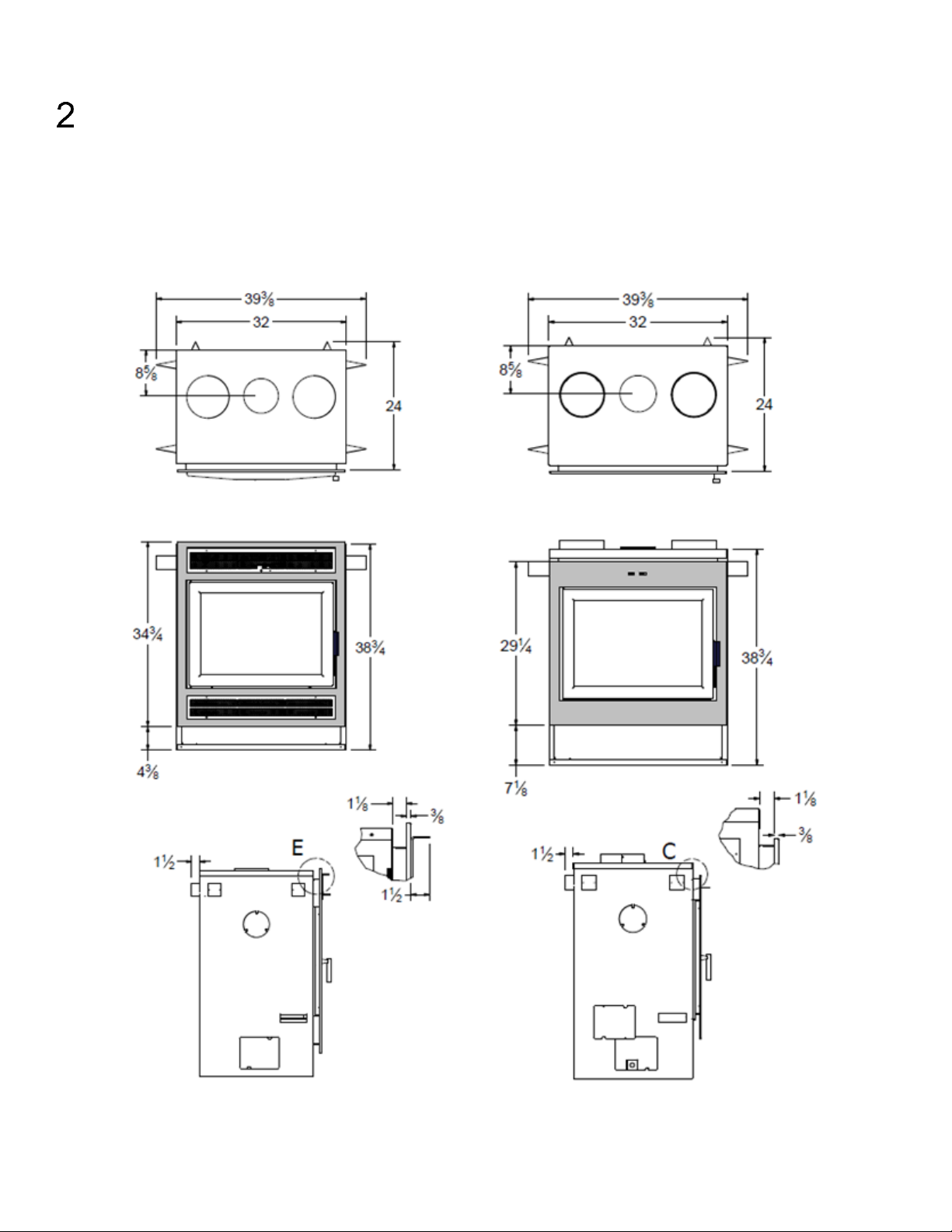
Determine the location of the Astra 32 by taking into consideration
the following criteria:
•The size of the room with respect to the heat output of the
fireplace.
•The proximity of windows, doors, and traffic flow.
•The necessary amount of space in front of the unit for the hearth
extension and mantel (Refer to Sections 3.6 and 3.8).
•The clearances to combustible materials.
•The passage of the chimney.
If possible, select a location for the fireplace that will minimize the
number of offsets in the chimney course. Offsets will reduce the draft,
complicate the chimney sweeper’s work, and increase installation
costs. Do not install an offset directly onto the unit/anchor plate.
Technical drawings outlining the chimney route should be prepared
prior to the installation. NOTE: The cutting of joists and rafters for
floor, ceiling, and roof chimney penetrations will affect the load
bearing capacities of the dwelling structure. To determine whether
additional support is required, consult your local building codes.
Improper cutting of chimney openings in the attic and roof will affect
the bearing and thermal insulating capacity, as well as the weather
tightness of the dwelling. Avoid incorrect workmanship by consulting
a professional engineer or a certified installer.
Through examination of the floor construction, ensure that the
fireplace and chimney system is resting on a surface capable of
withstanding its weight. Consult your building codes to see whether
additional structural supports are required (applicable for rare and
isolated cases).
Avoid having the chimney outlet near any obstructions (such as trees
and roof offsets) as the draft of the chimney may be affected by wind
turbulence. Ideally position the outlet of the chimney at the highest
area of the roof.
NOTE: It is strongly recommended to install a carbon monoxide
(CO) and smoke detector near the location of the unit.