HAZARDOUS AREA INSTALLATIONS SPECIFIC INFORMATION
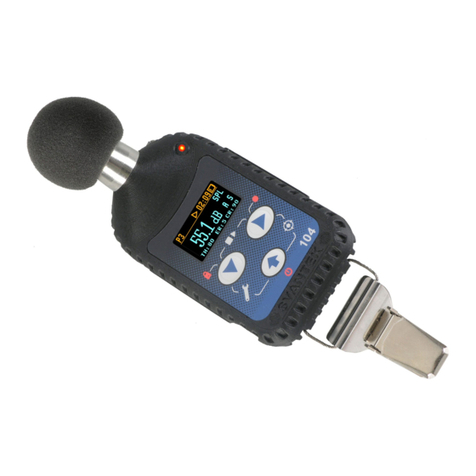
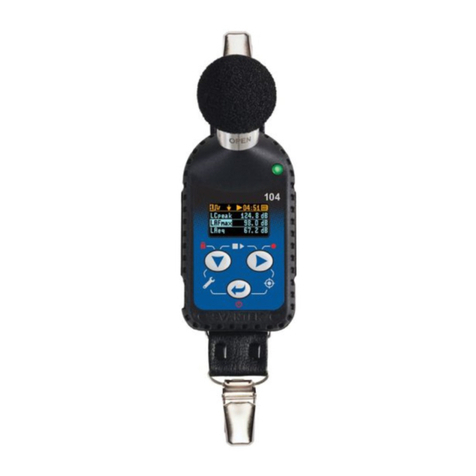
The SV 104BIS instrument is designed to be used in potentially explosive environments.
1. The equipment shall only be charged in non-hazardous area by manufacturer’s chargers
on a fireproof surface. The recommended charging docking stations: SB 104B-1 and SB 104B-5.
2. Whenever it is likely that the correct function or operating safety of the apparatus has been impaired,
it must be made inoperative and be secured against unintended operation.
3. The dosimeter should be mounted on conductive clothes and/or with direct contact with human
body. This assures a path to remove the accumulated electrostatic charge that could built-up on
dosimeter.
4. Some parts of the enclosure are non-conducting and may generate an ignition–capable level of
electrostatic charge under certain extreme conditions. The user should ensure that the equipment is
not installed or used in a location where it may be subjected to extreme conditions (such as high-
pressure steam), which might cause a build-up of electrostatic charge on non-conducting surfaces.
Additionally, cleaning of the equipment should be done only with a water dampened cloth.
5. Before entering hazardous zone check if there is no display shipping protection foil in place,
which is used on new products being sent to protect from accidental scratches. See Chapter 4.2.
6. The SV 104BIS instrument shall not be used in areas where a layer of coal dust may be deposited on
the enclosure.
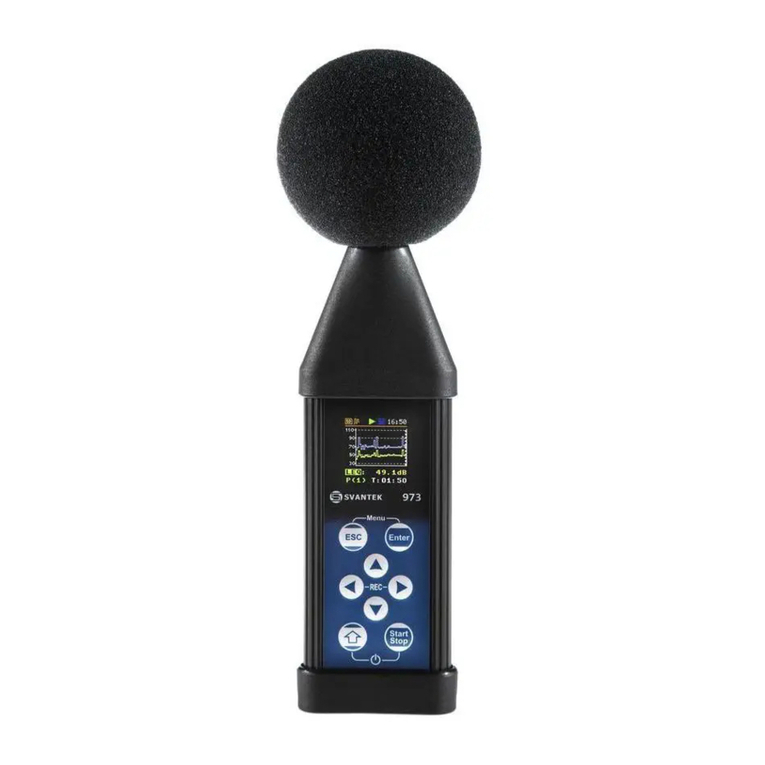
7. The microphone windscreen and microphone should not be removed in a hazardous area.
8. The equipment may be used with flammable gases and vapours with apparatus Groups IIA, IIB and
IIC and with temperature classes T1, T2, T3 and T4.
9. The equipment is only certified for use in ambient temperatures in the range -10°Cto +50°Cand
should not be used outside this range.
10. If the equipment is likely to come into contact with aggressive substances, then it is the responsibility
of the user to take suitable precautions that prevent it from being adversely affected, thus ensuring
that the type of protection is not compromised. Aggressive substances e.g. solvents may affect
polymeric materials.
11. Any substitution of components may impair intrinsic safety.
12. Repair and battery replacement of this equipment shall only be carried out by the manufacturer
or by authorized and trained service personnel. Any adjustment, maintenance and repair of the
open apparatus under voltage must be avoided as far as possible and, if unavoidable, must be carried
out only by trained service.
13. Calibration with non-intrinsically safe calibrators must only be performed on the SV 104BIS in
a non-hazardous atmosphere.
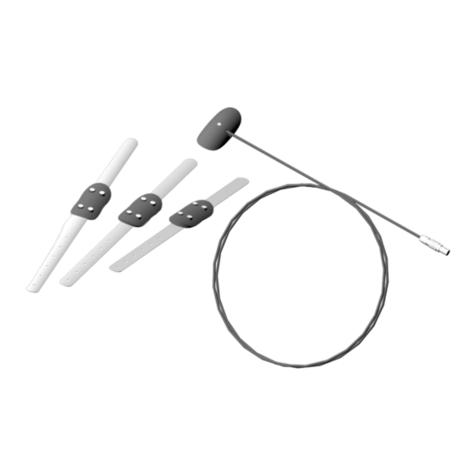
14. The SA 123IS and SA 124IS optional mounting accessories are made of natural leather, stainless
steel and EN 1149 antistatic velcro. Because the EN 1149 test may not reflect the conditions of end
use, those responsible for Health & Safety in the work environment should perform an in-use test
to determine if the additional accessories being considered as part of the total earthed system,
is compatible with their requirements for protection against electrostatic discharge.