manuals.online logo
Brands
  1. Home
  2. •
  3. Brands
  4. •
  5. Sven
  6. •
  7. Home Cinema Speakers
  8. •
  9. Sven HT-210 User manual

Sven HT-210 User manual

Other manuals for HT-210

1

Other Sven Home Cinema Speakers manuals

Sven MS-915 User manual

Sven

Sven MS-915 User manual

Sven IHOO T100U User manual

Sven

Sven IHOO T100U User manual

Sven HT-470 User manual

Sven

Sven HT-470 User manual

Sven HT-440 User manual

Sven

Sven HT-440 User manual

Sven IHOO MT 5.1R User manual

Sven

Sven IHOO MT 5.1R User manual

Sven c5-15 User manual

Sven

Sven c5-15 User manual

Sven HT-435R User manual

Sven

Sven HT-435R User manual

Sven HT-200 User manual

Sven

Sven HT-200 User manual

Sven HT-435D User manual

Sven

Sven HT-435D User manual

Sven IHOO MT 5.1P User manual

Sven

Sven IHOO MT 5.1P User manual

Popular Home Cinema Speakers manuals by other brands

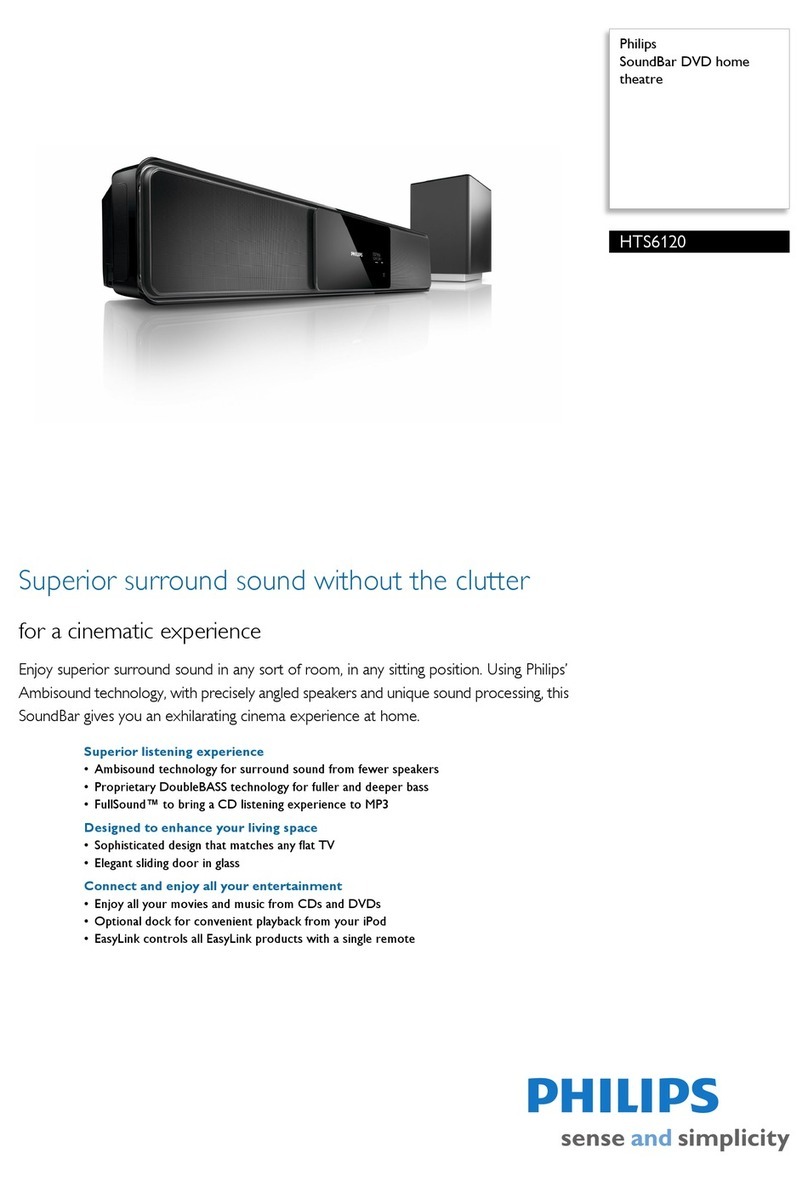
Philips HTS6120 Brochure & specs

Philips

Philips HTS6120 Brochure & specs

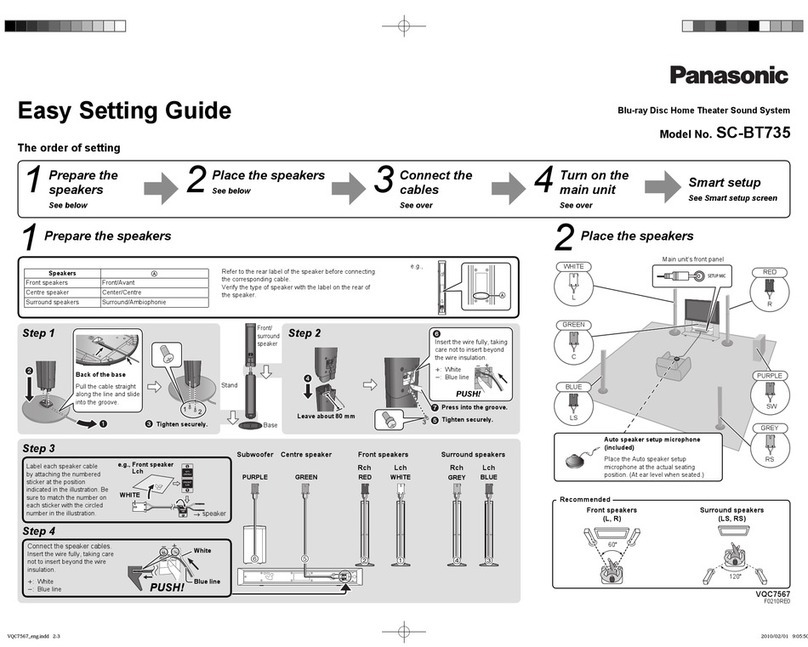
Panasonic SC-BT735 Easy setting guide

Panasonic

Panasonic SC-BT735 Easy setting guide

Insignia NS-HSB318 user guide

Insignia

Insignia NS-HSB318 user guide

JBL Reference 610 quick start guide

JBL

JBL Reference 610 quick start guide

Panasonic SC-HTB770 operating instructions

Panasonic

Panasonic SC-HTB770 operating instructions

MTX MTX HTB1-S owner's manual

MTX

MTX MTX HTB1-S owner's manual

Goodmans ASPECT user manual

Goodmans

Goodmans ASPECT user manual

JBL Simply Cinema SCS138 owner's guide

JBL

JBL Simply Cinema SCS138 owner's guide

Vizio S3821w-C0 quick start guide

Vizio

Vizio S3821w-C0 quick start guide

Philips Fidelio B5 quick start guide

Philips

Philips Fidelio B5 quick start guide

Pure Acoustics LORD-8 user guide

Pure Acoustics

Pure Acoustics LORD-8 user guide

MTX 525W owner's manual

MTX

MTX 525W owner's manual

Philips HTS6100/75 quick start guide

Philips

Philips HTS6100/75 quick start guide

DaytonAudio HTS-1200B user manual

DaytonAudio

DaytonAudio HTS-1200B user manual

Yamaha NS-P320 Service manual

Yamaha

Yamaha NS-P320 Service manual

LG HT503THW manual

LG

LG HT503THW manual

Yamaha NS-AP1405BL owner's manual

Yamaha

Yamaha NS-AP1405BL owner's manual

Philips HTS5530 quick start

Philips

Philips HTS5530 quick start

manuals.online logo
manuals.online logoBrands
  • About & Mission
  • Contact us
  • Privacy Policy
  • Terms and Conditions

Copyright 2025 Manuals.Online. All Rights Reserved.

www.sven.fi
OPERATION
MANUAL
5.1 Active Home Theater
Speaker System With Bluetooth
HT-210
ENG
1
Operation Manual HT-210
Technical support is on www.sven.fi.
Congratulations on your purchase of the Sven speaker system!
COPYRIGHT
© 2016. SVEN PTE. LTD. Version 1.0 (V 1.0).
This Manual and information contained in it are copyrighted. All rights reserved.
TRADEMARKS
All trademarks are the property of their legal holders.
NOTICE OF RESPONSIBILITY RESTRICTION
Despite the exerted efforts to make this Manual more exact, some discrepancies may occur. The
information in this Manual is given on «as is» terms. The author and the publisher do not bear any
liability to a person or an organization for loss or damage which has arisen from the information
contained in this Manual.
CONTENTS
1. BUYER RECOMMENDATIONS ..................................................
.............
2. PACKAGE CONTENTS.............................................................
............
3. SAFETY PRECAUTIONS ..................................................
...................
4. TECHNICAL DESCRIPTION ....................................................
................
5. PREPARATION AND OPERATION ..........................................
......................
6. TROUBLESHOOTING...............................................................
.................
7. TECHNICAL SPECIFICATIONS ....................................................
...........
1
2
2
2
5
11
12
1. BUYER RECOMMENDATIONS
• Unpack the device carefully. Make sure there are no accessories left in the box. Check up the
device for damage; if the product was damaged during transportation, address the firm which
carried out the delivery; if the product functions incorrectly, address the dealer at once.
• Check up the package contents and availability of the warranty card. Make sure the warranty card
has a shop stamp, a legible signature or the seller’s stamp and purchase date, and the number of
the wall mount corresponds to that in the warranty card. Remember: in case of warranty card loss
or discrepancy of numbers you forfeit the right for warranty repairs.
• Do not switch on the speaker system immediately after you bring it into a room from environment
with negative temperature! After unpacking, the speaker system should be kept in conditions of
room temperature for at least 4 hours.
• Before installing and using the speaker system, read this Manual carefully and keep it for future
reference.
• Shipping and transportation equipment is permitted only in the original container.
• Does not require special conditions for realization.
• Dispose of in accordance with regulations for the disposal of household and computer equip-
ment.
ENG
2
5.1 Active Home Theater
Speaker System With Bluetooth
2. PACKAGE CONTENTS
• Subwoofer – 1 pc
• Satellites – 5 pcs
• Remote control (RC) – 1 pc
• RC batteries (ААА type) – 2 pcs
• FM antenna – 1 pc
• Audio cables – 5 pcs
• Optical cable – 1 pc
• 2RCA to mini-jack (Ø 3.5 mm) signal cables – 3 pcs
• Satellite wall-mounting set – 6 pcs
• Operation manual – 1 pc
• Warranty card – 1 pc
3. SAFETY PRECAUTIONS
• To avoid electric shock, do not open the HTSS and do not perform repairs by yourself. Service
and repairs should be performed only by qualified specialists in an authorized service center. The
list of authorized service centers is available on www.sven.fi.
• Do not allow the circuit of wires (including the grounded ones) between the speakers, on the
power amplifier or the ground, for it causes damage to the power amplifier output stage.
• Do not touch the HTSS power cord plug pins for 2 seconds after unplugging it from the mains.
• Do not put foreign objects inside the holes of the HTSS.
• Protect the HTSS from high humidity, water and dust.
• Protect the HTSS from heating: do not locate it near heating appliances or expose to direct
sunlight.
• Do not place sources of open flame on or near the HTSS.
• Do not place the HTSS in poorly ventilated areas. Leave an air gap of 10 cm or more. When
operating the HTSS, do not put any devices on it, do not cover it with cloth or other objects
preventing it from cooling.
• Do not clean the HTSS with chemicals, use dry soft cloth only.
4. TECHNICAL DESCRIPTION
HT-210 5.1 Home Theater Speaker System (HTSS) is designed for creating a home theater. The
multichannel 5.1 amplifier built into the subwoofer enables to connect the HTSS to virtually any
audio source.
HTSS special features
• Speaker system is compatible with PCs, DVD/Media-players, mobile devices and other sound sources
• Built-in FM tuner
• Digital VFD display
• Possibility to transform stereo signal to 5.1
• Built-in clock
Caution! High voltage inside! To avoid the risk of electric shock
do not open or touch elements inside.
ENG
3
HT-210
Operation Manual
• Built-in player for audio les from
external storage devices
• Wireless signal transmission via
Bluetooth
• Optical and coaxial inputs
• Remote control
• Wall mountable satellites
• Wooden (MDF) subwoofer and
satellites cabinets
HTSS design
Subwoofer control panels
a VFD display
b IR: IR receiver
c SD/MMC CARD: slot for SD/MMC cards*
containing МР3 audio files
d USB: slot for a USB flash device* containing
МР3 audio files
e /СН-: previous track (pressed short
in the Player mode);
previous station** (pressed short in the Tuner
mode)
f /AUTO: play/pause (pressed short in the
Player mode);
start/stop auto scan (pressed short in the Tuner
mode);
g / СН+: next track (pressed short in the Player
mode);
next station** (pressed short in the Tuner mode)
h INPUT/VOLUME -/+: turn on (turn knob to the
right / left) and volume control;
turn off (long press);
input switching, OPT / COX / DVD / AUX / PC / FM /
MP3 / Bluetooth (short press)
i OPTICAL INPUT: connector for optical input
a b c d e
VOLUME
INPUT
CH-
IR
SD/MMC
CARD
USB
CH+AUTO
MHz
FM AUTO SLEEP
kHz
f g h
Fig. 1. Subwoofer control panel
Fig. 3. Subwoofer rear panel
OPTICAL INPUT
COAXIAL INPUT
L
L
FL
CEN
SL
R
R
SW
FR
SR
FR
FL
CEN
SR
SL
+
-
RADIO A NT
PC
AU X
DV D
AUDIO IN PUT
AUDIO INPUT
AUDIO OU TPUT
AC I NP UT
PO WE R SWITC H
ON
OF F
RA DIO A NT
FM
ANT
AC IN: 230V 50Hz
i
j
k
l
m
n
p
q
o
ENG
4
5.1 Active Home Theater
Speaker System With Bluetooth
j COAXIAL INPUT: coaxial input jacks
k FM ANT: FM antenna input jack
l PC: PC input jacks
m AUX: line input jacks
n DVD: DVD input jacks
o ON/OFF: power switch
p AUDIO OUTPUT: satellite output terminals
q Power cord
Remote control
a INPUT: the MSS mode selection (OPT/COX/DVD/AUX/
PC/FM/MP3/Bluetooth)
b SET: time setting (in the ST-BY mode)
c TUNE+/-: manual band scanning buttons (in the Tuner mode)
d CH-/ /CH+/ : previous/next track (in the Player mode)
previous/next station* (in the Tuner mode)
e AUTO/ : start auto scanning and memorizing stations in FM
band (in the Tuner mode);
play/pause (pressed short in the Player mode)
f FL-/+: left front channel volume up/down
g SW+/-: subwoofer volume up/down
h SL-/+: left rear channel volume up/down
i 0-9: numeric pad
j PRO: on/off button of the conversion mode of a stereo signal to 5.1
k BASS+/-: bass level up/down
l CLOCK: show current time
m : HTSS on/off button
n SLEEP: Sleep mode switch-on time setting
o MUTE: sound on/off
p SAVE: memorize selected frequency button (in the Tuner mode)
q FR-/+: right front channel volume up/down
r CEN-/+: center channel volume up/down
s VOL+/-: right rear channel volume up/down
t SR-/+: регулировка громкости правого тылового канала
u RESET: return to default settings
v TREBLE+/-: treble level up/down
Fig. 4. Remote control
r
d
q
r
s
t
a
m
c
c
d
e
g
i
j
f
b
o
p
h
k
nl
u
v
* The frequencies are switched if there are stations preset in the memory.
** The storage device must be formatted as FAT, FAT32. Memory cards SDHC class 10 or less can be
used. Connecting devices other than USB flash drive is not recommended. Connection of HDDs and other
devices can cause damage to the HTSS. Command processing time can be increased when using 8 Gb
USB drive.
ENG
5
Operation Manual MS-2050HT-210
Operation Manual
Installing RC batteries
• Open the battery compartment on the back of the remote control.
• Insert the included AAA batteries.
• Close the battery compartment.
Notes:
• Use the RC at an angle no more than 30° at a distance of no more than 7 meters.
• Direct the remote control at the LED display on the subwoofer.
• If the remote control is inoperative, check the availability of batteries or change them.
• Remove the batteries from the RC if you don’t intend to use it for a long time (more than
a week).
5. PREPARATION AND OPERATION
Speaker placement
• To achieve optimum sound, it’s recommended that you place the speakers according to Fig. 5.
The center and front speakers should be located along an imaginary circle with the distance
between the listener and the center channel speaker as a radius, and the listener’s head as the
center. Each of the three speakers should be placed at equal distance from the listener. The front
speakers and the listener make up an equilateral triangle. The rear speakers are placed at the same
distance from the listener (on the imaginary circle, too) at an angle of nearly 110° to the Listener –
Display axis.
• Avoid placing your speakers in the corners and close to walls, as this can lead to unwanted
resonance and distortions. If possible, place them at least 20 cm away from walls.
Fig. 5. Speaker placement
A
A A
A
A
A
30° 30°
110° ± 10° 110° ± 10°
Front right
speaker
Front left
speaker
Subwoofer
Rear left
speaker Rear right
speaker
Center
speaker
ENG
6
5.1 Active Home Theater
Speaker System With Bluetooth
• For more accurate perception, the tweeters should be at the listener’s ear level.
• Do not locate the speakers in niches. Such placement can affect the sound badly, especially in
the lows.
• The subwoofer emits non-directional sound, therefore it can be located in any place of the room
where it sounds the best.
Connecting speakers to the subwoofer
• Connect the speakers to the subwoofer AUDIO OUTPUT p as shown in Fig. 6, using audio cables
(included). Mind that the (+) terminals of the speakers should be connected to the (+) terminals of
the subwoofer (+ → +), while (–) terminals of the speakers should be connected to the (+) terminals
of the subwoofer (– → –).
Front right
speaker
Front left
speaker
Rear left
speaker
Rear right
speaker
Center
speaker
FM-antenna
Fig. 6.
Speaker connection diagram
OPTICAL INPUT
COAXIAL INPUT
L
L
FL
CEN
SL
R
R
SW
FR
SR
FR
FL
CEN
SR
SL
+
-
RADIO A NT
PC
AU X
DV D
AUDIO IN PUT
AUDIO INPUT
AUDIO OU TPUT
AC I NP UT
PO WE R SWITC H
ON
OF F
RA DIO A NT
FM
ANT
AC IN: 230V 50Hz
ENG
7
Operation Manual MS-2050HT-210
Operation Manual
• Check the correctness of connection polarity and the absence of contact between bared wires
and metal parts of the equipment (see connection diagram in Fig. 6).
Installing and connecting the FM antenna
• Insert the included indoor FM antenna into the FM ANT i jack on the subwoofer rear panel, as
shown in Fig. 6. Install the FM antenna in such a way that reception quality is satisfactory, and then
fix the position of the antenna.
Note. In buildings with weak FM signal use an outdoor FM antenna.
Preparations
HT-210 speaker system can be connected to virtually any audio source: DVD/CD/MP3 player, PC
sound card, etc. (see connection diagram, Fig. 7).
Caution! Before making any connections, make sure the MSS is off and unplugged.
• To connect the HTSS to PC sound cards, МР3/CD players, use the 2RCA to mini-jack signal cab-
les from the package. Connect the RCA jacks and mini-jacks, as shown in Fig. 7.
• To connect the HTSS to CD/DVD/AUX player or TV use the included 2RCA to 2RCA stereo signal
cables (not included) (see Fig. 7).
• To connect the HTSS to TV use the optical cable (included) or coaxial cable (not included) (see
Fig. 7).
Sound card,
CD player,
MP3 player
2RCA to mini-jack
signal cables
Fig. 7. Connection to audio sources
2RCA to mini-jack
signal cables
5.1-channel
sound card
SD/MMC
CARD
USВ
USB/SD-card
connection
SD
USB
ENG
8
5.1 Active Home Theater
Speaker System With Bluetooth
Switching on
• Сonnect the power cord o to the mains outlet.
• Switch on the HTSS power supply with the POWER ON/OFF switch on the subwoofer rear panel.
• Switch on the HTSS by turning the knob on the front panel or press the button on the remote
control.
• Select the desired source by short pressing the INPUT button on the control panel or by
pressing a button on the remote control.
Master volume control
• Adjust the desired master volume level with volume control knob on the subwoofer front panel or
use buttons VOL+/- s on the RC.
Subwoofer and satellite speaker volume control
• The bass and treble level can be adjusted with BASS +/– k and TREBLE +/– v buttons
respectively on the RC.
• The front, rear and center speaker volume can be adjusted with FL +/– f, FR +/– q, SL +/– h,
SR +/– t and CEN +/– r buttons on the RC. The SW +/– g buttons on the RC are used for
adjusting the subwoofer volume control.
Switching modes
• To select any of PC, AUX, OPT, COX, Bluetooth, FM, MP3 or DVD modes use the volume control
knob INPUT h on the front panel or INPUT a button on the RC, when the HTSS is on (Fig. 4). The
corresponding title will be displayed on the subwoofer and «PC», «AUX», «OPT», «COX», «BLUE»,
«Radio», «USB», «SD» or «DVD» LED indicators will illuminate.
DVD player
2RCA to 2RCA
signal cables
OPTICAL INPUT
COAXIAL INPUT
Coaxial cable
TV
Fig. 7. Connection to audio sources
ENG
9
Operation Manual MS-2050HT-210
Operation Manual
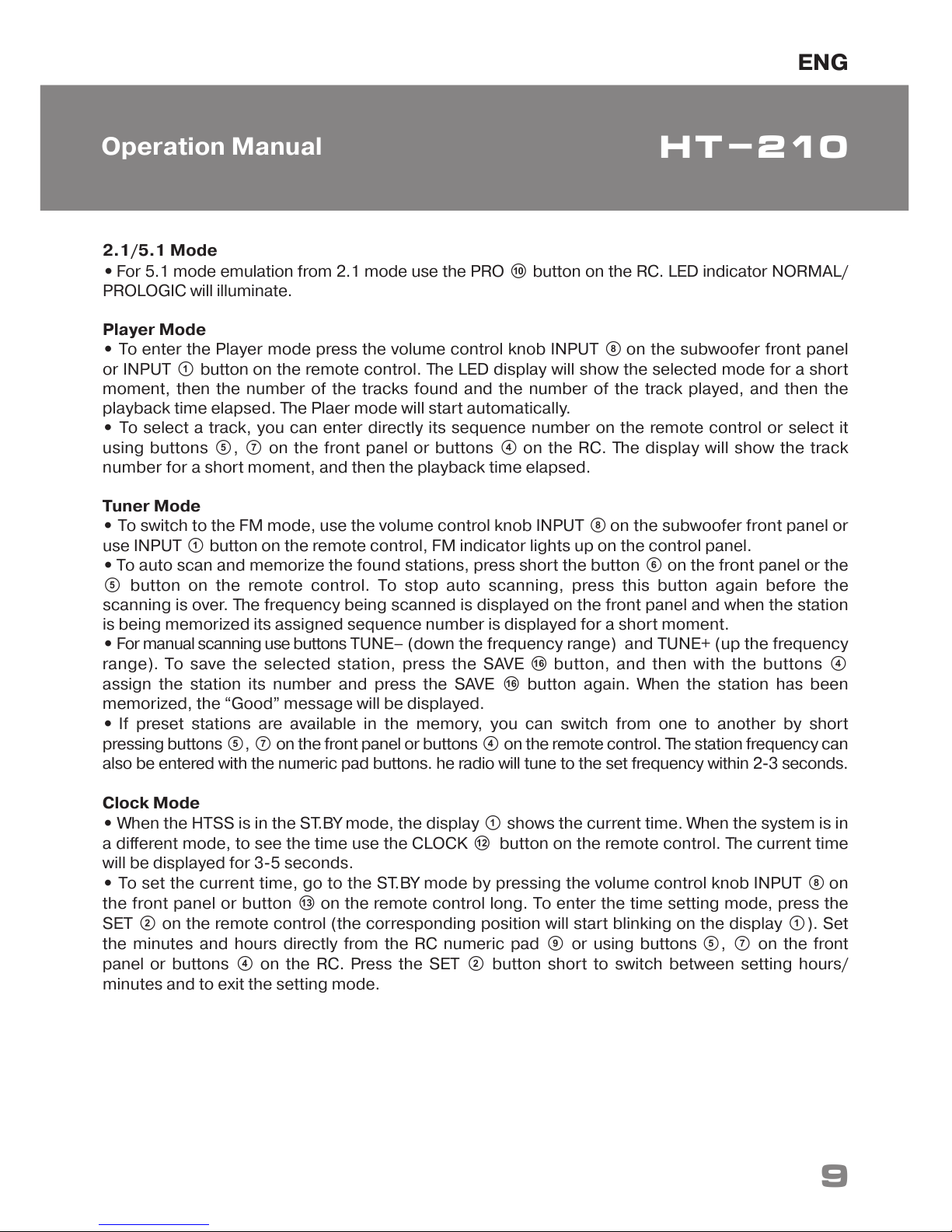
2.1/5.1 Mode
• For 5.1 mode emulation from 2.1 mode use the PRO j button on the RC. LED indicator NORMAL/
PROLOGIC will illuminate.
Player Mode
• To enter the Player mode press the volume control knob INPUT h on the subwoofer front panel
or INPUT a button on the remote control. The LED display will show the selected mode for a short
moment, then the number of the tracks found and the number of the track played, and then the
playback time elapsed. The Plaer mode will start automatically.
• To select a track, you can enter directly its sequence number on the remote control or select it
using buttons e, g on the front panel or buttons d on the RC. The display will show the track
number for a short moment, and then the playback time elapsed.
Tuner Mode
• To switch to the FM mode, use the volume control knob INPUT h on the subwoofer front panel or
use INPUT a button on the remote control, FM indicator lights up on the control panel.
• To auto scan and memorize the found stations, press short the button f on the front panel or the
e button on the remote control. To stop auto scanning, press this button again before the
scanning is over. The frequency being scanned is displayed on the front panel and when the station
is being memorized its assigned sequence number is displayed for a short moment.
• For manual scanning use buttons TUNE– (down the frequency range) and TUNE+ (up the frequency
range). To save the selected station, press the SAVE p button, and then with the buttons d
assign the station its number and press the SAVE p button again. When the station has been
memorized, the “Good” message will be displayed.
• If preset stations are available in the memory, you can switch from one to another by short
pressing buttons e, g on the front panel or buttons d on the remote control. The station frequency can
also be entered with the numeric pad buttons. he radio will tune to the set frequency within 2-3 seconds.
Clock Mode
• When the HTSS is in the ST.BY mode, the display a shows the current time. When the system is in
a different mode, to see the time use the CLOCK l button on the remote control. The current time
will be displayed for 3-5 seconds.
• To set the current time, go to the ST.BY mode by pressing the volume control knob INPUT h on
the front panel or button m on the remote control long. To enter the time setting mode, press the
SET b on the remote control (the corresponding position will start blinking on the display a). Set
the minutes and hours directly from the RC numeric pad i or using buttons e, g on the front
panel or buttons d on the RC. Press the SET b button short to switch between setting hours/
minutes and to exit the setting mode.