manuals.online logo
Brands
  1. Home
  2. •
  3. Brands
  4. •
  5. TDK
  6. •
  7. Power Supply
  8. •
  9. TDK Supereta iQN series User manual

TDK Supereta iQN series User manual

This manual suits for next models

1

Other TDK Power Supply manuals

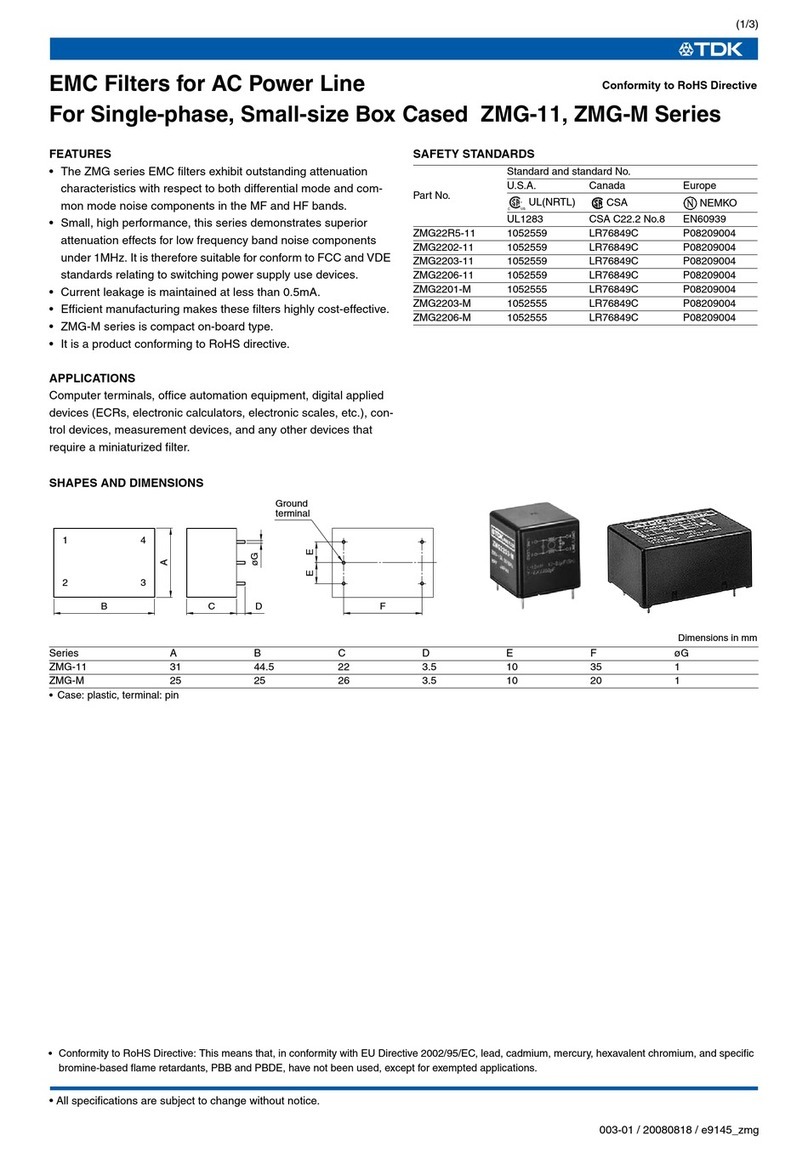
TDK ZMG-11 User manual

TDK

TDK ZMG-11 User manual

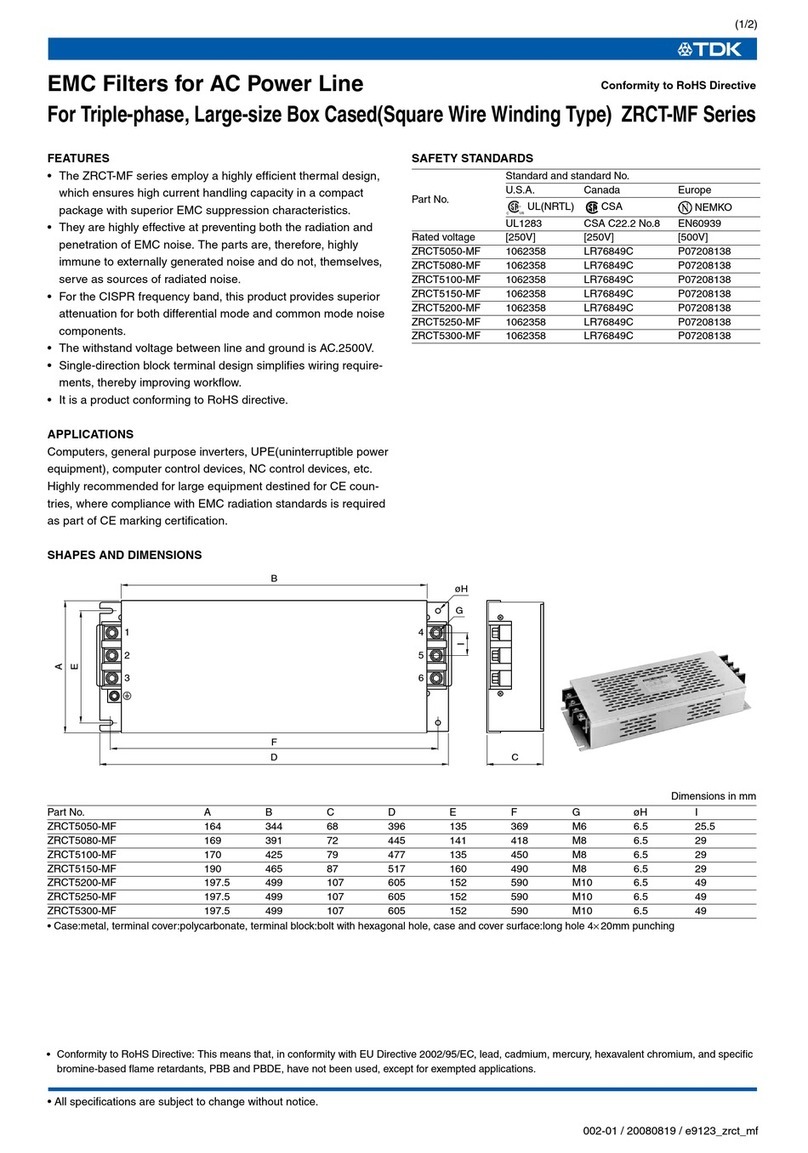
TDK ZRCT-MF series User manual

TDK

TDK ZRCT-MF series User manual

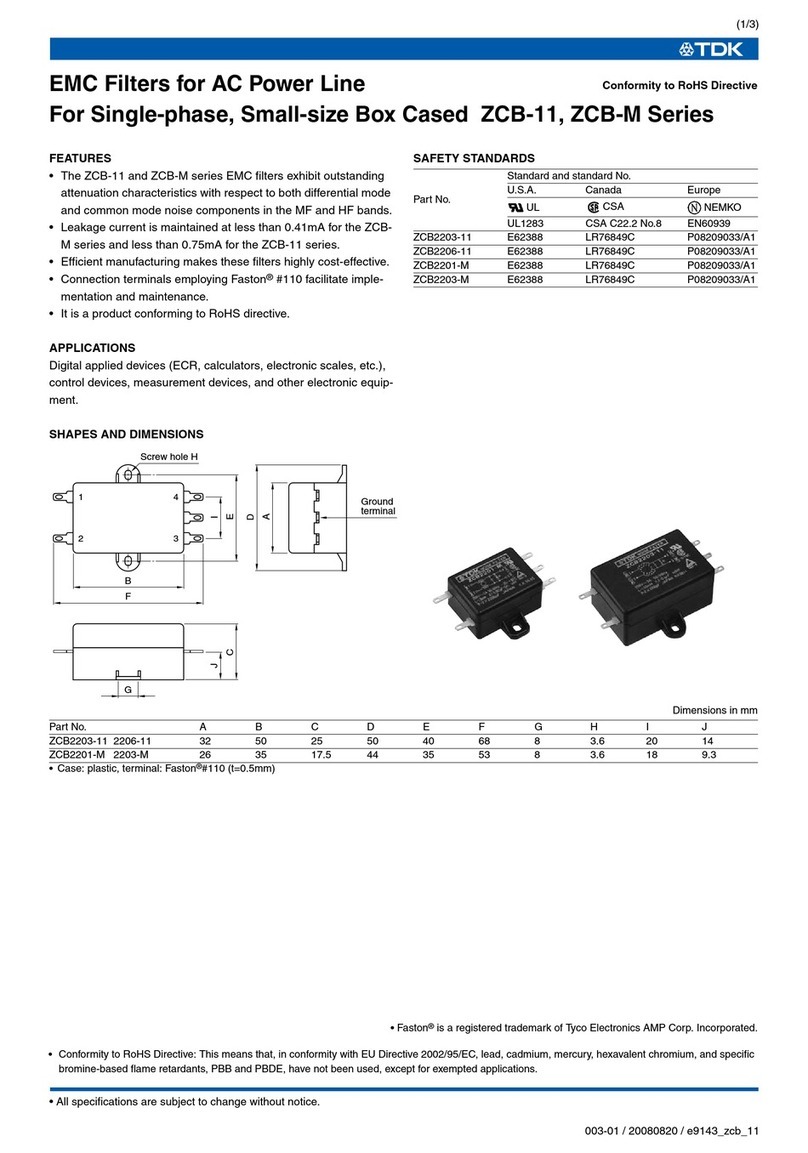
TDK ZCB-11 User manual

TDK

TDK ZCB-11 User manual

TDK ZACT-ME Series User manual

TDK

TDK ZACT-ME Series User manual

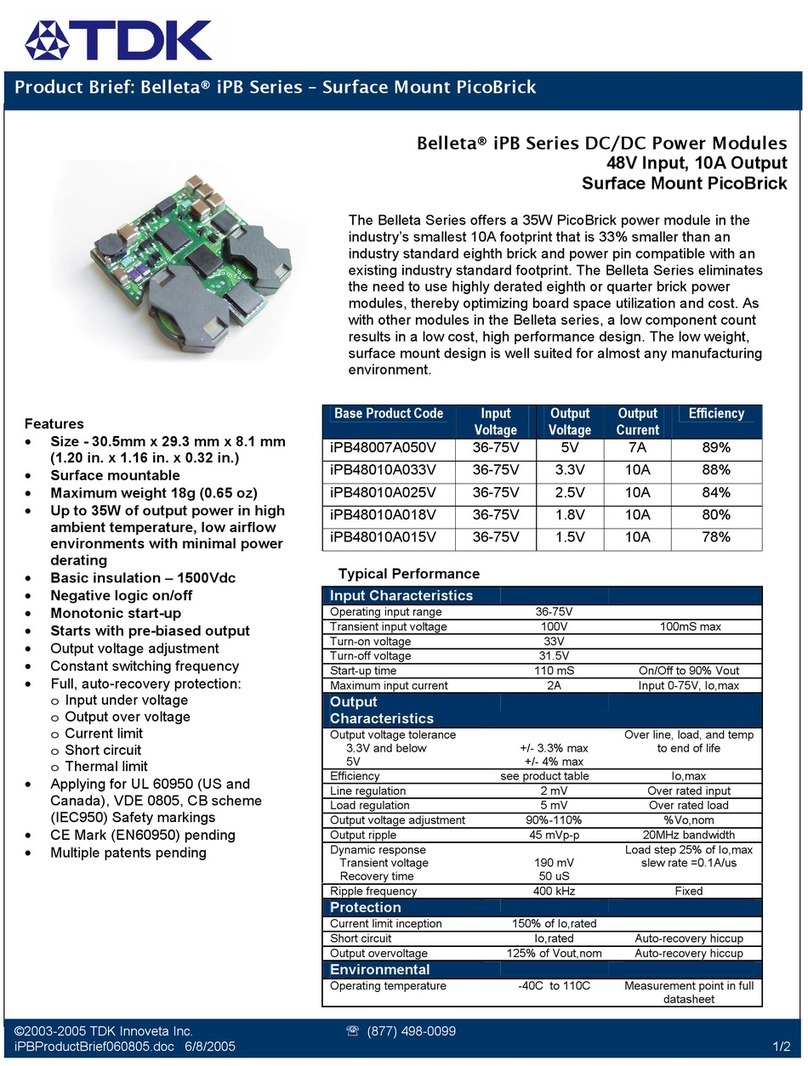
TDK Belleta iPB Series Reference guide

TDK

TDK Belleta iPB Series Reference guide

TDK iHA48060A012V User manual

TDK

TDK iHA48060A012V User manual

TDK Genesys Series User manual

TDK

TDK Genesys Series User manual

Popular Power Supply manuals by other brands

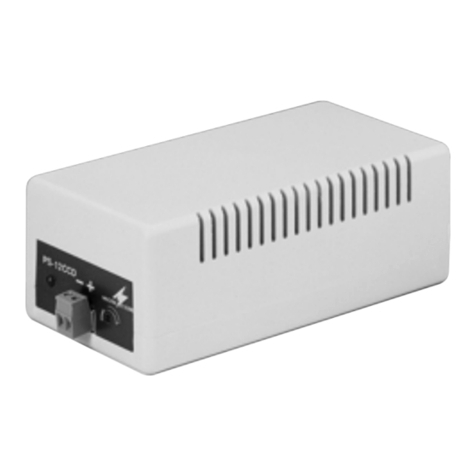
Monacor PS-12CCD instruction manual

Monacor

Monacor PS-12CCD instruction manual

VOLTIMA MagicBox 15 Installation and operating instructions

VOLTIMA

VOLTIMA MagicBox 15 Installation and operating instructions

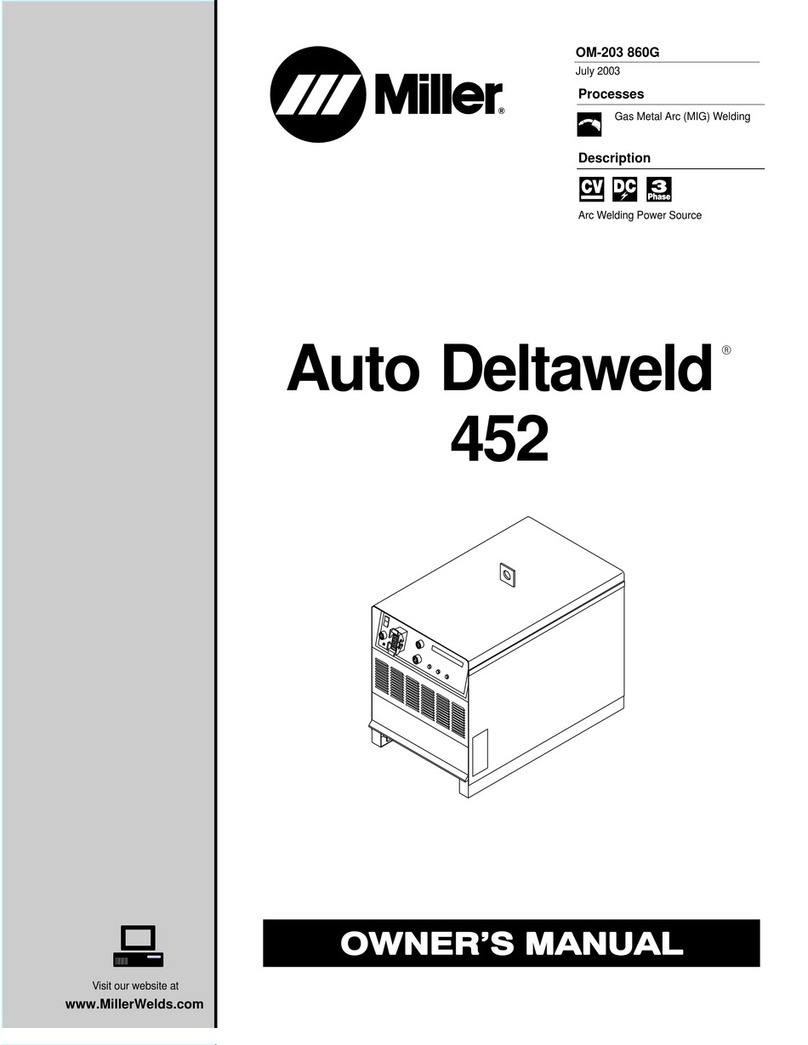
Miller Auto Deltaweld 452 owner's manual

Miller

Miller Auto Deltaweld 452 owner's manual

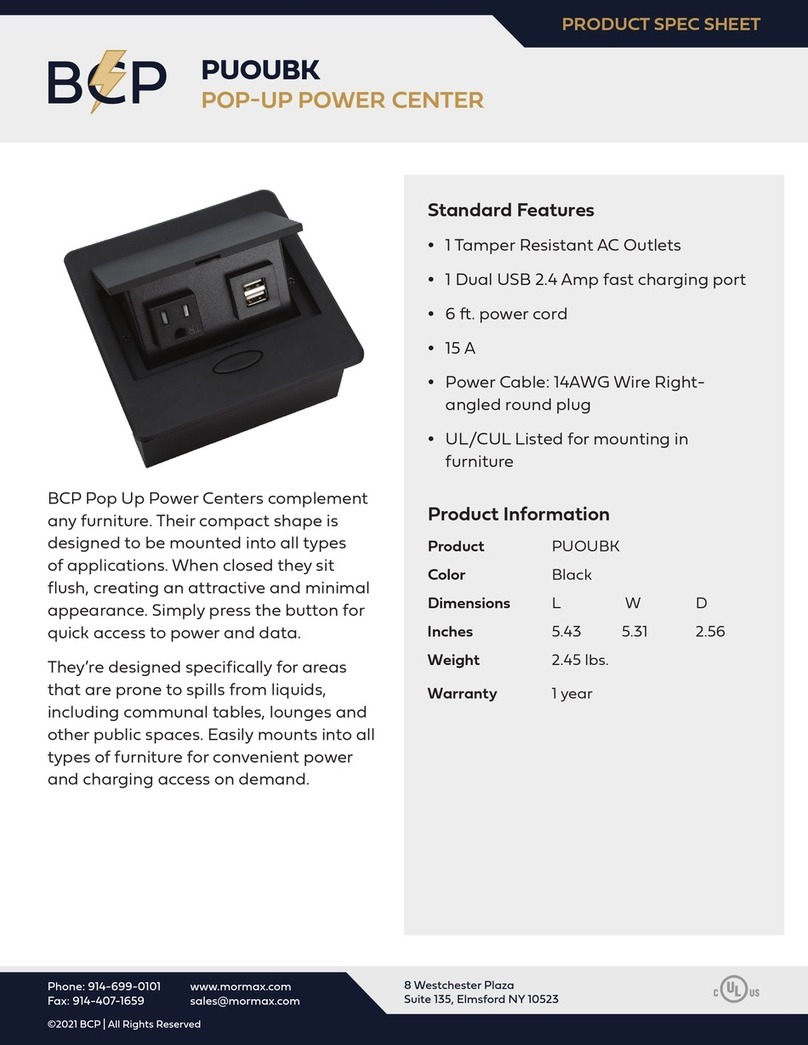
BCP PUOUBK How to install

BCP

BCP PUOUBK How to install

HC 2210 manual

HC

HC 2210 manual

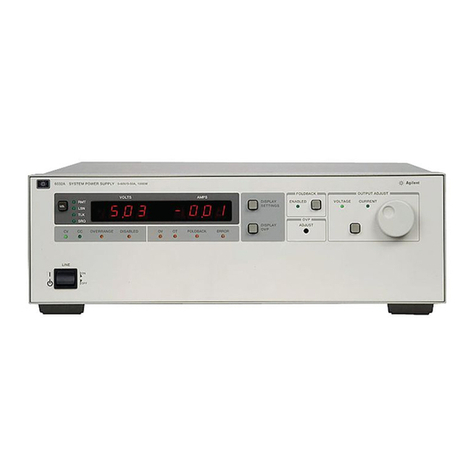
Agilent Technologies 6032A Service manual

Agilent Technologies

Agilent Technologies 6032A Service manual

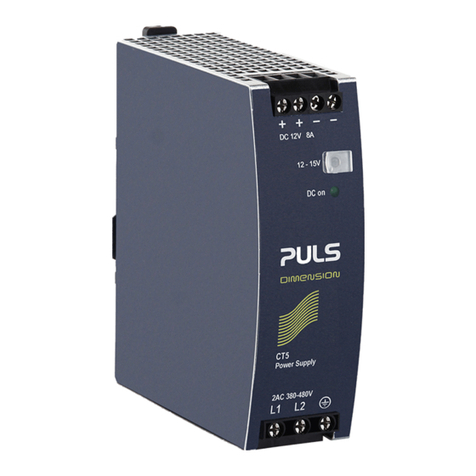
Puls CT5.241 installation manual

Puls

Puls CT5.241 installation manual

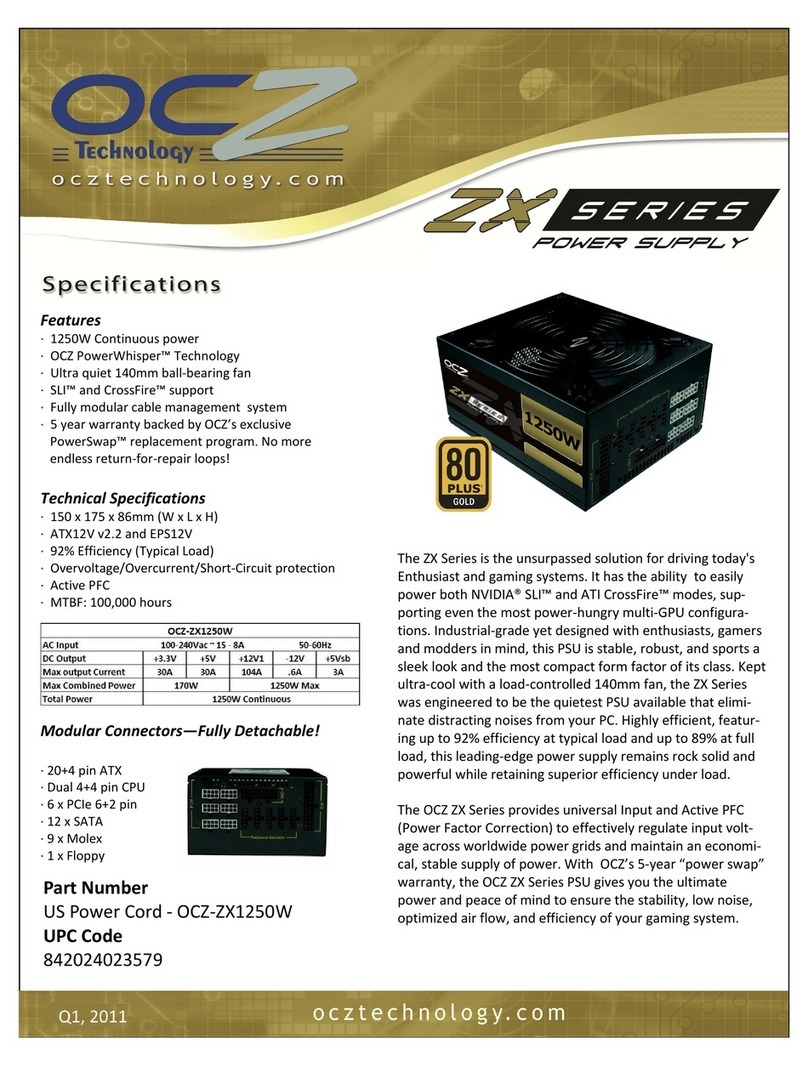
OCZ ZX1250W Technical specifications

OCZ

OCZ ZX1250W Technical specifications

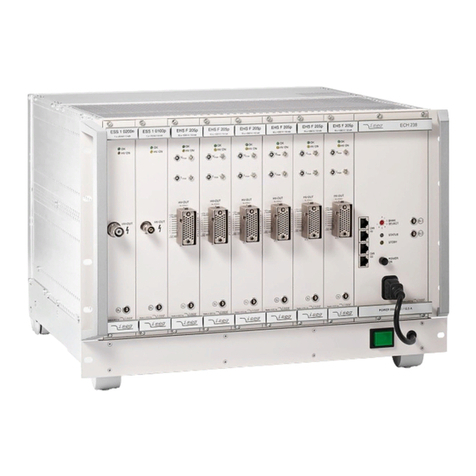
iseg ECH 238 manual

iseg

iseg ECH 238 manual

Agilent Technologies 6631B Service manual

Agilent Technologies

Agilent Technologies 6631B Service manual

Power XXL A Series instruction manual

Power

Power XXL A Series instruction manual

Renogy PHOENIX 300 user guide

Renogy

Renogy PHOENIX 300 user guide

HP 6200B Operating and service manual

HP

HP 6200B Operating and service manual

Epson Stylus Scan 2500 Product information sheet

Epson

Epson Stylus Scan 2500 Product information sheet

Pulsar GREEN POWER CCTV PoE POE044816 manual

Pulsar

Pulsar GREEN POWER CCTV PoE POE044816 manual

Puls MiniLine ML50.100 instruction manual

Puls

Puls MiniLine ML50.100 instruction manual

Puls AS-Interface SLA4.100 installation manual

Puls

Puls AS-Interface SLA4.100 installation manual

Kenwood PS-60 instruction manual

Kenwood

Kenwood PS-60 instruction manual

manuals.online logo
manuals.online logoBrands
  • About & Mission
  • Contact us
  • Privacy Policy
  • Terms and Conditions

Copyright 2025 Manuals.Online. All Rights Reserved.

Data Sheet: Supereta
TM
iQN Series –Single Output Quarter Brick
©2005-2006 TDK Innoveta Inc.
iQN 35V/6A/-0A9 Datasheet Issue 1.2 /8/2008
℡
(877) 98
-
0099
1/15
Supereta™ iQN Series DC/DC Power Modules
8V Input, 35V / 6A Output
Quarter Brick
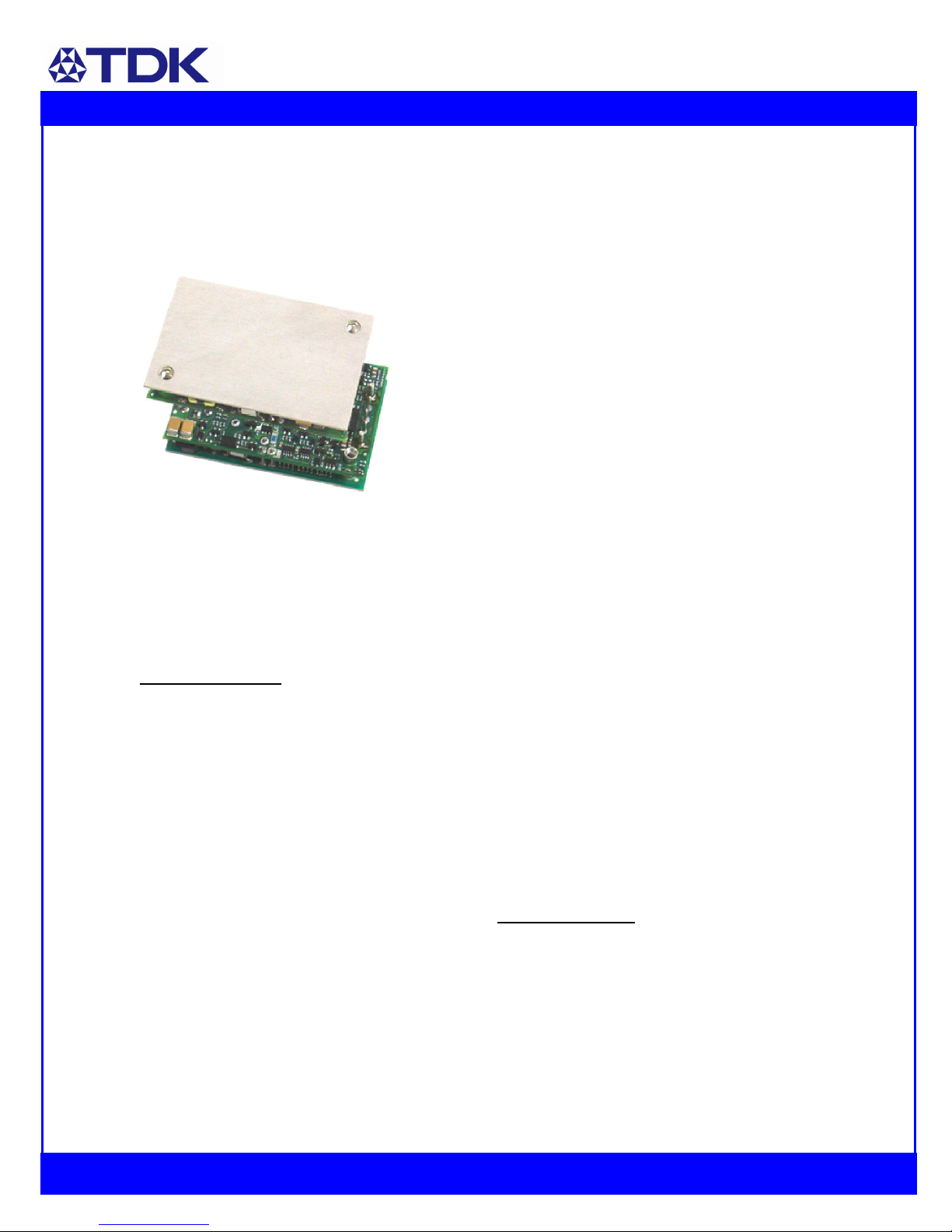
The Supereta™ iQN series offers an industry
standard quarter brick high current power
module with true useable output power.
The
iQN series power modules with the voltage
foldback constant current limit feature are
ideally suited for fan motor control and
wireless applications
.
Its 90% full load
efficiency (91% at 70% of full load) and
superior thermal performance make the iQN
series of power modules ideally suited for
tight space and power-hungry applications in
demanding thermal environments. This
rugged building block is designed to serve as
the core of your high reliability system. The
droop current sharing capability allows
multiple modules to be connected in parallel.
A wide output voltage trim down range, to
17V, and remote sensing are standard
features enhancing versatility.
Standard Features:
• Standard Quarter Brick Pinout
• Size: 2.28” × 1. 5” × 0.5”
(57.9mm × 36.8mm × 12.7mm)
• Up to 6A of output current
• Power density – 127W / in
3
• Efficiency – up to 92%
• Full load typical efficiency – 90%
• Output power – up to 210W
• Droop load share
• Wide output voltage trim range, 17V to 35V
• Metal board design with high usable power
6A at 70C, 350LFM, 1.625” heat sink
• Basic insulation – 1500Vdc
• Positive remote on/off logic
• Remote sense
• Constant switching frequency
• Voltage fold-back constant current limit
• Latched output over-voltage protection
• Latched output over-current protection
• Latched over-temperature protection
• Auto-recovery input under and over
voltage protections
• UL 60950 (US and Canada), VDE 0805,
CB scheme (IEC950)
• CE Mark (EN60950)
• EMI: CISPR 22 A or B with external filter
• US 6,618,27 . Other patents pending
• ISO Certified manufacturing facilities
Optional Features:
• Negative remote on/off logic
• Short Thru-hole pins 2.79 mm (0.110”)
• Long Thru-hole pins .57 mm (0.180”)
• Long Thru-hole pins 5.08 mm (0.200”)
• Non-latching output OVP protection
• Non-latching load over-current protection
• Non-latching over-temperature protection
Data Sheet: Supereta
TM
iQN Series –Single Output Quarter Brick
©2005-2006 TDK Innoveta Inc.
iQN 35V/6A/-0A9 Datasheet Issue 1.2 /8/2008
℡
(877) 98
-
0099
2/15
Ordering information:
Product
Identifier
Package
Size
Platform Input
Voltage
Output
urrent/
Power
Output
Units
Main
Output
Voltage
# of
Outputs
Safety
lass
Feature Set
i Q N 8 006 A 350 V -
0 00
TDK Innoveta Quarter-
brick Supereta 36-75V 006 – 6 A Amps
350 – 35V
Single 00 – Standard
Option Table:
Product Offering:
ode Input Voltage Output Voltage Output
urrent
Maximum
Output Power
Efficiency
iQN 8006A350V 36-75V 35V 6A 210W 90%
Feature Set On/Off Logic OVP Pin Length Special ode
00 Positive Latch 0.1 5” No
01 Negative Latch 0.1 5” No
02 Positive Latch 0.110” No
03 Negative Latch 0.110” No
0 Positive Latch 0.200” No
05 Negative Latch 0.200” No
06 Positive Non-Latch 0.1 5” No
07 Negative Non-Latch 0.1 5” No
08 Positive Latch 0.180” No
09 Negative Latch 0.180” No
A9 Negative Latch 0.180” Yes. Modified start-up
characteristics.
TDK Innoveta Inc.
3320 Matrix Drive, Suite 100
Richardson, Texas 75082
Phone (877) 98-0099 Toll Free
( 69) 916- 7 7
Fax (877) 98-01 3 Toll Free
(21 ) 239-3101
support@tdkinnoveta.com
http://www.tdkinnoveta.com/
Data Sheet: Supereta
TM
iQN Series –Single Output Quarter Brick
©2005-2006 TDK Innoveta Inc.
iQN 35V/6A/-0A9 Datasheet Issue 1.2 /8/2008
℡
(877) 98
-
0099
3/15
Mechanical Specification:
Dimensions are in mm [in]. Unless otherwise specified tolerances are: x.x ± 0.5 [0.02], x.xx and x.xxx ± 0.25 [0.010].
Pin Assignment:
PIN FUNCTION PIN FUNCTION
1 Vin(+) Vo(-)
2 On/Off 5 Sense(-)
3 Vin(-) 6 Trim
7 Sense(+)
8 Vo(+)
Pin base material is copper or brass with matte tin or tin/lead plating; the maximum module weight is 60g (2.1 oz).
Metal Board Flatness Tolerance: 0.002” per inch (Max).
1
2
3
8
7
6
5
4
Recommended hole pattern (top view)
3. 0 [0.13 ] max Dia
2 places
1.52 [.060] DIA
2 pins
M3 X .5 threaded
inserts, 2 places
1.02 [.0 0] DIA
6 pins
Data Sheet: Supereta
TM
iQN Series –Single Output Quarter Brick
©2005-2006 TDK Innoveta Inc.
iQN 35V/6A/-0A9 Datasheet Issue 1.2 /8/2008
℡
(877) 98
-
0099
4/15
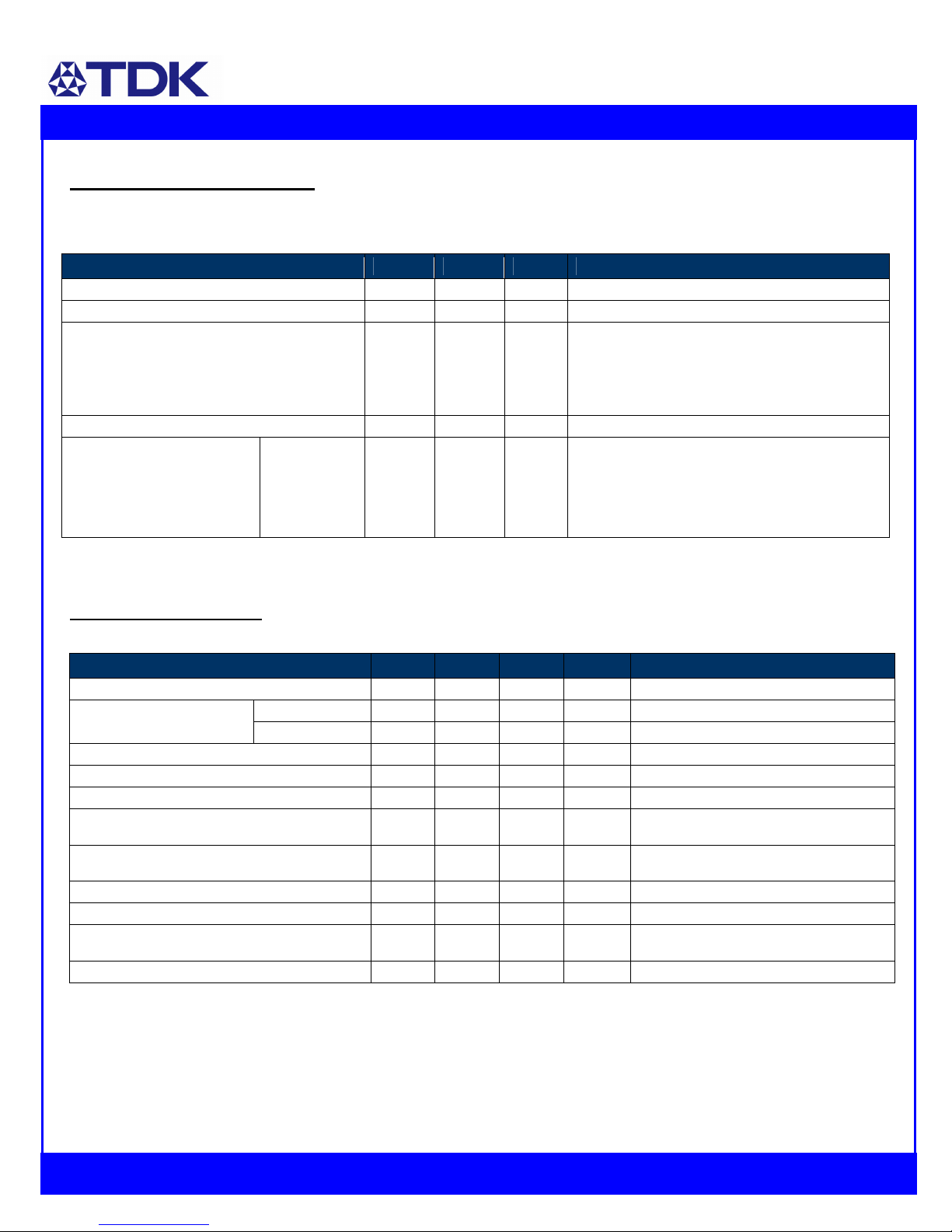
Absolute Maximum Ratings:
Stress in excess of Absolute Maximum Ratings may cause permanent damage to the device.
Input haracteristics:
Unless otherwise specified, specifications apply over all Rated Input Voltage, Resistive Load, and Temperature conditions.
haracteristic Min Typ Max Unit Notes & onditions
Operating Input Voltage 36 8 75 Vdc
6A output --- --- 7 A Vin = 0 to Vin,max Maximum Input Current
Turn-on Voltage --- 3 .5 --- Vdc
Turn-off Voltage --- 32.3 --- Vdc
Hysteresis --- 2.2 --- Vdc
Startup Delay Time from application of input
voltage
--- 50 --- mS Vo = 0 to 0.1*Vo,nom; on/off =on,
Io=Io,max, Tc=25˚C
Startup Delay Time from on/off --- 0 --- mS Vo = 0 to 0.1*Vo,nom; Vin = Vi,nom,
Io=Io,max,Tc=25˚C
Output Voltage Rise Time --- 80 --- mS Io=Io,max,Tc=25˚C, Vo=0.1 to 0.9*Vo,nom
Inrush Transient --- --- 0.2 A
2
s Exclude external input capacitors
Input Reflected Ripple --- --- --- mApp See input/output ripple and noise
measurements figure; BW = 20 MHz
Input Ripple Rejection --- 0 --- dB @120Hz
* Engineering Estimate
** Consult TDK Innoveta for slow start-up with heavy capacitive load
aution: The power modules are not internally fused. An external input line normal blow fuse with a maximum value of 15A is
required; see the Safety Considerations section of the data sheet.
haracteristic Min Max Unit Notes & onditions
Continuous Input Voltage -0.5 80 Vdc
Transient Input Voltage --- 100 Vdc 100mS max.
Isolation Voltage
Input to Output
Input to Base-plate
Output to Base-plate
---
---
---
1500
1500
500
Vdc
Vdc
Vdc
Basic Insulation
Basic Insulation
Operational Insulation
Storage Temperature -55 125 ˚C
Operating Temperature Range
(Tc)
- 0 119 ˚C
Measured at the location specified in the thermal
measurement figure. Maximum temperature varies
with model number, output current, and module
orientation – see curve in thermal performance section
of the data sheet.
Data Sheet: Supereta
TM
iQN Series –Single Output Quarter Brick
©2005-2006 TDK Innoveta Inc.
iQN 35V/6A/-0A9 Datasheet Issue 1.2 /8/2008
℡
(877) 98
-
0099
5/15
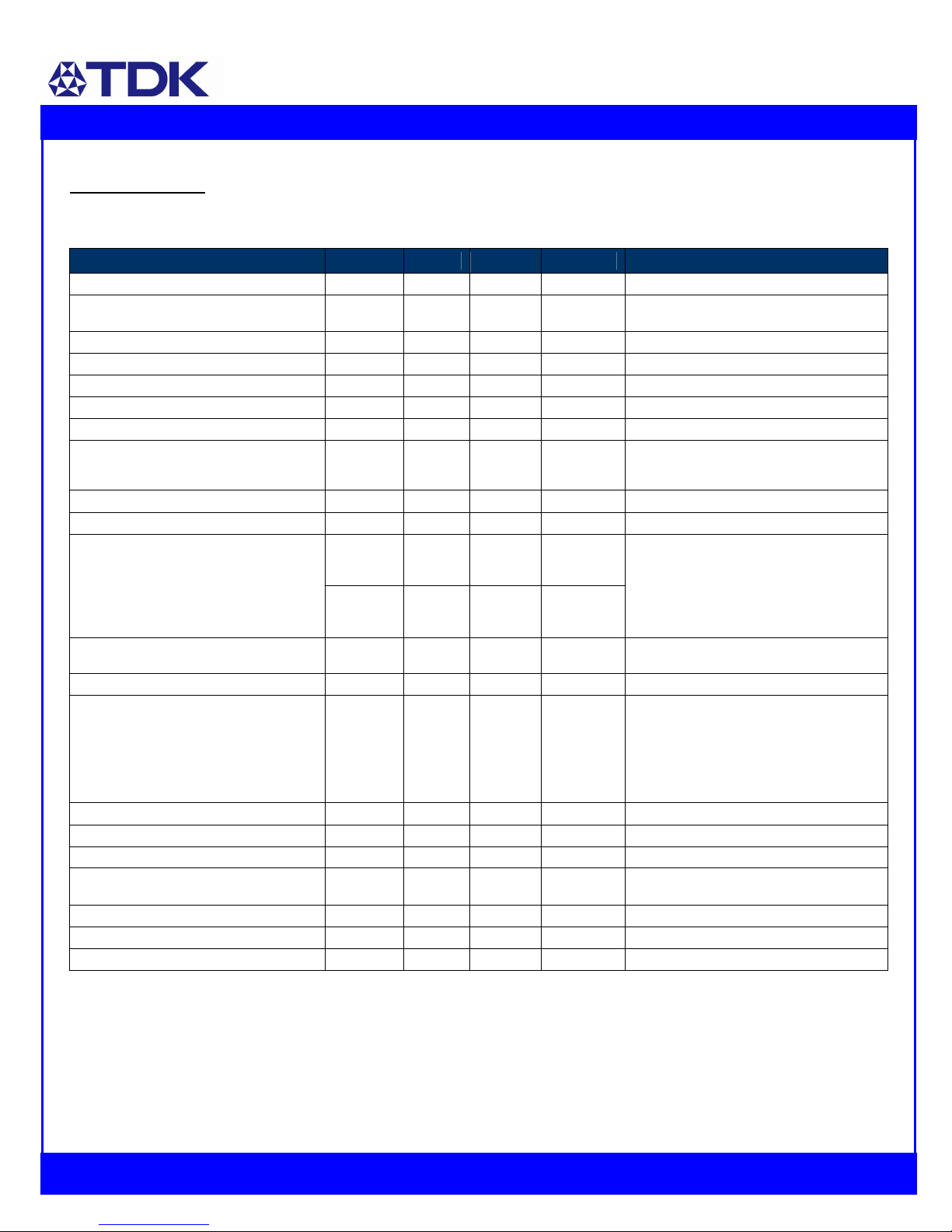
Electrical Data:
iQN48006A350V-000 through -0A9: 35V, 6A Output
haracteristic Min Typ Max Unit Notes & onditions
Output Open Circuit Voltage Set-point 3 .65 35 35.35 Vdc Vin=Vin,min to Vin,max, Io=0A, Tc = 25˚C
Output Voltage Initial Set-point Tolerance 3 . 8 35 35.53 Vdc Over all rated input voltage and temperature
conditions with Io=0A to end of life
Efficiency --- 90 --- % Vin=Vin,nom; Io=Io,max; Tc = 25˚C
Line Regulation --- 50 100* mV Vin=Vin,min to Vin,max, Io and Tc fixed
Droop Rate --- 771 --- mV/A Vin=Vin,min to Vin,max, Tc = 25˚C
Temperature Regulation --- 125 300* mV Tc=Tc,min to Tc,max, Vin and Io fixed
Load Share Accuracy -10 --- +10 % 50% to 100% rated load current, Tc = 25˚C
Output Current 0 --- 6 A
At loads less than Io,min the module will
continue to regulate the output voltage, but
the output ripple may increase slightly
Output Current Limiting Threshold --- 6.5 --- A Vo = 0.9*Vo,nom, Tc<Tc,max
Short Circuit Current 0 0 --- A Latch off
--- 120 250 mVpp
Output Ripple and Noise Voltage
--- 10 30 mVrms
Vin= 8V, Io≥Io,min, Tc=25˚C. Measured
across one 0.1uF, one 1.0 uF, one 7uF
ceramic, and a 68uF low esr aluminum
electrolytic capacitors located 2 inches
away – see input/output ripple
measurement figure; BW = 20MHz
Output Voltage Adjustment Range 17 --- 35** V Note: Trim up 10% is possible, but the load
current needs to be reduced
Output Voltage Remote Sense Range --- --- 10 %Vo,nom
Dynamic Response:
Recovery Time to 10% of Peak Deviation
Transient Voltage
---
---
800
350
---
---
µS
mV
di/dt = 0.1A/uS, Vin=Vin,nom; load step
from 50% to 75% of Io,max, Tc=25˚C with at
least one 1.0 uF, one 7uF ceramic, and a
68uF low esr aluminum electrolytic
capacitors across the output terminals.
Note: Exclude the droop.
Output Voltage Overshoot during Startup 0 0 --- mV Vin=Vin,nom; Io=Io,max,Tc=25˚C
Switching Frequency --- 155 --- kHz Fixed
Output Over Voltage Protection 38.9 39.7 1.1 V
External Load Capacitance 68 --- 5,000 † uF Minimum ESR > 2.5 mΩ. Tc=25˚C
Isolation Capacitance --- 1000 --- pF
Isolation Resistance 10 --- --- MΩ
Vref 2.5 V Required for trim calculation
* Engineering Estimate
** Trim up is possible, but the load current needs to be reduced. Contact TDK Innoveta for details
† Contact TDK Innoveta for applications that require additional capacitance or using capacitors with very low ESR
Data Sheet: Supereta
TM
iQN Series –Single Output Quarter Brick
©2005-2006 TDK Innoveta Inc.
iQN 35V/6A/-0A9 Datasheet Issue 1.2 /8/2008
℡
(877) 98
-
0099
6/15
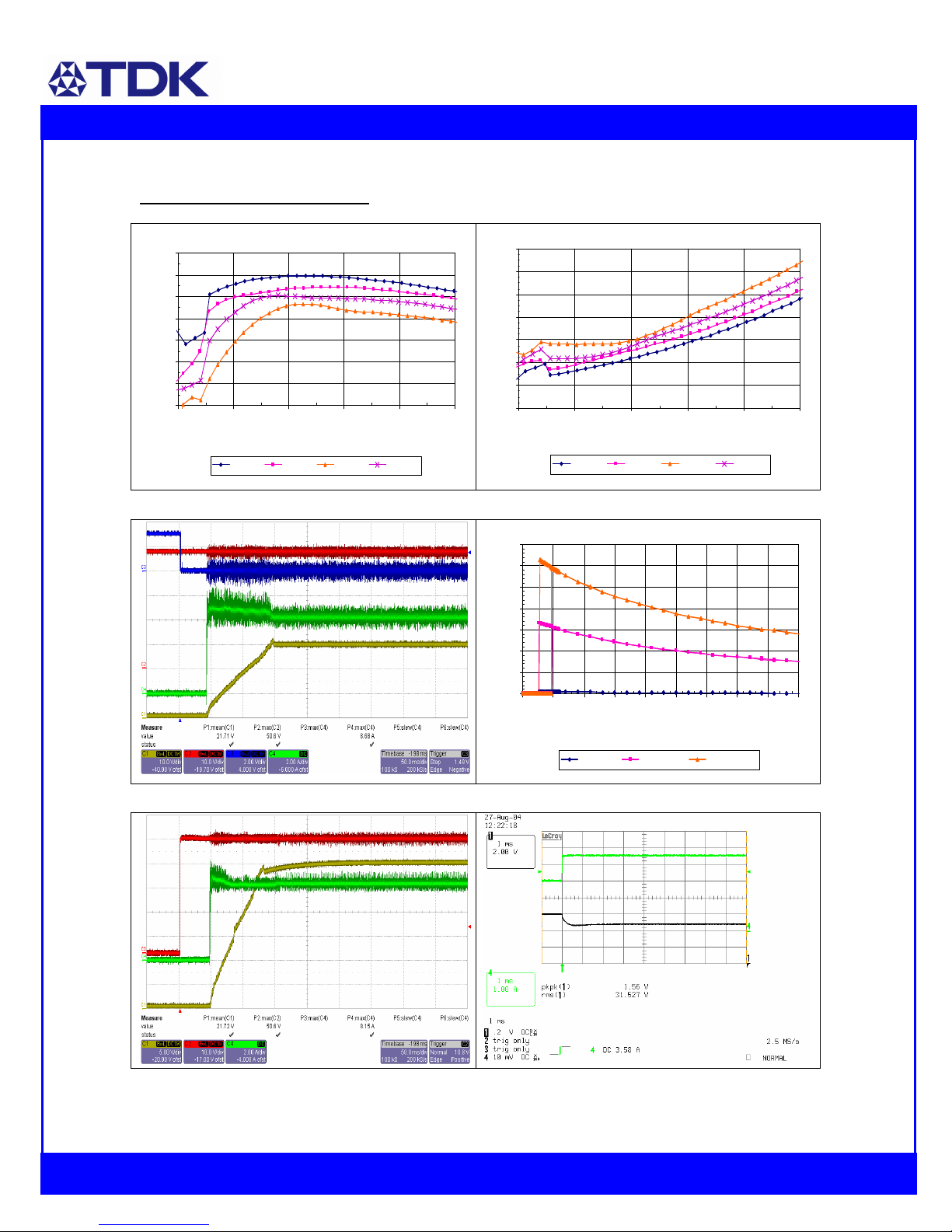
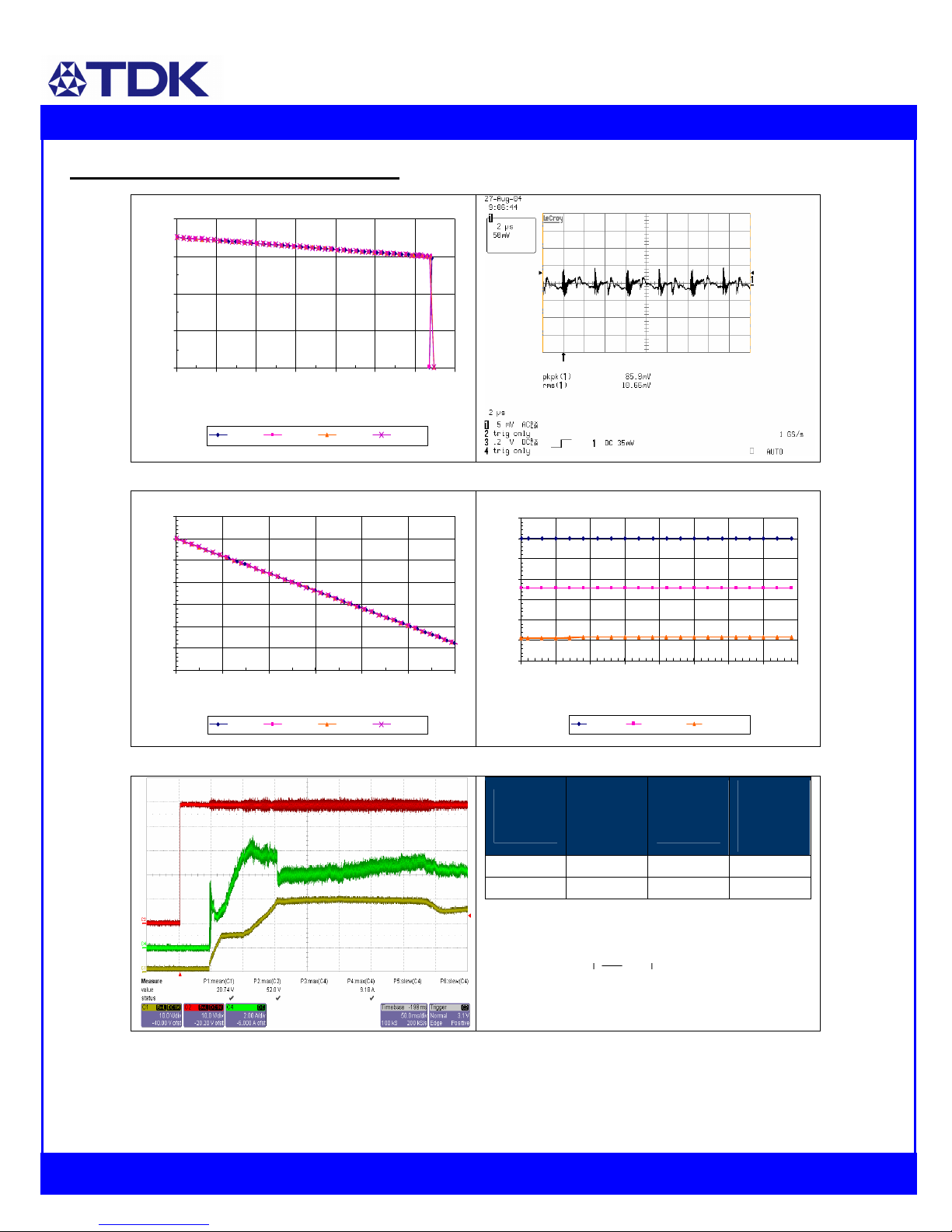
Electrical haracteristics:
iQN48006A350V-000 through -0A9: 35V, 6A Output
Efficiency vs. Input Voltage at Ta=25C, No Heat Sink
Power Dissipation vs. Input Voltage at Ta=25C, No
Heat Sink
Start-up constant current load from on/off switch, 8Vin
Ch. 1: Vo Ch.2: Vin Ch. 3: on/off Ch. : Io
Typical Input Current vs. Input Voltage Characteristics
Start-up constant current load from Vin Application
Ch. 1: Vo Ch. 2: Vin Ch. : Io
Transient Response. Load Step from 50% to 75% of
Full Load with di/dt= 0.1A/uS. Ch. 1: Vo Ch. : Io
0
1
2
3
5
6
7
30 35 0 5 50 55 60 65 70 75
Input Voltage (V)
In p u t C u rr e n t (A )
Io_min = 0A Io_mid = 3.1A Io_max = 6.1A
0
8
12
16
20
2
28
1 2 3 5 6
Output Current (A)
P o w e r D is s ip a t io n (W )
Vin = 36V Vin = 8V Vin = 75V Vin = 60V
80
82
8
86
88
90
92
9
1 2 3 5 6
Output Current (A)
E ffic ie n c y ( % )
Vin = 36V Vin = 8V Vin = 75V Vin = 60V
Data Sheet: Supereta
TM
iQN Series –Single Output Quarter Brick
©2005-2006 TDK Innoveta Inc.
iQN 35V/6A/-0A9 Datasheet Issue 1.2 /8/2008
℡
(877) 98
-
0099
7/15
Electrical haracteristics (continued):
iQN48006A350V-000 through -0A9: 35V, 6A Output
Output Current Limit Characteristics vs. Input Voltage at
Ta=25C.
Typical Output Ripple at 8V Input and Full Load.
Cext=68uF. Ch. 1: Vo
Typical Output Voltage vs. Load Current at Ta=25C. Typical Output Voltage vs. Input Voltage at Ta=25C.
%
Change
of Vout
Trim
Down
Resistor
(Ohm)
%
Change
of Vout
Trim
Down
Resistor
(Ohm)
-10 52.7K -30 11. K
-20 21.8K - 0 6.28K
e.g. trim down 50%
Rdown 6.19 100
50 1−






⋅3.01−:= K
Start-up Fan Load from Input Voltage Application
Ch. 1: Vo Ch. 2: Vin Ch. : Io
Calculated Resistor Values for Output Voltage Adjustment
0
10
20
30
0
0 1 2 3 5 6 7
Output Current (A)
O u tp u t V o lta g e ( V )
Vin = 36V Vin = 8V Vin = 75V Vin = 60V
29
30
31
32
33
3
35
36
0 1 2 3 5 6
Output Current (A)
O u tp u t V o lta g e (V )
Vin = 36V Vin = 8V Vin = 75V Vin = 60V
29
30
31
32
33
3
35
36
36 1 6 51 56 61 66 71 76
Input Voltage (V)
O u tp u t V o lta g e ( V )
Io_min = 0A Io_mid = 3.1A Io_max = 6.1A
Data Sheet: Supereta
TM
iQN Series –Single Output Quarter Brick
©2005-2006 TDK Innoveta Inc.
iQN 35V/6A/-0A9 Datasheet Issue 1.2 /8/2008
℡
(877) 98
-
0099
8/15
Thermal Performance:
iQN48006A350V-000 through -0A9: 35V, 6A Output
Maximum output current vs. ambient temperature at nominal
input voltage for airflow rates of 1.0m/s to 3.0m/s with airflow
from pin 8 to pin 1 (best orientation with 1.625” heat sink).
Maximum output current vs. ambient temperature at nominal
input voltage for airflow rates of 1.0m/s to 3.0m/s with airflow
from pin 1 to pin 8 (with 1.625” heat sink).
Thermal measurement location on baseplate – top view
The thermal curves provided are based upon measurements made in TDK Innoveta’s experimental test setup that is
described in the Thermal Management section. Due to the large number of variables in system design, TDK Innoveta
recommends that the user verify the module’s thermal performance in the end application. The critical component should
be thermo- coupled and monitored, and should not exceed the temperature limit specified in the derating curve above. It
is critical that the thermocouple be mounted in a manner that gives direct thermal contact otherwise significant
measurement errors may result.
2
3
5
6
7
60 70 80 90 100 110 120
Ambient Temperature ( )
Output urrent (A)
1.0 m/s (200 LFM) 1.25 m/s (250 LFM) 1.5 m/s (300 LFM)
1.75 m/s (350 LFM) 2.0 m/s ( 00 LFM) 2.5 m/s (500 LFM)
3.0 m/s (600 LFM) Max Baseplate Temp
I
n
p
u
t
Thermal
measurement
location
O
u
t
p
u
t
2
3
5
6
7
80 90 100 110 120 130
Ambient Temperature ( )
Output urrent (A)
1.0 m/s (200 LFM) 1.25 m/s (250 LFM) 1.5 m/s (300 LFM)
1.75 m/s (350 LFM) 2.0 m/s ( 00 LFM) 2.5 m/s (500 LFM)
3.0 m/s (600 LFM) Max Baseplate Temp
Data Sheet: Supereta
TM
iQN Series –Single Output Quarter Brick
©2005-2006 TDK Innoveta Inc.
iQN 35V/6A/-0A9 Datasheet Issue 1.2 /8/2008
℡
(877) 98
-
0099
9/15
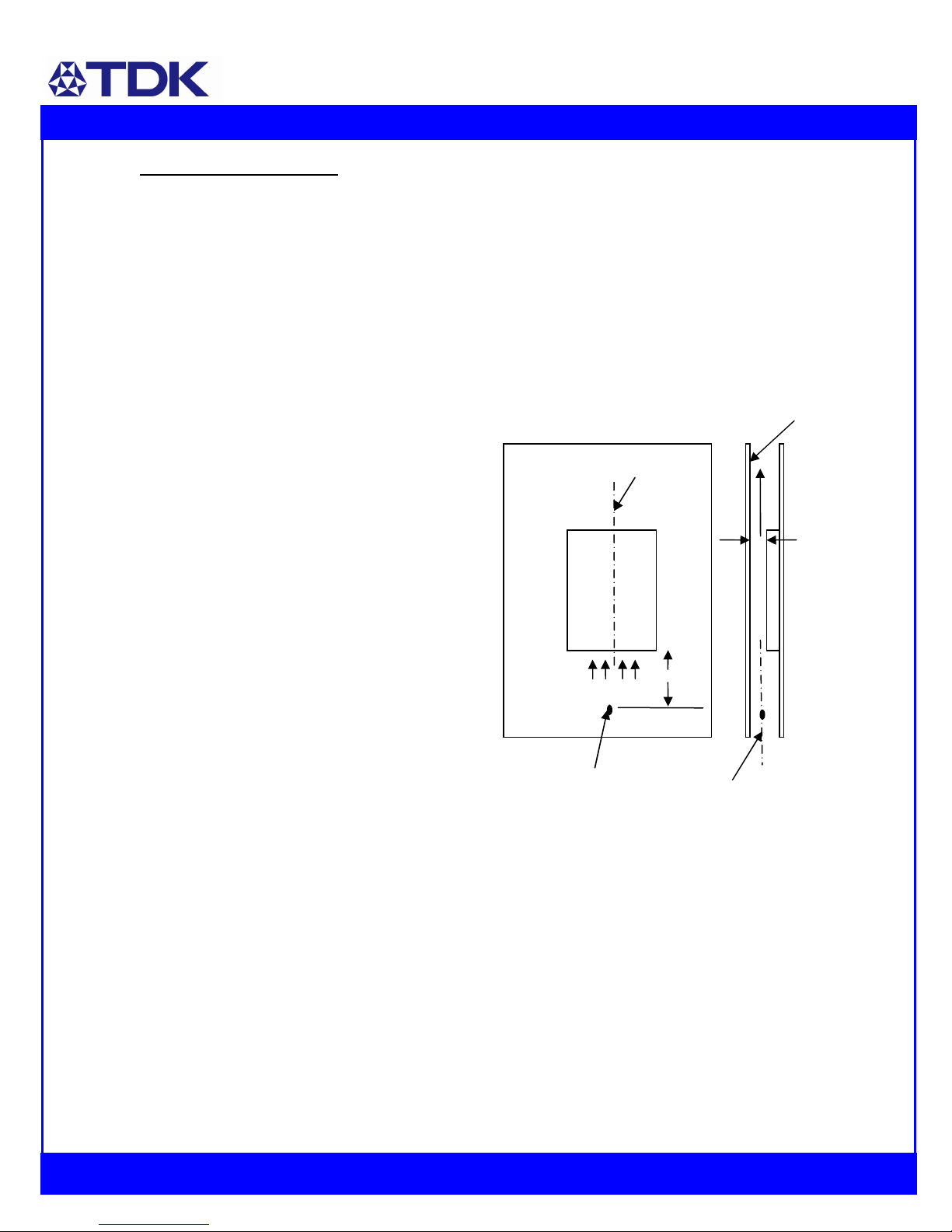
Wind Tunnel Test Setup Figure
Dimensions are in millimeters and (inches).
Thermal Management:
An important part of the overall system
design process is thermal management;
thermal design must be considered at all
levels to ensure good reliability and lifetime
of the final system. Superior thermal design
and the ability to operate in severe
application environments are key elements
of a robust, reliable power module.
A finite amount of heat must be dissipated
from the power module to the surrounding
environment. This heat is transferred by the
three modes of heat transfer: convection,
conduction and radiation. While all three
modes of heat transfer are present in every
application, convection is the dominant
mode of heat transfer in most applications.
However, to ensure adequate cooling and
proper operation, all three modes should be
considered in a final system configuration.
The open frame design of the power module
provides an air path to individual
components. This air path improves
convection cooling to the surrounding
environment, which reduces areas of heat
concentration and resulting hot spots.
Test Setup: The thermal performance data
of the power module is based upon
measurements obtained from a wind tunnel
test with the setup shown in the wind tunnel
figure. This thermal test setup replicates the
typical thermal environments encountered in
most modern electronic systems with
distributed power architectures. The
electronic equipment in networking, telecom,
wireless, and advanced computer systems
operates in similar environments and utilizes
vertically mounted printed circuit boards
(PCBs) or circuit cards in cabinet racks.
The power module is mounted on a 0.062
inch thick, 6 layer, 2oz/layer PCB and is
vertically oriented within the wind tunnel.
Power is routed on the internal layers of the
PCB. The outer copper layers are thermally
decoupled from the converter to better
simulate the customer’s application. This
also results in a more conservative derating.
The cross section of the airflow passage is
rectangular with the spacing between the
top of the module and a parallel facing PCB
kept at a constant (0.5 in). The power
module’s orientation with respect to the
airflow direction can have a significant
impact on the unit’s thermal performance.
Thermal Derating: For proper application of
the power module in a given thermal
environment, output current derating curves
are provided as a design guideline in the
Thermal Performance section for the power
module of interest. The module temperature
should be measured in the final system
configuration to ensure proper thermal
management of the power module. For
thermal performance verification, the module
temperature should be measured at the
component indicated in the thermal
measurement location figure on the thermal
AIRFLOW
Air Velocity and Ambient
Temperature
Measurement Location
A
I
F
L
O
W
12.7
(0.50)
Module
Centerline
Air Passage
Centerline
Adjacent PCB
76 (3.0)

Data Sheet: Supereta
TM
iQN Series –Single Output Quarter Brick
©2005-2006 TDK Innoveta Inc.
iQN 35V/6A/-0A9 Datasheet Issue 1.2 /8/2008
℡
(877) 98
-
0099
10/15
performance page for the power module of
interest. In all conditions, the power module
should be operated below the maximum
operating temperature shown on
the derating curve. For improved design
margins and enhanced system reliability, the
power module may be operated at
temperatures below the maximum rated
operating temperature.
Heat transfer by convection can be
enhanced by increasing the airflow rate that
the power module experiences. The
maximum output current of the power
module is a function of ambient temperature
(T
AMB
) and airflow rate as shown in the
thermal performance figures on the thermal
performance page for the power module of
interest. The curves in the figures are
shown for 1m/s (200 ft/min) to 3 m/s (600
ft/min). In the final system configurations,
the airflow rate for the natural convection
condition can vary due to temperature
gradients from other heat dissipating
components.
Heatsink Usage: For applications with
demanding environmental requirements,
such as higher ambient temperatures or
higher power dissipation, the thermal
performance of the power module can be
improved by attaching a heatsink or cold
plate. The iQN platform is designed with a
base plate with two M3 X 0.5 through-
threaded mounting fillings for attaching a
Heatsink or cold plate. The addition of a
heatsink can reduce the airflow requirement;
ensure consistent operation and extended
reliability of the system. With improved
thermal performance, more power can be
delivered at a given environmental condition.
Standard heatsink kits are available from
TDK Innoveta Inc for vertical module
mounting in two different orientations
(longitudinal – perpendicular to the direction
of the pins and transverse – parallel to the
direction of the pins). The heatsink kit
contains four M3 x 0.5 steel mounting
screws and a precut thermal interface pad
for improved thermal resistance between the
power module and the heatsink. The
screws should be installed using a torque-
limiting driver set between 0.35-0.55 Nm (3-
5 in-lbs).
The system designer must use an accurate
estimate or actual measure of the internal
airflow rate and temperature when doing the
heatsink thermal analysis. For each
application, a review of the heatsink fin
orientation should be completed to verify
proper fin alignment with airflow direction to
maximize the heatsink effectiveness. For
TDK Innoveta standard heatsinks, contact
TDK Innoveta Inc. for latest performance
data.