7Operating Manual geoTHERM VWS 0020045200_00
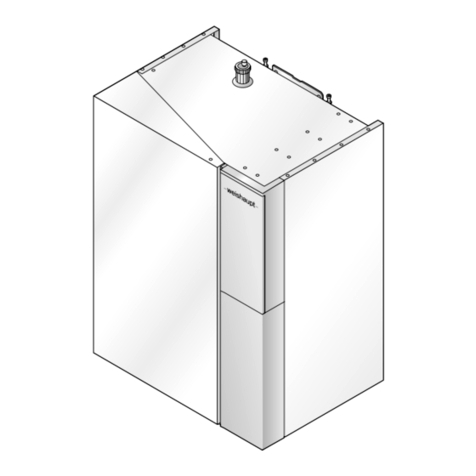
Fig. 3.1 Filling level of the brine expansion tank
It is normal for the filling level of the brine to fall a little
in the first month after the start-up of the system. The
filling level can also vary depending on the temperature
of the heat source. However it should never sink so far
that it is no longer visible in the expansion tank.
a
Caution!
Risk of damage!
The filling of the brine circuit in your
heat pump installation may only be
undertaken by authorised specialists.
Check the filling level of the brine circuit
at regular intervals and inform your
expert technician company if the filling
level in the brine expansion tank is too
low.
3.4.3 Accumulation of condensate (condensa-
tion water)
The evaporator, the brine pumps and the pipes in the
heat source circuit, as well as some components in the
coolant circuit, are insulated in the interior of the heat
pump, so that no condensate can accumulate. If conden-
sate should ever accumulate in small amounts this will
be collected by the condensate basin. The condensate
basin is located on the inside, in the lower part of the
heat pump. As a result of the heat generated inside the
heat pump, the condensate in the condensate pan eva-
porates. Small amounts of the accumulating condensate
can be drained off under the heat pump. In small
amounts, accumulating condensate should not be seen
as a fault in the heat pump.
3.5 Energy saving tips
Below you will find important tips to help you operate
your heat pump system in an energy and cost-saving
manner.
3.5.1 General energy saving tips
You can even save energy by your general behaviour:
— Ventilate correctly:
Do not leave windows or French windows tilted open,
but rather open the windows wide 3 or 4 times a day
for 15 minutes and turn down the thermostatic valves
or room thermostats while ventilating.
— Do not block the radiators to ensure that heated air
can circulate in the room.
— Use a ventilation system with heat recovery.
The optimum exchange of air in the building is always
guaranteed by the use of a ventilation system with
heat recovery (windows no longer need to be opened
for ventilation purposes). If necessary, the air flow can
be matched to your individual requirements with the
ventilation unit's remote control.
— Check that windows and doors are airtight: Keep shut-
ters and blinds closed at night, so that as little heat as
possible is lost.
— If a VR 90 remote control unit is installed as an acces-
sory, do not obstruct it with furniture, etc., so that it
can measure the circulating room air unhindered.
— Think when using water, for example, take a shower
instead of a bath, promptly renew the seals on drip-
ping taps.
3.5.2 Economising by the correct use of the control
system
Further economies can be made by the correct use of
the control system on your heat pump.
The control of the heat pump helps you to make savings
by:
— The correct selection of the heating flow temperature:
Your heat pump controls the heating flow tempera-
ture depending on the room temperature you have
set. Therefore select a room temperature that is just
sufficient for your comfort, for example 20°C. Every
degree over and above that means an increase in en-
ergy consumption of around 6% per annum.
— For floor heating use heating curves of < 0.4. For radi-
ator heating, we recommend that they are laid out to
manage with a maximum flow temperature of 50°C
at the lowest outside temperature; this corresponds
to heating curves of < 0.7.
— An appropriate setting of the hot water temperature:
Only heat hot water as much as is required for con-
sumption. Any further heating results in unnecessary
power consumption, and hot water temperatures of
Notes on operation 3