-6-
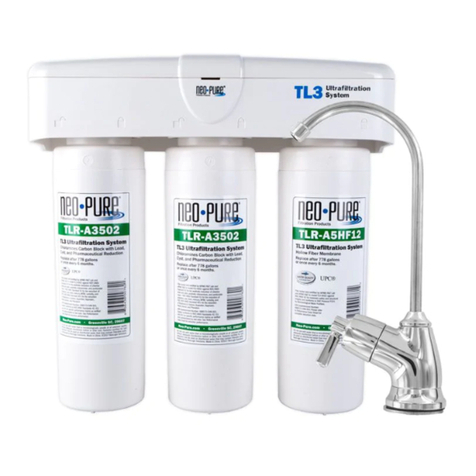
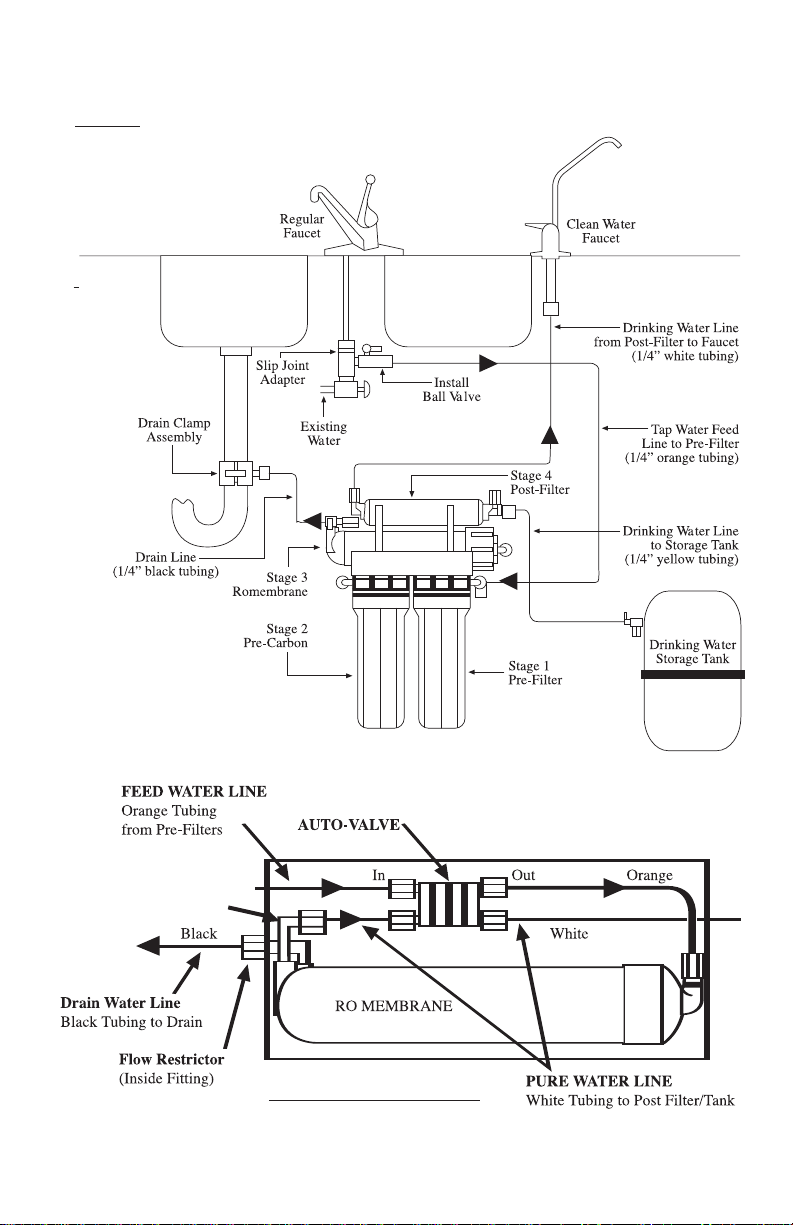
2.6 Installation of clean water faucet (Fig. 6)
The faucet should be positioned
with aesthetics, function, and con-
venience in mind. An ample flat
area is required for the faucet base
so that it can be drawn down tight.
The space under the sink below
where the faucet will be mounted
must be clear of any obstructions.
Some conditions may eliminate
the need to drill a hole in the sink
such as a faucet previously
installed in the sink, a hole cov-
ered by a chrome hole cover, or an
unused spray handle. If any of
these situations are present, you
may mount the faucet in one of
these holes.
The sink drilling process is not
complicated, but requires a certain
amount of caution and fore-
thought. Porcelain sinks can be
chipped if care is not exercised
when drilling the hole for the
faucet.
[NOTE: This procedure is for the non air gap faucet provided.]
2.7 Porcelain/Enamel over Steel or Cast Iron Sinks
Using a small diameter carbide tipped drill, drill a pilot hole completely through the
porcelain and the material underneath. Remove any metal chips that fall into the sink to
prevent rust stains. Place the spring-loaded porcelain cutter bit in to the drill chuck. Make
sure the pilot guide is insertedtightly. Insert the pilot guide onto the pilot hole. Push down
gently on the drill motor to apply light pressure to the porcelain surface. Start the drill
motor, turning as slowly as possible. After the initial cut has started, motor speed may be
gradually increased. The cut may require three to four minutes to complete. Going faster
could result in excessive chipping. Be sure a complete ring has been cut through the porce-
lain to the metal underneath.
Place the finish hole saw into the drill chuck. Make sure the pilot guide is inserted
tightly. Insert the pilot guide into the pilot hole. Begin cut using a slow speed and light
pressure until the porcelain has been penetrated to the material underneath. Remove the
saw from the hole and clean all debris from the porcelain surface. Reinsert saw into the
hole and cut through the remaining material.
Step 1.
Pilot Drill
Step 3.
Finish Hole
Saw
Step 2.
Spring Loaded
Porcelain Saw
(Relton Cutter)