Scalding Water Hazard. May result in serious burns.
When operating the pump, be sure to open at least one dis-
charge valve slightly to prevent the pump from overheating.
If the pump runs for a few minutes completely closed, it may
heat the water enough to scald someone when the valve is
opened. Overheating can damage the packing, seals and
other pump parts. If the apparatus builder has installed a by-
pass system or other provision designed to prevent overheat-
ing, opening a discharge valve may be unnecessary.
Pumping from Draft
After Pumping
1. If pumping anything but clean water, remove all intake
and discharge caps, open all valves and open all drains.
Flush entire system with clean, fresh water for several
minutes to remove all traces of impurities.
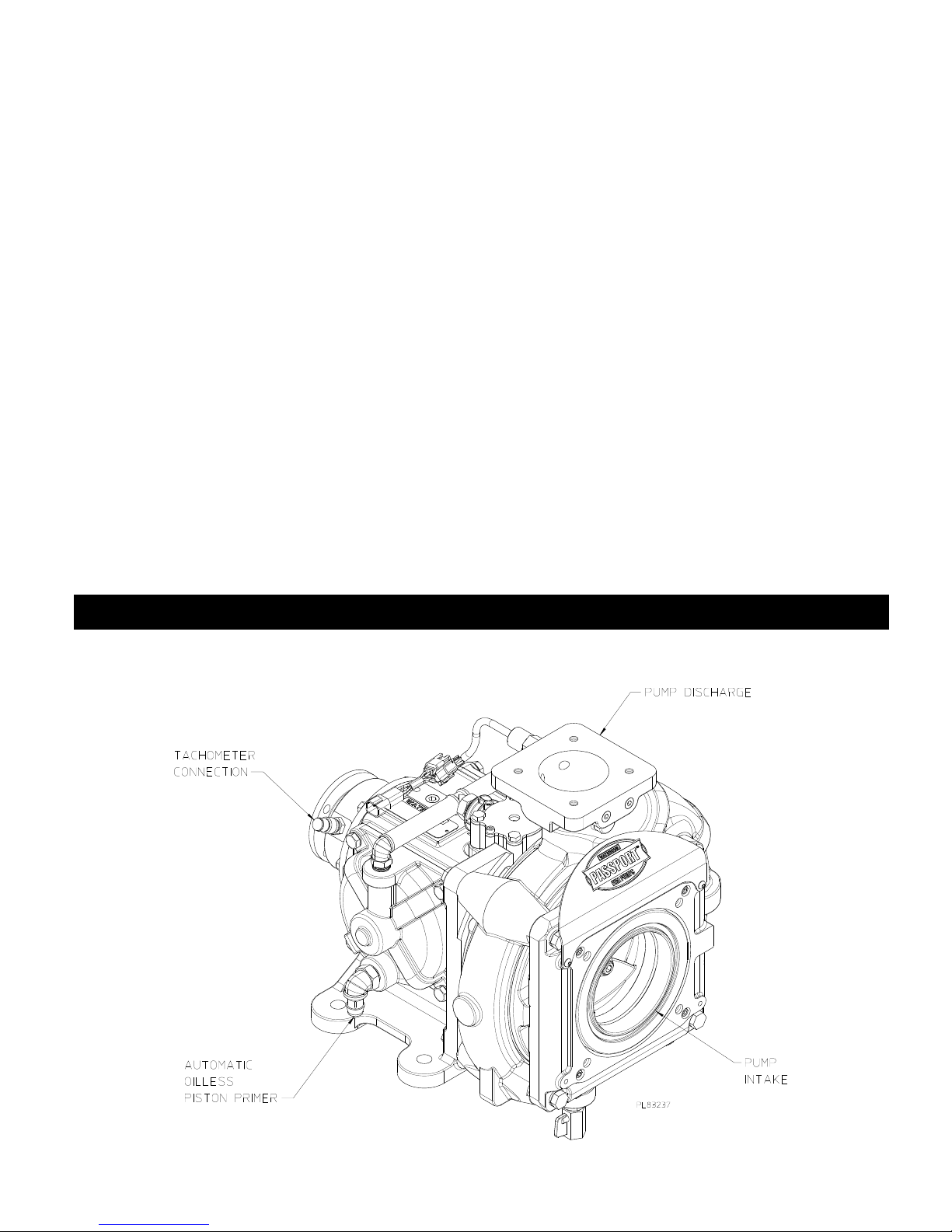
2. Cycle the piston primers. Operate them until all the fluid
is discharged from the piston primer discharge pipes.
NOTE: To get full capacity, quick prime and maintain
pump efficiency:
a. Position vehicle as near as possible to water supply.
b. Avoid humps and sharp bends in intake hose. Make
sure no part of hose is higher than pump inlet. (Air pock-
ets in intake hose may cause loss of prime or erratic
pump action, and may reduce pump capacity.)
c. Make sure all intake connections are tight and discharge
valves are closed.
d. Immerse intake strainer at least two feet (.5 M) below
water surface to prevent pump from drawing air. (Whirl-
pools forming above intake strainer indicate that strainer
is too close to surface of water.)
e. Make sure intake strainer is far enough from bottom to
prevent sand, gravel and other foreign matter from
being drawn into the pump.
6. Open suction valve (if equipped) as necessary to allow
water to enter the pump.
7. Engage pump drive in accordance to with the vehicle op-
eration instructions and accelerate engine to obtain de-
sired discharge pressure and capacity.
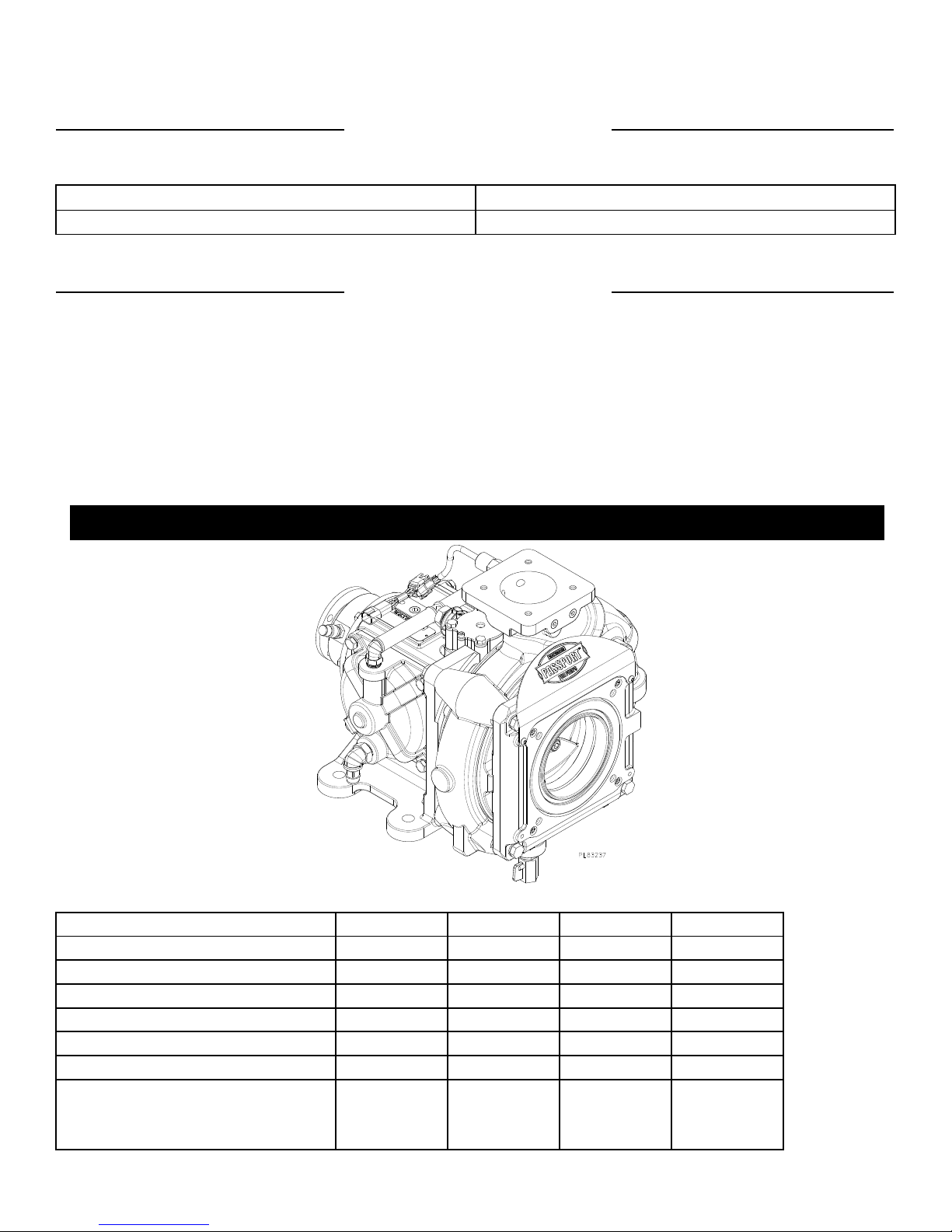
NOTE: The S200-P pump has an automatic priming
system that will engage or disengage when the dis-
charge pressure rises above or falls below a prede-
termined setting.
8. Open discharge valves, and accelerate engine to obtain
desired discharge pressure and capacity.
9. Set low pressure relief valve or other governing device
to desired pressure (relief valve or governing device not
supplied by Waterous).
3. If pump is kept full of water when not in use, make sure
water is clean and non-corrosive. Make sure the pump
is completely full or completely drained (never partially
full).
4. Disengage pump drive in accordance with the vehicle
operation instructions.
5. Close all drains and install intake and discharge caps.