WHITTAKER CONTROLS, INC.
A MEGGITT PLC COMPANY
MAINTENANCE MANUAL
SERVO MOTOR CONTROLLER – MODEL C159980
INDUSTRIAL PRODUCTS GROUP Revision 1.0 07/01/2005 Page 6
DESCRIPTION AND OPERATION
1. Description
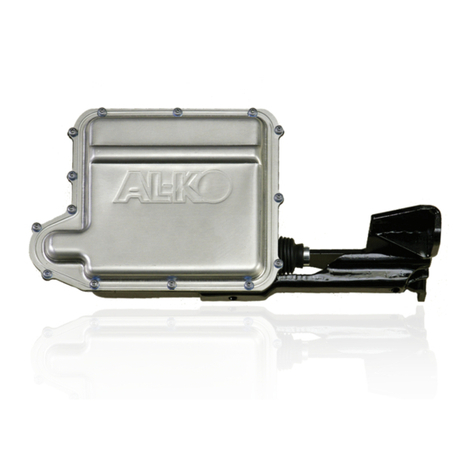
A. The Servo Motor Controller (see Figure 1) is installed remotely from the valve it controls, in its
own explosion proof container or in a separate customer furnished cabinet. In either case, the
controller must be located within 600 feet (182 meters) wire run length from the valve.
B. The controller consists of a servo amplifier, a position control I/O card and a power converter
packaged in a compact unit with readily accessible interface terminations. The servo amplifier
is pulse-width modulated.
C. The servo amplifier is mounted on a cold plate for improved heat conduction when enclosure
mounted.
2. Operation (Refer to Figure 2)
A. General
The controller is designed for control of high speed brushless DC servo motors for precision posi-
tioning of valves used on aero-derivative and frame DLE and SAC turbine engines.
B. Features
1) Speed and current control loops and many other functions, such as DC BUS status moni-
toring, softstart and recovery circuit management, and the protections thresholds detection,
carried out through numeric algorithms.
2) The digital mode allows a maximum stability related to the aging, the temperature and the
various application cases.
3) Settings are carried out through numbers calculated by means of analytic models and do
not depend upon analog calibrations.
C. Capabilities
1) Any 3-phase brushless DC motor can be driven by entering a set of parameters which
adjust the current loop and identify the motor’s electro-mechanical characteristics.
2) Any type of asynchronous motor can be very well driven by vector control, working as a
brushless servomotor, by entering the magnetization current (ID) and the slip gain (fre-
quency) additional parameters. Other parameters, used in connection with the hardware
features in common with brushless motors, remain active.