Properties
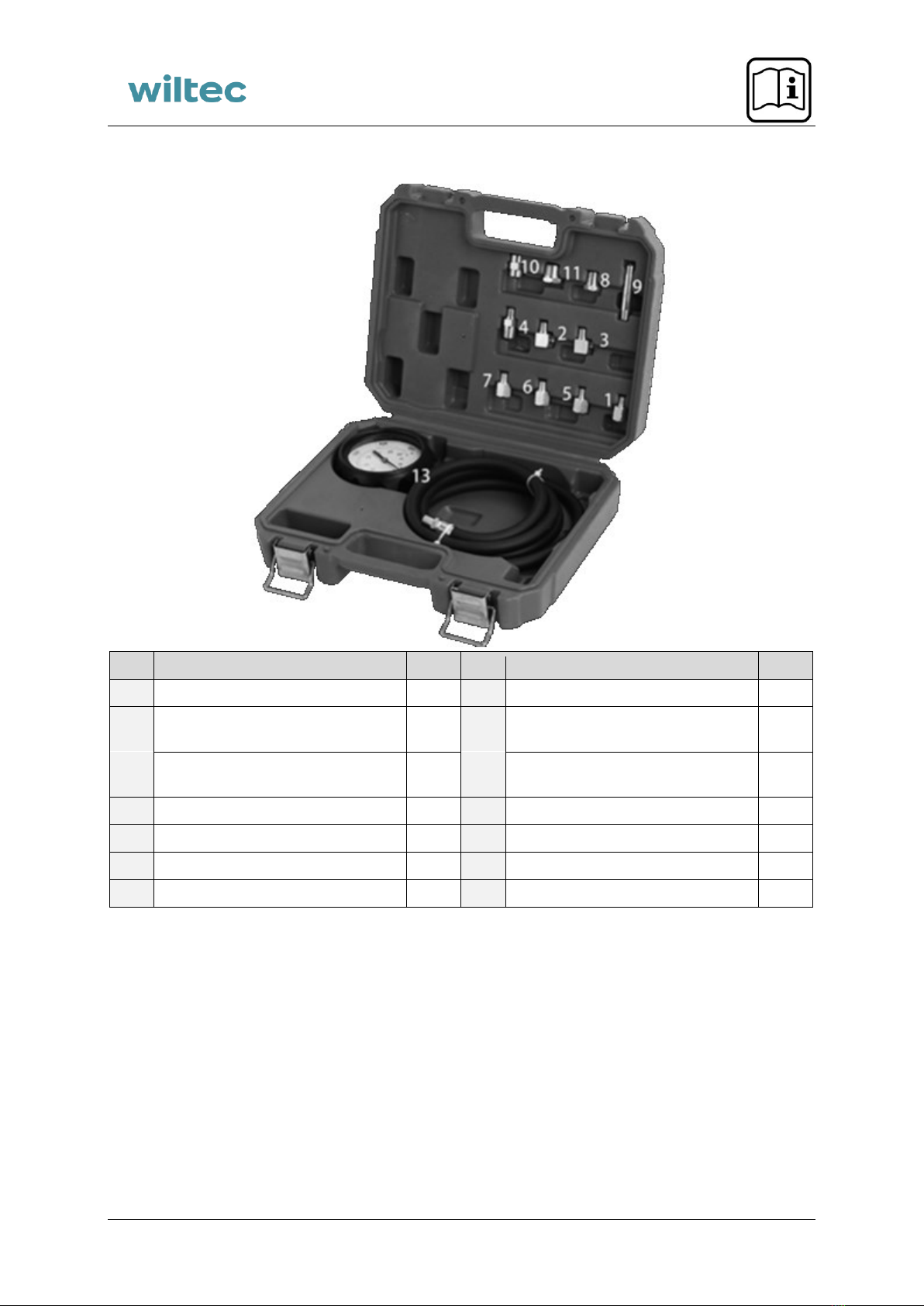
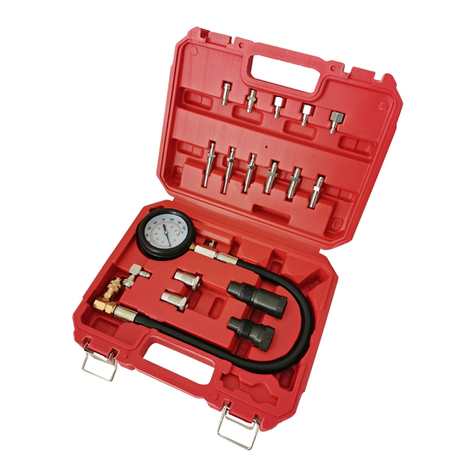
•Designed for checking engine oil pressure in cars and trucks
•Easy to read measuring device with two scales
•Contains 1.5-m oil-resistant hose with ⅛″ NPT and also adapters for ¼″ NPT and ⅜″ NPT
•Two measuring ranges: 0–35 bar (0–500 psi)
Use
Read the “Safety Instructions” section at the beginning of this manual, including all the text under
the subheadings, before setting up or using the product.
Note! Test the kit thoroughly before use.
1. Read the maintenance manual of the engine to be tested with the meter.
2. When testing the engine in a vehicle, the vehicle should be parked on a level surface, the trans-
mission in neutral, the parking brake applied, and the wheels blocked.
3. The oil pressure/temperature sensor is normally located on or near the oil pan on the lower part
of the engine. Thoroughly clean this area before continuing.
4. Only connect the meter when the engine is switched off and has cooled down.
5. Place a bowl under the sensor to catch the oil, remove the sensor and screw the meter into the
hole.
6. Attach the appropriate connector to the meter.
7. Check the oil level and top up with oil if necessary.
8. Start the vehicle and let it come to normal operating temperature. If necessary, ask an assistant
to maintain the correct speed indicated in the table.
9. Compare the reading on the meter with the numbers in the table. If the actual reading is lower
or higher than the values given in the table, have the engine serviced by a qualified technician.
10. Switch off the vehicle and let it cool down before removing the meter.
11. Replace the oil pressure/temperature sensor, top up oil if necessary, and dispose of and recycle
spilled oil in accordance with local and state laws and regulations.
12. Clean the tool, then store it in a room out of children’s reach.
Maintaining and repairing
Procedures not specifically explained in this manual must only be carried out by a qualified technician.
WARNING! TO PREVENT SERIOUS INJURY CAUSED BY ACCIDENTAL OPERATION, discon-
nect the tool from the vehicle being tested before performing inspection, maintenance, or cleaning. TO
AVOID SERIOUS INJURY CAUSED BY TOOL FAILURE, do not use damaged equipment. If unusual
noises or vibrations occur, have the problem inspected and repaired before further use.
1. Check the general condition of the unit BEFORE EACH USE. Check for loose moving parts,
cracked or broken parts, and any other condition that could affect safe operation.
2. Clean the outer surfaces of the device AFTER USE with a clean cloth.