USER INFORMATION
General Safety
WARNING
PERSONAL INJURY
Ensure the following:
•The oven is not overloaded with firewood such that burning logs may inadvertently roll out the door when the door is open or removed.
•The oven temperature does not exceed 900°F. Exceeding this temperature leads to "over-firing", a situation when flames spill out the front of the oven
when the door is opened.
•The oven door does not become completely closed when a fire is burning in the oven. Closing the door completely cuts off oxygen to the fire and may
cause the fire to erupt suddenly when the door is subsequently removed. Also, gasses from the fire may create a pressure build up behind the door,
causing the door to blow out like a projectile.
•Liquid fuel (firelighter fluid, gasoline, lantern oil, kerosene, or similar liquids) is not used to start, “freshen up,” or maintain the fire. These types of fuels
may cause explosions or flashbacks to occur, resulting in severe burns.
•Elbow-length, insulated, heat-resistant gloves that are rated as flame-retardant and non-combustible up to a minimum of 1000°F° (538C°) are worn
when touching any part of the oven's exterior while the oven is hot. (The oven's exterior temperature can exceed 200°F (93°C), while the chimney exterior
temperature can exceed 400°F (204°C)).
•The oven's exterior and interior temperature have cooled down to less than 85°F (30°C) when moving or storing the oven
•Maximum cooking temperatures are not exceeded.
•The oven is not used as a general wood fire for outdoor heating or any other purpose other than cooking or baking as outlined in these instructions.
•A well-maintained fire extinguisher is available close by at all times while the oven is in use.
Failure to comply with these instructions may result in personal injury.
Oven Location
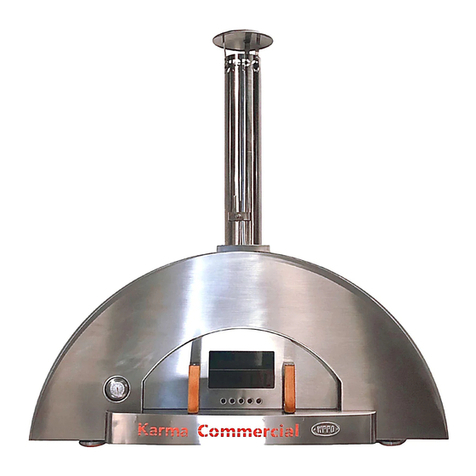
Your WPPO LLC Oven is designed for outdoor use only. When locating your oven, ensure the following:
•Maintain a clearance distance of at least 12ft. (3.7m) between the oven and any combustible materials while the oven is in use. Take into consideration
walls, ceilings, awnings, canopies, foliage, power lines, construction materials, and clearance to combustibles from all directions of the oven when in use.
•Do not install the oven at a backward-leaning angle where water could enter the oven and collect and pool, causing damage.
Firing Up Your Oven
1. Ensure the oven interior is clean. Remove ashes from any previous fires before lighting a new fire.
2. Open the flue located on the chimney.
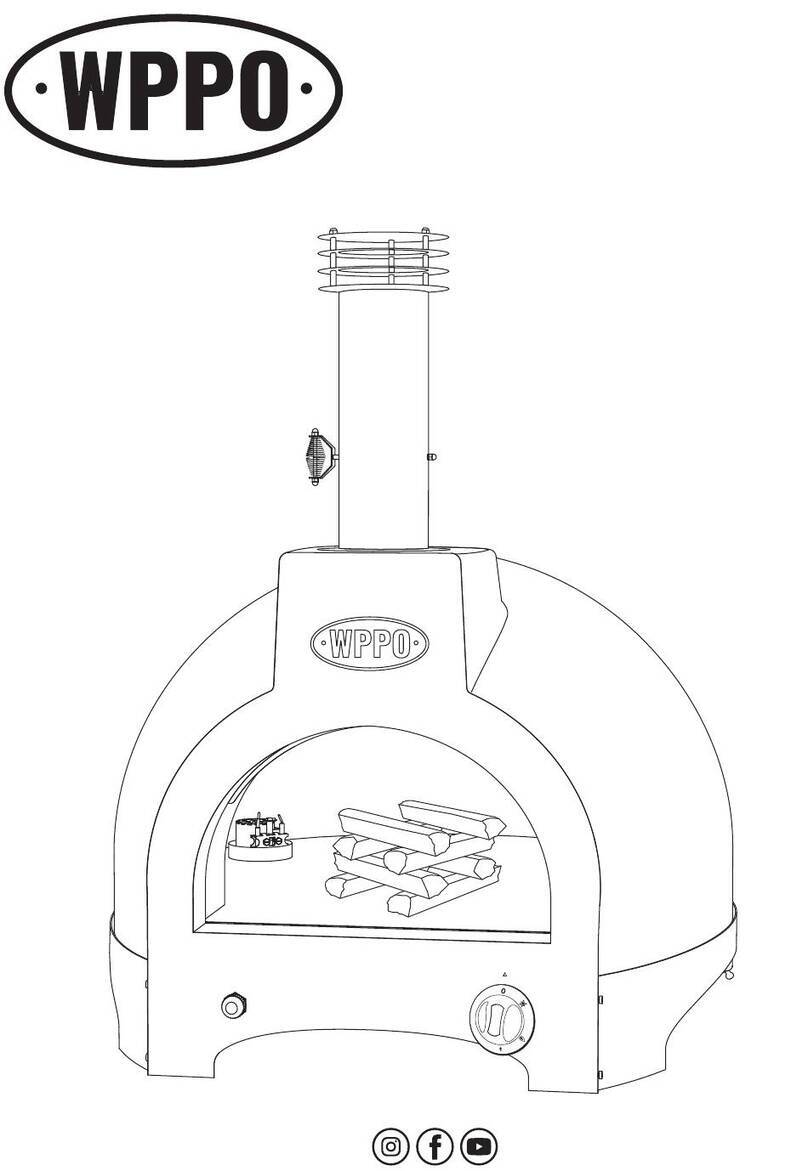
3. Stack six kindling sticks, Lincoln-log style, in the center of the oven’s cooking floor. (Oven efficiency depends on the quality of the firewood used.)
4 Place the fire starter in the center of the kindling stack.
5. Ignite the kindling stack.
6. Close the flue and turn the damper. Place the oven door so that the oven opening is blocked about three quarters of the way. This narrower opening
allows the damper to draw fresh air into the oven's interior.
7. Using tongs or a metal pizza peel, build the fire up slowly by adding wood to the back and sides of the oven. Once the fire is burning consistently, add
wood, a few pieces at a time, to sustain the required heat. To maintain the most consistent oven temperature, use your metal pizza peel to place any new
wood inside of the oven away from the active fire for a few minutes. Do not toss or throw wood into the oven or directly onto the fire.
8. Monitor the oven's temperature gauge, or use a point-and-shoot infrared thermometer, to ensure the oven is maintaining the desired temperature. (If
using a point-and-shoot infrared thermometer, aim the device at the cooking surface. Shooting an infrared thermometer directly into the flames will give varying
and less helpful readings.) When the wood has warmed, move it over onto the coals, where it will light quickly with a minimum of smoke.