4
General Warnings related to Warming Animals
Hypothermia occurs in 85% of anesthetized small animals. The Darvall Cozy Warm Air Heating System
is thermostatically controlled, intended to safely warm caged or kenneled animals before anesthesia,
during recovery and critical care as well as warming animals during anesthesia, surgery, dentistry,
minor procedures, endoscopy, imaging etc.
Animals should be under observation during use of warming devices and their body temperature
monitored frequently (usually every 20 min) or continuously.
Do not actively warm animals (mammals) above 37oC/98.6oF (for reptiles use lower temperatures)
To prevent the risk of burning skin the Cozy Heater is designed to be connected to a purpose-made
semi-permeable forced warm air blanket that distributes the warm air evenly around the animal.
Never place the heater nozzle next to an anaesthetized animal without connecting it to a purpose
made warming blanket. Even at 46oC/115oF, burning can occur with skin contact, typically>2hrs.
Darvall has invested 10 years of research into developing and manufacturing an innovative range of
blankets designed to deliver warm air safely, effectively and uniformly to caged and anaesthetized
animals (International Patents granted and applied for). The full range of Darvall Warm Air Blankets
for use in cages, anesthesia or surgery are shown on Page 6.
The Darvall Twist-Connect Kennel Door Adapter ducts warm air safely into kennels. Simply twist to
lock/unlock from grill or wire doors and rapidly moved between kennels. Darvall’s adapter permits
warm air to be ducted into kennels with secure closure of the door preventing risk of animals falling
out and enabling rapid access in an emergency. Use of the kennel door adapter will reduce risk of
physical damage to heater hoses.
The Darvall Cozy Warm Air Heater has a 0.2um HEPA air filter which should be replaced every 6
months or 500 hours of use. Instructions for changing the filter are on Page 17.
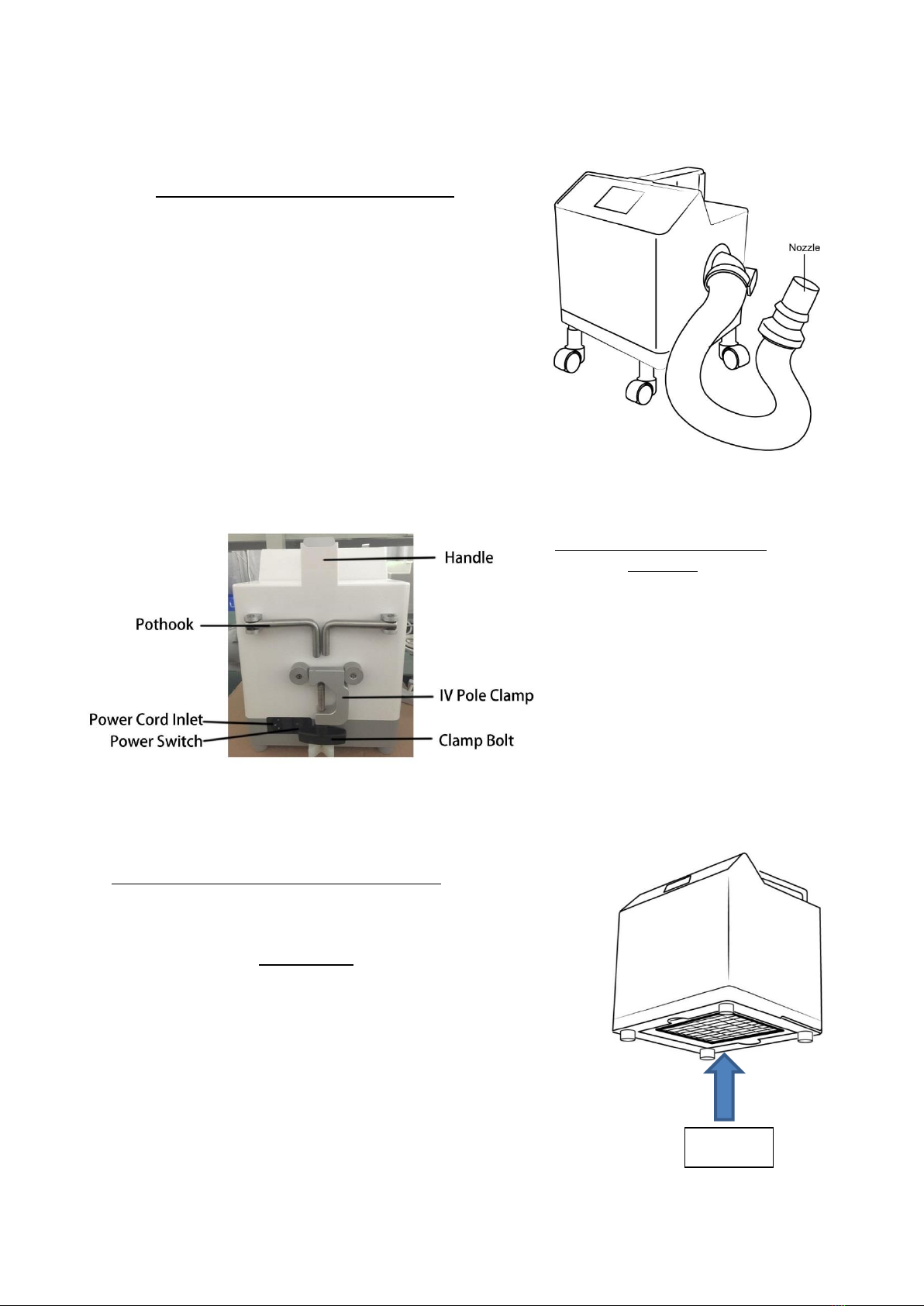
The Darvall Cozy Warm Air Heater is intended to be used on wheels to elevate the heater above
the floor and minimize contamination of the HEPA air filter with dust and hair.
There is Minimal Infection Risk using warm air heating during surgery in an appropriate manner.
For any sterile procedure use of a new Darvall Warm Air Blanket is advisable. In human surgery, use
of forced warm air heating is associated with lower rates of infection if the heater is properly
maintained, the filter changed regularly and new warm air blankets are used for each surgery
compared to no warming.