manuals.online logo
Brands
  1. Home
  2. •
  3. Brands
  4. •
  5. Aiphone
  6. •
  7. Receiver
  8. •
  9. Aiphone MYW-MD User manual

Aiphone MYW-MD User manual

Other Aiphone Receiver manuals

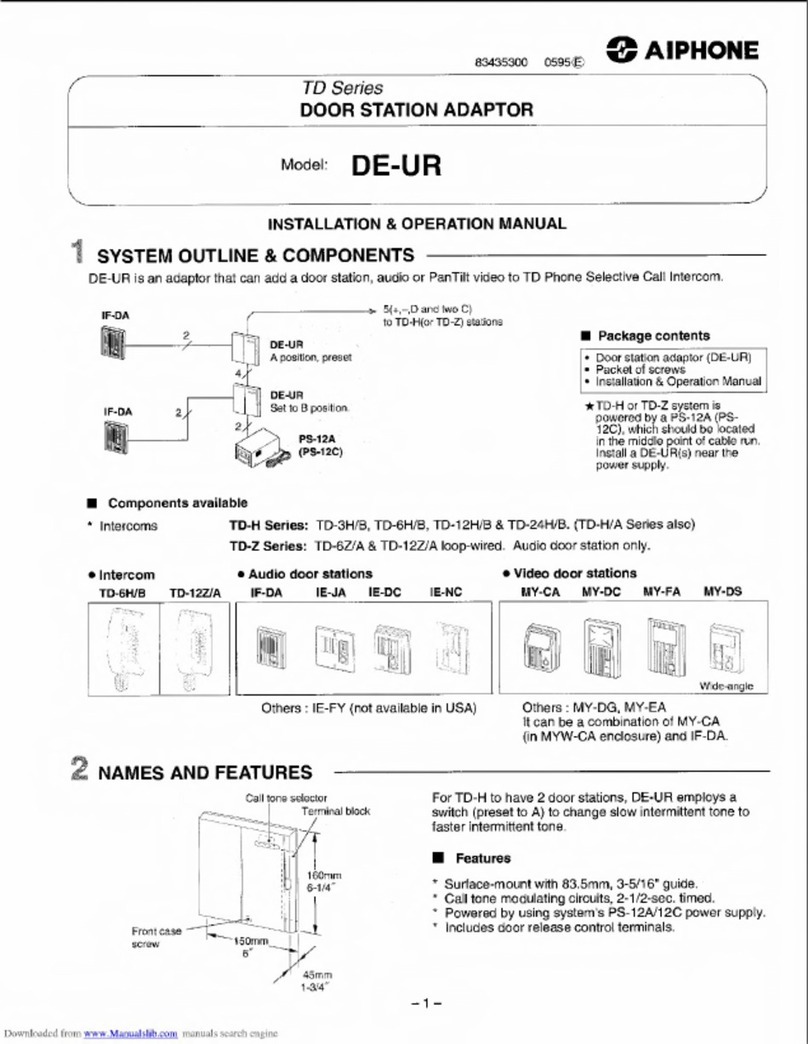
Aiphone LEF Series User manual

Aiphone

Aiphone LEF Series User manual

Aiphone AXW-AVR User manual

Aiphone

Aiphone AXW-AVR User manual

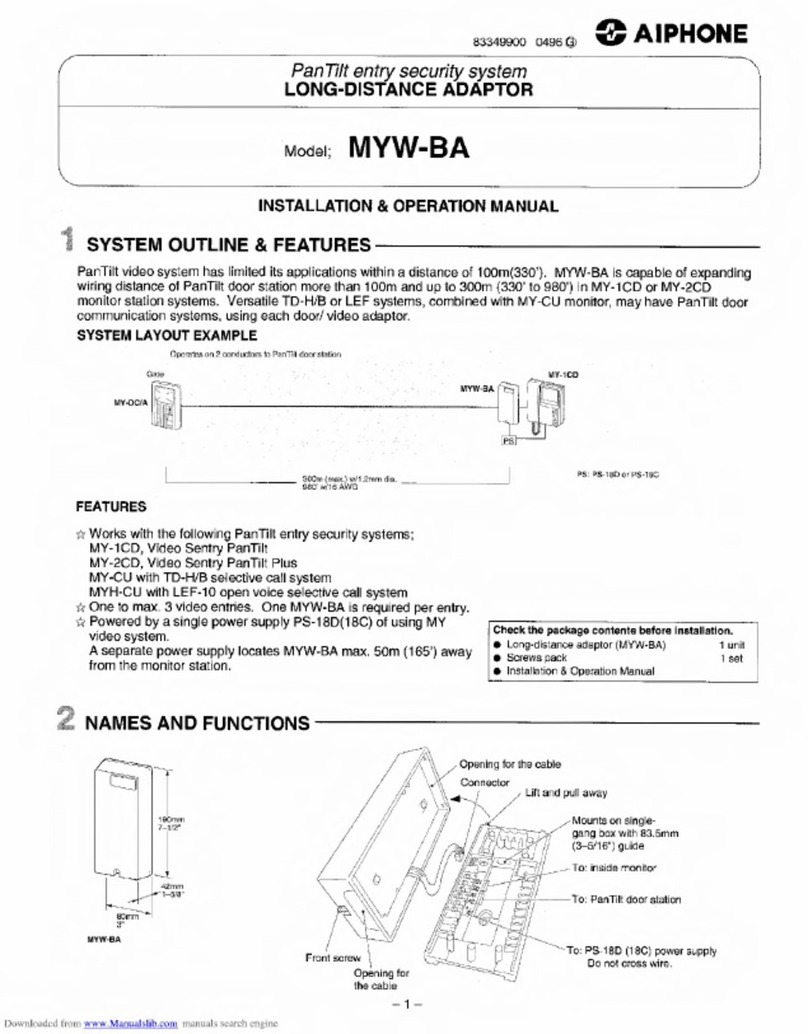
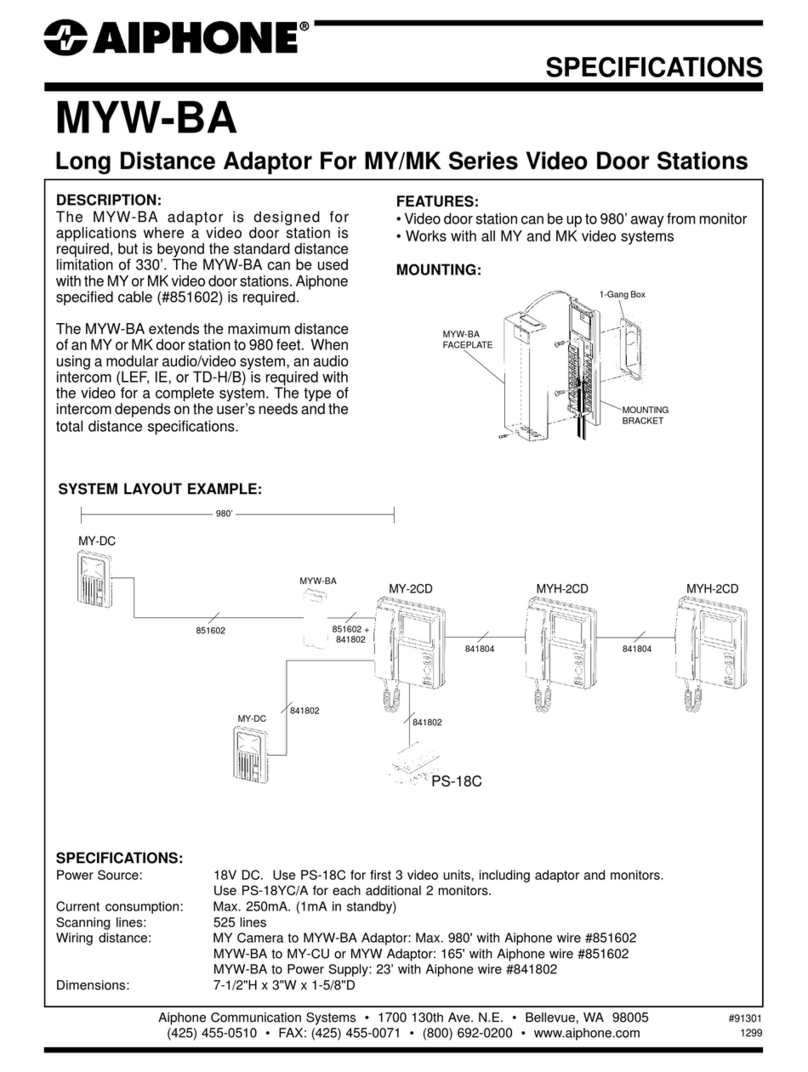
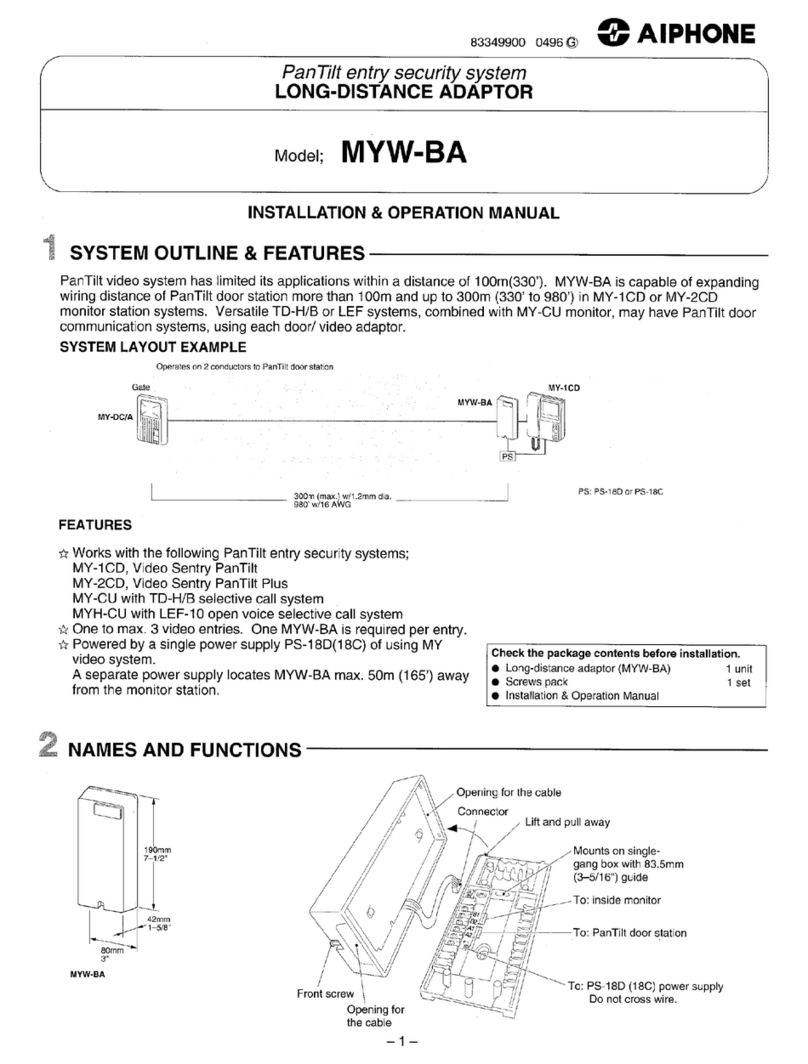
Aiphone MYW-BA User manual

Aiphone

Aiphone MYW-BA User manual

Aiphone IS-IPRY Owner's manual

Aiphone

Aiphone IS-IPRY Owner's manual

Aiphone PS-12F User manual

Aiphone

Aiphone PS-12F User manual

Aiphone MYW-BA User manual

Aiphone

Aiphone MYW-BA User manual

Aiphone IXW-MA User manual

Aiphone

Aiphone IXW-MA User manual

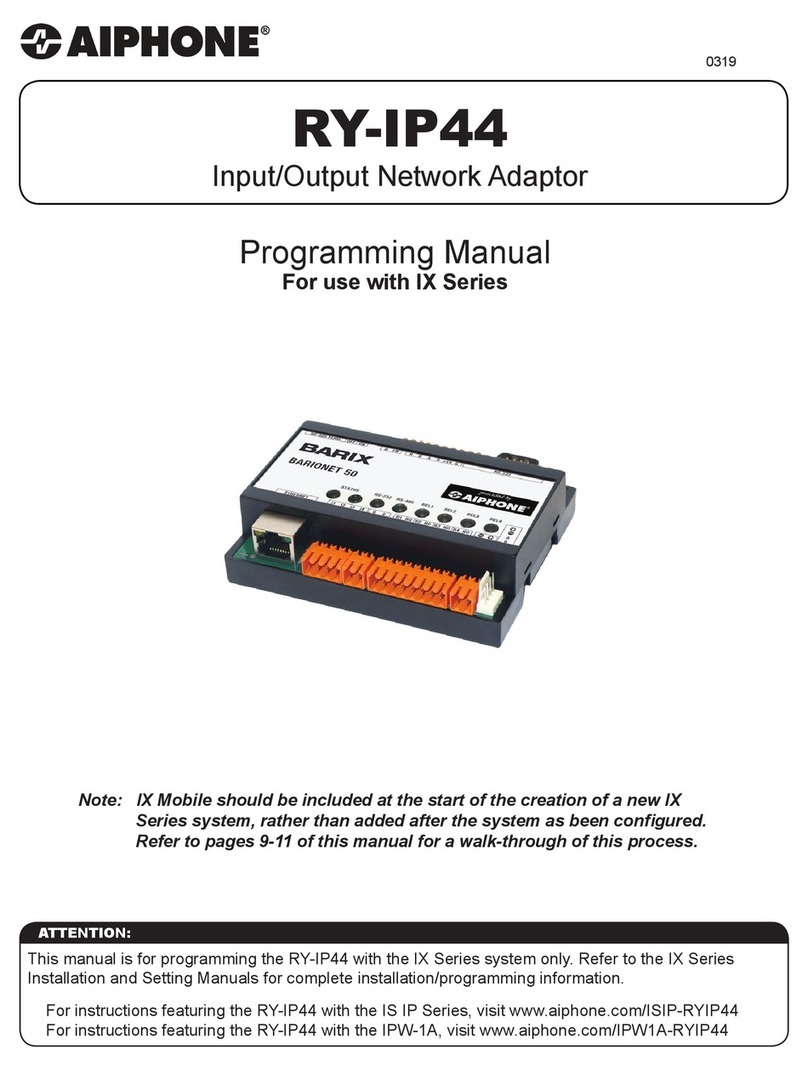
Aiphone RY-IP44 Owner's manual

Aiphone

Aiphone RY-IP44 Owner's manual

Aiphone KCW-D/B User manual

Aiphone

Aiphone KCW-D/B User manual

Aiphone TD-H Series User manual

Aiphone

Aiphone TD-H Series User manual

Aiphone MYW-BA User manual

Aiphone

Aiphone MYW-BA User manual

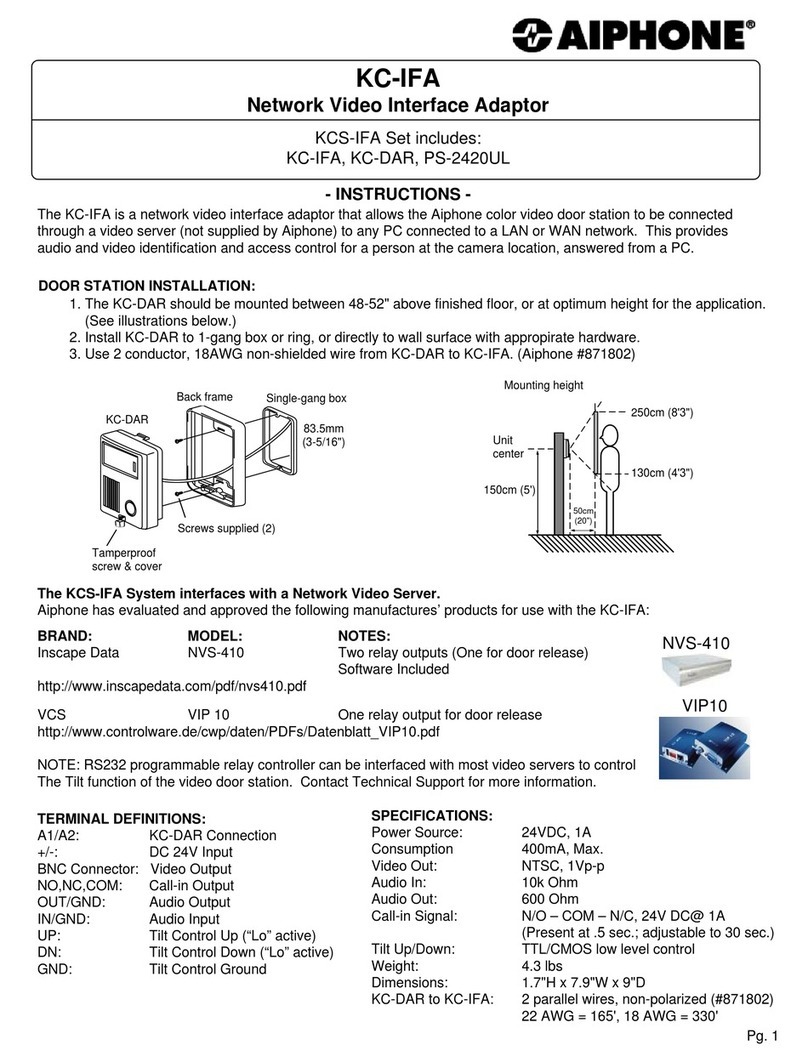
Aiphone KCS-IFA User manual

Aiphone

Aiphone KCS-IFA User manual

Aiphone SKK-620C User manual

Aiphone

Aiphone SKK-620C User manual

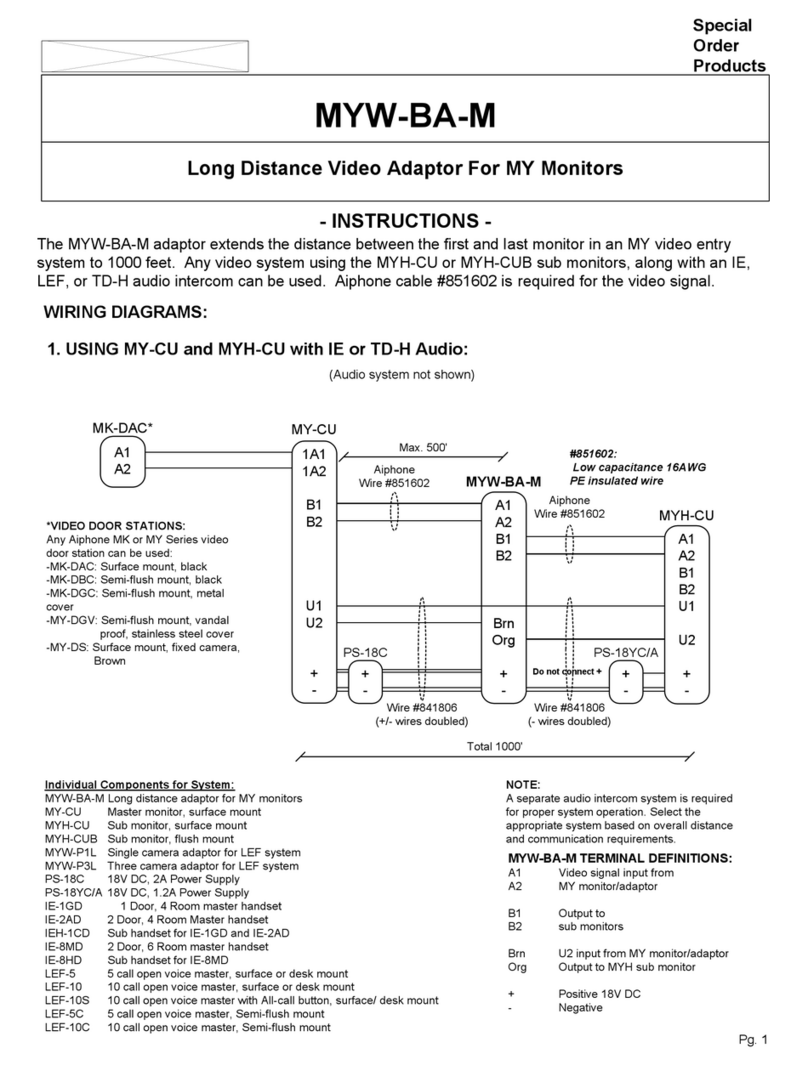
Aiphone MYW-BA-M User manual

Aiphone

Aiphone MYW-BA-M User manual

Aiphone MYW-BA User manual

Aiphone

Aiphone MYW-BA User manual

Aiphone DAK-2S User manual

Aiphone

Aiphone DAK-2S User manual

Aiphone NB-U User manual

Aiphone

Aiphone NB-U User manual

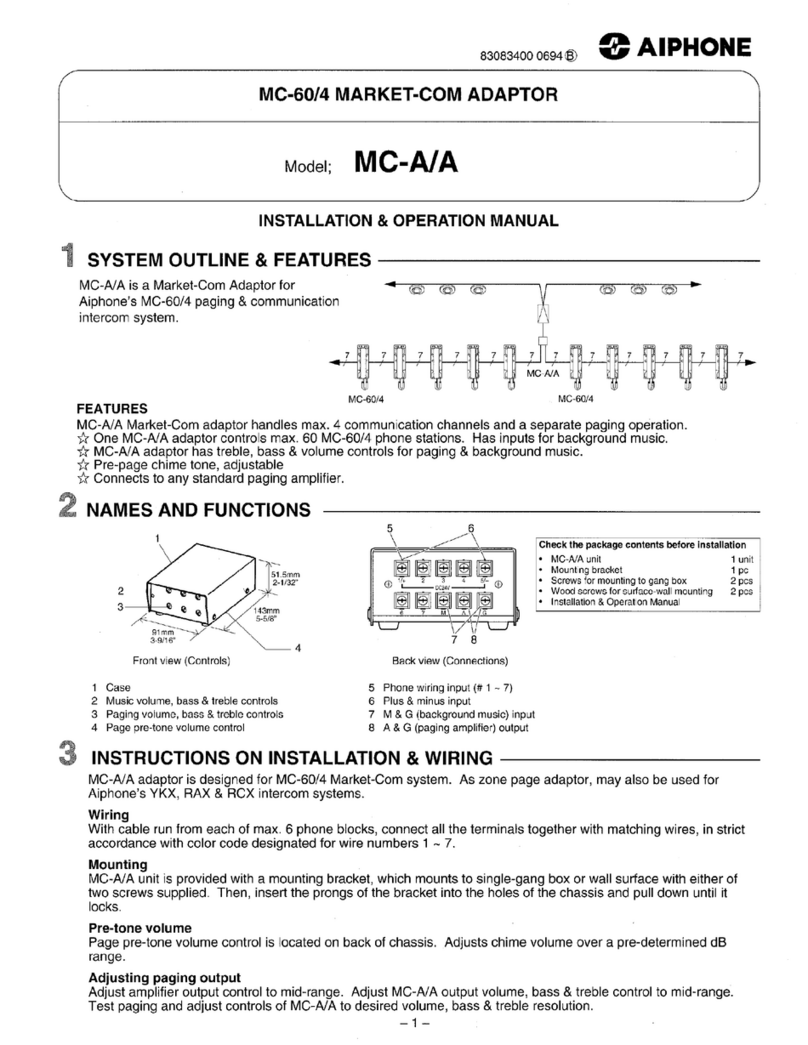
Aiphone MC-A/A User manual

Aiphone

Aiphone MC-A/A User manual

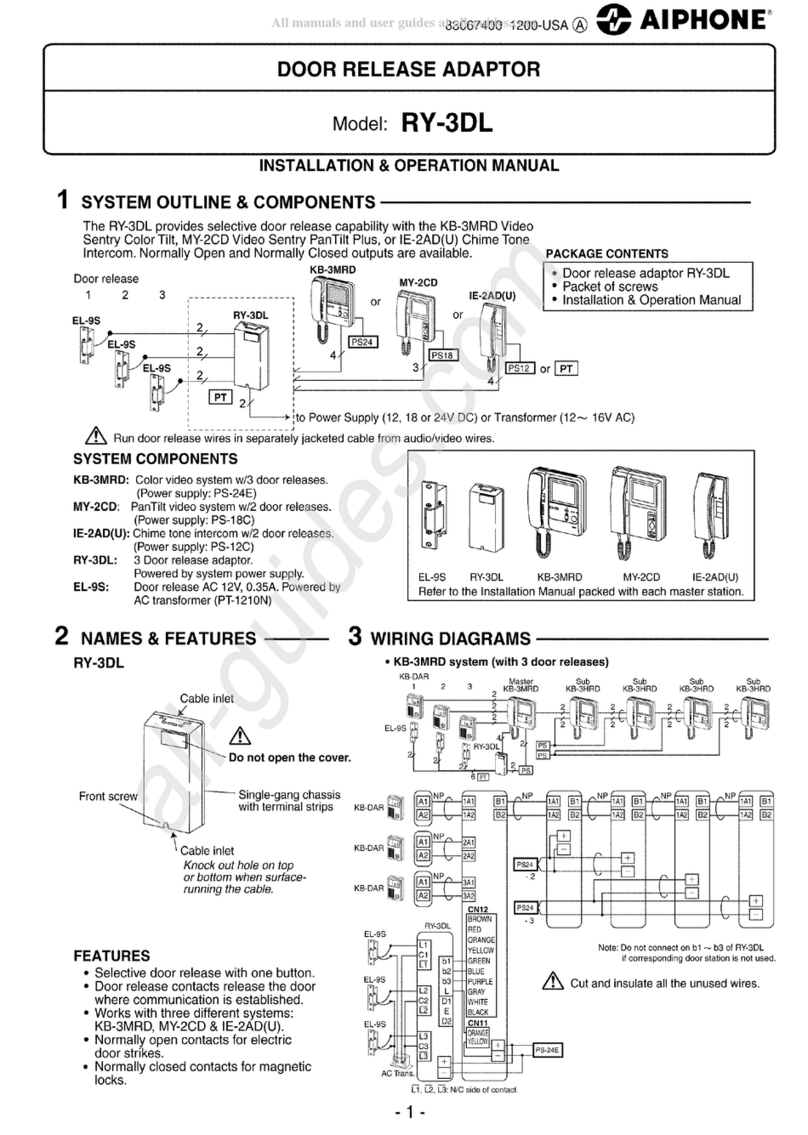
Aiphone RY-3DL User manual

Aiphone

Aiphone RY-3DL User manual

Popular Receiver manuals by other brands

Televes ZAS HD SAT user manual

Televes

Televes ZAS HD SAT user manual

Realistic DX-75 Operating and service instructions

Realistic

Realistic DX-75 Operating and service instructions

Saris 4620 Assembly instructions

Saris

Saris 4620 Assembly instructions

Mini DTR 206C PVR user manual

Mini

Mini DTR 206C PVR user manual

RF Elements TwistPort manual

RF Elements

RF Elements TwistPort manual

Denon DN-200WS user guide

Denon

Denon DN-200WS user guide

Yamaha RX-V467 owner's manual

Yamaha

Yamaha RX-V467 owner's manual

Russound SaphIR 858 instruction manual

Russound

Russound SaphIR 858 instruction manual

Quasonix RDMS Firmware update procedure

Quasonix

Quasonix RDMS Firmware update procedure

Pioneer XV-HTD1 Service manual

Pioneer

Pioneer XV-HTD1 Service manual

ATZ HDMI-V2-44HE150 manual

ATZ

ATZ HDMI-V2-44HE150 manual

Sony XNV-770BT MyTomTom Specifications

Sony

Sony XNV-770BT MyTomTom Specifications

Grundig STR 7122 TWIN Service manual

Grundig

Grundig STR 7122 TWIN Service manual

Creative Blaster Modem user guide

Creative

Creative Blaster Modem user guide

Panduit ATLONA AT-OME-RX11 installation guide

Panduit

Panduit ATLONA AT-OME-RX11 installation guide

VOLTCRAFT UTPS-40 operating instructions

VOLTCRAFT

VOLTCRAFT UTPS-40 operating instructions

JVC KW-ADV794 instructions

JVC

JVC KW-ADV794 instructions

Litelink VT-1001 operating instructions

Litelink

Litelink VT-1001 operating instructions

manuals.online logo
manuals.online logoBrands
  • About & Mission
  • Contact us
  • Privacy Policy
  • Terms and Conditions

Copyright 2025 Manuals.Online. All Rights Reserved.

- INSTRUCTIONS -
The MYW-MD adaptor converts the video from a 2-wire signal to a standard coaxial video signal
(Demodulator mode). It can also be used to convert a standard CCTV camera's signal to a 2-wire signal,
compatible with Aiphone's MY series video monitors (Modulator mode).
MYW-MD
Video Modulator/Demodulator for MY series Video Systems
MYW-MD TERMINAL DEFINITIONS:
MODULATOR:
MA1 2-Wire output to
MA2 MY monitor/adaptor
MV+ Coax input: center cond.
MV- Coax input: Braided shield
+Positive 18V DC
-Negative
Input signal requirements:
75 ohm, 1V peak-to-peak.
Coax: Solid copper core with copper braid.
DEMODULATOR:
DA1 2-Wire input from
DA2 MY monitor/adaptor
DV+ Coax output: center cond.
DV- Coax output: Braided shield
+Positive 18V DC
-Negative
Output signal:
75 ohm, 1V peak-to-peak.
Coax: Solid copper core with copper braid.
Special
Order
Products
MODULATOR
MYW-MD to integrate a Standard CCTV camera with an Aiphone Monitor
*MYW-MD Can also be used with:
MY-1CD
MY-CU
MYW-P1L
MYW-P3L (input only)
Center cond. to MV+
Braid to MV-
CCTV Camera
75 Ohm, 1V Peak-to-peak
(Independently powered)
1A1
1A2
2A1
2A2
B1
B2
+
-
MY-2CD*
MY-DC
A1
A2
MA1
MA2
MV+
MV-
+
-
MYW-MD
PS-18C
+
-
Polarized
JUMPER CLIP: (Located under rubber cover in upper right corner of the faceplate of the MYW-MD)
Set in Modulator (top) position from factory.
Ensure that jumper clip is
between the top two pins.
Pg. 1
Center cond. to MV+
Braid to MV-
CCTV Camera
75 Ohm, 1V Peak-to-peak
(Independently powered)
Center cond. to MV+
Braid to MV-
CCTV Camera
75 Ohm, 1V Peak-to-peak
(Independently powered)
MA1
MA2
MV+
MV-
+
-
MYW-MD
Polarized
MODULATOR
Master Sentry Intercom and Video System with Standard CCTV Cameras
MYW-P3L
MY-DC
A1
A2
PS-18C
+
-
MA1
MA2
MV+
MV-
+
-
MYW-MD
Polarized
1A1
1A2
2A1
2A2
DA
DB
E
R
12+
12-
EL2
KA
KB
18+
18-
3A1
3A2
B1
B2
U1
U2
18+
18-
A1
A2
U1
U2
+
-
MYH-CUB*
10
9
E
R
12+
12-
L
K10
K9
LEF-10C*
1
E
-
LE-DA*
NOTES:
1. In the above system example, the CCTV
cameras are addressed by pressing the
MONITOR button on the MYH-CUB. Press once
to turn on camera 1 (MY-DC), press again to
switch to camera 2 (CCTV #1), pressing
MONITOR a third time will switch to Camera 3
(CCTV #2) and a fourth time turns the monitor
off.
2. The LE-DA will become active by selecting
station #9 on the LEF-10C. Selecting this
station will also activate CCTV camera #2. The
camera will not activate when the LE-DA calls
in.
System Configurations:
1 Aiphone video door station and 2 CCTV cameras
or
2 Aiphone video door stations and 1 CCTV camera
Optional:
Part #261380 - Video Output connector for MYW-P3L.
(Provides a 1V peak-to-peak video signal output.) ONLY WIRING RELATING TO THIS APPLICATION
IS SHOWN HERE. SEE PRODUCT INSTRUCTIONS
FOR COMPLETE WIRING INFORMATION.
JUMPER CLIP: (Located under rubber cover in upper
right corner of the faceplate of the MYW-MD)
Set in Modulator (top) position from factory.
Ensure that jumper clip is
between the top two pins.
Separate video cable from
intercom cable
* Any LE or LS series
door station may be used.
* Any 5 or 10 call LEF
series master can be
used.
* Use MYH-CU for surface
mount applications.
Pg. 2
DEMODULATOR
MYW-MD used for VIDEO OUTPUT with Aiphone MY series Video Entry Systems
The picture from the Video Door Station can be seen at standard monitors whenever the Aiphone system
is activated. MY-1CD
JUMPER CLIP: (Located under rubber cover in upper
right corner of the faceplate of the MYW-MD)
Move to Demodulator (lower) position.
Coax output to standard video
input. (CCTV monitor, RF
modulator, or into cable
distribution network through a
multiplexer.)
* Used for video OUTPUT with
MY-1CD, MY-CU, MYW-
P3CB MYW-P1L, and MYW-
P3L.
DEMODULATOR
MY Video Door Station with Standard Monitor (No audio communication or PanTilt capabilities)
MY-DC
A1
A2 Polarized DA1
DA2
DV+
DV-
+
-
MYW-MD*
Red
Blk
PS-18YC/A
Center cond. to DV+
Braid to DV-
MY-DC*
A1
A2 DA1
DA2
DV+
DV-
+
-
MYW-MD*
+
-
PS-18C
Center cond. to DV+
Braid to DV-
IMPORTANT:
CN2 speaker microphone connector inside
Aiphone Video door station must be
unplugged to prevent the possibility of
feedback.
To standard monitor
or monitor input on a
video switcher.
Ensure that jumper clip is
between the bottom two pins.
JUMPER CLIP: (Located under
rubber cover in upper right corner
of the faceplate of the MYW-MD).
Move to Demodulator (lower)
position.
Ensure that jumper clip is
between the bottom two pins.
TO POWER THE CAMERA:
(1) WHEN IN USE
- Install a switch or relay contact in series with the "+" terminal from the power supply (see diagram.)
- Solder a jumper between points labeled AA on the MYW-MD main PC board. (see Illustration)
This allows the camera to be activated manually, or when the relay contact is activated from a separate source.
(2) CONTINUALLY
- Solder a jumper between points labeled AA on the the MYW-MD main PC board. (see Illustration)
This will provide continuous power to the camera, which may cause the camera to be warm.
Note: Continually powered, the overall life of the camera will be reduced and condensation may occur.
Solder jumper
wire between two
holes in land
pattern.
AA
Solder side
view of PC
board.
1A1
1A2
+
-
*Any MY
series camera
can be used
Standard 9"
Monitor
Pg. 3
IMPORTANT:
Modulator Deviation Control: Contrast control located underneath the cover in the upper right corner of the unit.
This applies only when the MYW-MD is used with a CCTV camera. To adjust the picture for more contrast, turn the
variable resistor clockwise with a small screwdriver.
OPERATIONS
MODULATOR:
Using the MODULATOR to Integrate a CCTV camera with an Aiphone 2-wire video system:
1. The view from the CCTV camera can be seen on the Aiphone MY monitor by pressing the MONITOR button. With
multi-camera systems (MY-2CD, MYW-P3CB & MYW-P3L), the cameras will come up sequentially. (e.g. One
press of MONITOR button brings up camera 1, second press brings up camera 2.) After the last camera in the
system is activated, the next press of the MONITOR button will turn off the monitor. If the monitor is left on, it will
automatically time out after 2-½ minutes.
2. When using a CCTV camera with the LEF/MY system, an audio sub station can be installed near the camera to
provide both audio and video monitoring. The station is activated simultaneously from the LEF master
station through the proper connection of the "K#" terminal of the master to the MYW-P3L adapter.
DEMODULATOR:
Using the Demodulator for VIDEO OUTPUT with the Aiphone 2-wire video systems:
1. When the call button is pressed on the MY door station, the inside monitor station will ring and the picture will
come on. At that time, the video signal out of the MYW-MD adaptor will be present, and the picture can be seen
on the remote monitor.
2. When the MONITOR button on the inside Aiphone station is pressed, the picture will come up for approximately
2-½ minutes and video signal sent to the monitor via the MYW-MD.
3. The video signal can be connected to any receiving device that accepts a composite video signal (75 ohm, 1V
peak-to-peak). This could be a standard CCTV monitor, a video input on a switcher or a multiplexer
system that modulates the video onto a cable TV channel. To take the video signal directly into a TV,
use a spare video input or go through an RF modulator.
Using the Demodulator to integrate the MY video door station with a standard CCTV monitor:
(No audio communication or PanTilt is possible with this application)
1. To view the camera location at any time, the camera must be powered at all times, or a switch must be installed
to turn it on. To do this, the PC board must be modified by adding a jumper wire in the location indicated on
the wiring diagram on page 3.
2. There is no PanTilt control of the camera when used in this application. To adjust the angle of the MY-DC at the
time of installation, remove the Lexan® dome and move the camera head to the desired angle. Replace the
dome and install the unit. If an MY-CA video door station is used, the camera view will be centered and is not
adjustable.
3. If the camera is powered continually, there will always be a video output from the MYW-MD. There is no audio
communication possible through the door station. This application will shorten the life of the camera.
SPECIFICATIONS:
Power: 18V DC. Use Aiphone model PS-18C (or PS-18YC/A with MY-1CD)
Current consumption: 100mA as Modulator; 500mA as Demodulator
Wiring distance: ALL DISTANCES ARE USING 18 AWG WIRE
Modulator: Max. 330' from MYW-MD to MY Monitor/adaptor
Demodulator: Max. 30' from MY monitor when used for video output
Max. 330' from MY door station when used with a standard monitor
Power supply: Max. 16' to MYW-MD
Dimensions: 5-1/2"H x 3"W x 1-1/2"D
COAXIAL CABLE: 75 ohm, copper center conductor, copper braid, 95% coverage.
DC resistance: Max, 15Ωper 1000 feet.
Aiphone Communication Systems
1700 130th Ave. N.E.
Bellevue, WA 98005
(425) 455-0510
FAX (425) 455-0071
Toll Free Technical Support:
1-800-692-0200
FAX: 1-800-832-3765
E-mail [email protected]
Pg. 4
MYW-MD Instr.
1198bkjd