Design Parameters
Typeofdryer:Refrigerated
Powersupply:115,230,460Volt/singleorthree
phase/60Hz
Refrigeranttype:R-134A&R-404A
ChemicalComposition:HFC
Parameter
Description
Optimum Maximum Minimum
AirPressure
(PSIG) 100-125 200 80
AirInlet
Temperature(°F) 80-100 100 40
Ambient
Temperature(°F) 75 100 32
SuctionGauge
Reading(psig) 28-40 60 28
DischargeGauge
Reading(psig) 160-250 350 80
Evaporator
Temperature(°F) 38-42 60 33
Description
System
The non-cycling refrigerated air dryer product
covers the flow range listed on the manual front
cover and provides reliable, dew point performance
in most flow conditions. Through optimization
ofcriticaldryercomponents–heatexchanger,
separator, and condensate removal – the system
ensures the highest performance at full- and partial-
load conditions. Environmentally refrigerant is
used in all refrigerated compressed air dryers. the
refrigerants used provide consistent performance
(zero temperature glide) and easy service.
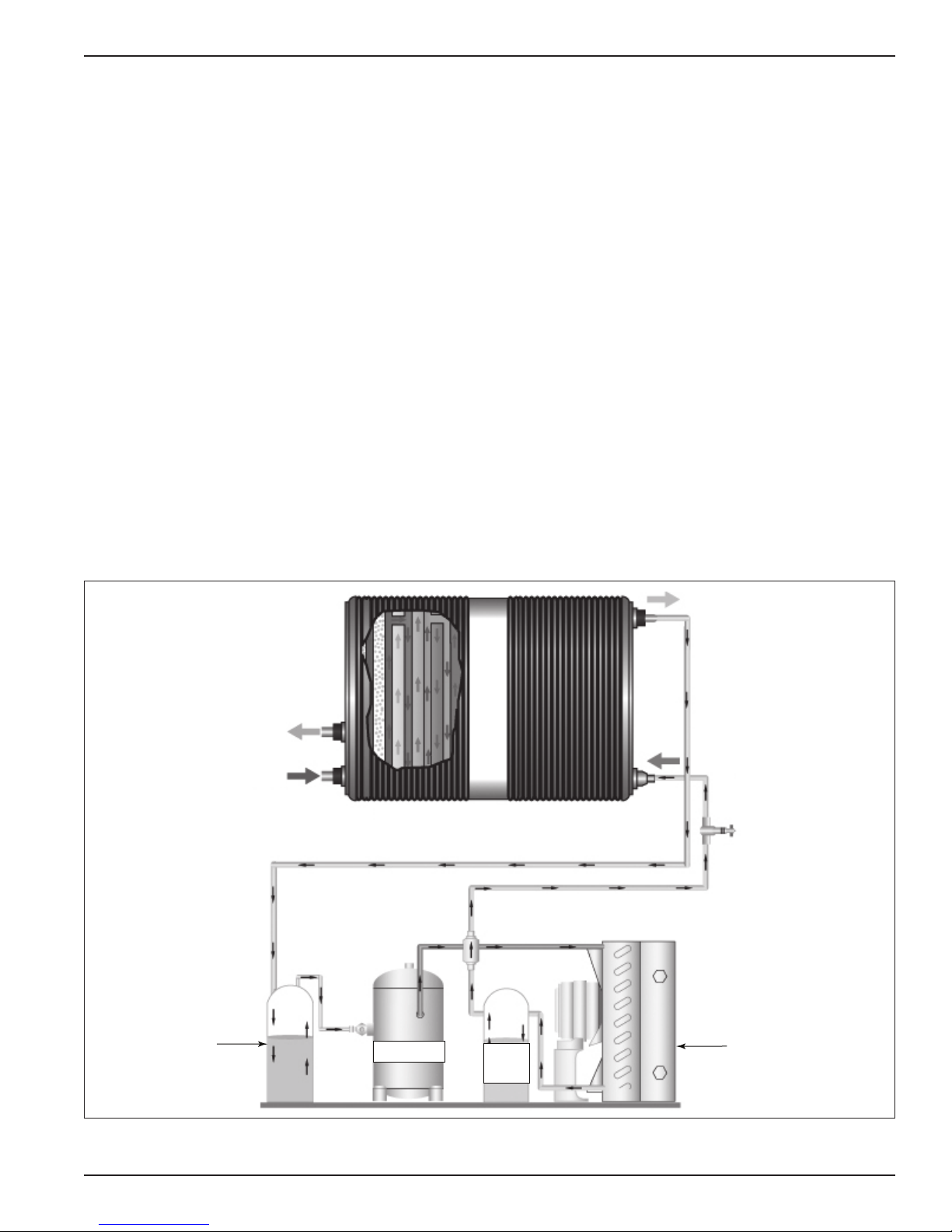
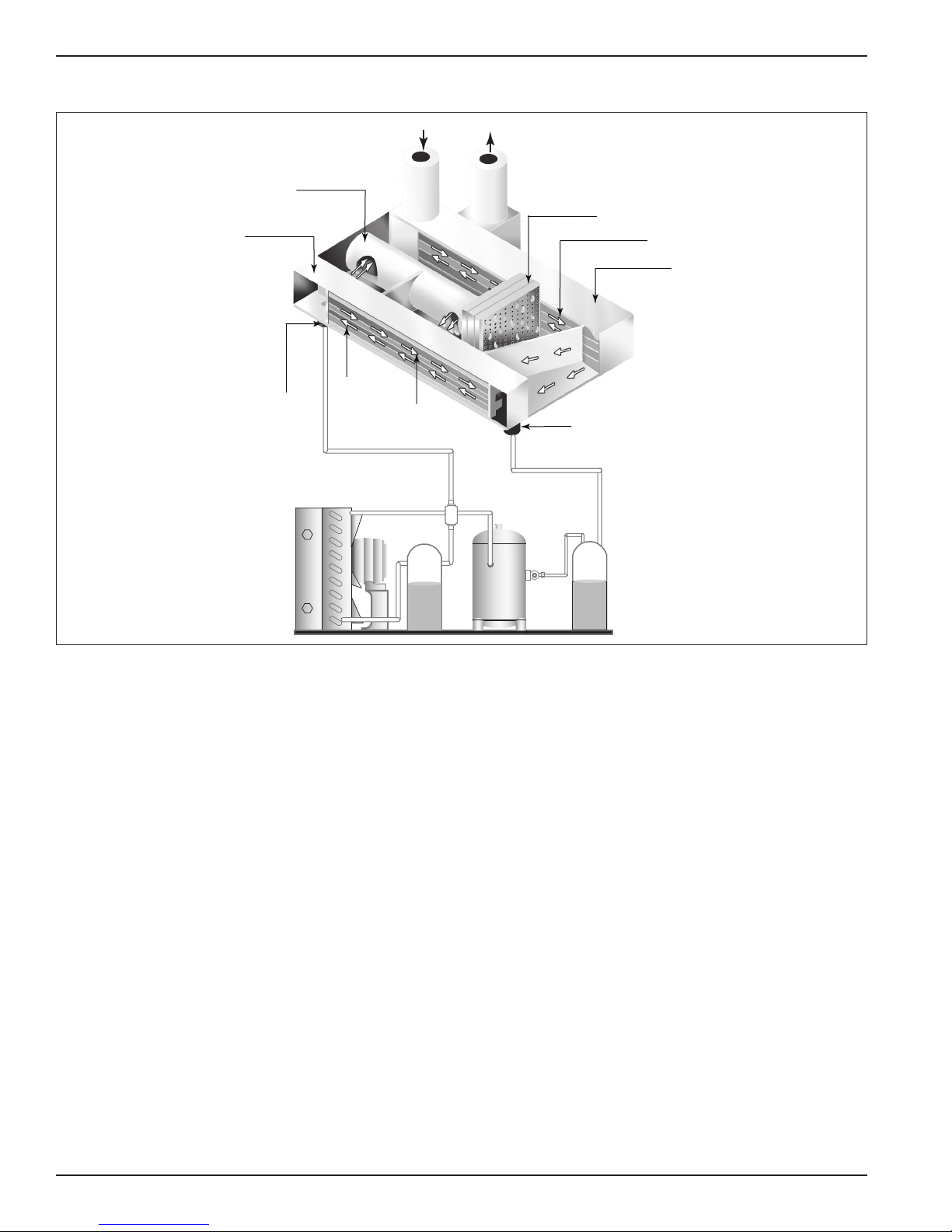
Hot saturated air enters the air-to-air heat
exchangeroftheNon-CyclingRefrigeratedAir
Dryerandisprecooledbytheoutgoingdryair.
Precoolingsavesenergybyreducingtheheatload
on the dryer’s compressor. The cool saturated air
enterstheair-to-refrigerantheatexchangerwhere
airtemperatureisloweredtothe38to42°Frange.
This dramatic temperature drop condenses water
and oil.
Themixtureofcoldairandcondensationthen
flows into the two-stage separator filter where
liquids and contaminants are removed by
centrifugal action, directional flow change, and
velocityreduction.Oncebulkliquidshavebeen
removed, the compressed air goes through a
stainless steel mist eliminating filter that coalesces
oilaerosolsandoilvaporswithinthe50-micron
range, and then separates and removes them. At
this point, the compressed air is dry and virtually
oil-free.
Cold,dryairexitsthroughtheprecoolerheat
exchangerandisreheatedbyincominghotair.
Reheatingrestoresenergyandalsoprevents
condensation from forming on the outside of air
distributionpiping.Intherefrigerationunit,the
compressor pumps hot, high-pressure gaseous
refrigerant to the condenser where it is cooled
andliquefiedbyambientair.Fromthecondenser,
liquid refrigerant first flows through the receiver,
then through a filter/dryer, and finally through the
expansionvalvewherepressureandtemperature
are reduced. This reduction in pressure causes
the liquid refrigerant to boil until it reaches the
saturation temperature that corresponds to its
pressure. As the low-pressure refrigerant passes
through the evaporator, heat flows from the
compressed air to the refrigerant, causing the
boiling to continue until all refrigerant is vaporized.
Refrigerantgasisreturnedtothecompressorand
the cycle is repeated. A hot gas by-pass valve is used
to control temperature in the evaporator.
6
AircelVFSeries-Models10-1200