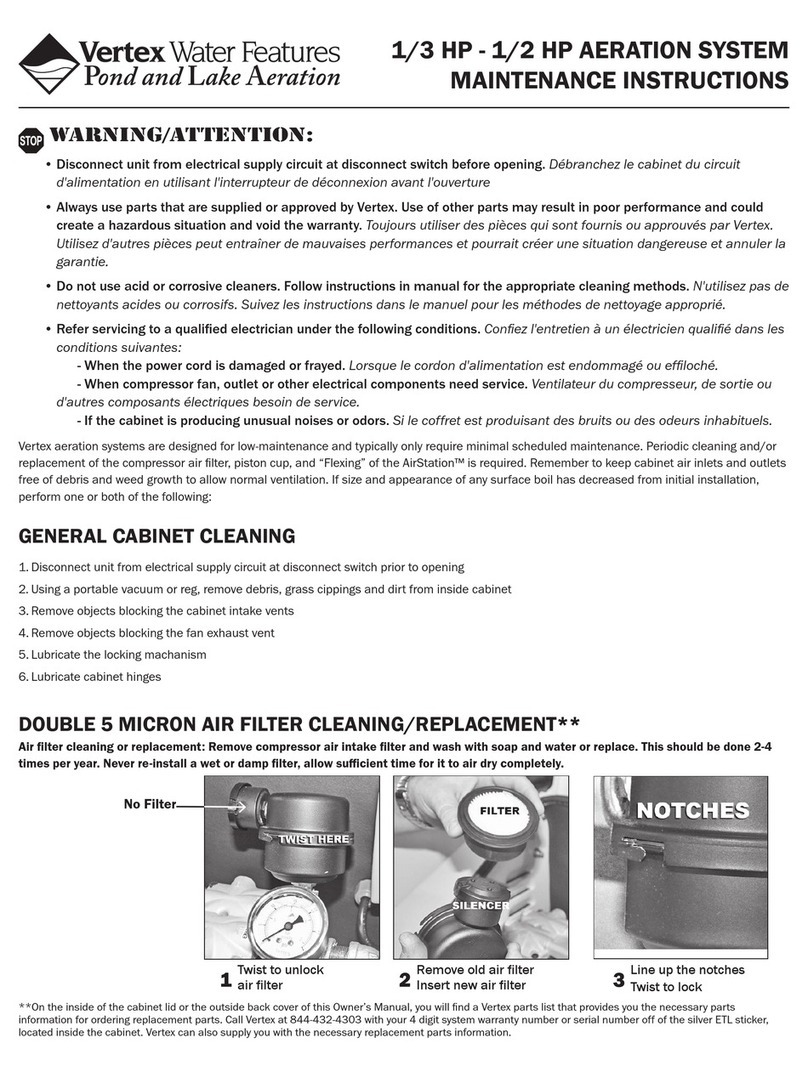
EVERY 3-6 MONTHS – Air Filter: Clean/replace air filter.
Cooling Fan: Check to ensure that cooling fan is operating. Cool air should be pulled in through filter media and
blowing over compressors, moving hot air out through louvered vents.
Pressure Gauge: Mark pressure gauge upon initial start up. Check to verify pressure has not significantly risen above
or dropped below initial reading. Typical operation will range between 5 and 15 PSI depending on depth.
Pressure Relief Valve: Check to ensure air is not escaping from valve and replace if needed.
EVERY 12-18 MONTHS – Maintenance Kit: It is recommended to install a maintenance kit every 12-18 months to
ensure optimum performance.
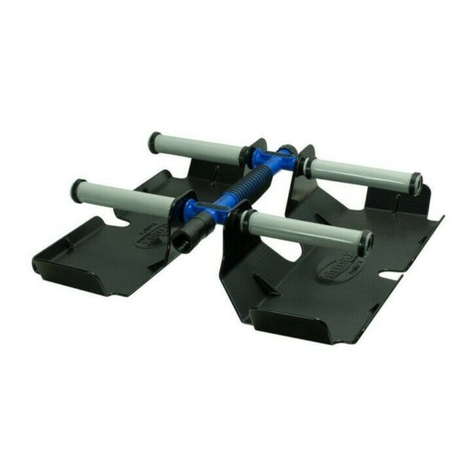
EVERY 24-36 MONTHS – Membrane Sticks: We recommend inspecting and/or cleaning the membrane diffuser
sticks every 24-36 months, especially anytime the pressure gauge reading is significantly higher than normal or if there
is a reduction of bubbles from the diffuser. To clean, use Airmax D-Scale™ (#530298) and a soft cloth.
Airmax Aeration Systems are designed for low-maintenance and require minimal scheduled
maintenance. Cabinet inlets and outlets should be kept free of debris and weed growth
allowing normal ventilation.
• Always unplug system before performing any maintenance or troubleshooting.
• Always unplug system and refer servicing to a qualified electrician when cord is damaged
or frayed or when compressor, power control, compressor fan, or other electrical
components are producing unusual noises or odors.
• Always use parts that are supplied or approved by Airmax, Inc. Use of other parts may
result in poor performance and could create a hazardous situation.
**Local environmental conditions may require more frequent maintenance.
WARNING: Compressors are equipped with a thermal overload switch. If temperature
becomes high enough to trip the overload, the compressor will shut down. It will then
automatically start up when temperature decreases as long as power is applied.
4. Maintenance**
5. Troubleshooting
IF COMPRESSOR IS NOT OPERATING:
ISSUE CHECK LIKELY CAUSE CORRECTION
Cabinet fan is not running.
Option 1: Check for power. Compressor and fan are not receiving power. Open cabinet and ensure the compressor and fan are plugged into
the power outlet. Also ensure the external power switch is on.
Option 2: GFCI circuit tripped. Damage to electrical cord or low voltage from
power supply. Contact Airmax or local dealer for electrical
troubleshooting assistance.
Option 3: GFCI circuit not tripped. GFCI malfunction.
Cabinet fan is running.
Option 1: Check compressor for power. Compressor is not receiving power. Open cabinet and ensure the compressor is plugged into the
power outlet.
Option 2: Check compressor capacitor wiring for frays
or poor connections.
Wiring loosened or was damaged during shipment
or maintenance.
Contact Airmax or local dealer for repair/replacement.
Option 3: No capacitor wiring issues can be seen. Bad capacitor.
Option 4: Capacitor has been replaced. Compressor is bad.
IF COMPRESSOR IS OPERATING:
ISSUE CHECK LIKELY CAUSE CORRECTION
No bubbles at any diffuser plates.
Option 1: No air leaks are audible in cabinet.
Compressor running louder and possible
excessive vibration.
Compressor air filter is dirty/clogged. Clean or replace air filter. NEVER re-install wet filter.
Option 2: Compressor operating normally or making
unusual noises. Exhibits reduced pressure
and/or air flow.
Compressor needs maintenance kit and
possibly new air filter.
Contact Airmax or local dealer with specifications for
maintenance kit. Clean or replace air filter. NEVER
re-install wet filter.
No bubbles at some diffuser plates.
Option 1: Check for leaks at all connections in line
and in cabinet. If none are audible, carefully
spray SMALL amount of soapy water onto
connections and look for bubbles.
Vibration loosened connection or
cracked fitting.
Tighten loose connection or replace cracked fitting
as necessary.
Option 2: Are all flow control valves in compressor
wide open? Improper “balancing” of diffusers.
Purge airlines one by one OR adjust air flow valves on manifold in
cabinet until all diffusers
operate properly. See Section 2. System Installation for
more information.
Option 3: Valves in cabinet are properly “balanced”
and no leaks are evident.
Compressor beginning to
lose compression and needs maintenance kit.
Contact Airmax or local dealer with compressor specifications for
maintenance kit.
Large rolling bubbles instead of fine
bubbles at surface above one or
more diffuser plates.
Inspect each diffuser plate for malfunction. Diffuser membrane damaged, diffuser plate fitting
broken or diffuser plate is flipped over. Contact Airmax or local dealer for repair/replacement.
Air coming out of pressure relief
valve.
Option 1: High pressure reading on gauge. Inspect
diffuser plates and tubing for clogging or
kinks.
Diffuser maintenance needed. Remove any overgrowth around diffuser membrane surface. See
Section 4. Maintenance for more information.
Option 2: Low pressure reading on gauge. Diffuser
plates not clogged.
Pressure gauge needs to be repressurized OR
pressure relief valve is bad. Contact Airmax or local dealer for repair/replacement.
Compressor stops working for
periods of time, then restarts. Inspect cooling fan for proper function. Compressor over-heating due to bad cooling fan.
Contact Airmax or local dealer for fan replacement. If possible,
leave top of cabinet open for cooling. Otherwise, unplug system
until fan is replaced.
Compressor shakes erratically and
is making loud noises.
Option 1: Check for low voltage while compressor
is running.
Gauge of supply wires to circuit possibly
undersized or cabinet is plugged into
extension cord.
If gauge of circuit wiring is incorrect, have electrician replace.
NEVER use extension cord to operate system for continual use.
Option 2: Check for clogged air filter. Air filter in need of replacement. Clean or replace air filter. NEVER re-install wet filter.
ENGLISH
9