manuals.online logo
Brands
  1. Home
  2. •
  3. Brands
  4. •
  5. Antec
  6. •
  7. Power Supply
  8. •
  9. Antec Sonata Designer 500 User manual

Antec Sonata Designer 500 User manual

Other manuals for Sonata Designer 500

1

This manual suits for next models

1

Other Antec Power Supply manuals

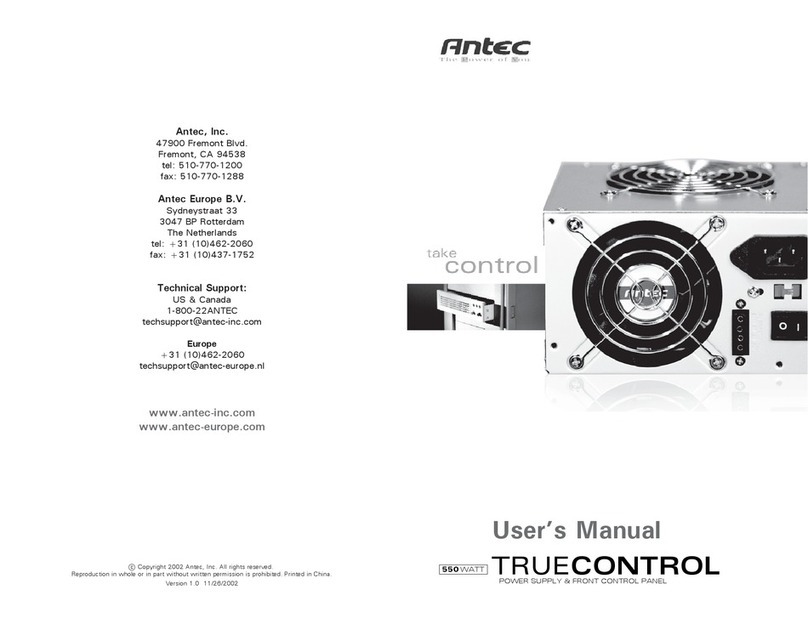
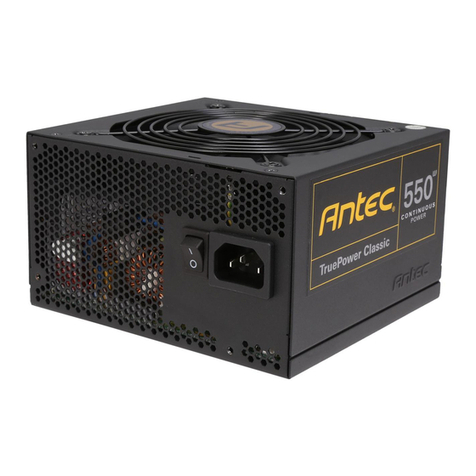
Antec NeoPower 550 User manual

Antec

Antec NeoPower 550 User manual

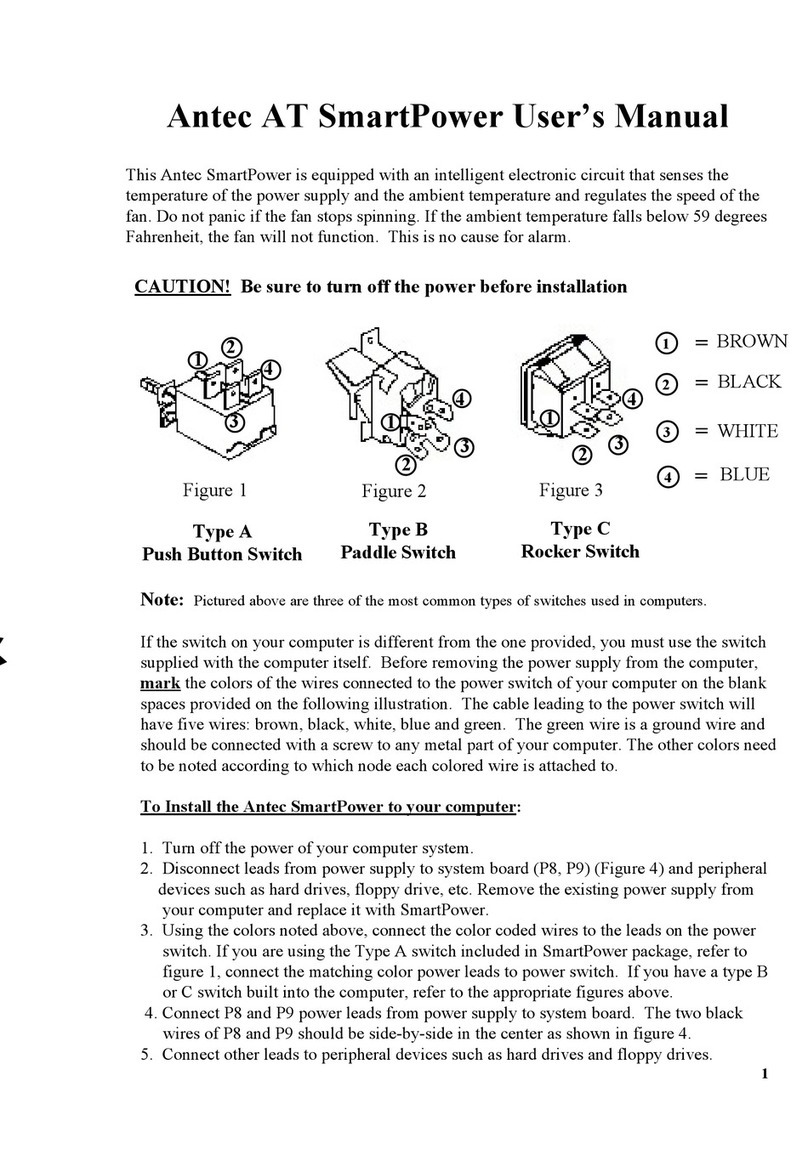
Antec SMARTPOWER 2.0 User guide

Antec

Antec SMARTPOWER 2.0 User guide

Antec SMARTPOWER 2.0 User manual

Antec

Antec SMARTPOWER 2.0 User manual

Antec VP350 User manual

Antec

Antec VP350 User manual

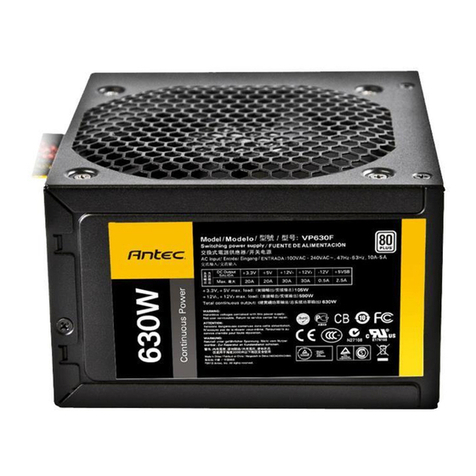
Antec VP550F User manual

Antec

Antec VP550F User manual

Antec Veris Fusion 430 User manual

Antec

Antec Veris Fusion 430 User manual

Antec VP450P User manual

Antec

Antec VP450P User manual

Antec EarthWatts 750 Green User manual

Antec

Antec EarthWatts 750 Green User manual

Antec EA-380D GREEN User manual

Antec

Antec EA-380D GREEN User manual

Antec New Solution Series NSK 1480 User manual

Antec

Antec New Solution Series NSK 1480 User manual

Antec PP380V Operating and safety instructions

Antec

Antec PP380V Operating and safety instructions

Antec TruePower Trio 430 Wat User manual

Antec

Antec TruePower Trio 430 Wat User manual

Antec HCG-750 User manual

Antec

Antec HCG-750 User manual

Antec SMARTPOWER SP-400 User manual

Antec

Antec SMARTPOWER SP-400 User manual

Antec True Control User manual

Antec

Antec True Control User manual

Antec TruePower Classic TP-450C User manual

Antec

Antec TruePower Classic TP-450C User manual

Antec TruePower 2.0 Instructions for use

Antec

Antec TruePower 2.0 Instructions for use

Antec EarthWatts 350 Green User manual

Antec

Antec EarthWatts 350 Green User manual

Antec 550W HE PSU User manual

Antec

Antec 550W HE PSU User manual

Antec HCG-400M User manual

Antec

Antec HCG-400M User manual

Antec Basiq BP350 User manual

Antec

Antec Basiq BP350 User manual

Antec EarthWatts EA-430 Green User manual

Antec

Antec EarthWatts EA-430 Green User manual

Antec PHANTOM 350 User manual

Antec

Antec PHANTOM 350 User manual

Antec VP550P V2 User manual

Antec

Antec VP550P V2 User manual

Popular Power Supply manuals by other brands

Videx 520MR Installation instruction

Videx

Videx 520MR Installation instruction

Poppstar 1008821 Instructions for use

Poppstar

Poppstar 1008821 Instructions for use

TDK-Lambda LZS-A1000-3 Installation, operation and maintenance manual

TDK-Lambda

TDK-Lambda LZS-A1000-3 Installation, operation and maintenance manual

TDK-Lambda 500A instruction manual

TDK-Lambda

TDK-Lambda 500A instruction manual

Calira EVS 17/07-DS/IU operating instructions

Calira

Calira EVS 17/07-DS/IU operating instructions

Monacor PS-12CCD instruction manual

Monacor

Monacor PS-12CCD instruction manual

VOLTIMA MagicBox 15 Installation and operating instructions

VOLTIMA

VOLTIMA MagicBox 15 Installation and operating instructions

Miller Auto Deltaweld 452 owner's manual

Miller

Miller Auto Deltaweld 452 owner's manual

BCP PUOUBK How to install

BCP

BCP PUOUBK How to install

HC 2210 manual

HC

HC 2210 manual

Agilent Technologies 6032A Service manual

Agilent Technologies

Agilent Technologies 6032A Service manual

Radial Engineering SB-48UB user guide

Radial Engineering

Radial Engineering SB-48UB user guide

Puls CT5.241 installation manual

Puls

Puls CT5.241 installation manual

OCZ ZX1250W Technical specifications

OCZ

OCZ ZX1250W Technical specifications

iseg ECH 238 manual

iseg

iseg ECH 238 manual

Agilent Technologies 6631B Service manual

Agilent Technologies

Agilent Technologies 6631B Service manual

Power XXL A Series instruction manual

Power

Power XXL A Series instruction manual

HP 6200B Operating and service manual

HP

HP 6200B Operating and service manual

manuals.online logo
manuals.online logoBrands
  • About & Mission
  • Contact us
  • Privacy Policy
  • Terms and Conditions

Copyright 2025 Manuals.Online. All Rights Reserved.

PHANTOM 500
User’s Manual
Manuel de l’utilisateur
Anwenderhandbuch
Manuale per l’operatore
Manual del usuario
Table of Contents
Table des matières / Inhaltsverzeichnis
Índice / Indice
English
Français
Deutsch
Italiano
Español
Tables
1
5
8
11
14
17
1
2
The high quality of our products is assured by a continuous process of refinement
of their technical features. Therefore, it is possible that your product may differ
in some respect from the descriptions contained in this manual. This is not a
problem – it is an improvement. All features, descriptions, and illustrations
contained herein are valid as of the date of publication.
Model: PHANTOM 500
The Phantom 500 power supply includes a number of ingenious features that
allow it (under most conditions) to operate entirely silently. Its extruded
aluminum chassis acts as a massive heat sink, which dissipates heat without
the use of a fan. If the power supply's internal temperature rises above a
user-determined limit (40°, 47.5°, or 55°C), its variable-speed fan will activate,
thereby providing additional cooling. When it's running, the fan will automatically
vary its speed in response to changing temperatures. When the internal temperature
falls below this limit, the fan will shut down, allowing the power supply to operate
entirely silently.
ATX12V Version 2.0 compliant: The Phantom 500 conforms to the latest
ATX12V Version 2.0 standard. It is also backwards-compatible with previous
ATX form factor power supplies. If your motherboard has a 20-pin power
receptacle, please review Step 5 of the installation instructions carefully. The
Phantom 500 is also compatible with motherboards built to the SSI standard
and supports an 8-pin variant of the +12V connector; use it or the 4-pin +12V
connector as appropriate for your motherboard. Before you connect the power
supply to any of your devices, please consult the appropriate user manuals for
your motherboard and other peripherals.
Protection: Phantom 500 includes dual +12V output circuitry, which delivers
safer and more reliable output to your system's components. Phantom 500 also
features a variety of industrial-grade protective circuitry: OCP (over current
protection), OTP (over temperature protection), OVP (over voltage protection),
OPP (over power protection), UVP (under voltage protection), and SCP (short
circuit protection).
Transportation Note: Because of Phantom's unique construction, it is
considerably heavier than standard power supplies. To avoid possible damage
to your case, we strongly recommend removing Phantom and transporting it
separately if you plan to ship your computer somewhere or otherwise subject
it to rough handling.
Chassis Ventilation Note: Before installing the Phantom 500 into your PC
chassis, please note that your chassis must be well-ventilated. Traditional
ATX power supplies include at least one fan that cools the power supply and
helps expel heat from the chassis. Even though the Phantom 500 includes a
fan, the fan will remain idle (to ensure silent operation) until the power
supply's internal temperature exceeds a user-determined limit. Therefore, you
should make sure that the exhaust fans installed in your PC chassis can cool
the whole system without the help of a power supply fan.
Power Switch: This power supply includes a main power switch. Make sure
you turn the switch to the ON ( I ) position before you boot up your computer
for the first time. In normal operation there is no need to turn the switch to the
OFF ( O ) position since the power supply is equipped with a soft on/off feature
which turns your computer on and off through the soft switch on your computer
case. You may need to turn the switch to the OFF position occasionally (if your
computer crashes and you can't shut it down through use of the soft switch).
There is a blue power indicator next to the power inlet plug. When the power
supply is running, the indicator lights up.
[Applicable only to models designed for sale in the European Union: Power
supplies designed for the EU include Power Factor Correction (PFC) circuitry in
accordance with European regulation code EN61000-3-2. By altering the input
wave shape, PFC improves the power factor of the power supply and results in
increased energy efficiency, reduced heat loss, prolonged life for the power
distribution and consumption equipment, and improved output voltage stability.]
Note (not applicable to models designed for the European Union): Check the red
power supply voltage switch setting before installation. It should be the same
as your local as your local power voltage (115V for America, Canada, Japan,
etc. and 230V for Europe, some South East Asia countries, and others).
Change the voltage setting if necessary. Failure to take this precaution could
result in damage to your equipment and void your warranty.
How to set the fan operating mode
On the power supply you'll find a 3-position fan switch. This switch allows you
to set the temperature at which the power supply's fan will activate. Before
you set this switch, take a moment to think about how you usually use your
computer.
Position 1: "High Performance" mode. The fan will activate if the temperature
reaches 40°C inside the power supply. The fan will automatically
vary its speed in response to changing temperatures. Once
the temperature decreases below 40°C, the fan will turn off. We
recommend this mode if you're a gamer or high-performance-oriented
user, and you care more about ultra-fast performance than the
noise level generated by your computer.
Position 2: "Quiet Computing" mode. The fan will activate if the temperature
reaches 47.5°C inside the power supply. The fan will automatically
vary its speed in response to changing temperatures. Once the
temperature decreases below 47.5°C, the fan will turn off. We
recommend this mode if you'd prefer a balance between
high-performance computing and quiet computing.
3
4
Position 3: "Virtually Silent" mode. The fan will activate if the temperature
reaches 55°C inside the power supply. The fan will automatically
vary its speed in response to changing temperatures. Once the
temperature decreases below 55°C, the fan will turn off. We
recommend this mode if you're determined to have the quietest
power supply possible. (Obviously, we don't recommend this
setting for overclockers or gamers.)
To install your Phantom 500, follow these steps:
1. Disconnect the power cord from your old power supply.
2. Open your computer case. Follow the directions provided in your case manual.
3. Disconnect all the power connectors from the motherboard and from the
peripheral devices such as case fans, hard drives, floppy drives, etc.
4. Remove the existing power supply from your computer case and replace it
with the Phantom power supply. Attach the Phantom to your chassis with
the screws from your original supply.
Note: Install the Phantom carefully, because the edges of the power supply
are sharp.
5. Connect the 24-pin Main Power Connector and the 4-pin or 8-pin +12V
connector to your motherboard as needed. If your motherboard uses a
20-pin connector, detach the 4-pin attachment on the 24-pin power
connector (see pictures 1 and 2). Connect the peripheral power connectors
to devices such as hard drives, optical drives, etc.
6. Set your desired fan operating mode. (See above for details.)
7. Close your computer case.
8. Connect the power cord to the Phantom 500.
Picture 1 Picture 2
For 24-pin
motherboards
For 20-pin
motherboards
Chez Antec, nous affinons et améliorons continuellement nos produits pour
garantir une qualité supérieure. Il est donc possible que le nouveau Phantom 500
diffère sensiblement des descriptions contenues dans ce manuel. Il ne s'agit pas
là d'un problème, juste d'une amélioration. A compter de la date de publication,
toutes les fonctionnalités, descriptions et illustrations contenues dans ce manuel
sont correctes.
Modèle: PHANTOM 500
Le bloc d'alimentation Phantom 500 inclut plusieurs fonctions astucieuses qui
lui permettent (dans la plupart des conditions) de fonctionner entièrement
silencieusement. Son châssis en aluminium extrudé fait office de dissipateur de
chaleur massif qui rend inutile l'utilisation d'un ventilateur. Si la température
interne du bloc d'alimentation dépasse une limite prédéfinie par l'utilisateur
(40, 50 ou 60°C), son ventilateur à vitesse variable s'activera, fournissant par
conséquent un refroidissement supplémentaire. Quand il fonctionne, le ventilateur
adapte automatiquement sa vitesse aux changements de température. Lorsque
la température interne chute en dessous de cette limite, le ventilateur s'arrête,
permettant au bloc d'alimentation de fonctionner entièrement silencieusement.
Conformité à ATX12V version 2.0: Le Phantom 500 est conforme avec le
nouveau standard ATX12V version 2.0. Il est aussi rétrocompatible avec les
précédents blocs d'alimentation ATX de petite taille. Si votre carte mère a une
prise d'alimentation 20 broches, veillez consulter le paragraphe 5 des instructions
qui concernent l'installation. Veuillez consulter les manuels d'utilisation fournis
avec votre carte mère et vos périphériques avant de connecter le Phantom à l'un
de vos périphériques.
Protection: Le Phantom 500 inclut également un double circuit de sortie +12V
qui délivre une sortie plus sûre et plus fiable aux composants de votre système.
Le Phantom 500 propose par ailleurs une variété de circuits de protection de
niveau industriel: OCP (protection contre les surintensités), OTP (protection contre
la surchauffe), OVP (protection contre les surtensions), OPP (protection contre
les surpuissances), UVP (protection contre les baisses de tension) et SCP
(protection par court-circuit).
5
Ventilation du châssis : Avant d'installer le Phantom 500 dans le châssis de
votre, notez que Votre châssis doit être bien ventilé. Les blocs d'alimentation
ATX traditionnels incluent au moins un ventilateur qui refroidit le bloc
d'alimentation et contribue à expulser la chaleur du châssis. Même si le
Phantom 500 comporte un ventilateur, ce ventilateur restera au ralenti (gage
de fonctionnement silencieux) jusqu'à ce que la température interne du bloc
d'alimentation dépasse une limite prédéfinie par l'utilisateur. Par conséquent,
vous devez vous assurer que les ventilateurs d'évacuation installés dans
votre PC châssis peuvent refroidir l'ensemble du système sans l'aide d'un
ventilateur du bloc d'alimentation.
Interrupteur d'alimentation: Le Phantom 500 inclut un interrupteur d'alimentation
secteur. Assurez-vous de mettre l'interrupteur sur position Marche ( I ) avant
d'initialiser l'ordinateur pour la première fois. En cours de fonctionnement normal,
inutile de mettre l'interrupteur sur position Arrêt ( O ) dans la mesure où le bloc
d'alimentation est équipé d'une fonction logicielle de marche/arrêt qui met votre
ordinateur sous et hors tension via l'interrupteur logiciel du boîtier de votre
ordinateur. Vous pourrez parfois mettre l'interrupteur sur position Arrêt (si votre
ordinateur plante et que vous ne pouvez pas l'arrêter par le biais de l'interrupteur
logiciel). Un voyant bleu se situe à côté de la prise d'entrée d'alimentation.
Lorsque le bloc d'alimentation fonctionne, le voyant s'allume.
[Applicable uniquement aux modèles conçus pour une commercialisation dans
l'UE: Les b locs d'alimentation conçus pour l'UE incluent un circuit de correction
du facteur de puissance (PFC) conforme au code des réglementations européennes
EN61000-3-2. En modifiant la forme de l'inde d'entrée, la PFC améliore le facteur
de puissance du bloc d'alimentation et se traduit par un meilleur rendement
énergétique, une perte calorifique moindre, une plus longue durée de vie pour
les équipements de distribution et de consommation d'alimentation et une plus
grande stabilité de tension de sortie.]
Remarque (non applicable aux modèles conçus pour une commercialisation dans
l'UE): Vérifiez le réglage du sélecteur de tension d'alimentation rouge avant
l'installation. Il doit correspondre à votre tension secteur locale (115V pour les
Etats-Unis, le Canada, le Japon, etc. et 230V pour l'Europe, certains pays de
l'Asie du sud-est et d'autres pays). Changez le réglage au besoin au risque
d'endommager vos équipements et d'annuler la garantie.
Configuration du mode de fonctionnement du ventilateur
Vous trouverez un sélecteur de ventilateur à 3 positions sur le bloc d'alimentation.
Ce sélecteur vous permet de définir la température à laquelle le ventilateur interne
du bloc d'alimentation s'activera. Avant de régler ce sélecteur, réfléchissez à
l'usage habituel que vous réservez à votre ordinateur.
Position 1: mode "haute performance". Le ventilateur s'activera si la température
atteint 40°C à l'intérieur du bloc d'alimentation. Il adaptera
automatiquement sa vitesse aux changements de température. Une
fois la température en dessous de 40°C, le ventilateur s'arrêtera.
Nous recommandons ce mode si vous êtes un joueur ou un utilisa
teur orienté haute performance et que vous vous souciez plus de
l'haute performance que du niveau de bruit produit par votre ordinateur
Position 2: mode "silencieux". Le ventilateur s'activera si la température.
atteint 47.5°C l'intérieur du bloc d'alimentation. Il adaptera
6
Recommandation de transport: La structure de votre châssis doit être assez
solide pour soutenir le bloc d'alimentation. Le Phantom pesant 3kg environ, il
risque d'endommager votre châssis si vous essayez de transporter votre
ordinateur en l'expédiant. Si vous envisagez d'expédier votre ordinateur ou si
vous anticipez une manutention brutale en cours de transport, retirez le bloc
d'alimentation Phantom et transportez-le séparément.
automatiquement sa vitesse aux changements de température. Une
fois la température en dessous de 47.5°C, le ventilateur s'arrêtera.
Nous recommandons ce mode si vous préférez bénéficier d'un
équilibre entre une haute performance et un fonctionnement
silencieux.
Position 3: mode "ultra-silencieux". Le ventilateur s'activera si la température
atteint 60°C à l'intérieur du bloc d'alimentation. Il adaptera
automatiquement sa vitesse aux changements de température. Une
fois la température en dessous de 60°C, le ventilateur s'arrêtera.
Nous vous recommandons ce mode si vous désirez un bloc
d'alimentation le plus silencieux possible (évidemment, nous ne
recommandons pas ce réglage aux utilisateurs forcenés et aux joueurs)
Pour installer votre Phantom 500, procédez comme suit:
1. Débranchez le cordon d'alimentation de votre ancien bloc d'alimentation.
2. Ouvrez le boîtier de votre ordinateur. Suivez les instructions du manuel de
votre boîtier.
3. Débranchez tous les connecteurs d'alimentation de la carte mère et des
périphériques tels que ventilateurs de boîtier, unités de disque dur, lecteurs
de disquette, etc.
4. Retirez le bloc d'alimentation existant du boîtier de votre ordinateur et
remplacez-le par le bloc d'alimentation Phantom. Montez le Phantom sur le
chassîs avec les vis de l'alimentation originale.
Remarque: Installez le Phantom avec précaution, car les bords du bloc
d'alimentation sont coupants.
5. Branchez le connecteur d'alimentation secteur à 24 broches et le connecteur
+12 V à 4 broches, au besoin, sur votre carte mère. Si votre carte mère
utilise un connecteur à 20 broches, détachez l'accessoire à 4 broches du
connecteur d'alimentation à 24 broches (cf. figures 1 et 2). Branchez les
connecteurs d'alimentation de périphériques sur les périphériques tels que
les unités de disque dur, les lecteurs optiques, etc.
6. Définissez le mode de fonctionnement souhaité pour votre ventilateur.
(Voir les détails ci-dessus).
7. Fermez le boîtier de votre ordinateur.
8. Branchez le cordon d'alimentation sur le Phantom 500.
7
Image 1 Image 2
Pour cartes
mères à 24
broches
Pour cartes
mères à 20
broches
Die hohe Qualität unserer Produkte wird durch eine ständige Optimierung ihrer
technischen Leistungsmerkmale gewährleistet. Deshalb ist es möglich, dass Ihr
Produkt nicht genau mit einigen Beschreibungen in dieser Betriebsanleitung
übereinstimmt. Dies ist aber kein Problem, sondern eine Verbesserung. Alle hier
enthaltenen technischen Leistungsmerkmale, Beschreibungen und Abbildungen
sind zum Zeitpunkt der Veröffentlichung gültig.
Modell: PHANTOM 500
Das Phantom 500 Netzteil verfügt über eine Vielzahl an einzigartigen Funktionen,
die (unter den meisten Bedingungen) einen völlig geräuschlosen Betrieb
ermöglichen. Sein extrudiertes Aluminiumgehäuse fungiert als großer Kühlkörper,
der die Wärme ohne Einsatz eines Lüfters verteilt. Übersteigen die
Innentemperaturen den vom Benutzer definierten Wert (40°, 50° oder 60°C),
wird der Lüfter mit mehreren Geschwindigkeitsstufen aktiviert und sorgt für
zusätzliche Kühlung. Er passt seine Geschwindigkeit während des Betriebs
automatisch an die jeweilige Temperatur an. Fällt die Innentemperatur unter den
eingestellten Wert, schaltet er sich ab und das Netzteil arbeitet wie gewohnt
geräuschlos.
ATX12V Version 2.0 Norm: Das Phantom 500 erfüllt den neuen ATX12V
Version 2.0 Standard. Es ist auch mit den älteren ATF Formfaktor Netzteilen
abwärts kompatibel. Bei Hauptplatinen mit 20-poligen Anschlüssen, schlagen
Sie unter dem Schritt 5 der folgenden Anweisungen der Installation nach. Um
eine korrekte Installation zu gewährleisten, lesen Sie vor dem Anschließen des
Phantom an ihre Geräte die Benutzerhandbücher für Hauptplatine und
Peripheriegeräte.
Schutzschaltung: Das Phantom 500 enthält zwei +12V-Ausgangsschaltkreise,
die eine sicherere und zuverlässigere Stromversorgung der Systemkomponenten
gewährleisten. Dazu kommt eine Reihe von Schutzschaltkreisen in Industriequalität:
OCP (Over Current Protection - Schutz vor Stromspitzen), OTP (Over Temperature
Protection - Überhitzungsschutz), OVP (Over Voltage Protection - Überspan-
nungsschutz), OPP (Over Power Protection - Überlastungsschutz), UVP (Under
Voltage Protection - Unterspannungsschutz) und SCP (Short Circuit Protection -
Schutz vor Kurzschlüssen).
8
Hinweis zur Gehäusebelüftung: Beachten Sie vor der Installation des
Phantom 500 in Ihren PC Folgendes Ihr Gehäuse muss gut belüftet sein.
Traditionelle ATX-Netzteile verfügen über mindestens einen Lüfter, der das
Gerät kühlt und die Wärme vom Gehäuse wegführt. Zwar verfügt auch das
Phantom 500 über einen Lüfter, allerdings bleibt dieser so lange inaktiv (und
gewährleistet einen geräuschlosen Betrieb), bis die Innentemperatur des
Netzteils den voreingestellten Wert übersteigt. Deshalb sollten Sie sicherstellen,
dass der Abluftlüfter in Ihrem PC Gehäuse das ganze System ohne
Unterstützung eines zusätzlichen Netzteillüfters kühlen kann.
Netzschalter: Dieses Netzteil verfügt über einen Hauptnetzschalter. Stellen Sie
diesen Schalter unbedingt auf ON ( I ), bevor Sie den Computer zum ersten Mal
booten. In der Regel brauchen Sie diesen Schalter nie auf OFF (O) zu stellen, da
das Netzteil mit einer softwarebasierten Ein-/Ausschaltfunktion ausgestattet ist.
Falls der Computer abstürzt und sich mit dem Soft-Schalter nicht mehr
herunterfahren lässt, stellen Sie den Hauptnetzschalter auf OFF (O). Auf der
Seite des Stromeingangs befindet sich eine blaue Stromanzeige. Wenn das
Netzteil eingeschaltet ist, leuchtet die Anzeige auf.
[Gilt nur für innerhalb der EU zum Verkauf vorgesehene Modelle: Die Netzteile
verfügen gemäß der Europäischen Norm EN61000-3-2 über Schaltkreise für eine
so genannte Blindstromkompensation (Power Factor Correction), bei der durch
eine Änderung der Eingangswellenform der Leistungsfaktor des Netzteils und die
Energieeffizienz erhöht, der Wärmeverlust gemindert, die Lebensdauer von
Stromverteilung und Verbrauchskomponenten sowie die Stabilität der
Ausgangsspannung verbessert werden.]
Hinweis (Gilt nicht für innerhalb der EU zum Verkauf vorgesehene Modelle):
Prüfen Sie vor der Installation die Einstellung des roten Spannungsschalters. Sie
sollte der landesüblichen (115V für Amerika, Kanada, Japan etc. und 230V für
Europa, einige Länder in Südostasien und andere) entsprechen. Ändern Sie ggf.
die Spannungseinstellung Ansonsten riskieren Sie eine Beschädigung Ihrer
Ausrüstung und das Erlöschen der Garantie.
So stellen Sie den Lüfterbetriebsmodus ein
Auf dem Netzteil befindet sich ein 3-stufiger Lüfterschalter. Mit diesem Schalter
können Sie einstellen, bei welcher Temperatur der Netzteillüfter aktiviert wird.
Bevor Sie dies tun, denken Sie einen Moment darüber nach, wie Sie Ihren PC
normalerweise verwenden.
Position 1: "Hochleistungsmodus". Der Lüfter wird aktiviert, wenn die
Temperatur innerhalb des Netzteils 40°C erreicht und passt seine
Geschwindigkeit automatisch an die jeweilige Temperatur an. Sobald
die Temperatur unter 40°C fällt, schaltet er sich ab. Wir empfehlen
diesen Modus, wenn Sie viel am PC spielen oder diesen im
Höchstmaß beanspruchen und auf ultraschnelle Leistung auf Kosten
des Geräuschpegels setzen.
Position 2: "Leiser Rechnermodus". Der Lüfter wird aktiviert, wenn die
Temperatur innerhalb des Netzteils 50°C erreicht und passt seine
Geschwindigkeit automatisch an die jeweilige Temperatur an. Sobald
die Temperatur unter 50°C fällt, schaltet er sich ab. Wir empfehlen
diesen Modus, wenn Sie eine hohe Leistung bei gleichzeitigem leisen
Betrieb anstreben.
9
Transportempfehlung. Ihre Gehäusestruktur muss stabil genug sein, um das
Netzteil tragen zu können. Das Phantom wiegt ca. 3kg, kann Ihr Gehäuse
beim Transport also potenziell beschädigen. Wenn Sie Ihren PC transportieren
möchten oder während des Transports einen rauen Umgang mit dem Paket
befürchten, entfernen Sie das Netzteil und transportieren Sie es separat.