3
will take to complete. However, because you’re
working with aluminum, it’s necessary you make a
special effort to be as careful as possible to avoid
scratches, sharp edges, etc. Where steel is quite tol-
erant of such things, aluminum isn’t. Each scratch
that can be felt with a fingernail needs to be
Scotchbrited out because it is a stress riser and the
possible starting point for a fatigue crack later in
life. This isn’t meant to scare anyone but to point
out the necessity of taking special precautions to
protect the material, especially the outside skins.
The biggest sources of scratching on alu-
minum structures is accidentally laying it on some-
thing seemingly as harmless as drill shavings or a
stray rivet. The best way to protect against that is to
cover your work surface with deep pile (not shag)
carpet and vacuum it periodically.
Work Tables
The hot ticket for building wing tables is to
make them from the shipping crates. Turn the crates
upside down on a set of saw horses (bolt or clamp
them down) OR, if you’re a welder, use the steel
from the crate top to build legs for the crates.
If you want, you can just take the foam out
of the crates and use it to pad the top or screw some
plywood onto the frame. When you’re finished
with the wings, you can use the steel in the wing
tables to build racks from which to hang the bazil-
lion small parts you’ll have to paint.
The table have to have a hole in the middle
to accept the strut attach straps that stick out of the
bottom of the wings
Unpacking the Wings
Don’t try to open the crates by yourself: the
tops are too awkward and it would be really easy to
lose control for a second and dent something. The
tops aren’t even remotely heavy (25-30 pounds),
but have an extra set of hands ready to help.
The flaps and ailerons are packed on top of
the top wing and covered with foam. Because the
foam is so light, don’t attempt to unpack the wings
in a wind because it’ll pick up the big pieces of
foam even as you try to get them out of the crate.
From this point on, remember that every-
thing in the crate is super easy to damage, so treat
the contents as if they are eggs.
When it comes time to lift the wings out of
the crate, two people can easily handle the wings
but be paranoid about the way the vertical parts of
the crate are sticking up just waiting for you to slip
and drop the wing on them.
Each piece of wing skin has a couple of alu-
minum pop rivets that need to be drilled out. USE
A#40 DRILL, NOT A1/8”, to remove them
because the rivet holes are for AN3 rivets. You
don’t have to drill all the way through. Just drill
enough to remove the head and, if they start to spin,
grab the butt with a pair of pliers. They should
come out very easily, when pushed with a punch.
Once the skins are free, remove and inven-
tory all the small parts packed in the gas tank bay.
Curling the Skins Back
To work inside the wings you’ll need a
method of curling the skins back and holding them
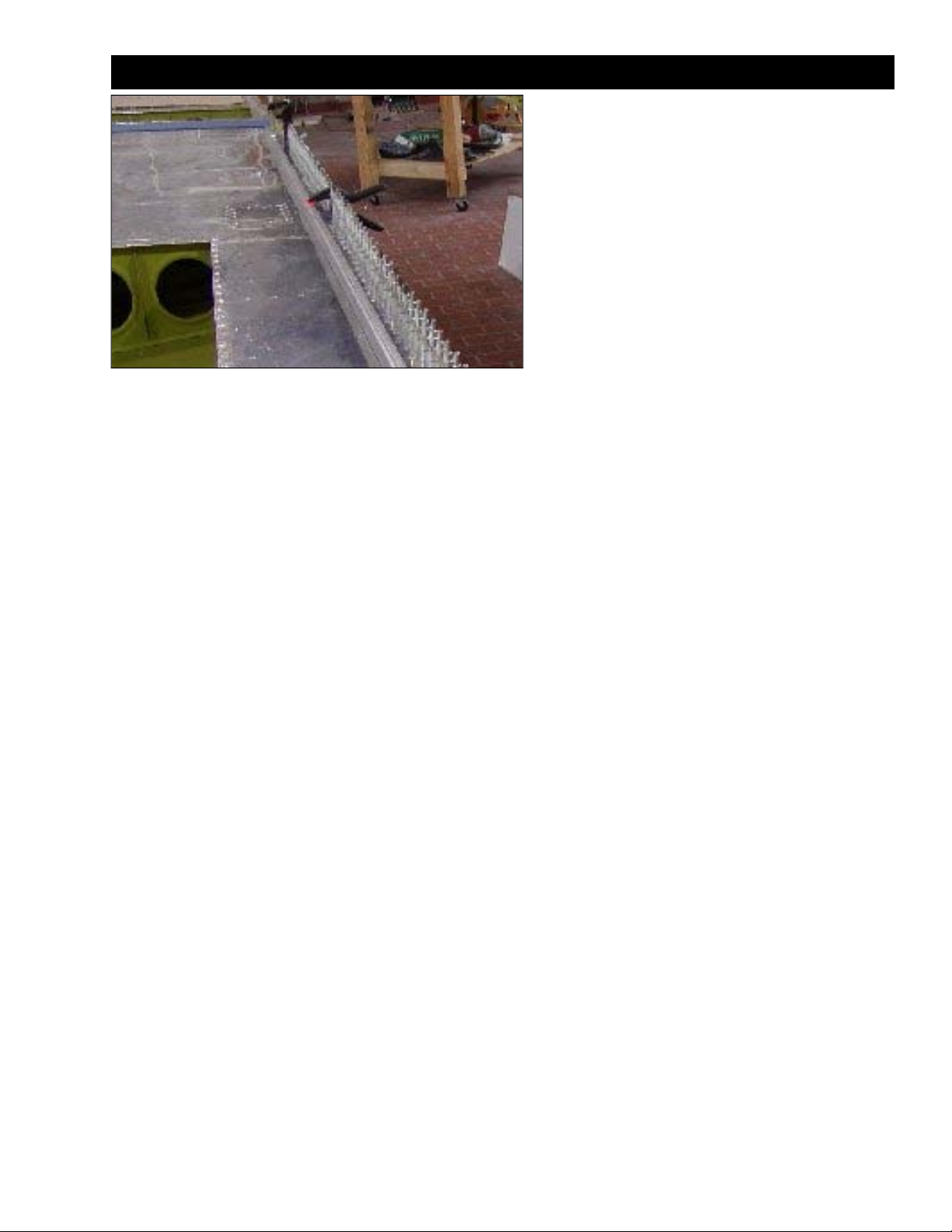
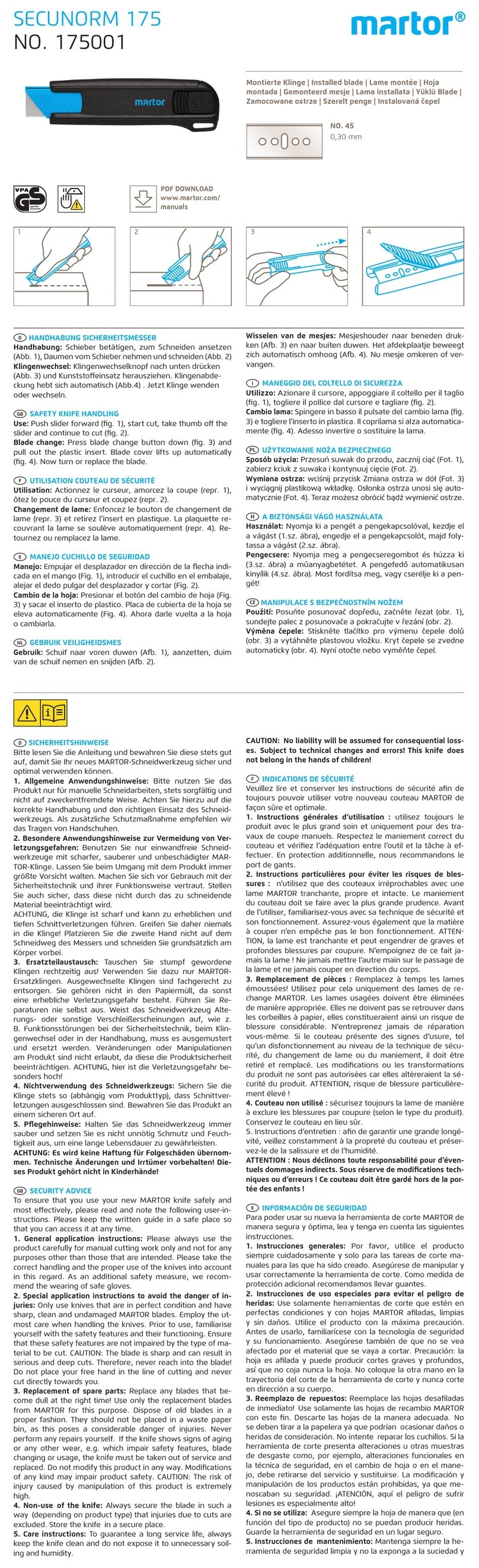
there in a solid manner.The opening picture shows
pieces of wood with finishing nails in them.
Another way to do it is by running boards ( 2 x 3)
or PVC pipe spanwise under the skins and tethering
them to the ceiling or the back side of the work
bench so they can’t move.
It’s important when setting up your skin
restraint system that it be infallible because should
one skin break free and try to come down, it can put
dings in the edge of the sheets where they overlap.
IMPORTANT: CHECK BOLTS
Before doing another thing, go through the
wing and check the bolts that were installed at the
factory. They should not be considered “ready to
fly” until you have checked each one for being the
right size and length, the requisite three threads are
free of the nut, that the nut is the appropriate type
AND THE BOLT HAS BEEN PROPERLY
TORQUED.
Aset of easily made dollies for your wing crate makes them
much easier to handle. An alternative are Harbor Freight fur -
niture dollies.