manuals.online logo
Brands
  1. Home
  2. •
  3. Brands
  4. •
  5. Avnet
  6. •
  7. Motherboard
  8. •
  9. Avnet Zynq Mini-ITX User manual

Avnet Zynq Mini-ITX User manual

Other Avnet Motherboard manuals
Avnet Reach Further Ultra96-V2 Installation manual
Avnet

Avnet Reach Further Ultra96-V2 Installation manual

Avnet Reach Further Ultra96-V2 User manual

Avnet

Avnet Reach Further Ultra96-V2 User manual
Avnet Reach Further Ultra96-V2 User manual

Avnet

Avnet Reach Further Ultra96-V2 User manual

Avnet MaaXBoard EM-MC-SBC-IMX8M Instructions for use
Avnet

Avnet MaaXBoard EM-MC-SBC-IMX8M Instructions for use

Avnet PicoZed FMC V2 User manual

Avnet

Avnet PicoZed FMC V2 User manual
Avnet zedboard Quick guide

Avnet

Avnet zedboard Quick guide

Avnet RZBOARD V2L User manual

Avnet

Avnet RZBOARD V2L User manual

Avnet MaaXBoard Mini User manual

Avnet

Avnet MaaXBoard Mini User manual
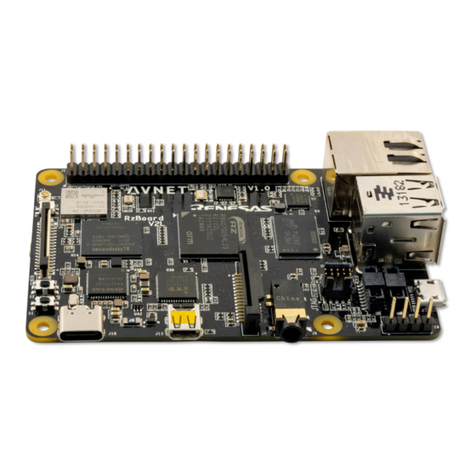
Avnet RZBOARD V2L Installation manual

Avnet

Avnet RZBOARD V2L Installation manual

Avnet MaaXBoard 8ULP Installation manual
Avnet

Avnet MaaXBoard 8ULP Installation manual

Avnet MSC C10-MB-EV User manual

Avnet

Avnet MSC C10-MB-EV User manual
Avnet Qseven MSC Q7-MB-EP6 User manual
Avnet

Avnet Qseven MSC Q7-MB-EP6 User manual

Avnet AVT9152 EVB User manual

Avnet

Avnet AVT9152 EVB User manual
Avnet AES-LPA-502-G User manual

Avnet

Avnet AES-LPA-502-G User manual
Avnet MicroZed Installation manual

Avnet

Avnet MicroZed Installation manual
Avnet AVT9152 EVB User manual

Avnet

Avnet AVT9152 EVB User manual
Avnet MiniZed User manual

Avnet

Avnet MiniZed User manual

Avnet AVT9152 EVB User manual

Avnet

Avnet AVT9152 EVB User manual
Avnet Spartan-3E User manual

Avnet

Avnet Spartan-3E User manual
Popular Motherboard manuals by other brands

Gigabyte MNJ190I-FH user manual

Gigabyte

Gigabyte MNJ190I-FH user manual

Biostar HI-FI-Z87X-3D Setup manual

Biostar

Biostar HI-FI-Z87X-3D Setup manual

Atmel SAM9753PIA-DK user guide

Atmel

Atmel SAM9753PIA-DK user guide

Coapt GEN2 Handbook

Coapt

Coapt GEN2 Handbook

Supero SUPER P4DL6 user manual

Supero

Supero SUPER P4DL6 user manual

Cypress CY3210-PSoCEVAL1 quick start guide

Cypress

Cypress CY3210-PSoCEVAL1 quick start guide

ASROCK B660M-HDV manual

ASROCK

ASROCK B660M-HDV manual

Fujitsu D2831 Short description

Fujitsu

Fujitsu D2831 Short description

Industrial Computers ADE-6050 user manual

Industrial Computers

Industrial Computers ADE-6050 user manual

Asus TUF Z270 MARK 2 manual

Asus

Asus TUF Z270 MARK 2 manual

DFI NB71-BC user manual

DFI

DFI NB71-BC user manual

ASROCK H61 Pro BTC user manual

ASROCK

ASROCK H61 Pro BTC user manual

Norco POS-7893 user manual

Norco

Norco POS-7893 user manual

Intel DG965MS specification

Intel

Intel DG965MS specification

Asus B85M-VIEW PAKER user manual

Asus

Asus B85M-VIEW PAKER user manual

Asus P5G41T-M LX V2 user manual

Asus

Asus P5G41T-M LX V2 user manual

Gigabyte GA-K8VT800-RH user manual

Gigabyte

Gigabyte GA-K8VT800-RH user manual

Gigabyte Z790M AORUS ELITE user manual

Gigabyte

Gigabyte Z790M AORUS ELITE user manual

manuals.online logo
manuals.online logoBrands
  • About & Mission
  • Contact us
  • Privacy Policy
  • Terms and Conditions

Copyright 2025 Manuals.Online. All Rights Reserved.

Avnet Zynq Mini-ITX Development Board
ARM PJTAG Interface
Version 1.0
August 2015
1
1Introduction
This document describes a simple Zynq design that can be used to allow the ARM
DSTREAM debug device to be connected to the Avnet Zynq Mini-ITX development
board.
2Reference Design Requirements
This reference design will require the following software and hardware setups.
2.1 Software
The software requirements for this reference design are:
Xilinx Vivado 2015.2
2.2 Hardware
The hardware setup for this reference design is:
Computer with 4 GB RAM and 1 GB virtual memory (recommended)
Avnet Zynq Mini-ITX Development Board
Power supply Module
ATX power supply
USB A-mini-B cable
ARM DSTREAM Debug Adapter
microSD card
2
3Reference Design Block Diagram
The following figure shows a high-level block diagram of the reference design. The
reference design is intended to show how to connect the ARM DSTREAM debug adapter
to the Zynq Mini-ITX board via the ARM PJTAG port.
The ARM PJTAG port is NOT connected to the Zynq dedicated PJTAG pins on the Zynq
Mini-ITX board, it is connected to the Zynq PL pins (referred to as EMIO pins). So, prior
to connecting the ARM DSTREAM debug adapter to the Zynq Mini-ITX board, a design
that connects the ARM PJTAG port to the ARM processor via the PL pins must be must
be loaded in to the Zynq device. This reference design implements the connection of the
ARM PJTAG port to the ARM processor via the PL pins. Users can use the steps taken in
this design to include the ARM PJTAG interface in their own design running on the
Avnet Zynq Mini-ITX board.
Figure 1 – Reference Design Block Diagram
3
4Setting up the Board and the PC
Please perform the following steps to setup the Zynq Mini-ITX board.
1. Install a jumper on JP1 pins 1-2.
2. Install a jumper on JP7 pins 3-4.
3. Install a jumper on JP12 pins 2-3.
4. Connect the USB A-mini-B cable to J7 and the USB port of the PC (USB-UART
connection).
5. If not already installed, install the power module onto the Mini-ITX board via J8,
J9, and J10 connectors.
6. Connect the ATX power supply to P2 connector.
7. Connect the ARM DSTREAM adapter to the Mini-ITX PJTAG header (J11).
8. Start a Tera Term session and set the serial port parameters to 115200 baud rate, 8
bits, 1 stop bit, no parity and no flow control (please refer to the Setting up the
Host PC section at the end of this document for installing the software driver for
the USB-UART port and setting up the UART).
4
5Reference Design Vivado IPI Project
Start the Vivado tool via Start > All Programs > Xilinx Design Tools > Vivado
2015.2 > Vivado 2015.2
Open the Vivado IPI zynq_mini_itx_pjtag_design project (the archived project
file is located in the root directory of the reference design folder). Click on the
Open Block Design (under the IP Integrator) and select zynq_design_1.bd file.
The Vivado IPI GUI should look as shown in the following figure.
Note: If you are using a Windows PC and encounter Windows 260 character path limit
issue when trying to rebuild the hardware platform in Vivado (the hardware platform is
already built for you), please refer to the Xilinx Answer Record #52787 to resolve the
issue. http://www.xilinx.com/support/answers/52787.htm
In addition to the above Answer Record, you could set your “Temp” environment
variable to a short path. To do this, create a folder on your C drive and call it MyTemp.
Set the “Temp” environment variable to C:\MyTemp.
5
Double-click on the ZYNQ device in the Vivado Block Design to open the PS
Configurator. Click on the MIO Configuration and noticed that the PJTAG box
is checked and PJTAG interface I/Os are mapped to the EMIO pins (I/Os pins in
the Zynq PL). Click Cancel to continue.
Double-click on the system.xdc file to open it.
6
As shown, the PJTAG interface I/O pins are mapped to the Zynq PL I/O pins.
6Reference Design Files
Unzip the reference design to your hard drive. The reference design zip file
contains the following folder and zip file:
ozynq_mini_itx_pjtag_design.zip
oready_to_download
The zynq_mini_itx_pjtag_design.zip file contains the archived of the Vivado
2013.4 design that shows how to connect the ARM PJTAG port to the Zynq
Programmable Logic (PL) EMIO pins. The ready_to_download folder contains
files that are needed to boot the Zynq Mini-ITX board and enable the ARM
PJTAG connections.
The ready_to_download folder contains the following files:
oZynq Mini-ITX board FSBL ELF file (generated by exporting the
reference design Vivado project to SDK)
oPL bitstream to connect the PJTAG signals to the PL EMIO pins
(bitstream is generated via the Vivado project)
oU-Boot ELF file (this is a pre-build file for the Zynq Mini-ITX board)
omicroSD card boot.bin image used to boot the Zynq processor (you can
re-create this image using the above 3 files in SDK, if needed)
7
7Running the Reference Design on the Zynq Mini-ITX Board
Copy the content of your microSD card to your hard drive so that you can restore
the microSD card content that was shipped with your Zynq Mini-ITX board.
Delete the content of the microSD card.
Copy the ready_to_download/boot.bin file to the root directory of the microSD
card.
Set the Zynq Mini-ITX board PS mode switch (SW7) for SD card boot with
“Independent JTAG”. This means the SW7 positions 1-5 must be set to 10110.
Insert the microSD card into the microSD card socket located on the Zynq Mini-
ITX board (J4).
Power up the board (SW12) and let the microSD card configure the PL (blue
DONE LED next to the PCIe slot will be illuminated).
Once PL is configured, U-Boot will begin to run in Tera Term terminal (at this
time PS-to-PL level shifters are enabled). Hit the return key to stop the auto-boot.
You should see the following in the Tera Term terminal.
The ARM PJTAG interface is now ready to be used by the ARM DSTREAM.
8
8Setting up the Host PC
This section describes how to install the USB drivers on the host PC for the USB-
UART connection to the Zynq Mini-ITX board.
8.1 Install the USB UART Drivers
Download and install the Silicon Laboratories CP210x VCP drivers on the host
computer. The drivers are available for download at
http://www.silabs.com/products/mcu/Pages/USBtoUARTBridgeVCPDrivers.aspx
8.2 Configure the Host Computer COM Port
The Reference design uses a terminal program to communicate between the host
computer and the Mini-ITX board. To configure the host computer COM port for this
purpose:
1. Connect the Mini-ITX board to the host computer via the J7 USB-UART port
and power up the board.
2. Open the host computer Device Manage as shown in the following figure. In
the Windows task bar, click Start, click Control Panel, and then click Device
Manager.
3. Open UART properties. Expand Ports (COM & LPT), right-click Silicon Labs
CP210x USB to UART Bridge, and then click Properties.
9
4. In the properties window, select the Port Settings tab, verify the settings match
the values shown in the following figure. Click on the Advanced button to
continue.
115200
8
None
1
None
5. Select an unused COM Port Number and then click OK. The following figure
shows COM1 as the selected COM port number.
6. Click OK in the properties window, close the Device Manager and the Control
Panel.