1.2 Features
1.2.1 WCDMA
yFDD 850/1900/2100 MHz
yPower Class 3 (+24dBm)
yWCDMA 384/384 kbps downlink/uplink modem operation
yHSUPA 2Mbps uplink modem operation (SW upgradable to 5.7Mbps)
yHSDPA 7.2Mbps downlink modem operation
ySupports UL and DL Compressed Modes
ySupports Circuit and Packet-Switched Data
yM250V supports 3G voice call via PCM interface
1.2.2 E-GPRS
y850/900/1800/1900 MHz
yGSM Power Class 4 (2W) for 850/900 bands
yGSM Power Class 1 (1W) for 1800/1900 bands
yEDGE class E2 (+27 dBm in 850/900 bands, +26 dBm in 1800/1900 bands)
yGPRS/EGPRS Multislot Class 12 (4 slots Rx, 4 slots Tx, 5 slots active max)
yGPRS/EGPRS Class B Type 1 MT
yGPRS CS1-CS4; EGPRS MCS1-MCS9
yCircuit Switched Data: 14.4 and 9.6 kbps
yM250V supports GSM voice call via PCM interface
1.2.3 GPS
yHigh-sensitivity GPS that integrated in Qualcomm gpsOne solution.
yHigh availability that is enabled by using both satellite and network information.
yThe GPS RF path is shared with the UMTS Receive Diversity RF path. When the GPS
functionality is enabled, the UMTS Receive Diversity will be disabled.
1.2.4 Baseband Functionality
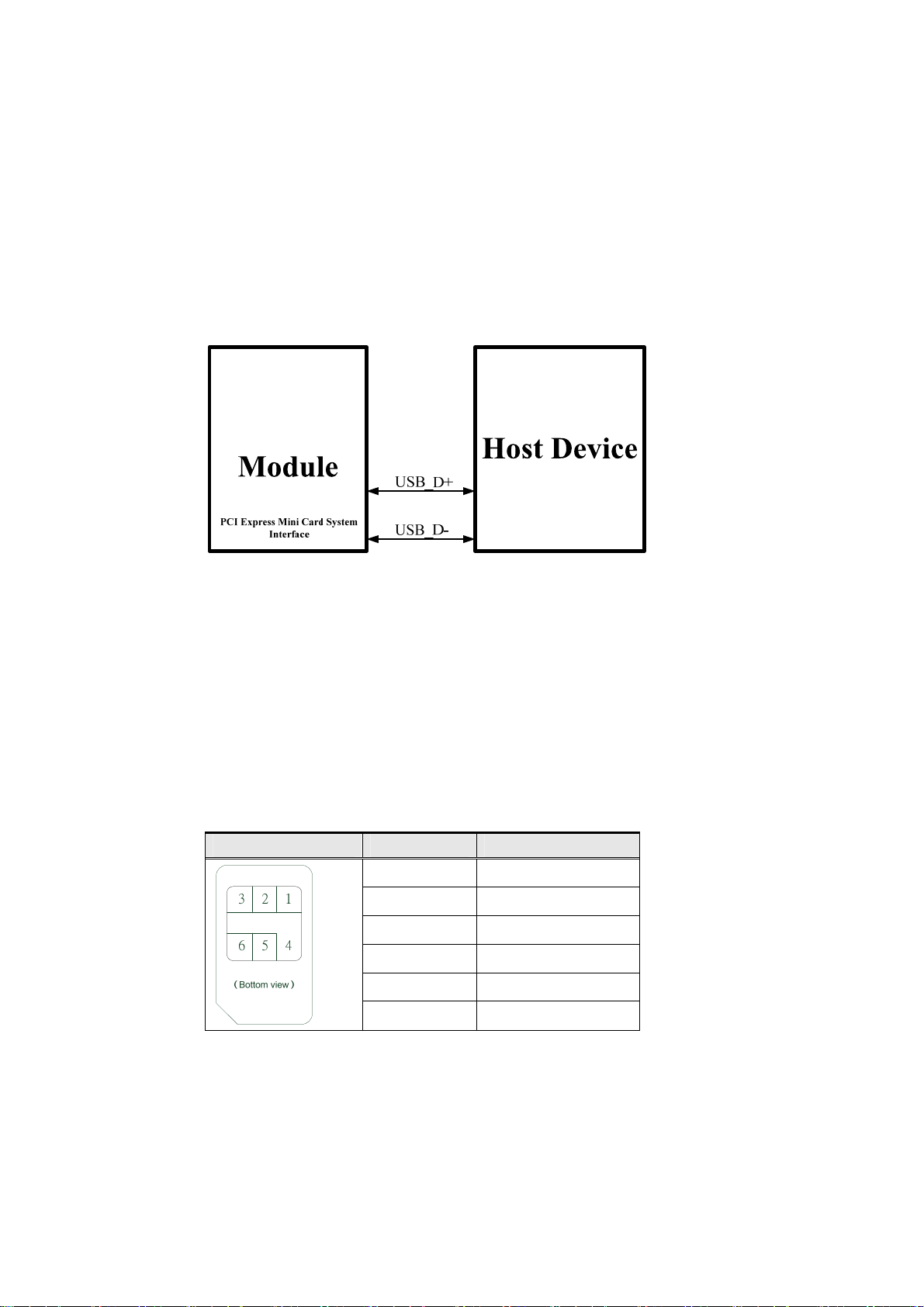
The M250 module interfaces with host device through PCI Express Mini Card interface. The
interface equips with USB2.0 interface, USIM interface, LED control signal, Wake# signal to request
host device return from sleep/suspended state, and W_Disable# signal to disable radio operation.
There are several GPIO pins (2.6V compatible) reserved for customized applications, please contact
BandRich for discussion. Besides the above mentioned interfaces, M250V also provides PCM
interfaces reserved for voice applications. The M250-LC features low power consumption but
requires higher input voltage than PCI standard.
1.2.5 Software Functionality
M250 module series is supplied with device driver of Microsoft Windows Vista 32/64, Windows XP
SP2 above, Windows 2000 SP4 above, Mac OSX 10.4 above, and Linux Fedora 8, Unbuntu 7, Open
SuSE 10.