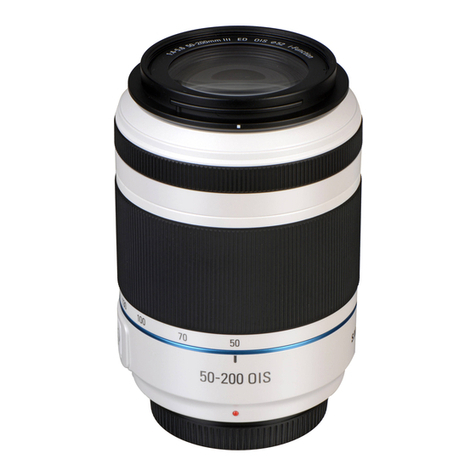
it
Safety Precautions
•
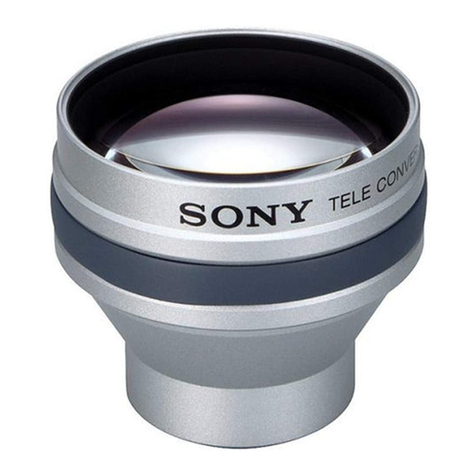
Do
not look at the sun or abright light source
through the lens or camera. Doing
so
could
result
in
loss of vision. Looking at the sun directly
through the lens is especially hazardous.
•Whether
it
is
attached
to
the camera or not, do
not leave the lens under the sun without the
lens cap attached. This is to prevent the lens from
concentrating the sun's rays, which could cause a
fire.
Handling Cautions
•If the lens
is
taken from acold environment into
awarm one, condensation may develop on the
lens surface and internal parts. To prevent
condensation
in
this case, first put the lens into
an
airtight plastic bag before taking
it
from acold to
warm environment. Then take out the lens after
it
has warmed gradually. Do the same when taking
the lens from awarm environment into acold one.
•
Do
not leave the lens
in
excessive heat such as
in
acar
in
direct sunlight. High temperatures can
cause the lens to malfunction.
This device complies with Part
15
of the FCC Rules. Operation
is
subject
to
the following two conditions: (1) This device may not
cause harmful interference, and
(2)
this device must accept any
interference received, including interference that may cause
undesired operation.
Do
not make any changes or modifications to the equipment
unless otherwise specified
in
the instructions. If such changes or
modifications should be made, you could be required
to
stop
operation of the equipment.
This equipment has been tested and found to comply with the
limits for aclass Bdigital device, pursuant
to
part 15 of the FCC
Rules. These limits are designed to provide reasonable protection
against harmful interference
in
aresidential installation. This.
equipment generates, uses and can radiate radio frequency
energy and,
if
not installed and used
in
accordance with the
instructions, may cause harmful interference
to
radio
communications.
However, there
is
no guarantee that interference will not occur
in
aparticular installation.
If
this equipment does cause harmful
interference
to
radio or television reception, which can be
determined by turning the equipment off and
on,
the user is
encouraged to try to correct the interference by one or more of
the following measures:
•Reorient or relocate the receiving antenna.
•Increase the separation between the equipment and receiver.
•Consult the dealer or
an
experienced radiofTV technician for
help.
This Class Bdigital apparatus complies with Canadian ICES-003.
ENG-2