4
ENGLISH
7. Use thecorrect machine.
Do not push small machines to do big jobs which demand more powerful
machines. Do not push amachine or attachment to perform anoperation it is not
designed for; for example, do not use alog cutter to cut tree branches or timber.
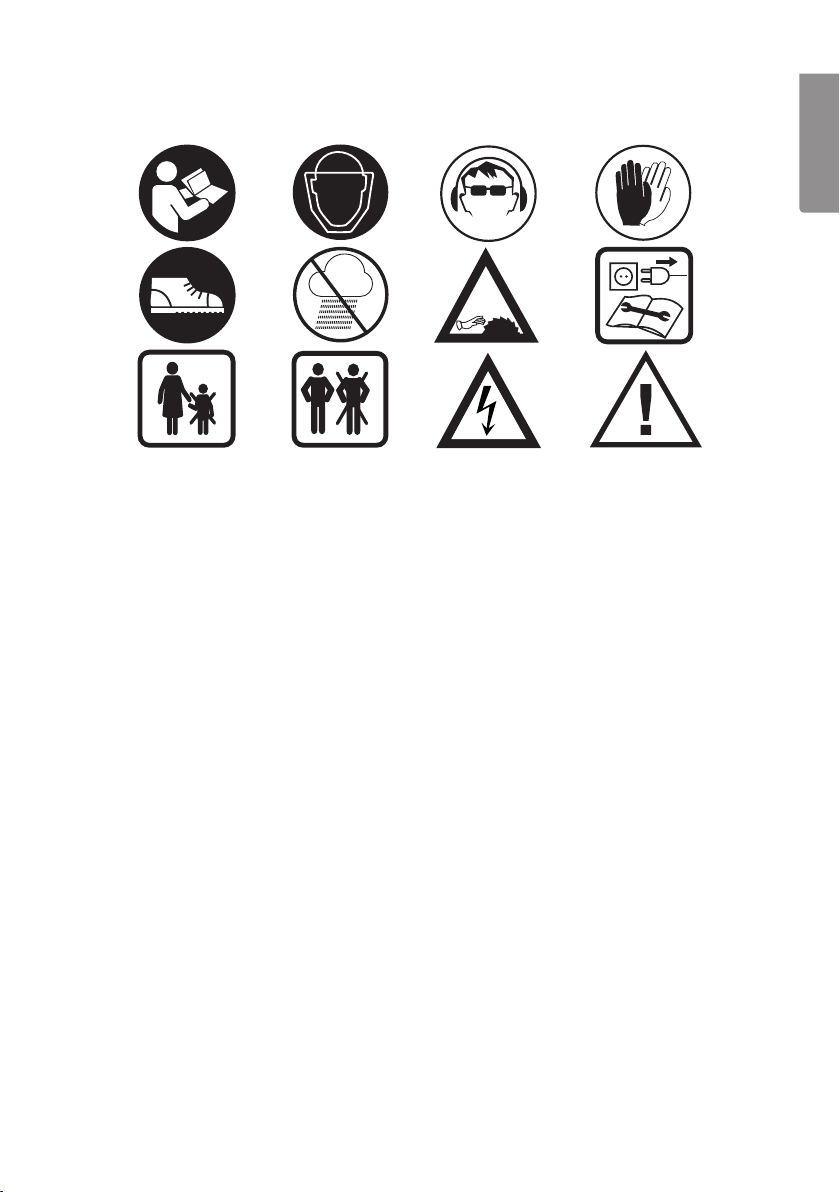
8. Wear proper clothing.
Do not wear loose fitting clothes or jewellery as they may get stuck in therotating
parts. Non-slip shoes are recommended when working outdoors.
Wear ahairnet or something similar if you have long hair.
9. Always wear protective goggles.
Wear protective goggles. Also, use dust filters or protective masks for dusty jobs.
10. Use suction equipment.
If themachine is prepared for attaching suction equipment for dust removal,
make sure theequipment is connected and used correctly.
11. Do not handle theelectric cable roughly.
Do not jerk thecable, but instead pull theplug when you remove it from thewall
socket. Make sure theelectric cable does not come into contact with heat,
oil or sharp edges.
12. Fasten theobject correctly.
When possible, use clamps or vices to fasten thework object. It is safer than
securing theobject with your hand.
13. Do not stretch too far.
Make sure that you are standing securely and balanced thewhole time.
14. Keep themachine maintained.
Make sure it is clean and theedges are sharpened for optimal effect and good
results. Follow themanual’s recommendations for lubrication and changing
accessories. Check theelectrical cable regularly. If it is damaged it should be
changed by aqualified service technician. Inspect all theextension cables regularly
to make sure they are not damaged. Make sure that themachine handle and lever
are clean, dry and completely free from oil, grease etc.
15. Turning thepower off.
Pull out theplug and push theemergency stop before servicing and changing
accessories, such as planning steel, drills, steel, sanding-belts or blades.
16. Remove all keys and service tools.
Regularly check that all keys and service tools have been removed from themachine
before you turn thepower on.