Compu Chlor Manual AU 6
5.2.1 Chlorine Stabiliser (Cyanuric Acid). Chlorine Stabiliser is needed to maintain
proper levels of chlorine. Unstable chlorine can be destroyed by the sun’s UV
radiation within two hours. Chlorine stabiliser must be maintained between 30 –60
ppm.
5.2.2 Nitrates and Phosphates. These chemicals can cause extremely high chlorine
demands and will deplete chlorine from your pool. In some cases, they may even
lower your chlorine levels to zero. Your local pool professional can test for Nitrates
and Phosphates and recommend methods of removal.
5.2.3 Metals. Metals can cause loss of chlorine. Also, metals can stain your pool and tint
your water. Have your local pool professional check for metals and recommend
methods of removal.
5.2.4 Chloramines. Chloramines should not be present in pool water. When organic
materials are not fully oxidized by Free Chlorine, Chloramines are formed. This ties
up the Free Chlorine in your pool, and does not allow the chlorine in your pool to
disinfect. Chloramines also cloud pool water and burn the eyes. Shock the pool
with chlorine to remove Chloramines at the initial start up of the pool.
5.2.5 pH Levels. pH produced by a chlorine generator is close to neutral pH. However,
other factors usually cause the pH of the pool water to rise. Therefore, the pH in a
pool chlorinated by a chlorine generator tends to stabilize at approximately 7.8. If
the pool pH rises above 7.8, have a pool professional test to see if other factors
such as high Calcium Hardness or Total Alkalinity are the cause, and then balance
accordingly.
5.2.6 Total Dissolved Solids (TDS). Adding salt to pool water will raise the TDS level.
While this does not adversely affect the pool water chemistry or clarity, the pool
water professional testing for TDS must be made aware that salt has been added
for a chlorine generator system. The individual performing the TDS test will then
subtract the salinity level to arrive at the correct TDS level.
5.3 Water Chemistry Helpful Hints
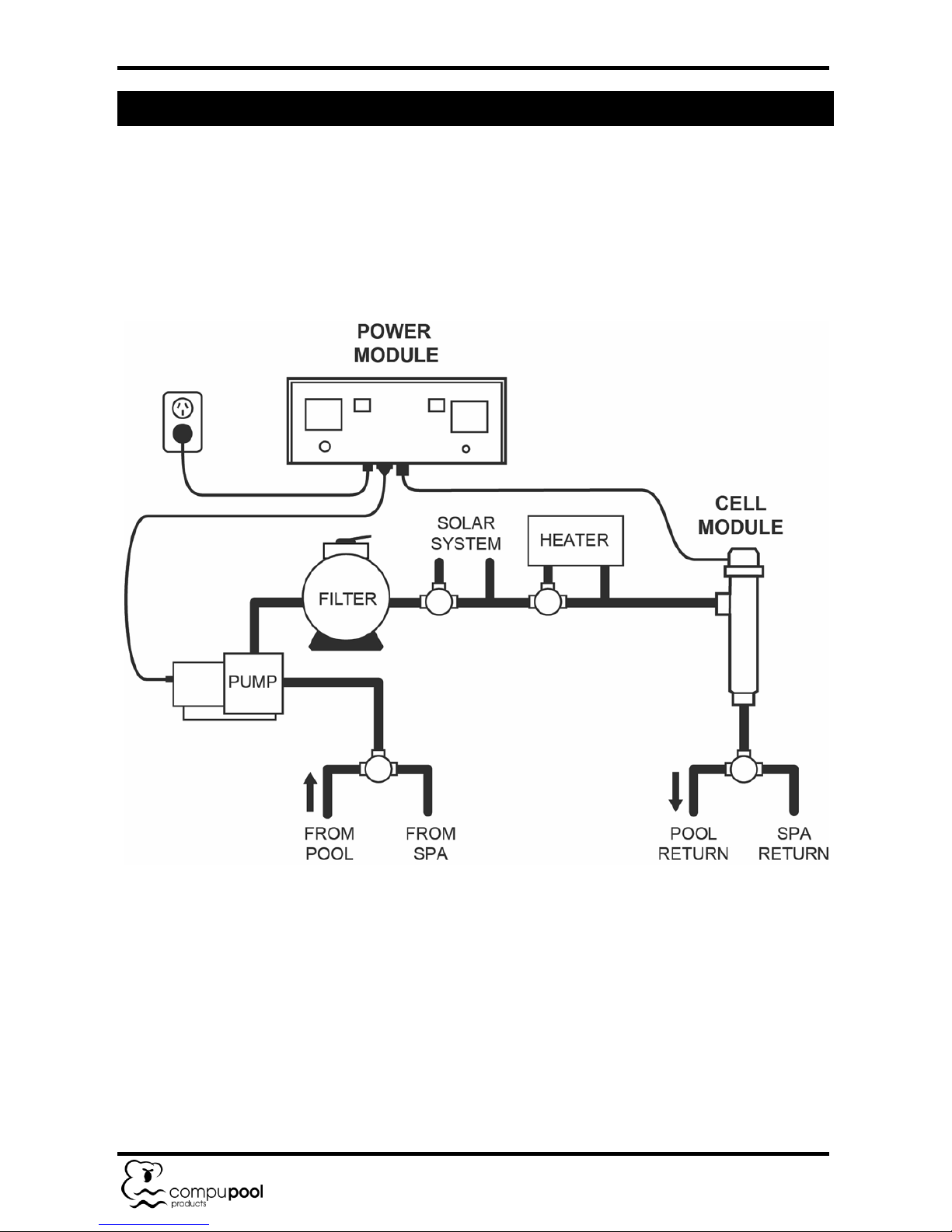
5.3.1 Proper operation of the chlorine generator can be easily verified by inspecting the
Electrolytic Cell. The chlorine being produced will appear as a fog at one end of the
plates.
5.3.2 If the pool remains cloudy, or the chlorine residual tests low, then the chlorine being
produced is being lost due to high chlorine demand or improper water conditions.
Take a water sample to a pool professional to ensure that the pool water is
balanced correctly.
5.4 Recommended List
5.4.1 Read and keep your manual in a safe place.
5.4.2 Increase chlorine production when temperature goes up.