Section
1
INTRODUCTION
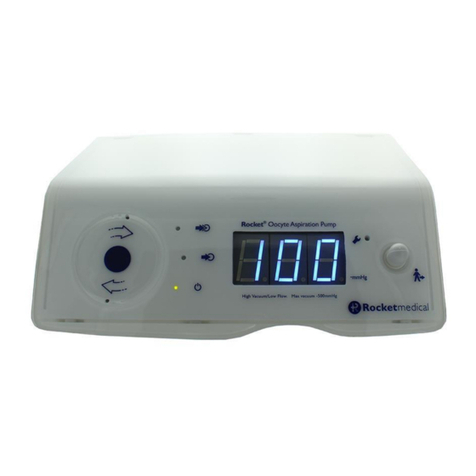
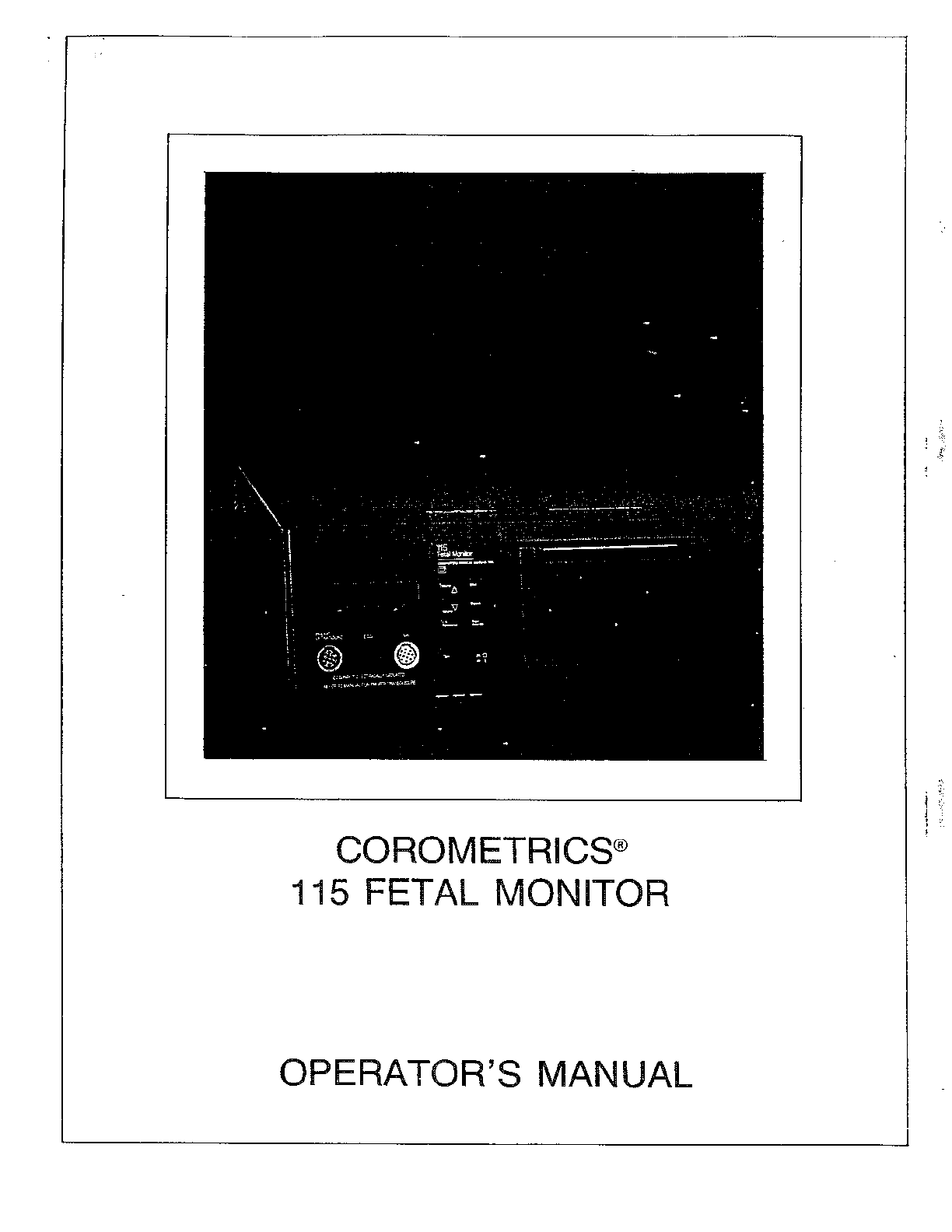
The CorometricsB Model
115
Fetal Monitor is capable of
monitoring two heart rates (maternal and
fetal
or twins)
and
maternal uterine contractions. Simultaneous trends of
'
beat-to-beat heart rate and uterine activity
(UA)
are plotted
continuously on the built-in
dual
channel strip chart
recorder. Fetal heart rate
(FHR)
and
UA
are displayed
continuously on the front-panel numeric display. The
Model
115
is capable
of
monitoring heart rate and uterine
activity using the following external or internal clinical
methods.
External
Monitoring
Modes
1)
Continuous-Wave Doppler Ultrasound:
A
transducer
placed on the abdomen is used to direct
an
ultrasonic
beam
toward the fetal heart and to sense Doppler-shied echoes
created by moving cardiac structures.
A
patented
autocorrelationprocess is used to determine the timing of
successive cardiac cycles.
2)
Phono: An acoustically sensitive transducer placed on
the maternal abdomen senses fetal heart -sounds which are
used
to compute the fetal heart rate. The patented
autocorrelationprocessing is
also
used in the Phono Mode
to improve measurement accuracy.
3)
Tocodynamometer: Relative Pressure within the uterus
is measured using a tocotransducer strapped to the
abdomen in the area of the uterine fundus. The readings
are recorded on the strip chart paper
in
a relative scale
from
0
to
100.
Internal Monitoring Modes
1)
Direct Fetal ECG: FECG waveforms are obtained via a
spiral electrode attached to the fetal presenting part. FHR
is computed on a beat-to-beat basis using the time interval
between R-wave peaks. The instantaneous FHR pattern is
printed on the strip chart paper and the FHR appears on
the
numeric display.
2)
Intrauterine Catheter and Strain Gauge: Amniotic fluid
pressure is measured using
a
transcervical intrauterine
catheter and externally mounted strain gauge. Pressure
trends are plotted over the range of
0
to
100
rnrnHg.
Maternal Monitoring Mode
MECG waveforms are obtained via electrodes placed on
the maternal chest and abdomen. MHR is computed on a
beat-to-beat basis using the time interval between R-wave
peaks. The instantaneous MHR pattern is printed on the
strip chart paper and the MHR appears on the numeric
display.