manuals.online logo
Brands
  1. Home
  2. •
  3. Brands
  4. •
  5. DPA
  6. •
  7. Microphone
  8. •
  9. DPA Dual-ear User manual

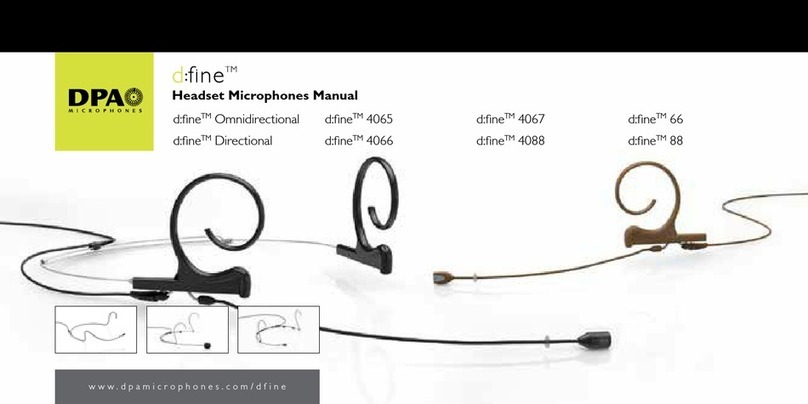
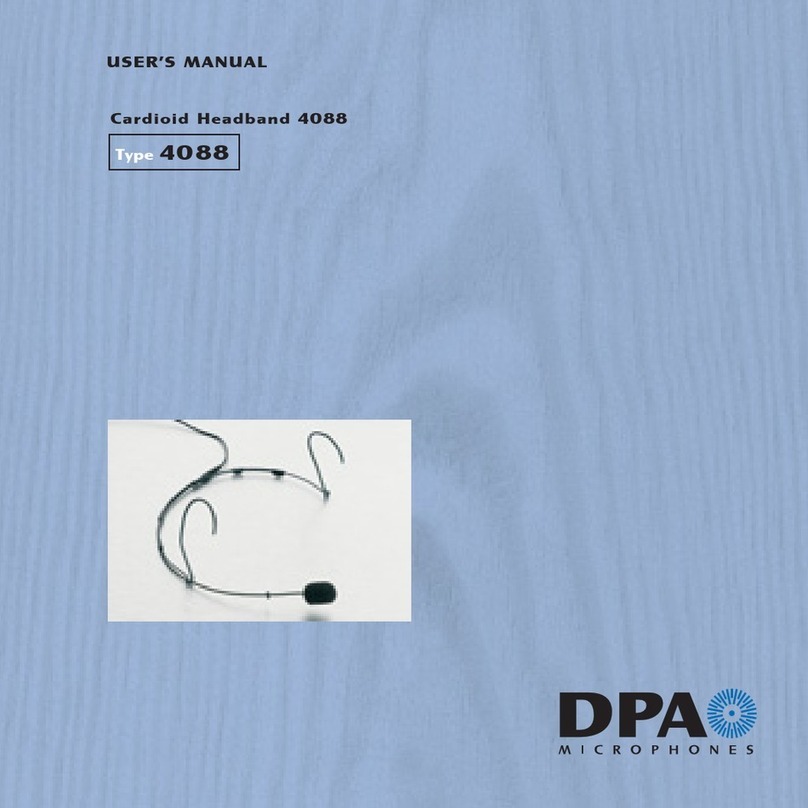
DPA Dual-ear User manual

This manual suits for next models

5

Other DPA Microphone manuals

DPA MSS6000 User manual

DPA

DPA MSS6000 User manual

DPA 5100 User manual

DPA

DPA 5100 User manual

DPA DPA 4099 Sax User manual

DPA

DPA DPA 4099 Sax User manual

DPA 4098H User manual

DPA

DPA 4098H User manual

DPA 4060 User manual

DPA

DPA 4060 User manual

DPA Hydrophone 8011 User manual

DPA

DPA Hydrophone 8011 User manual

DPA d:screet User manual

DPA

DPA d:screet User manual

DPA d:vote 4099B User manual

DPA

DPA d:vote 4099B User manual

DPA DPA 4017 User manual

DPA

DPA DPA 4017 User manual

DPA d:sign 4097 CORE User manual

DPA

DPA d:sign 4097 CORE User manual

DPA 4041-S User manual

DPA

DPA 4041-S User manual

DPA 4003 User manual

DPA

DPA 4003 User manual

DPA DPA 4071 Instruction manual

DPA

DPA DPA 4071 Instruction manual

DPA 4065 User manual

DPA

DPA 4065 User manual

DPA 4088-F User manual

DPA

DPA 4088-F User manual

DPA d:screet SC4098 User manual

DPA

DPA d:screet SC4098 User manual

DPA BLM4060 User manual

DPA

DPA BLM4060 User manual

DPA 4097 CORE User manual

DPA

DPA 4097 CORE User manual

DPA d:vote 4099B User manual

DPA

DPA d:vote 4099B User manual

DPA 4004 User manual

DPA

DPA 4004 User manual

DPA 4003 User manual

DPA

DPA 4003 User manual

DPA 4011 User manual

DPA

DPA 4011 User manual

DPA 2028 User manual

DPA

DPA 2028 User manual

DPA 4003 User manual

DPA

DPA 4003 User manual

Popular Microphone manuals by other brands

Betzold 760932 operating instructions

Betzold

Betzold 760932 operating instructions

Shure A88SM user guide

Shure

Shure A88SM user guide

JTS UF-10TH/12 instruction manual

JTS

JTS UF-10TH/12 instruction manual

Shure BETA 58A User giude

Shure

Shure BETA 58A User giude

Shure SM7 user guide

Shure

Shure SM7 user guide

Sony ECM-Z200 Service manual

Sony

Sony ECM-Z200 Service manual

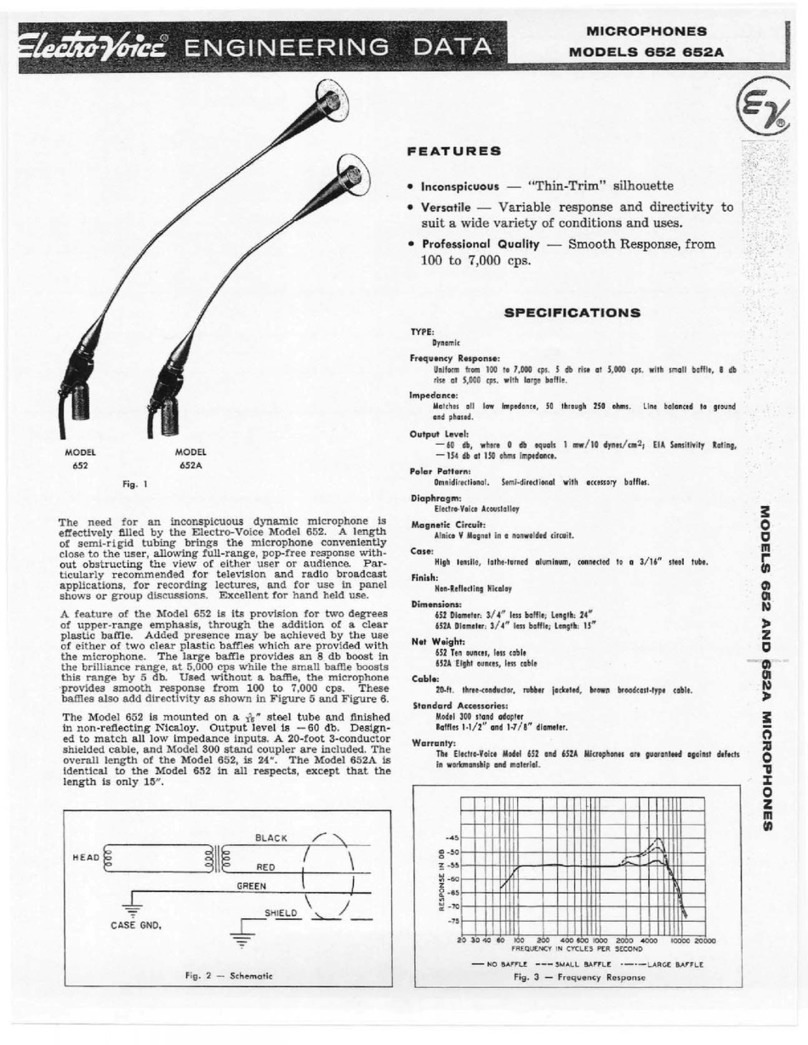
Electro-Voice 652 engineering data

Electro-Voice

Electro-Voice 652 engineering data

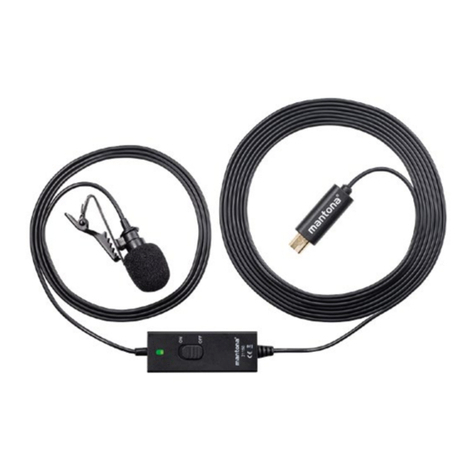
mantona 21150 instruction manual

mantona

mantona 21150 instruction manual

Loewe We. SEE 55 user manual

Loewe

Loewe We. SEE 55 user manual

IK Multimedia iRig Stream MIC PRO user manual

IK Multimedia

IK Multimedia iRig Stream MIC PRO user manual

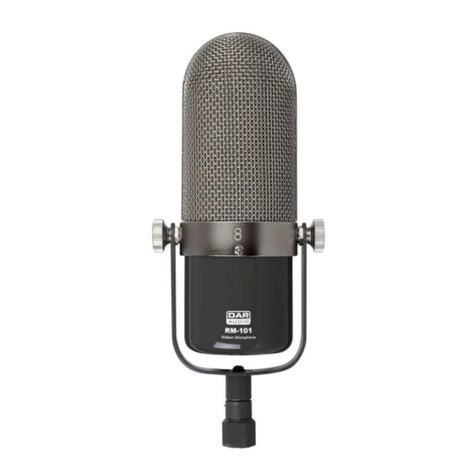
DAPAudio RM-101 user manual

DAPAudio

DAPAudio RM-101 user manual

AKG CHM 21 User instructions

AKG

AKG CHM 21 User instructions

Sennheiser evolution wireless series EM 100 instruction manual

Sennheiser

Sennheiser evolution wireless series EM 100 instruction manual

Sony C-48 operating instructions

Sony

Sony C-48 operating instructions

GIGAMEDIA GGM PAMICUHFG user manual

GIGAMEDIA

GIGAMEDIA GGM PAMICUHFG user manual

Shure WH30TQG user guide

Shure

Shure WH30TQG user guide

auna PRO MIC-900 manual

auna PRO

auna PRO MIC-900 manual

Shure MV51 manual

Shure

Shure MV51 manual

manuals.online logo
manuals.online logoBrands
  • About & Mission
  • Contact us
  • Privacy Policy
  • Terms and Conditions

Copyright 2025 Manuals.Online. All Rights Reserved.

www.dpamicrophones.com
user’s manual
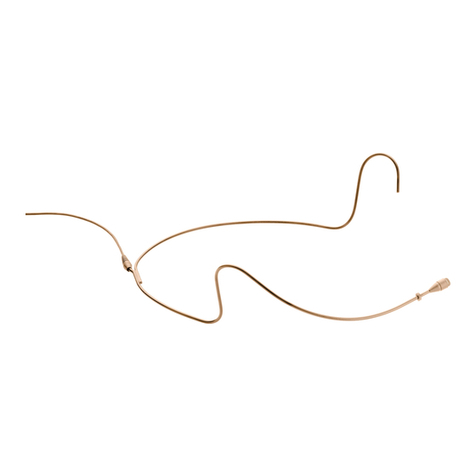
headset microphone
Dual-ear
Short boom
Single-ear
Omnidirectional characteristics
•Themicrophoneissensitivetosoundfromalldirections.
•Thesoundremainsmoreorlessthesameregardlessofthedistance
between the sound source and the microphone.
•Thepositioningofmicrophoneswithomnidirectional
characteristics is less critical than with directional.
•Anomnidirectionalmicrophoneisgenerallynotverysensitiveto
wind, breathing and handling noises.
Directional characteristics
•Rejectsbackgroundnoiseandcreateshigherseparation.
•Themicrophoneismostsensitivetosoundonthesideofthechevron.
•Thepositioningofmicswithdirectionalcharacteristicsisessential,asthelow
frequencylevelwillchangeaccordingtothedistancetothemouth.Choosea
distancewhichyieldsthedesiredamountofbass.
•Careshouldbetakentoprotectagainstwindandpopnoise.
Thedirectionalcharacteristicsofthemicrophoneisindicatedonthe
microphoneheadwithforomnidirectionalandfordirectional.
Thismarkingshouldalwayspointtowardsthemouth.
How to mount the DPA d:ne™ headset microphone
Forthesingle-ear,justopenthespringhooklightly,rstplacetheslide
behindyourearlobeandletgoofthespringoveryouear.
Forthedual-ear,placetheheadsetbehindyourearsandplacethesprings
likeforthesingle-ear.Adjusttheheadsetmicbypullingorpushingthewires
untilittstight.
How to adjust microphone boom & cable Service point for exchange of cables or booms
Windscreens
Theenclosedwindscreensofferadditionalprotectionagainstwindandpop
noise.Gentlydrawthewindscreenoverthemicrophonehead.
Forevenbetterprotection,biggerwindscreensareavailable.
Accessories (see more at www.dpamicrophones.com)
Gridsandwindscreens,cablesandadapters,boomsandearhooks
Sweat stop & protection grid
Themicrophoneisequippedwithatransparentsweatstoparoundthemicro-
phoneboomtopreventsweatrunningalongthemicrophoneboomtothe
microphone head. Aprotectiongridismountedoverthemicrophonehead.If
cloggedwithdirtormake-up,gentlyremoveitandcleanitwithdistilledwater.
Alwaysleavetheprotectiongridonthemicrophone,asitprotectstheinner
gridandoffersprotectionagainstwindandbreathingnoise.Theprotection
grid is replaceable.
Positionthemicrophoneproperlybypulling
or pushing the boom along the slide.
Switch between left and right ear wearing
style simply by rotating the microphone
boom. Hold on to the earhook while
gentlyturningtheboom.
Forthedual-earversions,alsorotatethe
twoearhooks.
Adjust the microphone boom to follow
theshapeofyourfacebygentlybending
thesoftsteelonthecablehanger.
Adjust the angle of the cable run, also
bygentlybendingthesoftsteel(seear-
rows). Position the cable as shown on
thepicture forsecuring theposition of
the microphone.
TheDPAd:neheadsetmicrophone
offersexchangeofcablesor
microphonebooms.Simplylocate
theserviceaccesspoint,pullbackthe
smallprotectioncapandgentlypullthe
boomawayfromthecablehanger.
Thecablereliefonthedual-earversion
shouldbexedintheclipthatalsoholds
the two wires on the mount.
Protection cap
DPAd:neTM headset microphone comes with a red plastic cap which
servestoprotectthemicrophoneheadwhenputtingonmake-up,
hairsprayandmore.Removethecapbeforeuse.
Color codes & cable steer
DPAd:neheadsetmicrophonecomeswithanumberofcablesteer
clipsindifferentcolours.Mountedonthecablerelief,thisclipallowsfor
quickrecognitionofaspecicheadsetmicrophone.
Clothing clip
Thesuppliedclothingclipallows
youtoattachthecabletoyour
clothes,thusrelievingthecable
draw to the headset mic.
This is essential on the
single-ear headset mic.
Maintenance
DPAd:neheadsetmicrophoneisresistanttohighlevelsofhumidity.
However,caremustbetakentokeeptheheadsetmicrophoneawayfrom
exposuretowaterandcleaninguids,andtokeepthemicrophonehead
dryatalltimes.Donotusesprayoruidcontainingchemicalsthatcould
removestaticelectricityonorclosetothemicrophone.Thiscouldcause
permanent damage.
Cable maintenance
Useorganicoil(e.g.oliveoil)orlukewarmdistilledwatertoremove
residuefromtape,glue,ormake-uponthecable.Donotbendthecable
orrubitharshly,itmaystresstheinnercoresofthecableandcause
themtobreakovertime.
©Copyright2012
Service & repair
Ifyouarenotsatisedwiththecharacteristicsexhibitedbythisproduct,pleasegoto
www.dpamicrophones.com/serviceforinstructions.
Warranty
Thed:netmheadsetmicrophoneiscoveredbyatwo-yearlimitedwarranty.
CE marking
ThisproductconformswithallrelevantdirectivesapprovedbytheEuropeanCommission.
Productfeaturesandspecicationsaresubjecttochangewithoutnotice.
dB
10
0
-10
-20
-30
20 Hz 50 100 200 500 1 kHz2 5102
04
0
dB
10
0
-10
-20
-30
20 Hz 50 100 200 500 1 kHz2 5102040
Black line is near field (2 – 3 cm/0.8 – 1.2 in).
Green line is far field (more than 30 cm/12 in).
Frequency response
d:neTM omni headset microphone
Frequency response
d:neTM directional headset microphone
Directional characteristics
Omnidirectional
Principle of operation
Pressure
Frequency range
20Hz-20kHz
Frequency range, ± 2 dB
20Hz-20kHzwith3dBsoftboostat8-15kHz
Sensitivity, nominal, ± 3 dB at 1 kHz
6mV/Pa;-44dBre.1V/Pa
Equivalent noise level, A-weighted
Typ.26dB(A)re.20µPa(max.28dB(A))
S/N ratio (A-weighted),
re. 1 kHz at 1 Pa (94 dB SPL)
Typ.68dB(A)
Total Harmonic Distortion (THD)
<1%upto123dBSPLpeak
<1%upto120dBSPLRMSsine
Dynamic range
Typ.97dB
Max. SPL, peak before clipping
144dB
Power supply (for full performance)
Min.5V-max.50VthroughDPAadapterfor
wirelesssystems.48Vphantompower±4V
withDAD6001-BCXLRadapter
Current consumption
Typ.1.5mA(microphone)
3.5mAwithDAD6001-BCXLRadapter
Connector
MicroDot
Color (microphone,cableandearhook)
Black,beige,brownorlime(nolimecable
available)
Weight
Microphoneboom:0.8g(0.03oz)
Single-earhook:1.1g(0.04oz)
Dual-earhook:3g(0.1oz)
Cable:6.6g(0.23oz)
Total:8.5g(0.30oz)
Microphone head size (h x w x d)
9.5x5.3x2.9mm(0.37x0.21x0.11in)
Capsule diameter
5.4mm(0.2in)
Cable length
1.3m(4.3ft)
Cable diameter
1.6mm(0.06in)
Temperature range
-40°Cto45°C(-40°Fto113°F)
Relative Humidity (RH)
Upto90%
Directional characteristics
Cardioid
Principle of operation
Pressure gradient
Frequency range
20Hz-20kHz
Frequency range, ± 2 dB,
Near eld 2-3 cm (0.8-1.2 in)
100Hz-20kHzwith3dBsoftboostat8-20kHz
Sensitivity, nominal, ± 3 dB at 1 kHz
6mV/Pa;-44dBre.1V/Pa
Equivalent noise level, A-weighted
Typ.28dB(A)re.20µPa(max.30dB(A))
S/N ratio (A-weighted),
re. 1 kHz at 1 Pa (94 dB SPL)
Typ.66dB(A)
Total Harmonic Distortion (THD)
<1%upto123dBSPLpeak
<1%upto120dBSPLRMSsine
Dynamic range
Typ.95dB
Max. SPL, peak before clipping
144dB
Power supply (for full performance)
Min.5V-max.50VthroughDPAadapterfor
wirelesssystems.48Vphantompower±4 V
withDAD6001-BCXLRadapter
Current consumption
Typ.1.5mA(microphone)
3.5mAwithDAD6001-BCXLRadapter
Connector
MicroDot
Color (microphone,cableandearhook)
Black,beige,brownorlime(nolimecable
available)
Weight
Microphoneboom:0.8g(0.03oz)
Single-earhook:1.1g(0.04oz)
Dual-earhook:3g(0.1oz)
Cable:6.6g(0.23oz)
Total:8.5g(0.30oz)
Microphone head size (h x w x d)
9.5x5.3x2.9mm(0.37x0.21x0.11in)
Capsule diameter
5.4mm(0.2in)
Cable length
1.3m(4.3ft)
Cable diameter
1.6mm(0.06in)
Temperature range
-40°Cto45°C(-40°Fto113°F)
Relative Humidity (RH)
Upto90%
Specications
d:neTM omni headset microphone
Specications
d:neTM directional headset microphone
dpi-dne-m