manuals.online logo
Brands
  1. Home
  2. •
  3. Brands
  4. •
  5. Electrolux
  6. •
  7. Cooker
  8. •
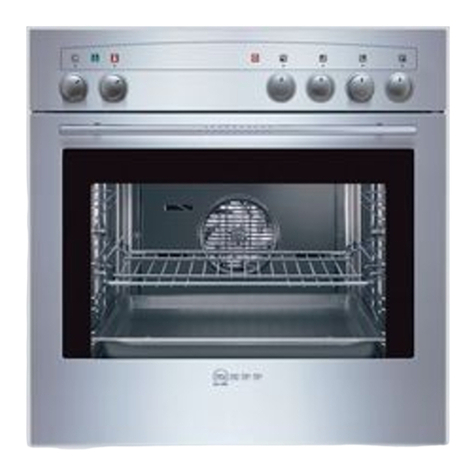
  9. Electrolux EK 6765 User manual

Electrolux EK 6765 User manual

Other Electrolux Cooker manuals

Electrolux EKK615A1OX User manual

Electrolux

Electrolux EKK615A1OX User manual

Electrolux EK 5701 User manual

Electrolux

Electrolux EK 5701 User manual

Electrolux SG 455 User manual

Electrolux

Electrolux SG 455 User manual

Electrolux EVEP916 User manual

Electrolux

Electrolux EVEP916 User manual

Electrolux EHL2X-4 User manual

Electrolux

Electrolux EHL2X-4 User manual

Electrolux Premier DSO51ELSS User manual

Electrolux

Electrolux Premier DSO51ELSS User manual

Electrolux EKC60351 User manual

Electrolux

Electrolux EKC60351 User manual

Electrolux CF501 Instruction Manual

Electrolux

Electrolux CF501 Instruction Manual

Electrolux Salamander 283001 User manual

Electrolux

Electrolux Salamander 283001 User manual

Electrolux EKC 603505 User manual

Electrolux

Electrolux EKC 603505 User manual

Electrolux EKK6130AO User manual

Electrolux

Electrolux EKK6130AO User manual

Electrolux N7E User manual

Electrolux

Electrolux N7E User manual

Electrolux EVE915 Instruction Manual

Electrolux

Electrolux EVE915 Instruction Manual

Electrolux 65G User manual

Electrolux

Electrolux 65G User manual

Electrolux EKG 603101 User manual

Electrolux

Electrolux EKG 603101 User manual

Electrolux EKC4011AOW User manual

Electrolux

Electrolux EKC4011AOW User manual

Electrolux EKM 6701 X User manual

Electrolux

Electrolux EKM 6701 X User manual

Electrolux FEH60G3102 User manual

Electrolux

Electrolux FEH60G3102 User manual

Electrolux EKV 5604 User manual

Electrolux

Electrolux EKV 5604 User manual

Electrolux 200372 User manual

Electrolux

Electrolux 200372 User manual

Electrolux EK 5701 User manual

Electrolux

Electrolux EK 5701 User manual

Electrolux EKM601101 User manual

Electrolux

Electrolux EKM601101 User manual

Electrolux EKC7051BOW User manual

Electrolux

Electrolux EKC7051BOW User manual

Electrolux EKG9241Z7X User manual

Electrolux

Electrolux EKG9241Z7X User manual

Popular Cooker manuals by other brands

Modena FC 7645 SGM User manual book

Modena

Modena FC 7645 SGM User manual book

Stanley Donard 60 Installation and operating instructions

Stanley

Stanley Donard 60 Installation and operating instructions

Bartscher 201TC manual

Bartscher

Bartscher 201TC manual

Parkinson Cowan 50 GR/BU installation instructions

Parkinson Cowan

Parkinson Cowan 50 GR/BU installation instructions

Siemens HK9P00020U instruction manual

Siemens

Siemens HK9P00020U instruction manual

Creda S150E Installation and user instructions

Creda

Creda S150E Installation and user instructions

Creda HB48309 instructions

Creda

Creda HB48309 instructions

Bosch HCE743220F instruction manual

Bosch

Bosch HCE743220F instruction manual

Tricity Bendix SE545P manual

Tricity Bendix

Tricity Bendix SE545P manual

NEFF E1461A2/01 Instructions for use

NEFF

NEFF E1461A2/01 Instructions for use

Zanussi ZCM 700 X Instruction booklet

Zanussi

Zanussi ZCM 700 X Instruction booklet

Smeg SNL61MA9 user manual

Smeg

Smeg SNL61MA9 user manual

RiverGrille TF2002501-RG Assembly instruction

RiverGrille

RiverGrille TF2002501-RG Assembly instruction

Vollrath 69504F Operator's manual

Vollrath

Vollrath 69504F Operator's manual

Tricity Bendix CSIE500 Operating and installation instructions

Tricity Bendix

Tricity Bendix CSIE500 Operating and installation instructions

AEG Competence 5731 V Instruction book

AEG

AEG Competence 5731 V Instruction book

Euromaid ES60 Installation and operation manual

Euromaid

Euromaid ES60 Installation and operation manual

Hotpoint HUI 62 TP Instructions for installation and use

Hotpoint

Hotpoint HUI 62 TP Instructions for installation and use

manuals.online logo
manuals.online logoBrands
  • About & Mission
  • Contact us
  • Privacy Policy
  • Terms and Conditions

Copyright 2025 Manuals.Online. All Rights Reserved.

1
Electric cookers
INSTRUCTION BOOKLET
Mod. EK 6765
35676-6601
2
This appliance complies with the following
E.E.C. Directives:
 73/23 - 90/683 (Low Voltage Directive ;
 89/336 (Electromagnetical Compatibility
Directive ;
 93/68 (General Directives ;
and subsequent modifications.
This warnings has been given for the safety of you and others. We therefore ask you to carefully read the procedures of
installing and using this cooker.
ENGLISH
Important safety information
Installation
 The work of installation must be carried out by
competent and qualified installers according to the
regulations in force.
 Any modifications to the domestic electrical mains
which may be necessary for the installation of the
appliance should be carried out only by competent
personnel.
 Avoid installation of the cooker near inflammable
material (e.g. curtains, tea towels, etc.).
Child Safety
 This appliance has been designed for use by adults.
Take care, therefore, that children do not attempt to
play with it.
 The appliance remains hot for a long time after being
switched off. upervise children at all times, paying
attention that they do not touch surfaces or remain
in the vicinity of the appliance when in use or when
not completely cooled.
During Operation
 This product is intended for the cooking of food and
must not be used for other purposes.
 It is dangerous to modify, or attempt to modify, the
characteristics of this appliance.
 Unstable or deformed pans should not be placed on
the burners or plates in order to avoid accidents
caused by upsetting or boiling over.
 Particular care should be taken when cooking with
oil or fat.
 If the appliance is fitted with a cover, its function is to
protect the surface from dust when closed and to ac-
cumulate splashes of grease when open. Do not use
for other purposes.
 Always clean the cover before closing.
 Leave the burners and/or plates to cool before
closing.
 All the covers, in plate glass or enamel, are
removable to facilitate cleaning.
 Always ensure that the knobs are in the « »
(Stop) position when the appliance is not in use.
 Always insert the dripping pan when using the grill
or when cooking meat on the grid. Pour a little water
into the dripping pan to avoid grease burning and
creating unpleasant smells.
 Always use oven gloves to remove dishes from the
oven.
 The accessories (grid and dripping pan) should be
washed before using for the first time.
 Take care when using cleaning products in spray
form: never direct the spray onto the resistance or
the thermostat bulb.
 If, when placing food in the oven, or when removing
it, a large quantity of oil, juice, etc. spills onto the
bottom of the oven, re-clean before starting to cook
to avoid unpleasant smoke and also the possibility
of these substances catching fire.
 For reasons of hygiene and safety this appliance
must always be kept clean. A build up of grease or
other food can cause fires.
 The oven becomes hot with the movement of air. The
holes on the bottom of the oven must never be
obstructed. Do not cover the sides of the oven with
aluminium foil, in particular the lower part of the
opening.
 The appliance is heavy, move it carefully.
 Before maintenance and cleaning disconnect the
appliance and allow to cool.
 Ensure that the oven grids are inserted correctly (see
instructions).
 If there are self-cleaning panels they should only be
cleaned with soap and water (see cleaning
instructions).
 Only heat-resistant plates may be placed in the
drawer situated under the oven.Do not put
combustible materials there.
Service
 In case of repairs, do not attempt to correct yourself.
Repairs carried out by unqualified persons can cau-
se damage. Contact an authorized Technical
Assistance Centre and insist an original spareparts.
Environmental Information
 After installation, please dispose of the packaging with
due regard to safety and the environment.
 When disposing of an old appliance, make it unusable,
by cutting off the cable.
The following symbols will be found in the text to guide
you throughout the Instructions:
Safety Instructions
Step by step instructions for an operation
Hints and Tips
Environmental information
F
Guide to Use the instructions
It is very important that this instruction ook
should e kept safely for future consultation. If
the appliance should e sold or given to
another person, please ensure that the ooklet
goes together with it, so that the new owner
can know of the functions of the machine and
also e aware of the warnings.
3
MANUFACTURER: ELECTROLUX ZANUSSI S.p.A.
Viale Bologna 298
47100 FORLÌ (Italy
Description of the appliance
Contents
For the user For the installer
These instructions are only for the countries
stated y the sym ol printed on the front cover
of this instruction ook.
1. Ceramic hob
2. Control panel
3. Oven handle
4. Oven door
5. Storage drawer
6. Adjustable feet
2
3
4
5
6
Important safety information 2
Description of the appliance 3
Ceramic glass hob
Practical Hints 5
Electric oven 6
When using the oven for the first time 7
2 Hour Clock and Timer 8
Suggestions for using the oven 10
Cooking tables 11
Cleaning and maintenance 12
Something not working 13
Technical assistance 13
Technical data 1
Instructions for the installer 1
Electrical connection 15
Storage drawer
IMPORTANT: Only heat-resistant plates may be
placed in the storage drawer situated under the
oven. Do not put com usti le materials there.
1
4
It is important to note that the plate may smoke
and produce a slightly unpleasant odour when
used for the first time. This is quite normal and will
disappear after a short while.
Using the hotplates
The control panel incorporates knobs to operate the four
hot plates. The cooking zones and relevant control knobs
are of two types:
A normal cooking zone: the control knob (fig. 1 is a 7
position control knob: 0 = off and 1-3 indicate the
levels of power up to the mawimum.
We recommend the plates are switched to maximum
(3 for a short while to boost the cooking zone, and
then adjusted to the required setting.
B double circuit cooking zone (front left
- To switch on the smaller cooking zone, turn the
relevant control knob (fig. 2 to the required heat setting
between 1 and 3.
- To switch on both heating elements, turn the control
knob to maximum heat setting (3 then turn the knob
further to nearly reach the 0 symbol. You will hear a
click and the wider cooking zone will switch on.
Then turn back the knob and adjust it to the required
heat setting. Now the two heating elements will ope-
rate together, giving a higher power output that a
normal cooking zone.
Ho pilot lights
The ceramic glass hob is equipped with four pilot lights
corresponding to each cooking zone. The corresponding
light turns on some minutes after the plate has been set
into operation, and stays on during the whole time of
functioning and also when the plate is off to show the
presence of residual heat in the pyroceram surface.
The pilot light turns finally off only when the surface
temperature decreases to safety values (lukewarm tem-
perature , more o less 50°C, allowing users to clean the
plate with no risk.
Ceramic glass hob
Fig. 1
Fig. 2
0
1
2
3
FO 2086
0
1
2
3
FO 2621
5
Fig. 3
Suita le pans and pots
Remember that a large pan offers a larger surface to
heat and therefore cooks food quicker than a narrow pan.
Always use pans of a size suitable for the food to be
cooked. In particular, take care that pans are not too
small for liquid preparations which could easily spill over
or that they are not too big for food which must be cooked
quickly; uncovered areas on the bottom are easily burnt
by fats and juice.
For cakes, it is preferable to use tins which do not open.
A tin which opens lets out fruit juices and sugar which,
when spilling onto the bottom of the oven, caramelize
and are difficult to clean. Avoid placing pans with plastic
handles in the oven as they may not support the heat.
Saucepans suitable for use on solid plate hobs should
have several characteristics:
- they should be heavy duty.
- they should fit the heat area exactly, or be slightly
larger for efficient use, NEVER smaller.
- they should have a flat base to ensure good contact
with the plate (Fig. 3 .
This is particularly important when using pans for high
temperature frying or pressure cooking.
Ensure pans are large enough to avoid liquids being split
onto the plates. Never leave the plates on without a pan
on them or with an empty pan on them. Particular care
should be taken when cooking with oil or fat.
During cooking, when using fats or oils, take
particular care as they can, when over-
heated, self-ignite.
The ceramic glass hob is resistent to sudden changes
in temperature, it is insensitive to heat and cold and hals
also a good resistence to mechanical blows; a sharpened
object, however, no matter if it is small (for example a
point of a knife can irreparably damage the cooking
surface, jeopardising its functionality.
Before using the cooking plate for the first time, carefully
wash the pyroceram plate with a non-abrasive detergent,
dry it and then wsitch it on for about 10 minutes at the
highest position.
When using the cooking plate for the first time, unpleasant
smells, or smell of burnt material, might be smelt: this is
absolutely normal and it is due to the evaporation of
greasy working residues and of hte dope used during the
installation. These smells will vanish after some time of
working.
Attention: is the surface shows a crack,
immediately switch the equipment off and call
the Aftersales Service.
Practical Hints
6
FO 0375
Fig. 6
FO 2124
Electric oven
Switch to choose type of cooking
(Fig.4) and thermostat regulation
(Fig. 5).
These two switches allow you to select the type of cooking
(choice of heating element as well as temperature,
according to the requirements of the recipe.
The oven light stays on in all positions.
Explanation of sym ols
Upper and lower heating
Lower element
Top element
Grill
Fan cooking
Defrosting
Traditional cooking
Turn the switch to the position and regulate the
thermostat to the temperature required.
Bottom heating only
Turn the switch to the position and regulate the
thermostat to the temperature required.
Top heating only
Turn the switch to the position and regulate the
thermostat to the temperature required.
Grilling
Turn the switch to the position and regulate the
thermostat to the temperature required.
While the grill is in function, leave the door
half-open and to put the protective screen to
the kno (fig. 6).
Fan cooking
Turn the switch to the position and regulate the
thermostat to the temperature required.
Defrosting
Turn the switch to the position .
In this function, the electric ventilator fans cold air inside
the oven, which begins to defreeze food.
When the cooking selector switch is placed in position
regulate the thermostat to position l.
Fig. 4
0
FO 2622
Fig. 5
0
5
0
10
5
10
0
20
FO 0156
7
Thermostat Pilot lamp (°C)
When lit indicates the operation of one or more heating
elements.
Cooker Pilot lamp
When lit indicates the operation of one or more heating
elements.
Dripping pans and grids
The oven is equipped with an enamelled dripping-pan
which function is to collect the juices dripping from the
meat on the grill or on the spit, and a grid for the cooking
of foods on the grill or in a pan.
In models provided with oven grids with a position catch
(fig. 7 and when cooking on the grill or on the spit, you
are advised to fit the dripping-pan (A-fig. 7 in the guides
beneath the grill (B-fig. 7 to avoid dirtying the oven.
if you need to place the dripping-pan over the oven grid
during cooking, position it as shown in the particular of
Fig. 7.
Fig. 7 FO 0190
When using the oven for the first time
a set the oven knob to and the thermostat knob to
MAX;
b allow the oven to run empty for approximately 45
minutes;
c open a window for ventilation.
During this time, an unpleasant odour may be emitted.
This is absolutely normal, and is caused by residues of
manufacturing.
Once this operation is carried out, let the oven cool down,
then clean the oven cavity with a soft cloth soaked in warm
soapy water.
Before cooking for the first time, carefully wash the shelf
and the dripping pan.
When using the oven for the
first time
F
8
Fig. 8
Fig. 8.1
Fig. 8.2
Fig. 8.3
Fig. 8.4
-+
-+
-+
-+
-+
-+
12
Fig. 8.5
1. ( - ) DECREASE CONTROL & TIMER SETTING
BUTTON
2. ( + ) INCREASE CONTROL
( ) COOKPOT SYMBOL
Setting the time of day
When the electricity supply is first switched ON, the
display will flash 0.00. See Fig. 8.1.
Press buttons (1 and (2 together. The display will
momentarily read 88.88 (See Fig.8.2 . Release buttons,
0.00 will appear in the display as shown in Fig.8.3. Within
5 seconds press button (2 , 12.00 will show in the display
as Fig. 8.4.
Within 5 seconds, press and hold either button (1 to
decrease or button (2 to increase the time until the
correct time of day on the 24 hour clock is reached, e.g.
14.30. See Fig. 8.5.
NOTE: The increase and decrease control buttons
operate slowly at first and then more rapidly. They
should be pressed separately.
24 Hour Clock and imer
9
Fig. 8.8
Fig. 8.7
Fig. 8.9
Fig. 8.6
Fig. 8.10
Fig. 8.11
Fig. 8.12
-+
-+
-+
-+
-+
-+
-+
The timer
IMPORTANT:The timer can be used to time a set
cooking period. At the end of the cook time the
timer will automatically switch off the oven if in
use.
The timer gives an audible reminder at the end of
any period of cooking up to 23 hours and 59
minutes.
To set, press button (1 and the display will read 0.00, see
Fig. 8.6.
Release button (1 and press and hold button (2 . The
display will count up in one minute intervals until the
interval to be timed is reached, e.g. 30 minutes, see Fig.
8.7. If necessary, press and hold button (1 to achieve
the correct time interval.
The timer will begin to count down once set. At the end
of the timed period, the timer will click, switching the
oven OFF if in use.
An audible signal will sound for up to 2 minutes.
The cookpot symbol will flash and the time of day will
show in the display. See Fig. 8.8.
To stop the sound press button (1 . The display will stop
flashing. The cookpot symbol ( will go out. See Fig.
8.9. If using the oven it will come on again once button
(1 has been depressed. When cooking is complete
remove food and turn OFF oven temperature control.
To cancel the timer
Press and release button (1 . Then press and hold button
(1 and the display will count down in one minute intervals
to 0.00. See Fig. 8.10. Release button (1 .
After a few seconds the cookpot symbol will flash and the
time of day will show in the display. See Fig. 8.11
If the oven is in use this will switch OFF after a few
seconds.
To reset, press button (1 and (2 together. See Fig. 8.12.
Things to note
1. The time of day must be set before the oven will ope-
rate. There will be a few seconds dealy before the
oven switches on.
2. The timer function controls the main oven only and
will switch the oven OFF at the end of a timed period.
This function is useful if you want to begin cooking
now and have the oven switch OFF automatically.
3. If you have used the timer to time food cooking in the
oven you will need to reset the timer before the oven
can operate again.
10
Traditional cooking
As heat originates from top and bottom, dishes should
preferably be placed in the middle. If cooking requires more
heat from the bottom or the top, use the upper or lower
level.
Fan cooking
Heat is transmitted to dishes by hot air forcibly circulated
inside the oven by a fan placed at the back of the oven. By
this method, heat is quickly and evenly circulated
throughout the oven, permitting several different dishes to
be cooked at the same time on different levels (Fig. 9 .
With this cooking method, through the elimination of
humidity in the air and a drier environment, smells and
tastes are not given off and do not mix with those of other
dishes. You can also cook on only one level. In this case,
it is advisable to place the dish on the lower level for better
cooking control. This oven is particularly suitable for
defreezing rapidly, sterilizing preserves, homemade jams
and, finally, for drying mushrooms and fruit.
Using the oven
For the cooking of cakes
Pre-heat the oven, unless indicated differently, for at least
10 minutes before use. Do not open the oven door when
cooking dishes which must raise (e.g. raised pastries and
soufflés ; the jet of cold air would block the raising
process. To check if cakes are cooked, insert a toothpick
into the mixture; if it comes out clean the cake is ready.
Wait until at least 3/4 of the cooking time has passed
before doing this check.
As a general rule remember that:
a dish which is well-cooked on the outside but not
sufficiently cooked inside would have required a lower
temperature and longer cooking time. On the contrary, a
dry texture would have required a shorter time and higher
cooking temperature.
For the cooking of meat
Meat to be cooked in the oven should weigh at least 1
kilo to avoid its becoming too dry. If you want roasts with
a good colour, use very little oil. If the piece is lean, use
oil or butter or a little of both. Butter or oil are on the other
hand unnecessary if the piece has a strip of fat. If the
piece has a strip of fat on one side only, put it in the oven
with this side upwards; when melting the fat will grease
the lower side sufficiently. Red meat should be removed
from the fridge one hour before cooking otherwise the

sudden change of temperature could cause it to become
tough. A roast, especially if of red meat, must not be
salted at the beginning of cooking as salt causes juices
and blood to seep out of the meat, thus preventing the
formation of a well-browned crust. It is advisable to salt
the outside of the meat after just over half the cooking
time. Place the roast in the oven in a dish having a low
rim; a deep dish shields heat.
Meat can be placed on an ovenproof dish or directly on
the grill, under which the dripping pan will be inserted to
collect juice. Ingredients for gravy should only be put in
the dish immediately if cooking time is brief, otherwise
they should be added during the last half hour. Begin
cooking rare meat at a high temperature, reducing the
temperature to finish cooking the inside. The cooking tem-
perature for white meat can be moderate throughout.
The degree of cooking can be checked by pressing the
meat with a fork; if it does not give the meat is cooked.
At the end of cooking it is advisable to wait at least 15
minutes before cutting the meat in order that the juices
are not lost. Before serving plates can be kept warm in
the oven at minimum temperature.
Grilling
The following types of meat are suitable for grilling. Mostly
meat or offal cut in slices or pieces of various sizes, but
not usually very thick, poultry cut in half and flattened,
fish, some vegetables (e.g. courgettes, aubergines,
tomatoes, etc. , skewers of meat or fish and seafood.
Meat and fish to be grilled should be lightly brushed with
oil and always placed on the grill; meat should be salted
upon completion of cooking; whereas fish should be
salted on the inside before cooking. The grill should be
positioned in the guides nearest or furthest from the grill
element according to the thickness of the meat, in order
to avoid burning the surface and cooking the inside
insufficiently. The formation of smoke caused by drops of
juice and fat can be avoided by pouring l or 2 glasses of
water into the dripping pan. The grill can also be used to
brown, toast bread and grill certain types of fruit, such as
bananas, halved grapefruit, slices of pineapple, apples,
etc. Fruit should not be placed too near the source of
heat.
Cooking times
Cooking times can vary according to the type of food, its
consistency and its volume. It is advisable to watch when
cooking for the first time and check results since when
preparing the same dishes, in the same conditions,
similar results are obtained.
The COOKING TABLE relating to cooking in the oven
and by grill is provided as a guide. Experience will show
possible variations to the values set out in the table.
Nevertheless carefully follow the indications given
in the receipe you intend to follow.
Attention: do not place any utensils such as dripping
pan, cake tins, casseroles, pyrex dishes, aluminium foil
or other on the base of the oven when the oven is in use.
A stagnation of heat would result which would compromi-
se the results of cooking and could damage the oven
enamel.
Suggestions for using the oven
Fig. 9
FO 0061
Fan cooking