DIAPHRAGM CONSTRUCTION
The construction of the LFT-11 begins by laminating a very thin sheet of
aluminum foil to a half-mil-thick sheet of Mylar. A voice grid pattern, created by means
of CAD (Computer-Aided Design) technology, is silk-screened onto the foil side; the
remainder of the aluminum--the part not covered by ink from silk-screening is chemically
etched away, in a manner similar to the etching of traces on a printed-circuit board. The
ink is then washed away, leaving a voice grid of near perfect uniformity. This technique
results in a diaphragm/voice coil grid that is still less than two mils in total thickness, and
also permits relatively narrow spaces between the individual traces, so the diaphragm can
be evenly driven over its entire surface.
With this construction the entire diaphragm area of the LFT-11 is driven full range.
For midrange and high frequencies the wavelength of sound is smaller than the
diaphragm making the speaker very directional. This characteristic substantially improves
performance for separation and three-dimensional effects over speakers that use
conventional cone drivers. It also lowers off axis sound levels.
THE MAGNET / FRAME STRUCTURE
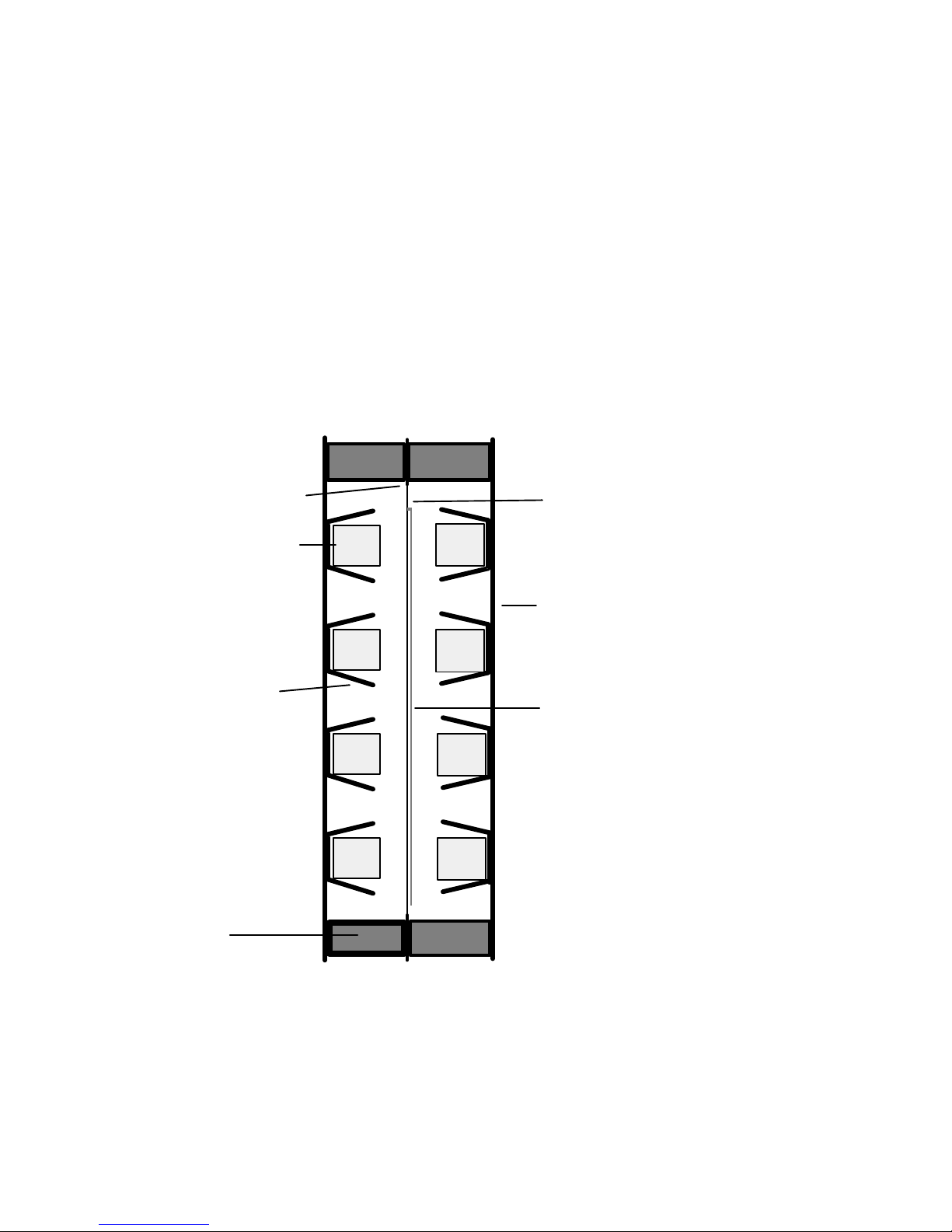
The magnet/frame structure developed for the LFT-11 is also unique. Eminent
Technology builds its magnets into individual steel channels, the size and shape of which
have been carefully designed to help "focus" the magnetic flux lines and concentrate the
strength of the magnetic field on the appropriate area of the diaphragm/voice grid. These
channels are then welded to steel frames, which in turn are bolted to the frame that holds
the diaphragm in place. These channels reduce stray magnetic fields preventing monitor
convergence problems or damage to magnetic media in close proximity to the speaker.
Interestingly, one of the biggest challenges faced in creating a true push-pull
dynamic speaker was not a design consideration but rather a matter of construction
difficulty: to assemble a perfect rigid structure with very powerful permanent magnets at
the front and the rear, both sides opposing each other with tremendous force. The second