manuals.online logo
Brands
  1. Home
  2. •
  3. Brands
  4. •
  5. Faderfox
  6. •
  7. Recording Equipment
  8. •
  9. Faderfox micromodul uc4 User manual

Faderfox micromodul uc4 User manual

Other Faderfox Recording Equipment manuals

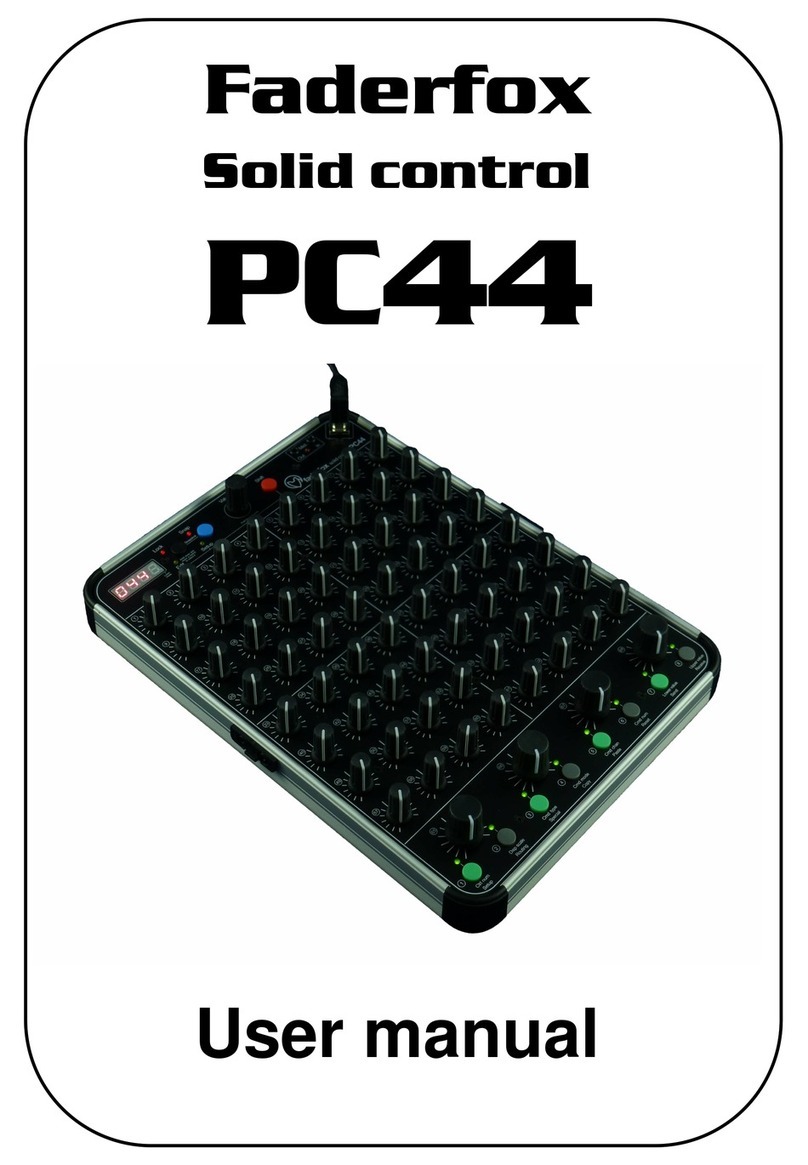
Faderfox PC44 User manual

Faderfox

Faderfox PC44 User manual

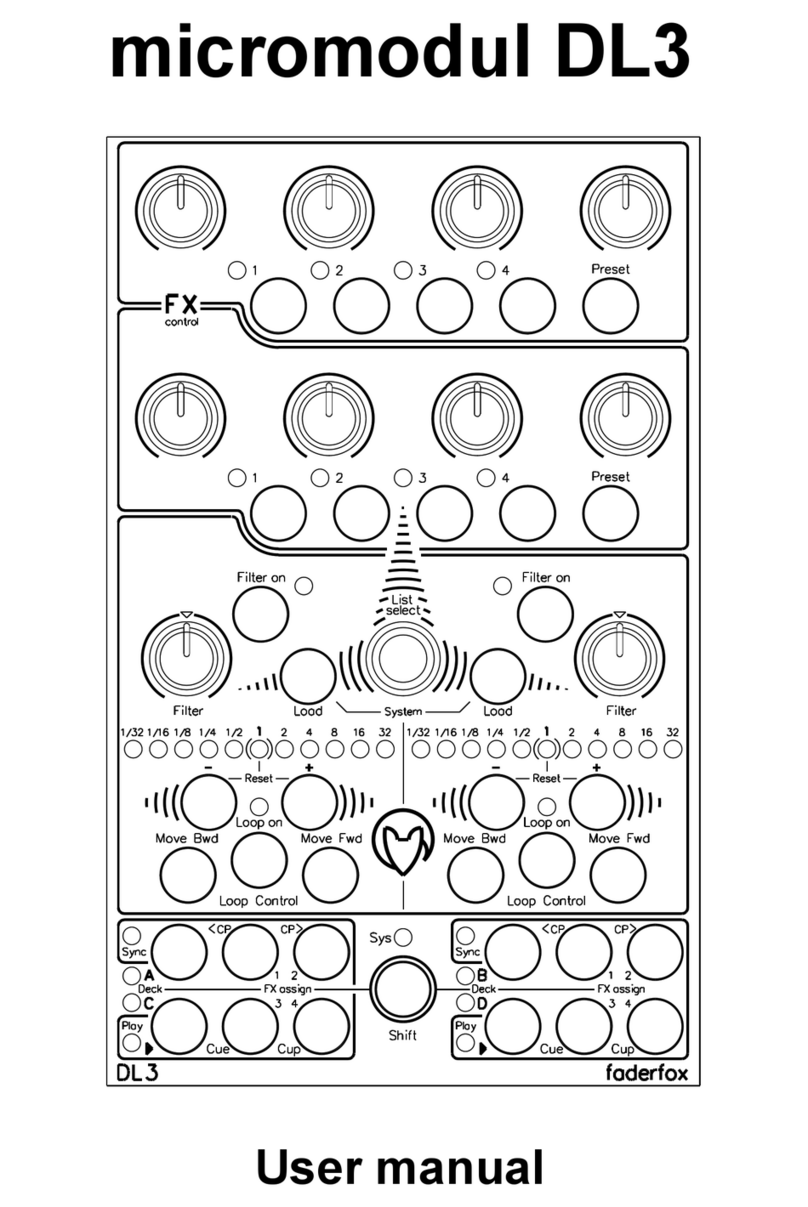
Faderfox DL3 User manual

Faderfox

Faderfox DL3 User manual

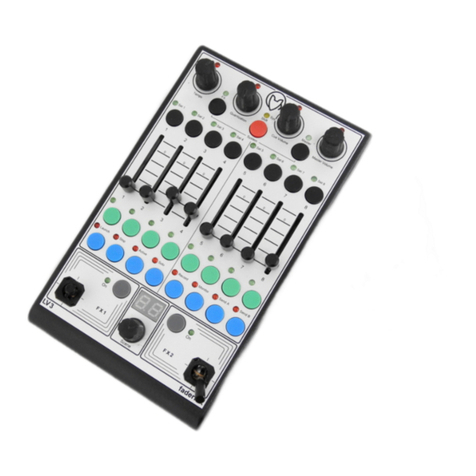
Faderfox micromodul LV3 User manual

Faderfox

Faderfox micromodul LV3 User manual

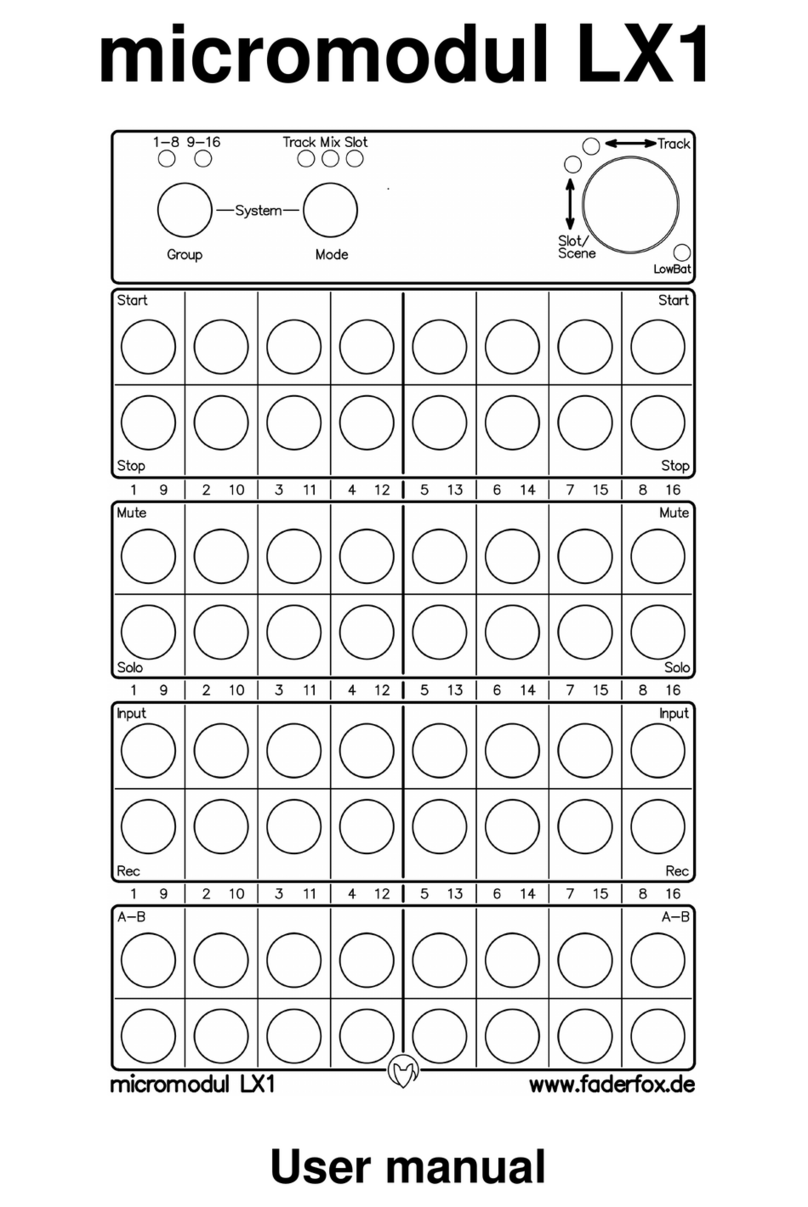
Faderfox micromodul LX1 User manual

Faderfox

Faderfox micromodul LX1 User manual

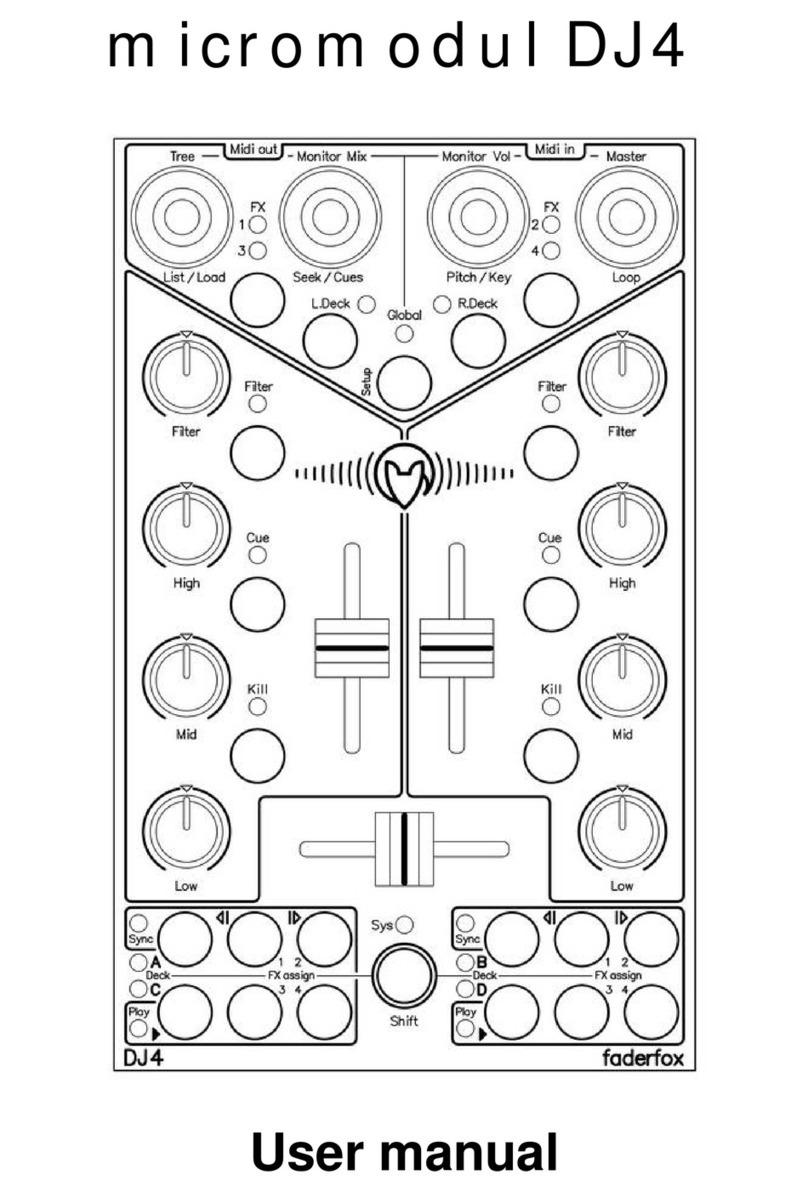
Faderfox DJ4 User manual

Faderfox

Faderfox DJ4 User manual

Popular Recording Equipment manuals by other brands

ThermoFisher Scientific Dionex DRS 600 Installation checklist

ThermoFisher Scientific

ThermoFisher Scientific Dionex DRS 600 Installation checklist

Shure ANIUSB-Matrix user guide

Shure

Shure ANIUSB-Matrix user guide

Nady Audio HE-1 user guide

Nady Audio

Nady Audio HE-1 user guide

AUDAC APM 01 User manual & installation guide

AUDAC

AUDAC APM 01 User manual & installation guide

Teac GF-350 owner's manual

Teac

Teac GF-350 owner's manual

Fractal Audio MFC-101 MARK III owner's manual

Fractal Audio

Fractal Audio MFC-101 MARK III owner's manual

bmcm USB-OI16 manual

bmcm

bmcm USB-OI16 manual

HHB BurnIT CDR-830 Service manual

HHB

HHB BurnIT CDR-830 Service manual

GE VersaMax IC200CPUE05 manual

GE

GE VersaMax IC200CPUE05 manual

IntesisBox MH-RC-MBS-1 user manual

IntesisBox

IntesisBox MH-RC-MBS-1 user manual

Attero Tech unD4l user manual

Attero Tech

Attero Tech unD4l user manual

Sennheiser UI 765 instruction manual

Sennheiser

Sennheiser UI 765 instruction manual

Sony RCD-W1 Operating Instructions  (primary... Service manual

Sony

Sony RCD-W1 Operating Instructions (primary... Service manual

Roland Planet-P  MKS-10 owner's manual

Roland

Roland Planet-P MKS-10 owner's manual

Roland BOSS GT-PRO Turbostart

Roland

Roland BOSS GT-PRO Turbostart

8x8 Inc Valcom V-2001A manual

8x8 Inc

8x8 Inc Valcom V-2001A manual

Waves SUB Align user guide

Waves

Waves SUB Align user guide

Mitsubishi Electric MAC-334IF-E installation manual

Mitsubishi Electric

Mitsubishi Electric MAC-334IF-E installation manual

manuals.online logo
manuals.online logoBrands
  • About & Mission
  • Contact us
  • Privacy Policy
  • Terms and Conditions

Copyright 2025 Manuals.Online. All Rights Reserved.

micromodul UC4
User manual
Provision of guarantee and product liability
The seller warrants for faultless material and proper manufacture for a period of 24 months from the date of
sale to the end user.
Excluded from the stated guarantee are defects on parts as the result of normal wear-and-tear. These parts
are mostly faders (sliding guides), potentiometers, encoders, buttons, switches and touchpads.
Also excluded from the guarantee are damages that are the result of :
incorrect or inappropriate handling, excessive force, mechanical or chemical influences, incorrectly
connecting the instrument with other instruments, incorrect or inappropriate use.
The warranty is void if the instrument is opened or changed. In addition, there is no warranty for individual
parts and components (in particular, semiconductors) and disposables/ consumables. The seller is not liable
for consequential damages which are not the result of criminal intent or negligence on his part. The
following conditions must be met in order to claim the warranty services:
-Instrument is either in its original packaging or similar packaging.
-Copy of the invoice with the serial number clearly visible.
-Meaningful error report or description of the error is attached.
The buyer assumes all costs and dangers of return shipments to the manufacturer. Since the user’s manual
which is included with each instrument also affects the warranty conditions (especially regarding safety
issues), it is absolutely essential that you read through and follow all instructions.
Safety precautions and servicing
-Instrument's intended use is based on the functions and procedures contained in this manual
-Read all instructions for use as well as all enclosed literature before using the instrument
-Use only in closed rooms (not for outdoor use)
-Never use in a moist or humid environment (laundry rooms, swimming pools, etc, …)
- Not for use in the vicinity of heat sources (radiators, ovens, etc, …)
-Operational temperature is in the range of 0‚ - + 40‚ C
- Not for use in the vicinity of flammable material
-The instrument should not be in direct or prolonged contact with sunlight
-Dusty environmental conditions should be avoided
-Connect only to USB ports of computers or hubs
-No foreign objects are permitted inside the instrument casing
-No liquids should get inside the instrument casing
-Never let the instrument fall to the ground (casing and/or control elements may be damaged)
If the instrument must be opened (for example, to remove foreign objects from the casing or for other
repairs), this may only be done by qualified personnel. The USB-cable must be disconnected before opening
the instrument. Guarantee is void for defects that occur if the instrument was opened by an unauthorised or
unqualified person.
Use a soft towel or brush to clean the instrument. Please do not use any cleaning liquids or water, so you
avoid any damages to the instrument.

Package contents
-Device
- USB cable (with angle plug)
-Midi adapter cable (with angled 3.5mm jack plug)
-Manual / Quick start guide
-CD with settings and manuals
Introduction
Thank you for choosing a Faderfox controller. These probably world’s smallest controllers are designed for
live use on stage. All Faderfox controllers are professionally hand crafted in Germany ensuring high
quality. The 4th generation brings a lot of new features like additional MIDI connections, black faceplates
with laser engraving and updatable firmware.
UC4 as successor of the UC3 is a universal controller for all kinds of midi controllable hard- and
software.
The all-rounder has 8 push-encoders without detents, 9 faders and 8 buttons, all switchable to 8 controller
groups that allow to control a total amount of 264 control parameters. A 4-digit-display and 8 LEDs show
the current values of all controls.
Various kinds of midi commands like program change, pitchbend, aftertouch and control change in relative
and absolute mode with different acceleration amounts are possible. All these properties are fully
programmable on the devices very fast and easy for each control separately.
The encoders can work as high resolution 14bit controllers too (control change or pitchbend) which makes
them suitable for sensitive parameters like resonating filter cutoffs or similar things.
Use the internal 18 setups to save your individual settings. Backup and restore of all settings by sysex
dumps are possible too.
The factory settings are perfect to control music and video software products out of the box if they
are freely assignable. So any additional device programming isn’t necessary for many applications.
The little box is also a great extension for your Ableton Live setup. There you can control all the
continuous parameters like track volumes, rack macros, send amounts, track pannings and switchable
parameters like clip launch/stop, mute, solo, rec arm, monitor and track select. A special control surface
script for Ableton Live 8/9 with all necessary mappings is enclosed in the package. With that script you can
also use two UC4 devices to control up to 16 tracks simultaneously.
Check out this amazing power box and you will get a reliable mate...
Extensions to UC3:
-Midi in/out ports
- 8 additional Buttons
-editable group names
-min/max-values
-programmable encoder push buttons
-fader snap mode
-more precise encoders
-various software improvements
Features
-Universal controller for all kinds of midi controllable hard-and software
-iPad compatible with camera connection kit
-Control surface script for Live 8/9 is shipped with the controller
-USB interface with bus powering -class compliant / no driver necessary (consumption < 500mW)
-MIDI in and out ports with routing and merge functionality
- 8 push encoders without detents (resolution about 36 pulses)
-Encoder push buttons can send commands (fully programmable)
- 8 buttons with LED for switchable parameters
- 4-digit-display to show control values and programming data
- 14 bit high resolution encoder mode for sensitive parameters
-Programmable value ranges with min/max values
-Data feedback for encoders and faders avoid value jumps
-All controls (incl. push buttons) fully programmable in the device by channel, type, number and mode
-Different command types like control change (CC), pitch bend, aftertouch, program change and notes
-Advanced programming functions like copy, paste and group sets
- 8 independent groups for encoders and faders/buttons (controlled by shift key)
-About 264 commands per setup (33 controls x 8 groups)
- 18 setups with backup/restore function contain all controller settings
-Very compact design in a black casing with metal faceplate (laser engraving, 180x105x70 mm, 350 g)
System requirements
-PC or Mac with a free USB port (1.0 or higher) or any USB hub (connection by inclosed USB cable)
-iPad with iOS5 or higher (connection by apples camera connection kit)
-MIDI device with standard midi in port (5pin DIN socket connection by enclosed adapter cable)
-USB power adapter (5V min 100mA) if you want to control only midi gear
Controller mode
Controller mode is the basic mode of the UC4. Here the encoders, faders and buttons are used to control
any parameters in your soft-or/and hardware by standard midi commands like CC and notes.
First choose the encoder group by holding shift key and press one of the 8 encoders. The display shows the
group name: GrP1....GrP8 Pay attention that you can edit the group names in edit mode for each setup
separately.
Turning and pushing of the encoders can send different commands which you can program in edit mode.
After turning or pushing any encoder you can see the numerical value in the display too. A programmed
acceleration gives a better feeling for the encoders so you can go from min to max value easily. Hold any
shift key while you turn the encoders to have a precise control without acceleration.
You can also select a independent group for the faders and buttons by holding shift key and press the green
buttons. The green LEDs show the selected group 1 to 8.
The faders can work in snap or jump mode. In snap mode you have to catch the last value which avoids any
possible value jumps after feedback data or changing the fader group. Jump mode works like a standard
controller so the data will be send immediately. Hold shift while you move a fader to swap these modes
temporarily.
The green buttons can be programmed to various modes too. So they can work as momentary switch or in
toggled mode, sending notes, CC, program change or aftertouch commands.
The right point in lower right corner of the display shows incoming midi data. It flashes bright when the
device receives controller data. Low flashing indicates midi clock or other midi data.
Ableton Live mode
The setups 17 and 18 are preconfigured for using with Live 8/9. The display shows special group names for
the encoder groups (see below).
setup 17 controls tracks 1 to 8,
setup 18 controls tracks 9 to 16
Encoder groups:
Snd1 (group 1) controls parameter send 1(A) for 8 tracks
Snd2 (group 2) controls parameter send 2(B) for 8 tracks
Snd3 (group 3) controls parameter send 3(C) for 8 tracks
Snd4 (group 4) controls parameter send 4(D) for 8 tracks
trAC (group 5) controls various parameters of the selected track
(tracks below track 16 are available too in this group)
-encoder 1: track send 1(A)
-encoder 2: track send 2(B)
-encoder 3: track send 3(C), push button 3: stop clip
-encoder 4: scene select, push button 4: launch clip
-encoder 5: track select
-encoder 6: crossfader assign
-encoder 7: track pan
-encoder 8: track volume
RAC (group 6) Rack control of macros 1 to 8
-encoder 1: macro 1
-encoder 2: macro 2
-encoder 3: macro 3
-encoder 4: macro 4
-encoder 5: macro 5
-encoder 6: macro 6
-encoder 7: macro 7
-encoder 8: macro 8
Pan (group 7) controls panorama for 8 tracks
GLob (group 8) Global controls
-encoder 1: tempo coarse, push button 1: nudge down
-encoder 2: tempo fine, push button 2: nudge up
-encoder 3: quantization, push button 3: stop scene
-encoder 4: scene select, push button 4: start scene
-encoder 5: track select, push button 5: global play
-encoder 6: cue volume, push button 6: global stop
-encoder 7: master pan, push button 7: global record
-encoder 8: master volume, push button 8: view arrangement/session
Fader/button groups:
Faders control 8 track volumes in all 8 groups (same function in each group).
Buttons:
group 1 - launch clips (blinking LED = running clip, LED lit = clip available, LED off = no clip)
group 2 - stop clips (LED lit = stopped clip)
group 3 - tracks active (LED lit = active track)
group 4 - tracks solo (LED lit = track in solo)
group 5 - tracks arm (LED lit = record arm active)
group 6 - tracks monitor (LED lit = monitor in or auto)
group 7 - track control (the 8 buttons control following functions of the selected track:
1=launch, 2=stop, 3=active, 4=solo, 5=arm, 6=monitor, 7=device view, 8=clip view)
group 8 - tracks select (LED lit = track is selected)
Edit mode
The edit mode allows the programming of the controls (encoders, push buttons, faders, green buttons).
Start edit mode by holding shift key and press edit key. The activated edit mode is indicated by the red
edit-LED. To leave edit mode please press the edit button again without shift. Press any encoder shortly to
see the function behind. Setup data will be stored automatically by leaving the edit mode.
To edit any control choose the group (see controller mode), select the control by encoder 1
and then set different properties by the encoders 2 to 8 (see below).
To copy properties separately to all controls in same group, hold down the encoder push button of encoder
2,3,4,5,7 or 8 while running bar lines shown. This makes editing much faster if you want to have same
functions on all controls in same group.
To assign number, channel and type by incoming midi commands (learn mode) please hold down the
encoder 6 until the left display point flashes and then send any valid command (control change, program
change, aftertouch, pitch bend or note). The display point will be off after receiving a valid command or
pushing the encoder 6 again.
Group names can be modified in edit mode by holding shift and turning encoder 1 to 4.
---- 4 lines in the display means that the property isn’t available
Control number (Encoder 1)
Enc1....Enc8 select encoder 1 to 8 for editing
Pbt1....Pbt8 select encoder push button 1 to 8 for editing
btn1....btn8 select green button 1 to 8 for editing
FAd1....Fad9 select Fader 1 to 9 for editing
Display scale (Encoder 2)
Encoder / fader:
OFF no display control
Std standard display-control (0 to 127) by the device and by external command
bPoL bipolar display-control (-63 to 63) by the device and by external command
Green button:
OFF no LED control
Std standard LED control by the device and by external command
EXt LED control only by external commands
(external control by feedback data with same commands as corresponding buttons).
Command type (Encoder 3)
Encoder types:
CCr1 control change command in relative mode 1 (values 1/127)
CCr2 control change command in relative mode 2 (values 63/65)
CCAb control change command in 7 bit absolute mode (values 0 to 127) mostly used as standard
PrGC program change command (values 0 to 127)
CCAh two control change commands (MSB/LSB) in 14 bit highres mode (values 0 to 16383)
Pbnd pitch bend command 14 bit (values 0 to 16383)
AFtt aftertouch (channel pressure) command 7 bit (values 0 to 127)
Push button / green button types:
OFF button sends no command
notE note command
CC control change command
PrGC program change command
AFtt aftertouch (channel pressure) command
(for all types: upper value = press/on, lower value = release/off)
Fader types:
CCAb control change command in 7 bit absolute mode (values 0 to 127) mostly used as standard
PrGC program change command (values 0 to 127)
Pbnd pitch bend command 14 bit (values 0 to 16383)
AFtt aftertouch (channel pressure) command 7 bit (values 0 to 127)
Command mode (Encoder 4)
Encoder modes:
Acc0 no acceleration by faster turning
Acc1 low acceleration by faster turning
Acc2 middle acceleration by faster turning
Acc3 max acceleration by faster turning
Fader modes:
SnAP sends command not before catching the last value by moving the control
JMP jump mode, command will be send immediately by moving the control
Push button modes:
btn send momentary command (upper value = press, lower value = release)
toGL send toggle command (upper value = on, lower value = off)
Command channel (Encoder 5)
Ch01....Ch16 choose midi channel 1 to 16
Command number (Encoder 6)
n000....n127 choose controller or note number 0 to 127 for note and CC commands
0 to 31 (MSB) for high resolution mode (32 to 63 for LSB follows automatically)
Lower / upper value (Encoder 7 / 8)
L000....L127 choose lower value (0 to 127) for all command types except relative modes
U000....U127 choose upper value (0 to 127) for all command types except relative modes
Set same lower and upper value for buttons with program change type to choose only one program change
number by the button. Set a higher amount in lower value as upper value to have an inverted control.