9
© Ferno-Washington, Inc 234-2045-03 October 2011
Model 678 Pedi-Mate®
4.3 Positioning the Pedi-Mate®
1. Remove any restraints attached to the cot.
2. Raise the cot backrest and lock into place at an angle
between 15 - 45 degrees. This will keep the patient's
shoulders higher than the pelvis and maintain proper
center of gravity.
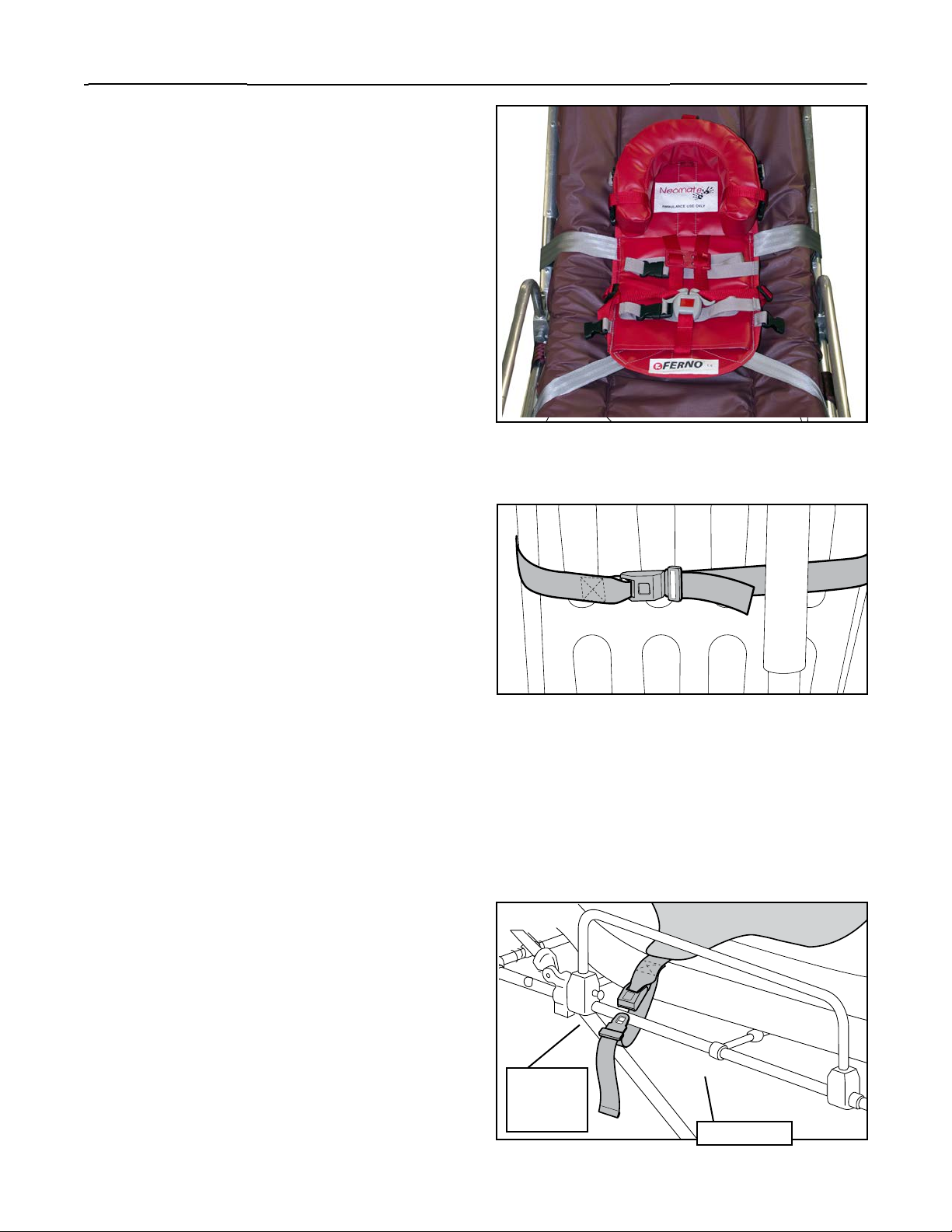
3. Unroll the Neomate and spread it flat on the cot
mattress with all straps extended.
4. Center the blanket left to right on the mattress.
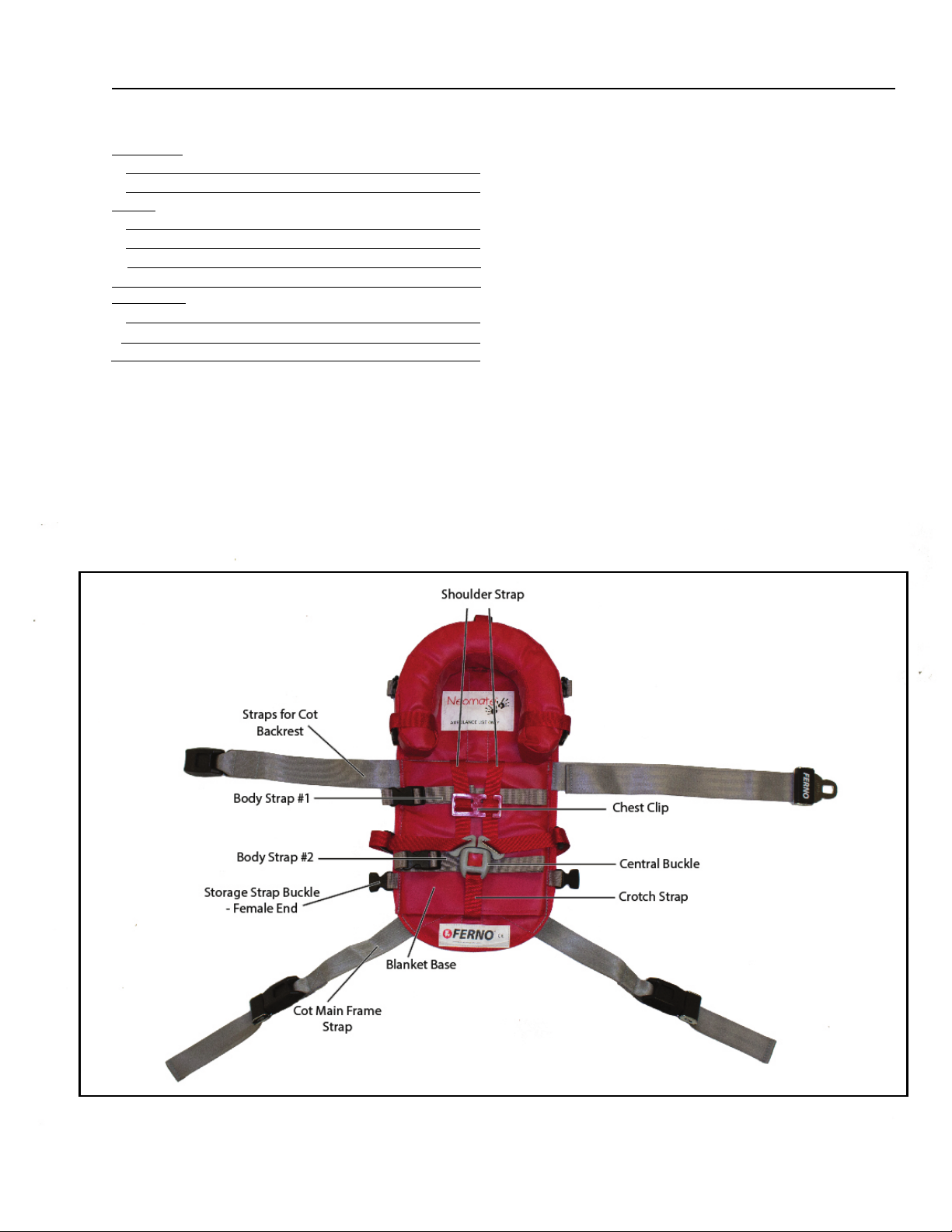
5. Position the blanket with the grey backrest strap at
the point where you expect the patient’s shoulders to
rest (Figure 1).
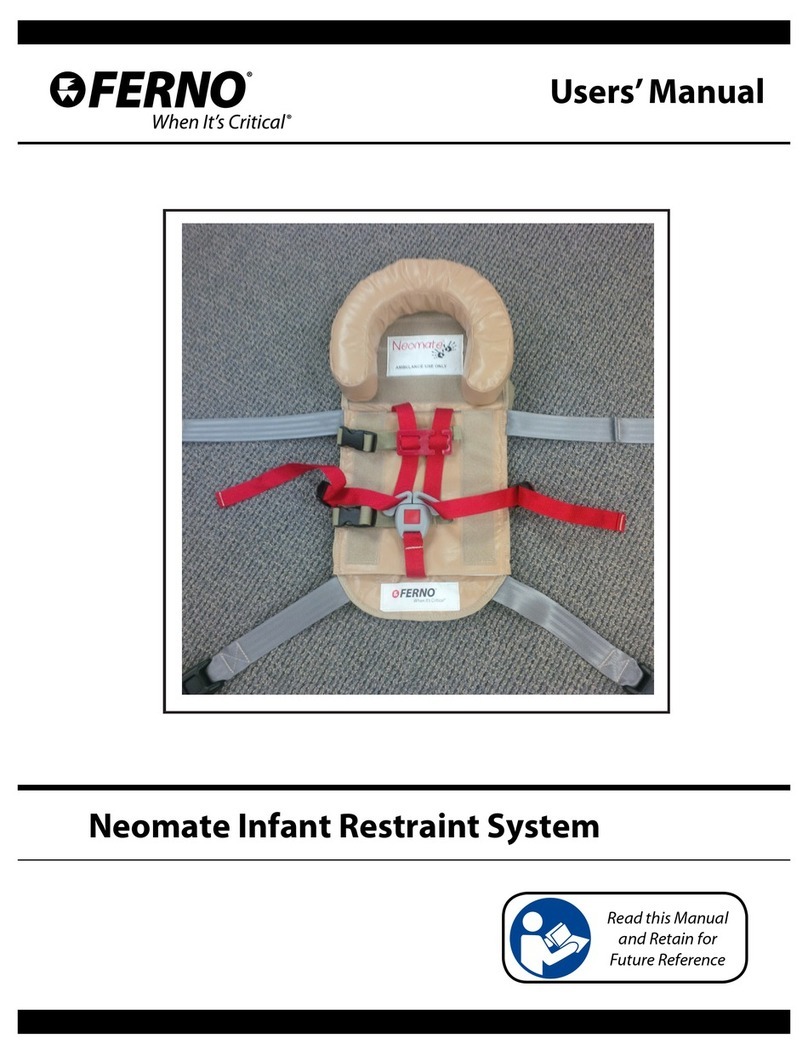
6. Run the ends of the backrest strap around the cot
until they meet in the back, then fasten the buckle
Figure 2). Leave some slack in the strap for final
adjustment.
4.4 Securing the Pedi-Mate®
1. Place the patient on the Pedi-Mate®. If the black
backrest strap is not at the patient’s shoulder level,
adjust the blanket position.
2. With the blanket properly positioned, tighten the
backreststrapbypullingveryrmlyonthefreeendof
the strap until the mattress is compressed.
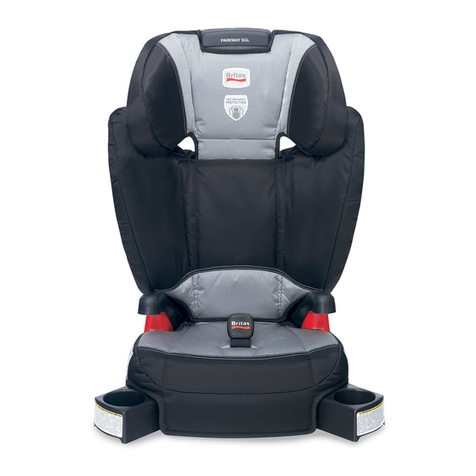
3. Fasten a main frame strap by threading the free
end downward between the cot main frame and the
mattress next to the head-end sidearm casting.
4. Wrap the strap up around the cot main frame and
fasten the buckle (Figure 3). Leave a little slack in the
strapfornaladjustment.
5. Repeat with the other main-frame strap.
6. Tighten each main frame strap by holding onto the
buckle with one hand and pulling rmly on the free
end of the strap.
Note:To loosen a main-frame strap, unfasten it, then grasp
the buckle tang, and pull outward. Refasten the buckle.
Using the Pedi-Mate®
Figure 1 - Pedi-Mate® Positioned on a Cot
O
Figure 3 - Attach a Strap to the Cot Main Frame
Head-end
Sidearm
Casting Main Frame
Model Neomate
USING THE NEOMATE
Before Placing the Neomate in
Service
● Personnel who will work with the Neomate need to
read this manual and practice using the Neomate.
● Conrm that theNeomate operates properly. Follow
instructions in Inspecting the Neomate, page 12.
General Guidelines for Use
● Medical advice is beyond the parameters of this
manual.
● It is the Neomateusers’responsibility to ensure safe
practices for the patient and themselves.
● It is the responsibility of the qualied Emergency
Medical Service personnel to assess the patient’s
condition and determine the proper equipment and
procedures to use.
● Follow standard emergency patient-handling
pro-cedures when using the Neomate.
● Stay with the patient at all times.
● Always use the patient harness.
● UsetheNeomate only when allelementsarein good
working order.
● Use the Neomateonly with the approved cot models
listed on page 6.
● Never use the Neomatein a captain’s chair or front
seat of an ambulance.
● Never use the Neomate as an immobilization device
or as part of an immobilization system.
● If the Neomateis in use at the time of a vehicular
accident, remove the Neomate from service and
replace it.
Using the Neomate
WARNING
Improper application can cause injury. Apply the
Neomate only as described in this manual.
WARNING
An unattended patient can be injured. Stay with the
patient at all times.
WARNING
Secure and snug all straps. Unsecured or loose
straps may allow movement and result in injury or
death of the patient.
Model Neomate
USING THE NEOMATE
Before Placing the Neomate in
Service
● Personnel who will work with the Neomate need to
read this manual and practice using the Neomate.
● Conrm that theNeomate operates properly. Follow
instructions in Inspecting the Neomate, page 12.
General Guidelines for Use
● Medical advice is beyond the parameters of this
manual.
● It is the Neomateusers’responsibility to ensure safe
practices for the patient and themselves.
● It is the responsibility of the qualied Emergency
Medical Service personnel to assess the patient’s
condition and determine the proper equipment and
procedures to use.
● Follow standard emergency patient-handling
pro-cedures when using the Neomate.
● Stay with the patient at all times.
● Always use the patient harness.
● UsetheNeomate only when allelementsarein good
working order.
● Use the Neomateonly with the approved cot models
listed on page 6.
● Never use the Neomatein a captain’s chair or front
seat of an ambulance.
● Never use the Neomate as an immobilization device
or as part of an immobilization system.
● If the Neomateis in use at the time of a vehicular
accident, remove the Neomate from service and
replace it.
Using the Neomate
WARNING
Improper application can cause injury. Apply the
Neomate only as described in this manual.
WARNING
An unattended patient can be injured. Stay with the
patient at all times.
WARNING
Secure and snug all straps. Unsecured or loose
straps may allow movement and result in injury or
death of the patient.
Model Neomate
USING THE NEOMATE
Before Placing the Neomate in
Service
● Personnel who will work with the Neomate need to
read this manual and practice using the Neomate.
● Conrm that theNeomate operates properly. Follow
instructions in Inspecting the Neomate, page 12.
General Guidelines for Use
● Medical advice is beyond the parameters of this
manual.
● It is the Neomateusers’responsibility to ensure safe
practices for the patient and themselves.
● It is the responsibility of the qualied Emergency
Medical Service personnel to assess the patient’s
condition and determine the proper equipment and
procedures to use.
● Follow standard emer
● Stay with the patient at all times.
● Always use the patient harness.
● UsetheNeomate only when allelementsarein good
working order.
● Use the Neomateonly with the approved cot models
listed on page 6.
● Never use the Neomatein a captain’s chair or front
seat of an ambulance.
● Never use the Neomate as an immobilization device
or as part of an immobilization system.
● If the Neomateis in use at the time of a vehicular
accident, remove the Neomate from service and
replace it.
Using the Neomate
WARNING
Improper application can cause injury. Apply the
Neomate only as described in this manual.
WARNING
An unattended patient can be injured. Stay with the
patient at all times.
WARNING
Secure and snug all straps. Unsecured or loose
straps may allow movement and result in injury or
death of the patient.
Model Neomate
USING THE NEOMATE
Before Placing the Neomate in
Service
● Personnel who will work with the Neomate need to
read this manual and practice using the Neomate.
● Conrm that theNeomate operates properly. Follow
instructions in Inspecting the Neomate, page 12.
General Guidelines for Use
● Medical advice is beyond the parameters of this
manual.
● It is the Neomateusers’responsibility to ensure safe
practices for the patient and themselves.
● It is the responsibility of the qualied Emergency
Medical Service personnel to assess the patient’s
condition and determine the proper equipment and
procedures to use.
● Follow standard emergency patient-handling
pro-cedures when using the Neomate.
● Stay with the patient at all times.
● Always use the patient harness.
● UsetheNeomate only when allelementsarein good
working order.
● Use the Neomateonly with the approved cot models
listed on page 6.
● Never use the Neomatein a captain’s chair or front
seat of an ambulance.
● Never use the Neomate as an immobilization device
or as part of an immobilization system.
● If the Neomateis in use at the time of a vehicular
accident, remove the Neomate from service and
replace it.
Using the Neomate
WARNING
Improper application can cause injury. Apply the
Neomate only as described in this manual.
WARNING
An unattended patient can be injured. Stay with the
patient at all times.
WARNING
Secure and snug all straps. Unsecured or loose
straps may allow movement and result in injury or
death of the patient.
Positioning the NeoMate
Securing the Neomate
Figure 1 - Neomate Positioned on a Cot
Figure 2 - Attach the Neomate Backrest Strap
1. Place the patient on the Neomate. If the grey backrest
strap is not at the patient’s shoulder level, adjust the
blanket position.