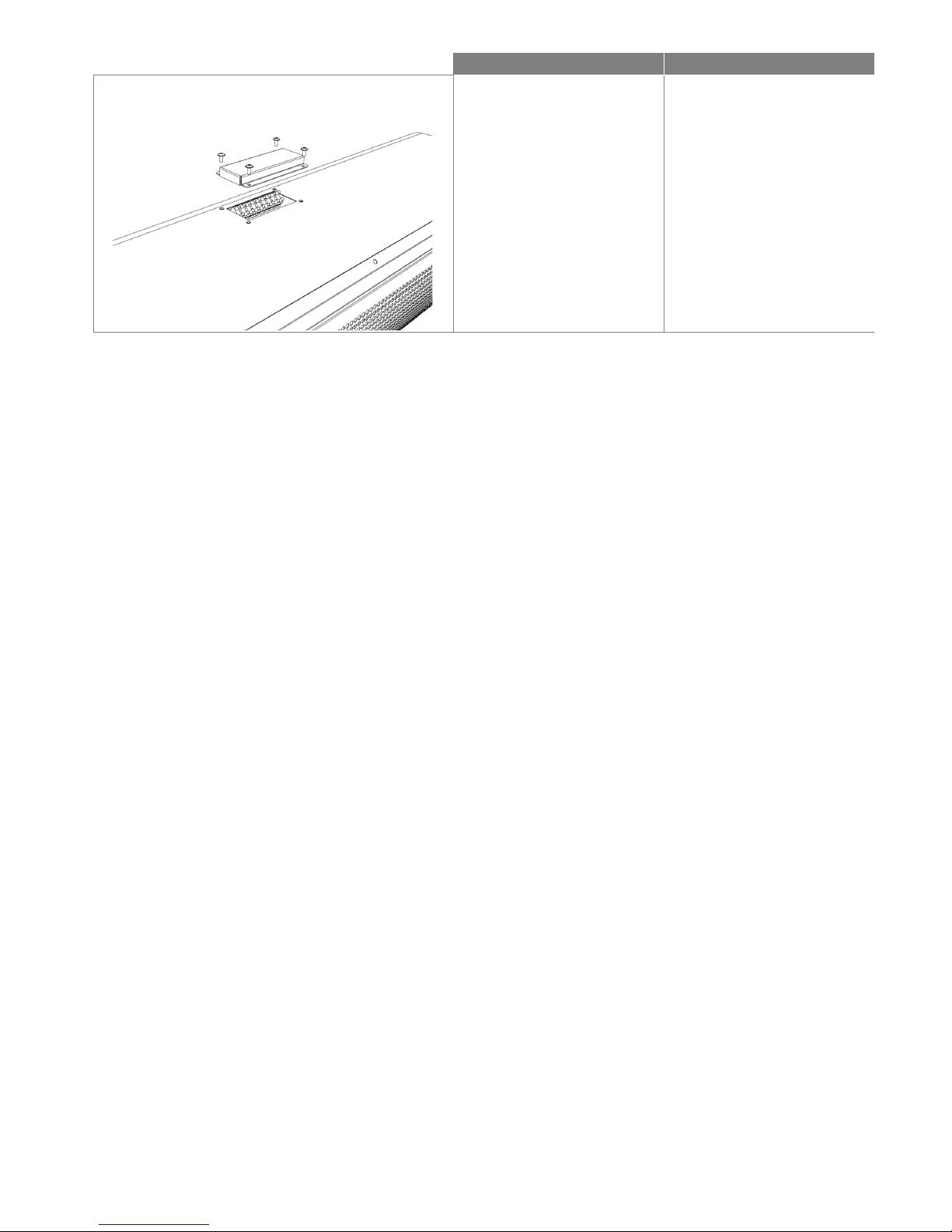
7. URUCHOMIENIE I EKSPLOATACJA
7. START-UP AND OPERATION
Podłączenie instalacji grzewczej
§Przyłącze powinno byćwykonane w sposób niepowodujący
naprężeń. Zalecane jest stosowanie przewodów elastycznych
doprowadzających czynnik grzewczy.
§Zalecane jest zastosowanie zaworów odpowietrzających
w najwyższym punkcie instalacji.
§Instalacja powinna byćwykonana w taki sposób, aby w razie
awarii istniała możliwość przeprowadzenia demontażu
urządzenia. W tym celu należy zastosowaćzawory odcinające
tużprzy urządzeniu.
§Instalacja z czynnikiem grzewczym musi byćzabezpieczona
przed wzrostem ciśnienia czynnika grzewczego ponad
dopuszczalnąwartość (1.2 MPa).
§Przed uruchomieniem urządzenia należy sprawdzić
prawidłowość podłączenia przewodów z czynnikiem grzewczym
oraz szczelność instalacji.
Pierwsze uruchomienie
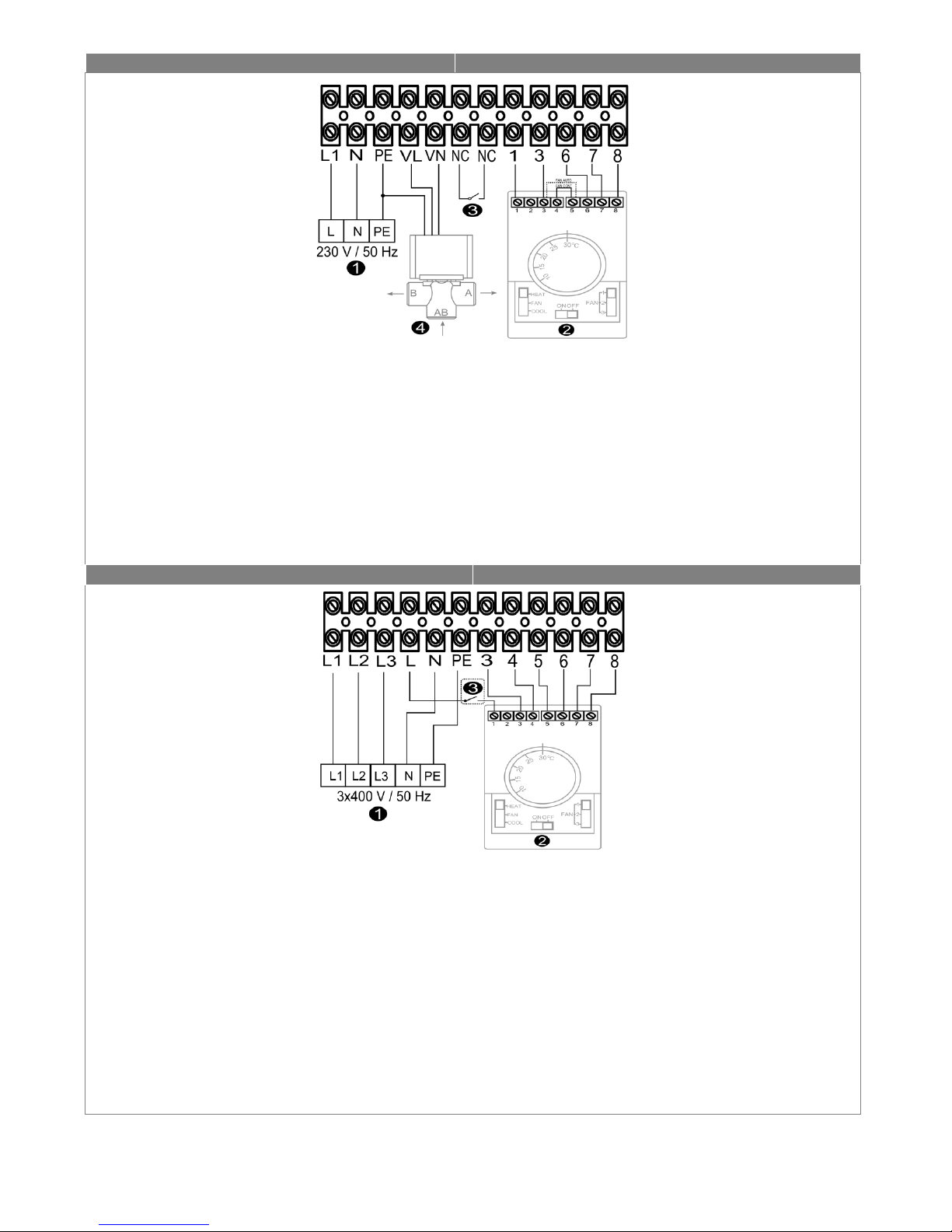
§Podłączenia zasilania oraz sterowników powinno być
wykonane zgodnie z dokumentacjątechniczną.
§Przed podłączeniem zasilania należy sprawdzićpoprawność
podłączenia sterowników.
§Przed podłączeniem zasilania należy sprawdzićczy napięcie w
sieci jest zgodne z napięciem na tabliczce znamionowej
urządzenia.
§Instalacja elektryczna, zasilająca silnik wentylatora powinna
byćdodatkowo zabezpieczona bezpiecznikiem przed skutkami
ewentualnego zwarcia w instalacji.
§Uruchomienie urządzenia bez podłączenia przewodu
uziemiającego jest niedozwolone.
Eksploatacja
§Urządzenie przeznaczone jest do pracy wewnątrz
pomieszczeń, w temperaturach powyżej 0oC. W niskich
temperaturach (poniżej 0ºC) istnieje niebezpieczeństwo
zamarznięcia czynnika.
Producent nie ponosi odpowiedzialności za uszkodzenia
wymiennika ciepła będące skutkiem zamarznięcia czynnika w
wymienniku.
§Nie wolno umieszczaćna urządzeniu, ani zawieszaćna
króćcach przyłączeniowych żadnych przedmiotów
§Urządzenie musi podlegaćokresowym przeglądom. Przy
nieprawidłowej pracy urządzenia należy go niezwłocznie
wyłączyć.
Nie wolno używaćuszkodzonego urządzenia. Producent nie
bierze odpowiedzialności za szkody wynikłe podczas
użytkowania uszkodzonego urządzenia.
§W przypadku gdy woda z urządzenia zostaje spuszczona na
dłuższy okres czasu, rurki wymiennika należy przedmuchać
sprężonym powietrzem.
Guidelines for System Connection
§The connection should be executed in a way which does not induce
stresses. It is recommended to use flex pipes to connect the stubs.
§It is recommended to install vent valves at the highest point of the
system.
§The system should be executed so that, in the case of a failure, it is
possible to disassemble the device. For this purpose it is best to use
shut-off valves just by the device.
§The system with the heating medium must be protected against an
increase of the heating medium pressure above the permissible value
(1.2 MPa).
§While screwing exchanger to pipeline - connecting stubs has to be
hold by wrench.
Start Up
§Before connecting the power supply check the correctness of
connection of the fan motor and the controllers. These connections
should be executed in accordance with their technical documentation.
§Before connecting the power supply check whether the mains voltage is
in accordance with the voltage on the device data plate.
§Before starting the device check the correctness of connection of the
heating medium conduits and the tightness of the system.
§Starting the device without connecting the ground conductor is
forbidden.
Operation
§The device is designed for operation inside buildings, at temperatures
above 0oC. In low temperatures (below 0ºC) there is a danger of
freezing of the medium.
The manufacturer bears no responsibility for damage of the heat
exchanger resulting from freezing of the medium in the exchanger. If
operation of the device is expected at temperatures lower than 0º, then
glycol solution should be used as the heating medium, or special
automatic systems should be used for protecting against freezing of
the medium in the exchanger.
§It is forbidden to place any objects on the heater or to hang any objects
on the connecting stubs.
§The device must be inspected periodically. In the case of incorrect
operation of the device it should be switched off immediately.
It is forbidden to use a damaged device. The manufacturer bears no
responsibility for damage resulting from the use of a damaged device.
§If it is necessary to clean the exchanger, be careful not to damage the
aluminium lamellas.
§For the time of performing inspection or cleaning the device, the
electrical power supply should be disconnected.
§In case water is drained from the device for a longer period of time, the
exchanger tubes should be emptied with compressed air.
§It is not allowed to make any modification in the unit. Any modification
causes in warranty loss.