SECTION I Introduction
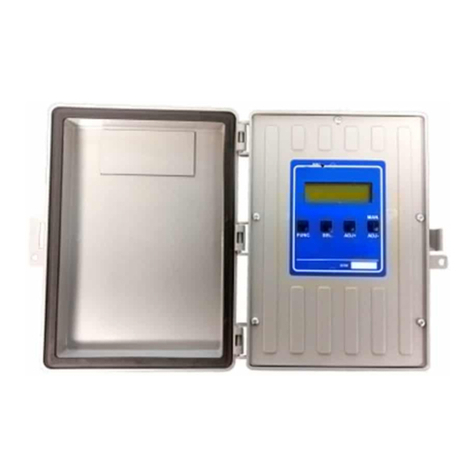
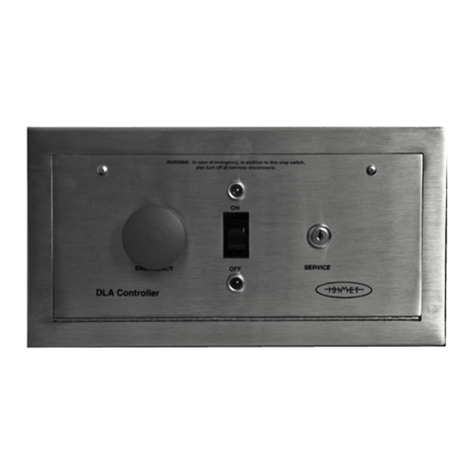
Automatic Filters, Inc. features state of the art electronic backwash controllers in the GB
series. GB6 and GB7 controllers are complete with a differential pressure sensor, a
backwash counter, and an emergency alarm output. The GB6 controller backwashes a
single filter, while GB7 controllers control up to two filters simultaneously. Both models
will initiate a backwash cycle in three ways: when the differential pressure gauge is
triggered, periodically by timer, or when manually activated. They are available in
115/230 volts or battery operated at 9/12 volts.
SECTION II Installation
GB6 and GB7 The controllers come factory-prepared and are ready to use. The only steps
necessary for installation are:
1. Mounting the controller
2. Connecting the tubing and wires of the PD gauge
3. Connecting the power supply (AC models)
4. Connecting the wires of the electric ball valve
Mount the electric controller on a convenient wall or panel as close as possible to the
filter to minimize the length of the pressure tubing. The controller can also be mounted
directly on the filter itself with brackets. The pressure differential (PD) gauge/switch is
to be installed on the bottom of the controller housing. The ¼” tubing from the high
pressure connection (red) on the center of the PD gauge goes to the high pressure side of
the filter or manifold (inlet). The lowpressure connection (blue) of the PDgoesto the
low pressure side of the filter or manifold (outlet). If desired, the gauge may be removed
from the housing and mounted at a suitable location on or near the filter.
For 110/230 Volt AC models, connect 120 VAC or 230 VAC, depending on the primary
voltage in your area, to the transformer wires. The 24 VAC leads are to be connected to
the terminal strip.
SECTION III Electric Ball Valve
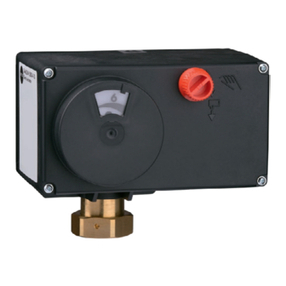
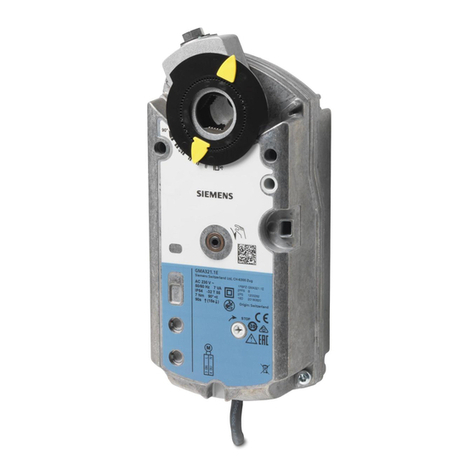
The 24VAC stainless steel electric ball valve should be wired to the controller terminals
in the following manner:
AUTOMATIC FILTERS, INC.
GB6&GB7 OWNER’S MANUAL
For more information:
WEB:
FLTR.com.au PHONE:
(+61) 1300 62 4020 EMAIL: [email protected] SKYPE: Purple.Engineering