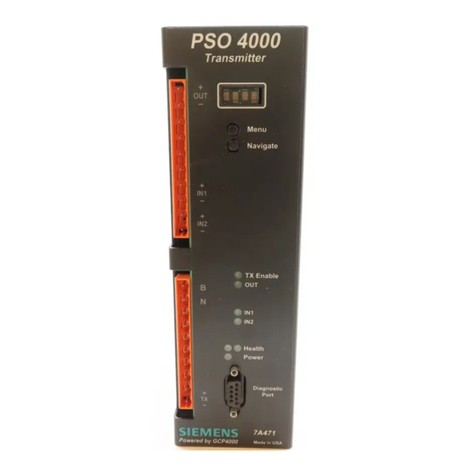
—The unit has successfully synchronized and associated
with an Access Point. This is the normal status.
Alarmed—The unit is has detected one or more alarms that have not
been cleared.
c. When the network is operating properly based on observation
of the unit’s LEDs, connect a computer to the transceiver’s
data port that will be used by the local terminal equipment.
Send the PING command to verify communications link integ-
rity with the Access Point.
d. After the PING is successful, connect the terminal equipment
to the radio’s data port and verify normal operation.
If all checks are OK, you are finished with the installation at this site.
Resetting to Factory Defaults (Use with Caution)
Selecting Maintenance/Tools>Reset to Factory Defaults sets all trans-
ceiver parameters back to their factory defaults. This may be useful
when several parameters have been modified and there is no track of
changes. It causes the transceiver to return to a known factory state.
Use this function with care, as all user-customized settings will be
cleared.
AIMING DIRECTIONAL ANTENNAS
Directional antennas usually require some fine-tuning of their bearing
to optimize the received signal strength. The unit has a built-in
received signal strength indicator (RSSI) that can be used to optimize
the received signal level. It is available under the Performance Informa-
tion menu.