SETTING AND ADJUSTING REBOUND DAMPING
(Both Coil and Air Shocks)
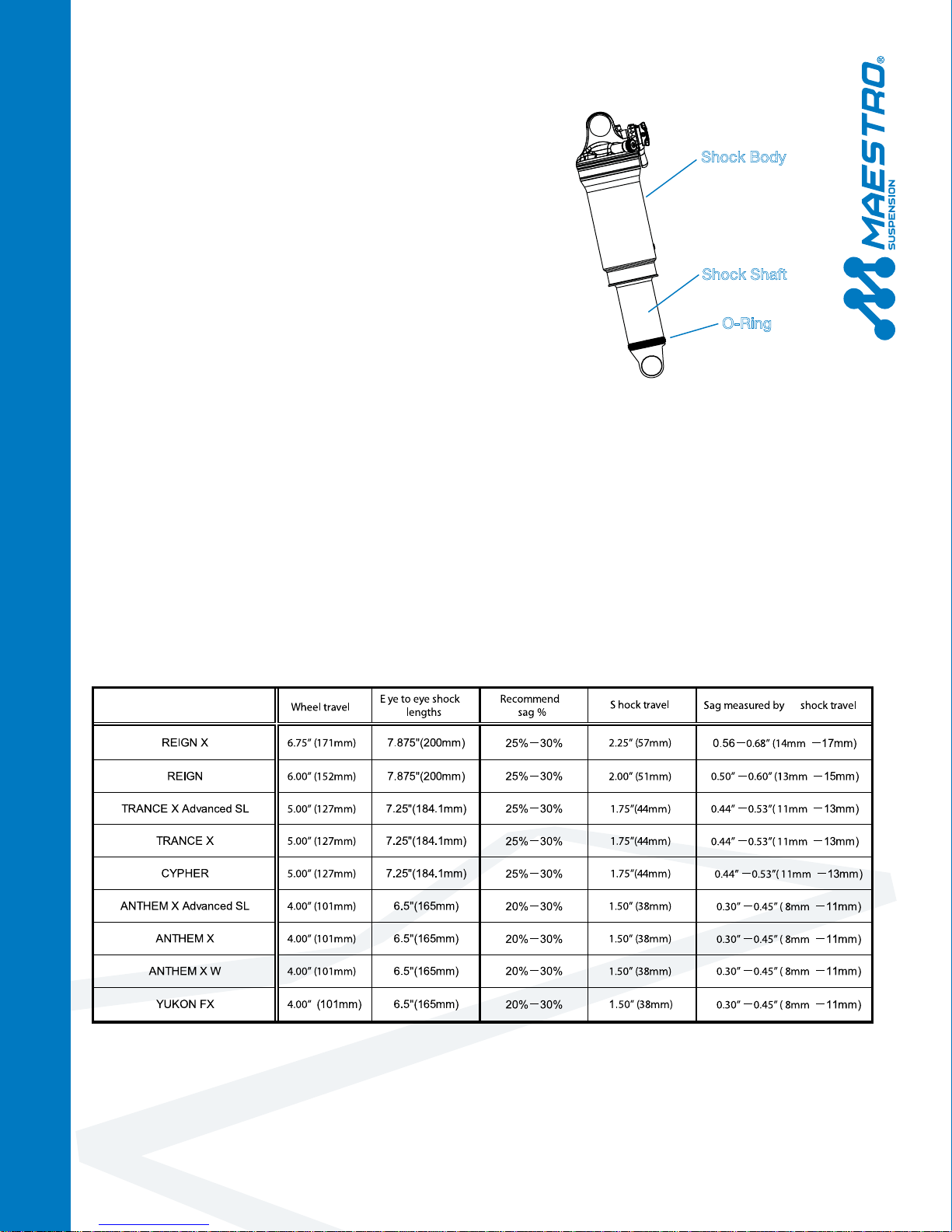
FRONT SUSPENSION TRAVEL & SAG GUIDE
A suspension fork is effective at both absorbing bump forces and helping the tire to track the ground
for improved traction and braking control. When in active mode, a fork will rely on sag to keep the
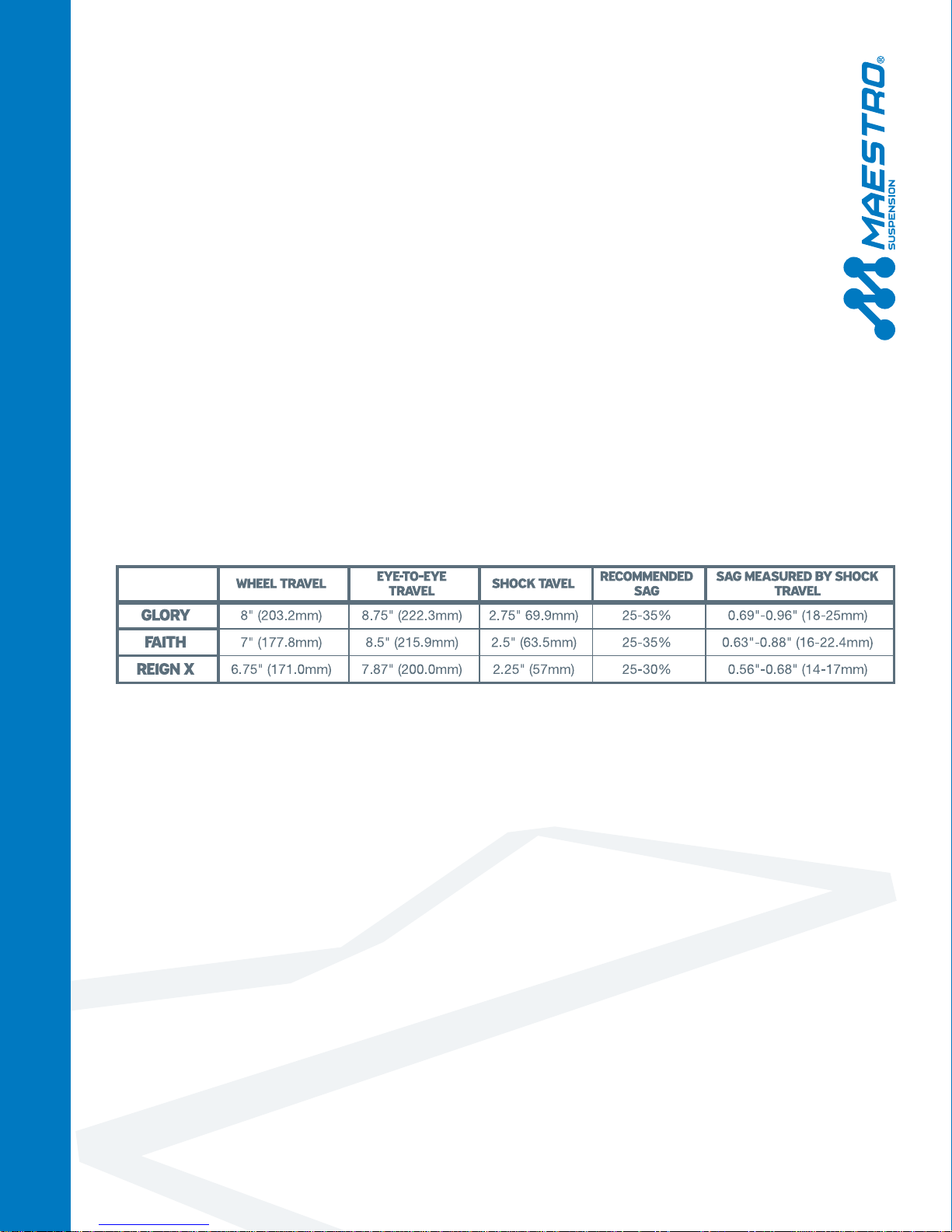
front tire in better contact with the ground during braking. The chart on Page vi should be used as a
general guideline.
To determine the bike’s specific front suspension travel adjustments and recommended settings,
please refer to the fork manufacturer’s technical manual.
AIR SPRUNG FORKS
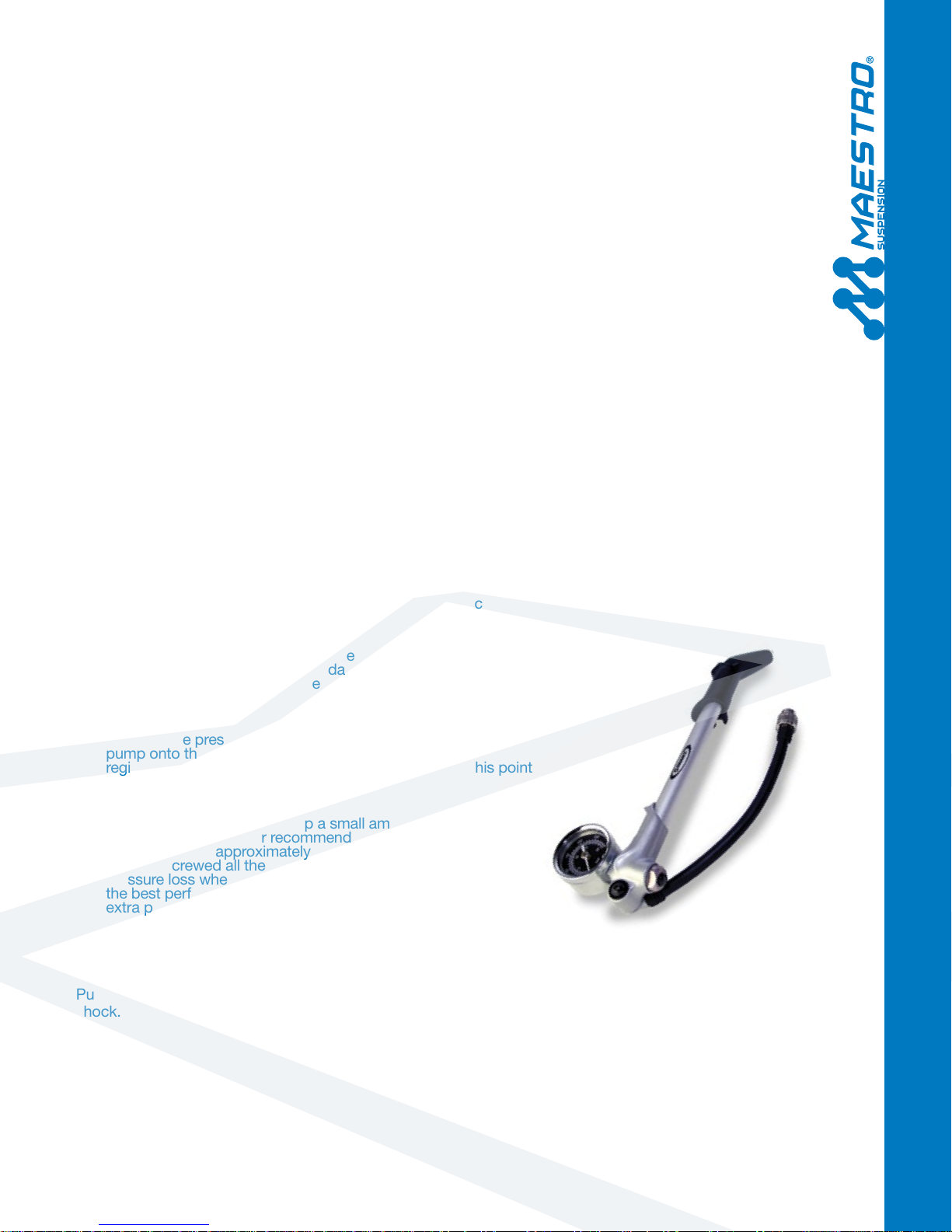
As a general guide, pump the main chamber (main spring) to a psi equal to 60% of your rider’s weight
in pounds (2.2lb = 1kg). Adjust the fork’s sag by using the same procedure used for accurately
adjusting the sag on the rear shock as described on Page vi .
COIL SPRUNG FORKS
Springs on these types of forks are set at the factory. Most have a simple preload adjuster that allows
the rider to make the fork firmer or softer depending on rider weight. The heavier the rider, the firmer
the spring setting should be. If with no preload you are not achieving the recommended sag then a
softer spring is needed and if with maximum preload you are achieving too much sag then a harder
spring is needed.
To check rebound, turn the rebound-damping knob (if applicable) counter-clockwise until it stops.
With full body weight, push down on the fork forcefully with the front brake on and watch (and feel)
how the fork rebounds. Turn the rebound damping knob clockwise until the fork rebounds slightly
slower than with no damping (the heavier the rider, the more damping will be required).
1. If you are unfamiliar with rebound damping, perform this
procedure: With full body weight, push down on the saddle
forcefully to compress the shock. Watch (and feel) how the
shock rebounds from compression.
2. Next, turn the rebound-damping knob clockwise until it stops
and compress the shock under full body weight. Note that the
shock rebounds very slowly. Next, turn the damping knob
counterclockwise a few complete turns and re-perform your
compression testing until the shock rebounds more slowly than
with no damping.
3. To check the rebound-damping rate while riding, have the
rider ride off a curb while seated. The rear suspension should
bounce only once upon rebound (the heavier the rider, the more
damping will be required). Adjust accordingly to accomplish this
motion. If the suspension bounces more than once, turn the
damping knob clockwise until one bounce is achieved.
SUGGESTED FRONT SUSPENSION SAG GUIDE (ALL TYPES)
fork travel (mm) sag (mm)
85/ 90 mm 12-17 mm
100 mm 15-20 mm
120 mm 18-30 mm
140/145 mm 28-37 mm
170 mm 34-50 mm
180 mm 36-54 mm
200 mm 40-60 MM
243
service |Maestro Suspension Manual