manuals.online logo
Brands
  1. Home
  2. •
  3. Brands
  4. •
  5. Graco
  6. •
  7. Control Unit
  8. •
  9. Graco 207861 User manual

Graco 207861 User manual

This manual suits for next models

3

Other Graco Control Unit manuals

Graco 26A231 Parts list manual

Graco

Graco 26A231 Parts list manual

Graco Dispensit 1092 Troubleshooting guide

Graco

Graco Dispensit 1092 Troubleshooting guide

Graco PD44 Guide

Graco

Graco PD44 Guide

Graco 236864 User manual

Graco

Graco 236864 User manual

Graco 246085 Guide

Graco

Graco 246085 Guide

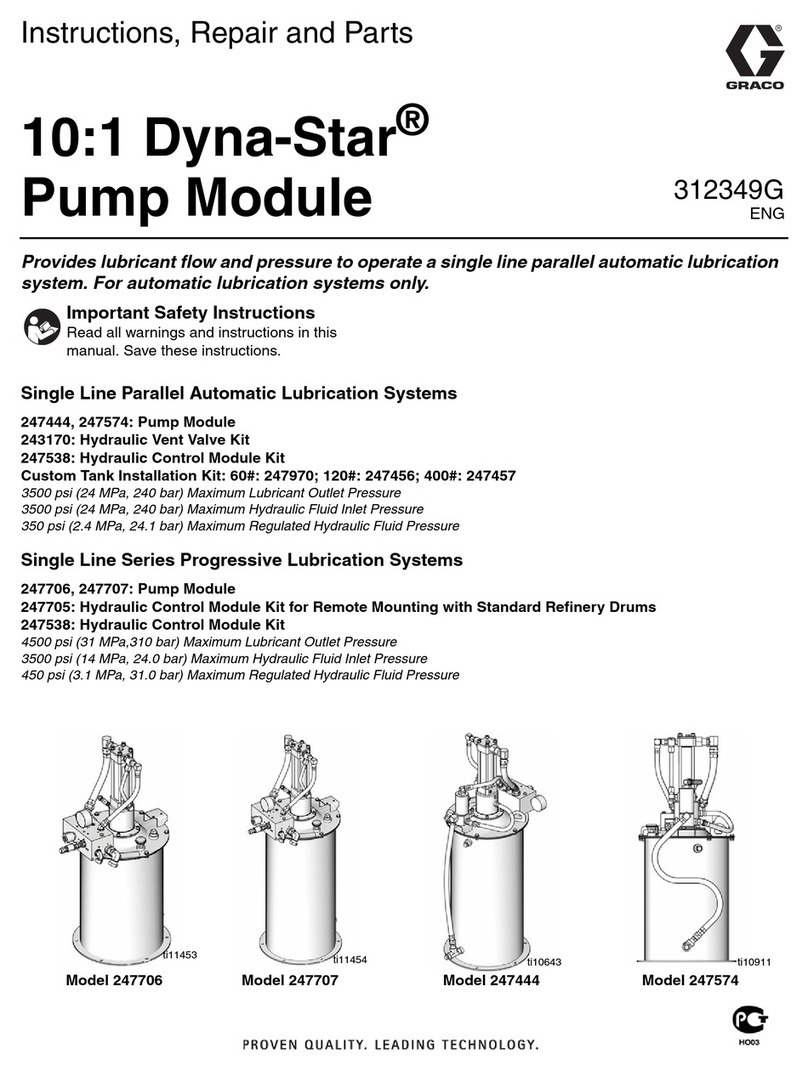
Graco 10:1 Dyna-Star 247444 Use and care manual
Graco

Graco 10:1 Dyna-Star 247444 Use and care manual

Graco Pulse Series Assembly instructions

Graco

Graco Pulse Series Assembly instructions

Graco 482 Series Operation manual

Graco

Graco 482 Series Operation manual

Graco PD44 Manual instruction

Graco

Graco PD44 Manual instruction

Graco M5 User manual

Graco

Graco M5 User manual

Graco 25D614 User manual

Graco

Graco 25D614 User manual

Graco CSP Series User manual

Graco

Graco CSP Series User manual

Graco 24R021 Parts list manual

Graco

Graco 24R021 Parts list manual

Graco Therm-O-Flow 194485 Operation manual

Graco

Graco Therm-O-Flow 194485 Operation manual

Graco Trabon MD Series User manual

Graco

Graco Trabon MD Series User manual

Graco XM PFP Operation manual

Graco

Graco XM PFP Operation manual

Graco SERIES F Operation manual

Graco

Graco SERIES F Operation manual

Graco DataTrak NXT606 User manual

Graco

Graco DataTrak NXT606 User manual

Graco 24J415 Parts list manual

Graco

Graco 24J415 Parts list manual

Graco 15X303 Technical reference manual

Graco

Graco 15X303 Technical reference manual

Graco 25V482 User manual

Graco

Graco 25V482 User manual
Graco Gun Flush Box 570046 Operation manual

Graco

Graco Gun Flush Box 570046 Operation manual

Graco Control Architecture Module Owner's manual

Graco

Graco Control Architecture Module Owner's manual

Graco Advanjet HV-2000b Manual instruction

Graco

Graco Advanjet HV-2000b Manual instruction

Popular Control Unit manuals by other brands
Festo Compact Performance CP-FB6-E Brief description
Festo

Festo Compact Performance CP-FB6-E Brief description

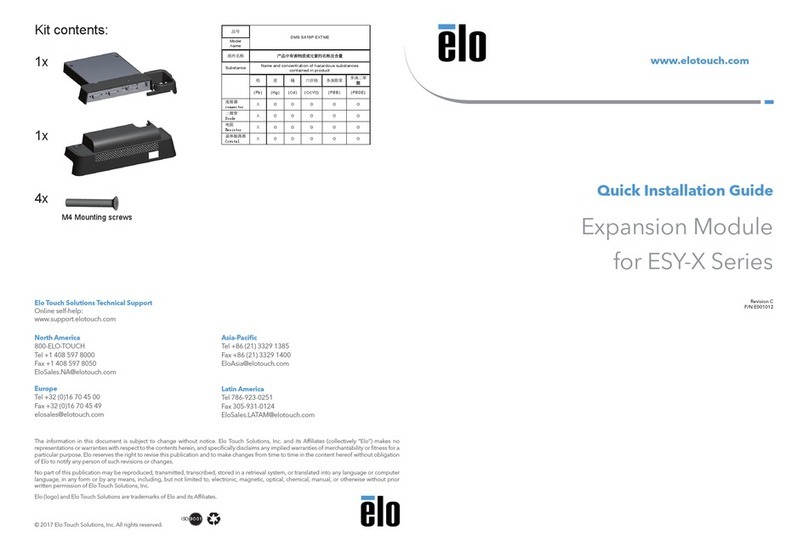
Elo TouchSystems DMS-SA19P-EXTME Quick installation guide

Elo TouchSystems

Elo TouchSystems DMS-SA19P-EXTME Quick installation guide

JS Automation MPC3034A user manual

JS Automation

JS Automation MPC3034A user manual
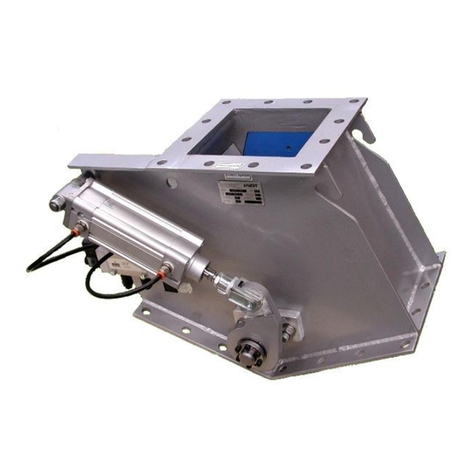
JAUDT SW GII 6406 Series Translation of the original operating instructions

JAUDT

JAUDT SW GII 6406 Series Translation of the original operating instructions

Spektrum Air Module System manual

Spektrum

Spektrum Air Module System manual
BOC Edwards Q Series instruction manual

BOC Edwards

BOC Edwards Q Series instruction manual

KHADAS BT Magic quick start

KHADAS

KHADAS BT Magic quick start

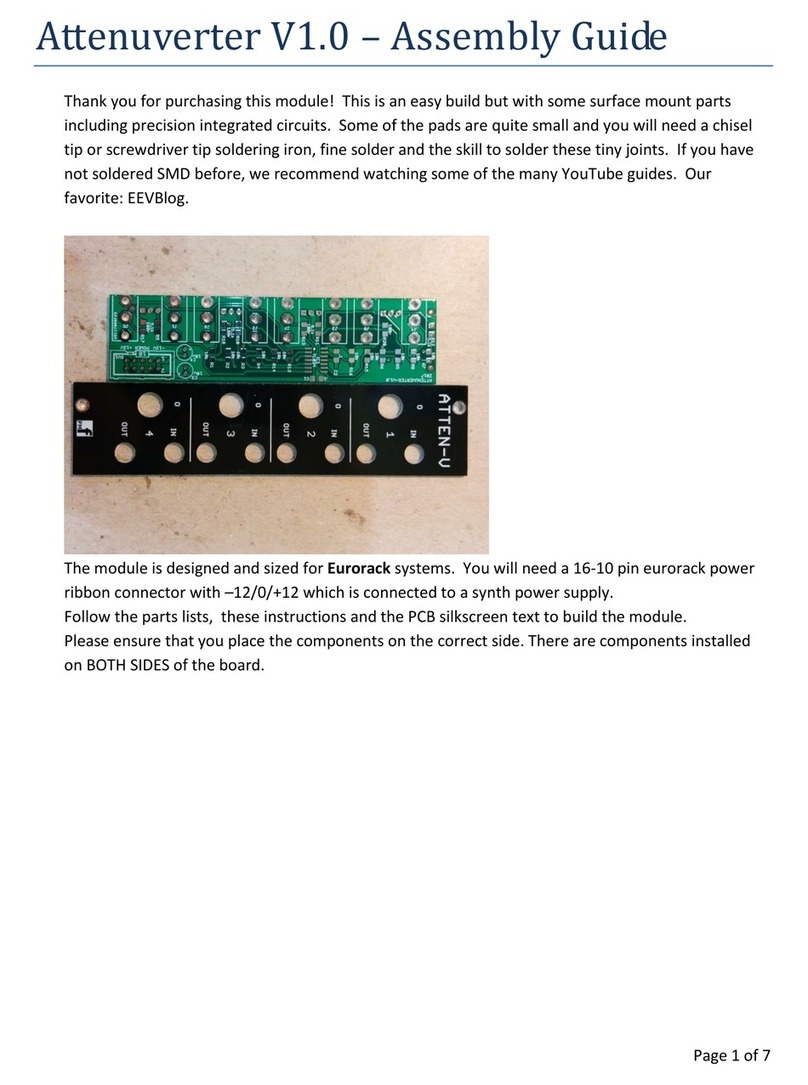
Etherma eNEXHO-IL Assembly and operating instructions
Etherma

Etherma eNEXHO-IL Assembly and operating instructions

PMFoundations Attenuverter Assembly guide
PMFoundations

PMFoundations Attenuverter Assembly guide

GEA VARIVENT Operating	 instruction

GEA

GEA VARIVENT Operating instruction
Walther Systemtechnik VMS-05 Assembly instructions

Walther Systemtechnik

Walther Systemtechnik VMS-05 Assembly instructions

Altronix LINQ8PD Installation and programming manual

Altronix

Altronix LINQ8PD Installation and programming manual

Eaton Powerware Series user guide

Eaton

Eaton Powerware Series user guide

WAGO 750-407/040-000 manual

WAGO

WAGO 750-407/040-000 manual

Sony CCU-590 Operation manual

Sony

Sony CCU-590 Operation manual

Task Force Tips YE-RF-900 Instructions for installation, safe operation and maintenance

Task Force Tips

Task Force Tips YE-RF-900 Instructions for installation, safe operation and maintenance

Shini SPV-U Series manual

Shini

Shini SPV-U Series manual

Flyron FN-BC04 user manual

Flyron

Flyron FN-BC04 user manual

manuals.online logo
manuals.online logoBrands
  • About & Mission
  • Contact us
  • Privacy Policy
  • Terms and Conditions

Copyright 2025 Manuals.Online. All Rights Reserved.

Instructions
GRACO INC.ąP.O. BOX 1441ąMINNEAPOLIS, MNą55440-1441
Copyright 1984, Graco Inc. is registered to I.S. EN ISO 9001
PLURAL COMPONENT
Static Mixer Control
3000 psi (21 MPa, 210 bar) Maximum Fluid Working Pressure
Part No. 207861, Series C
Part No. 948338, Series A
Part No. 241809, Series A
Includes 207861 and a static pipe mixer.
Part No. 241808, Series A
Includes 948338 and a static pipe mixer.
306992 Rev.G
Read warnings and instructions.
See page 2 for Table of Contents.
8613A
Model 207861 Shown
Parts
2 306992
Table of Contents
Warnings 2. . . . . . . . . . . . . . . . . . . . . . . . . . . . . . . . . . . . . .
Installation 5. . . . . . . . . . . . . . . . . . . . . . . . . . . . . . . . . . . . .
Troubleshooting 7. . . . . . . . . . . . . . . . . . . . . . . . . . . . . . . .
Service 7. . . . . . . . . . . . . . . . . . . . . . . . . . . . . . . . . . . . . . .
Parts 8. . . . . . . . . . . . . . . . . . . . . . . . . . . . . . . . . . . . . . . . .
Technical Data 12. . . . . . . . . . . . . . . . . . . . . . . . . . . . . . . .
Dimensions 13. . . . . . . . . . . . . . . . . . . . . . . . . . . . . . . . . . .
Graco Standard Warranty 14. . . . . . . . . . . . . . . . . . . . . .
Graco Information 14. . . . . . . . . . . . . . . . . . . . . . . . . . . . .
Symbols
Warning Symbol
WARNING
This symbol alerts you to the possibility of serious
injury or death if you do not follow the instructions.
Caution Symbol
CAUTION
This symbol alerts you to the possibility of damage to
or destruction of equipment if you do not follow the
instructions.
WARNING
INSTRUCTIONS
EQUIPMENT MISUSE HAZARD
Equipment misuse can cause the equipment to rupture or malfunction and result in serious injury.
DThis equipment is for professional use only.
DRead all instruction manuals, tags, and labels before operating the equipment.
DUse the equipment only for its intended purpose. If you are uncertain about usage, call your Graco
distributor.
DDo not alter or modify this equipment. Use only genuine Graco parts and accessories.
DCheck equipment daily. Repair or replace worn or damaged parts immediately.
DDo not exceed the maximum working pressure stated on the equipment or in the Technical Data
for your equipment. Do not exceed the maximum working pressure of the lowest rated component
in your system.
DUse fluids and solvents which are compatible with the equipment wetted parts. Refer to the Tech-
nical Data section of all equipment manuals. Read the fluid and solvent manufacturer’s warnings.
DRoute hoses away from traffic areas, sharp edges, moving parts, and hot surfaces. Do not expose
Graco hoses to temperatures above 82_C (180_F) or below –40_C (–40_F).
DWear hearing protection when operating this equipment.
DComply with all applicable local, state, and national fire, electrical, and safety regulations.
3306992
WARNING
INJECTION HAZARD
Spray from the gun/valve, hose leaks or ruptured components can inject fluid into your body and
cause extremely serious injury, including the need for amputation. Fluid splashed in the eyes or on the
skin can also cause serious injury.
DFluid injected into the skin might look like just a cut, but it is a serious injury. Get immediate medi-
cal attention.
DDo not point the gun/valve at anyone or at any part of the body.
DDo not put your hand or fingers over the spray tip/nozzle.
DDo not stop or deflect leaks with your hand, body, glove or rag.
DDo not “blow back” fluid; this is not an air spray system.
DAlways have the tip guard and the trigger guard on the gun when spraying.
DCheck the gun diffuser operation weekly. Refer to the gun manual.
DBe sure the gun/valve trigger safety operates before spraying/dispensing.
DLock the gun/valve trigger safety when you stop spraying/dispensing.
DFollow the Pressure Relief Procedure on page 6 if the spray tip/nozzle clogs and before clean-
ing, checking or servicing the equipment.
DTighten all fluid connections before operating the equipment.
DCheck the hoses, tubes, and couplings daily. Replace worn or damaged parts immediately. Do not
repair high pressure couplings; you must replace the entire hose.
DFluid hoses must have spring guards on both ends, to help protect them from rupture caused by
kinks or bends near the couplings.
MOVING PARTS HAZARD
Moving parts can pinch or amputate your fingers.
DKeep clear of all moving parts when starting or operating the equipment.
DBefore checking or servicing the equipment, follow the Pressure Relief Procedure on page 6 to
prevent the equipment from starting unexpectedly.
4 306992
WARNING
FIRE AND EXPLOSION HAZARD
Improper grounding, poor ventilation, open flames or sparks can cause a hazardous condition and
result in a fire or explosion and serious injury.
DGround the equipment and the object being sprayed. Follow the grounding instructions on page 5.
DIf there is any static sparking or you feel an electric shock while using this equipment, stop spray-
ing/dispensing immediately. Do not use the equipment until you identify and correct the problem.
DProvide fresh air ventilation to avoid the buildup of flammable fumes from solvents or the fluid
being sprayed/dispensed.
DKeep the spray/dispense area free of debris, including solvent, rags, and gasoline.
DElectrically disconnect all equipment in the spray/dispense area.
DExtinguish all open flames or pilot lights in the spray/dispense area.
DDo not smoke in the spray/dispense area.
DDo not turn on or off any light switch in the spray/dispense area while operating or if fumes are
present.
DDo not operate a gasoline engine in the spray/dispense area.
TOXIC FLUID HAZARD
Hazardous fluid or toxic fumes can cause serious injury or death if splashed in the eyes or on the skin,
inhaled, or swallowed.
DKnow the specific hazards of the fluid you are using.
DStore hazardous fluid in an approved container. Dispose of hazardous fluid according to all local,
state and national guidelines.
DAlways wear protective eyewear, gloves, clothing and respirator as recommended by the fluid and
solvent manufacturer.
REACTIVE CHEMICALS HAZARD
Graco Inc. does not manufacture or supply any of the reactive chemical components that are used in
this equipment, and is not responsible for their effects. Because of the vast number of chemicals that
could be used, and their varying chemical reactions, the buyer and user of this equipment should de-
termine all facts relating to the materials used, including any of the potential hazards involved. Particu-
lar inquiry and investigation should be made into potential dangers relating to toxic fumes, fires, explo-
sions, reaction times, and exposure of human beings to the individual components or their resultant
mixtures. Graco assumes no responsibility for loss, damage, expense, or claims for bodily injury or
property damage, direct or consequential, arising from use of such chemical components.
5306992
Installation
For assistance in setting up a plural component sys-
tem, you should contact your Graco distributor. This
will help ensure that you select the proper type and
size of equipment for your job.
For Models 207861 and 241809 the solvent (S) and
material (M) inlet valves have 1/4 npt(m) threads. The
manifold outlet (F) has 1/2 npt(m) threads. Model
241809 includes a static mixer with a 3/8 npt(m) outlet.
See Fig. 1.
For Models 948338 and 241808 the solvent (S) inlet
valve has 1/4 npt(m) threads. The material (M) inlet
valves have 1/2 npt(f) threads. The manifold outlet (F)
has 1/2 npt(f) threads. Model 241808 includes a static
mixer with a 3/8 npt(m) outlet. See Fig. 1.
Grounding
Proper grounding is an essential part of maintaining a
safe system.
To reduce the risk of static sparking, ground the pump.
Check your local electrical code for detailed grounding
instructions for your area and type of equipment. Be
sure to ground all of this equipment:
1. Pump: use a ground wire and clamp as instructed
in your pump instruction manual.
2. Fluid hoses: Use only grounded hoses with a max-
imum of 500 feet (150 m) combined hose length to
ensure grounding continuity.
3. Spray gun, manifold, or dispensing valve: obtain
grounding through connection to a properly
grounded connection to a properly grounded fluid
hose and sprayer.
4. Object being sprayed: according to local code.
5. Supply Containers: according to local code.
6. All solvent pails used when flushing, according to
local code. Use only metal pails, which are con-
ductive. Do not place the pail on a nonconductive
surface, such as paper or cardboard, which
interrupts the grounding continuity.
7. To maintain grounding continuity when flushing or
relieving pressure, always hold a metal part of the
gun firmly to the side of a grounded metal pail,
then trigger the gun.
Start-up
The mixer manifold was tested in oil, which was left in
to protect the manifold. Before operating, thoroughly
flush the manifold to prevent contamination of the
fluids.
Start and prime the solvent pump and check the flush-
ing system before connecting the material hoses.
Push the actuating lever forward to open the material
valves and back to close them.
Open the solvent valve and flush the mixing equipment
immediately after closing the material valves, to pre-
vent material from hardening in the mixer or dispenser.
8613A
Fig. 1
Move Lever Forward to Open
M
S
M
F
Model 207861 Shown
6 306992
Installation
Flushing
CAUTION
Be sure to label all fluid path parts “component A” or
“component B” when disassembling them. Doing so
prevents interchanging A and B parts during reas-
sembly, which will contaminate the materials and the
fluid path through the equipment.
Color-coded chemically resistant tape may be used
to label the parts. Use blue for component A, green
for component B, white for solvent, and red for mixed
material.
When you stop spraying/dispensing for a short time,
close the mixer material valves and open the solvent
flush valve. Point the material outlet into a waste
container, open the gun/valve and flush until the sol-
vent is clean. Close the solvent valve, and open the
gun/valve to relieve the pressure.
For longer shutdowns, solvent flush as above, follow
the Pressure Relief Procedure, then disconnect the
hose and equipment from the mixer. Soak and clean
parts with clean solvent and a stiff brush. Rinse and
blow dry with air. Clean all material off the mixer cham-
ber. Do not reassemble until you are ready to use the
mixer again.
Solvent may channel through viscous materials and
leave a coating of mixed material on the inner tube of
your hose. Be sure all material is thoroughly flushed
from the hose after each use.
Disconnect all other spray/dispensing equipment, as
necessary, and clean thoroughly.
If you are using a static mixer, it should be visually
inspected weekly. Unscrew the static mixer from the
manifold. Insert a wooden dowel at the adapter end
and push the mixer element out of the static mixer.
Clean all parts with a compatible solvent and reassem-
ble.
Pressure Relief Procedure
WARNING
INJECTION HAZARD
The system pressure must be manually
relieved to prevent the system from
starting or spraying/dispensing acciden-
tally. Fluid under high pressure can be injected
through the skin and cause serious injury. To
reduce the risk of an injury from injection, splashing
fluid, or moving parts, follow the Pressure Relief
Procedure whenever you:
Dare instructed to relieve the pressure,
Dstop spraying/dispensing,
Dcheck or service any of the system equipment,
Dor install or clean the spray tip/nozzle.
1. Close the mixer material valves.
2. Open the solvent flush valve and flush until clean.
3. Shut off the material and solvent pumps.
4. Open the gun/valve to relieve pressure.
5. If material has hardened in the hose(s) or mixer,
close the material valves, shut off the material and
solvent pumps, and slowly loosen the material inlet
hose(s) to relieve pressure, then remove the
dispensing hose.
7306992
Troubleshooting
WARNING
To reduce the risk of serious injury whenever you
are instructed to relieve pressure, always follow the
Pressure Relief Procedure on page 6.
1. Relieve the pressure before you check or service
any system equipment.
2. Check all possible causes and solutions in the
Troubleshooting Chart before disassembling the
mixer for repair. If the problem is still not corrected,
refer to the Troubleshooting section of the sepa-
rate manuals supplied with each component in
your system.
Problem Cause Solution
Little or no part A (resin) output Plugged material inlet or check
valve
Clean
The fluid supply container is empty Refill, prime
Little or no part B (catalyst) output Plugged material inlet or check
valve
Clean
The material supply container is
empty.
Refill, prime
The mixed material will not flush
out
There is hardened material in the
mixing chamber
Clean the chamber with a compatible
solvent
The solvent supply container is empty Refill, prime
The solvent is not compatible with the
material
Check, correct*
* Be sure to read and observe the manufacturer’s literature before using any material in this system.
Service
Clean/Service Inlet Check Valves
WARNING
To reduce the risk of serious injury whenever you
are instructed to relieve pressure, always follow the
Pressure Relief Procedure on page 6.
NOTE: Reference numbers refer to model 207861.
Relieve the pressure.
Remove the actuating lever (1) from the ball valves (3).
See Fig. 2. Remove and disassemble the valves. See
the Detail in Fig. 2. Clean all parts and inspect for wear
or damage, replacing parts as necessary. Lubricate the
parts with light grease and reassemble. Align the round
hole (A) of the ball (3d) with the hole in the valve
housing (3i) and the square hole (B) with the stem hole
(C) in the valve housing.
To clean or repair the check valve, disconnect the
swivel (2) from the seat (13). Screw the seat out of the
manifold (18). Remove the ball (6), spring (16), and
guide (14). Thoroughly clean all parts and the pas-
sageways of the manifold. Inspect parts for wear or
damage and replace parts as necessary. Be sure there
are no nicks or scratches on the seat which would
prevent the ball from seating properly. Reassemble,
screwing the seat in tightly.
Screw the ball valve (3) into the swivel union (2).
Screw the swivel onto the check valve body (13). With
both inlet valves opened or closed, install the actuating
lever (1). Connect the hoses. If applicable, install the
static mixer with the arrow pointing downward. Close
the solvent valve and push the actuating lever back to
the closed position before starting the system.
8 306992
Parts
Model 207861, Series C and 241809, Series A
Fig. 2
12
1
8
11
74
3
10
73
2
9
15
5
18
3
7
13
17
6
16
14
3j
3i
*3h
*3b 3e
3b*
3h
3d
3g
*3c
3f
*3a
13
Ball Valve Detail
22
20
21
9306992
Parts
Model 207861, Series C includes items 1–18
Model 241809, Series A includes items 1–22
Ref
No. Part No. Description Qty.
Ref
No. Part No. Description Qty.
1 217561 LEVER, actuating 1
2 207411 SWIVEL, union adapter; 45_;
3/8 npt(f) 2
3 213040 BALL VALVE
Includes items 3a–3j 3
3a* 104893 . O-RING; PTFE R
1
3b* 104892 . O-RING; PTFE R2
3c* 164900 . WASHER; acetal homopolymer 2
3d* 178746 . BALL, valve 1
3e 165274 . NIPPLE, adapter;
1/4 npt(m) x 11/16 thd 1
3f 165964 . NUT, stem packing 1
3g 178745 . STEM, valve 1
3h* 172094 . SEAT, ball 2
3i 178743 . HOUSING, valve 1
3j 165599 . STUD; 3/8 npt(m) x 11/16 thd 1
4 178747 LEVER, solvent valve 1
5 100403 PLUG, pipe 2
6n101823 BALL; sst; 5/16” (8 mm) dia 3
7n102310 CAPNUT, hex hd; 10–32 thd; nylon
insert 3
8 102410 CAPSCREW, soc hd; 6–32 thd;
3/8” (10 mm) long 2
9 102598 CAPSCREW, soc hd; 10–32 thd;
1/2” (13 mm) long 2
10 156173 UNION, straight swivel;
3/8 npsm(f) x 3/8 npt(f) 1
11 167124 GRIP, hand, lower; nylon 1
12 167125 GRIP, hand, upper; nylon 1
13 167743 SEAT, check valve 3
14n167762 GUIDE, spring, check valve 3
15 167763 BRACKET, mounting 1
16n167770 SPRING, helical compression, check
valves 3
17n168492 GASKET; copper 3
18 208185 MANIFOLD, mixer control;
1/2 npt(m) outlet 1
20 502265 BUSHING, reducer; 1/2 x 3/8
(241809 only) 1
21 512506 MIXER, static pipe; 3/8 x 3/8 npt(m)
(241809 only) 1
22 158581 COUPLING, hex; 1/2 in
(241809 only) 1
nKeep these spare parts on hand to reduce down time.
* These parts are included in Repair Kit 217560, which may
be purchased separately.
10 306992
Parts
Model 948338, Series A and 241808, Series A
TI1915B
9
4
7
3
5
8
1
6
2
4j 4b4h 4d4g
4k
4a
4e
4i 4c
4f
11
12