manuals.online logo
Brands
  1. Home
  2. •
  3. Brands
  4. •
  5. Graco
  6. •
  7. Water Pump
  8. •
  9. Graco FIRE-BALL Series Parts list manual

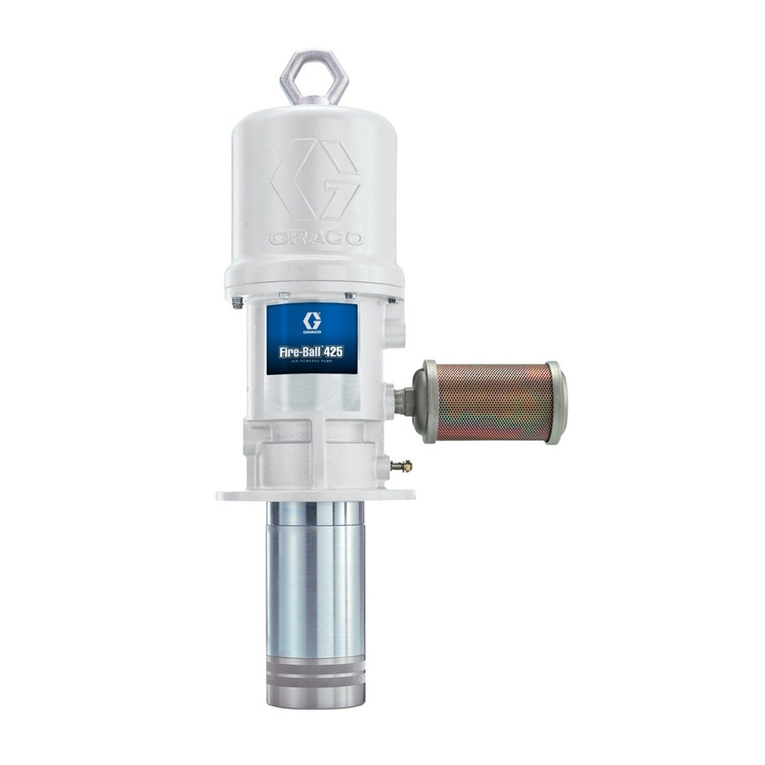
Graco FIRE-BALL Series Parts list manual

Other manuals for FIRE-BALL Series

1

This manual suits for next models

1

Other Graco Water Pump manuals

Graco SaniForce STU Series Instruction Manual

Graco

Graco SaniForce STU Series Instruction Manual

Graco Check-Mate 800 User manual

Graco

Graco Check-Mate 800 User manual

Graco Therm-O-Flow C03508 Parts list manual

Graco

Graco Therm-O-Flow C03508 Parts list manual

Graco E-Flo Plus Operating instructions

Graco

Graco E-Flo Plus Operating instructions

Graco 206897 Operation manual

Graco

Graco 206897 Operation manual

Graco E-Flo EC1110 Operation manual

Graco

Graco E-Flo EC1110 Operation manual

Graco Standard 946-964 User manual

Graco

Graco Standard 946-964 User manual

Graco REGULUS 003.175-DP Operation manual

Graco

Graco REGULUS 003.175-DP Operation manual

Graco ChemSafe 307 Operation manual

Graco

Graco ChemSafe 307 Operation manual

Graco Check-Mate 800 User manual

Graco

Graco Check-Mate 800 User manual

Graco Dura-Flo XL 1000cc Guide

Graco

Graco Dura-Flo XL 1000cc Guide

Graco HUSKY 1050P User manual

Graco

Graco HUSKY 1050P User manual

Graco Husky D71 Series Operation manual

Graco

Graco Husky D71 Series Operation manual

Graco SaniForce 2150e Instruction Manual

Graco

Graco SaniForce 2150e Instruction Manual

Graco 190ES 261825 Operating instructions

Graco

Graco 190ES 261825 Operating instructions

Graco Check-Mate P05LCS Parts list manual

Graco

Graco Check-Mate P05LCS Parts list manual

Graco 247888 Operation manual

Graco

Graco 247888 Operation manual

Graco Husky 1050 Series User manual

Graco

Graco Husky 1050 Series User manual

Graco Husky 15120 Use and care manual

Graco

Graco Husky 15120 Use and care manual

Graco 3A2977K Parts list manual

Graco

Graco 3A2977K Parts list manual

Graco Series A Operating instructions

Graco

Graco Series A Operating instructions

Graco President A Series Operation manual

Graco

Graco President A Series Operation manual

Graco Monark C Series Operation manual

Graco

Graco Monark C Series Operation manual

Graco ChemSafe 515 PT Series Operation manual

Graco

Graco ChemSafe 515 PT Series Operation manual

Popular Water Pump manuals by other brands
Neptun NPHW 5500 operating instructions

Neptun

Neptun NPHW 5500 operating instructions

Sensidyne Gilian BDX-II Operation & service manual

Sensidyne

Sensidyne Gilian BDX-II Operation & service manual

Draper 47808 instructions

Draper

Draper 47808 instructions

Trolla 12820 manual

Trolla

Trolla 12820 manual

Sunfab SVH Series installation guide

Sunfab

Sunfab SVH Series installation guide

WilTec 50740 Operation manual

WilTec

WilTec 50740 Operation manual

Fieldmann FVC 5015 EK user manual

Fieldmann

Fieldmann FVC 5015 EK user manual
Everbilt EFSUB5-122HD Use and care guide

Everbilt

Everbilt EFSUB5-122HD Use and care guide

esotec 101018 operating manual

esotec

esotec 101018 operating manual
Becker BASIC VASF 2.80/1-0.AC230 operating instructions

Becker

Becker BASIC VASF 2.80/1-0.AC230 operating instructions

Sykes AmeriPumps GP100M Operation and maintenance instructions

Sykes AmeriPumps

Sykes AmeriPumps GP100M Operation and maintenance instructions

DUROMAX XP WX Series user manual

DUROMAX

DUROMAX XP WX Series user manual

BRINKMANN PUMPS SBF550 operating instructions

BRINKMANN PUMPS

BRINKMANN PUMPS SBF550 operating instructions

Franklin Electric IPS Installation & operation manual

Franklin Electric

Franklin Electric IPS Installation & operation manual

Xylem e-1532 Series instruction manual

Xylem

Xylem e-1532 Series instruction manual

Milton Roy PRIMEROYAL instruction manual
Milton Roy

Milton Roy PRIMEROYAL instruction manual

STA-RITE ST33APP owner's manual

STA-RITE

STA-RITE ST33APP owner's manual

GÜDE HWW 900 GC Translation of the original instructions

GÜDE

GÜDE HWW 900 GC Translation of the original instructions

manuals.online logo
manuals.online logoBrands
  • About & Mission
  • Contact us
  • Privacy Policy
  • Terms and Conditions

Copyright 2025 Manuals.Online. All Rights Reserved.

307883
Rev. F
INSTRUCTIONS-PARTS LIST
INSTRUCTIONS
This manual contains important
warnings and information.
READ AND KEEP FOR REFERENCE.
FIRE-BALLrand PRESIDENTr
LUBRICATION PUMPS
* For stationary or mobile installations
5:1 Ratio Fire-Ball Pump
900 psi (62 bar) MAXIMUM WORKING PRESSURE
Model No. Size Type* Hose
Kit
Cover Bung
Adapter
Sturdi
Clamp
Hold-
Down Kit
225094 16-gallon open drum
222086 16-gallon open drum, truck mounted
S
M
X
X
X
X X
225642 55-gallon open drum
225640 55-gallon closed drum
206655 55-gallon closed drum, truck mounted
204264 55-gallon closed drum, truck mounted
S
S
M
M
X
X
X
X
X
X
X
X X
X
X
225931 275-gallon obround tank S X X
10:1 Ratio President Pump
1800 psi (120 bar) MAXIMUM WORKING PRESSURE
Model No. Size Type* Hose
Kit
Cover Bung
Adapter
Sturdi
Clamp
Hold-
Down Kit
225782 55-gallon open drum S X X
225786 55-gallon closed drum
206656 55-gallon closed drum, truck mounted
222067 55-gallon closed drum, truck mounted
S
M
M
X
X
X
X
X
X X
X
X
Table of Contents
Warnings 2. . . . . . . . . . . . . . . . . . . . . . . . . . . . . . . . . . . . . .
Installation 4. . . . . . . . . . . . . . . . . . . . . . . . . . . . . . . . . . . . .
Operation 10. . . . . . . . . . . . . . . . . . . . . . . . . . . . . . . . . . . .
Fire-Ball Parts Lists and Drawings 12. . . . . . . . . . . . . . .
President Parts Lists and Drawings 14. . . . . . . . . . . . . .
Warranty 16. . . . . . . . . . . . . . . . . . . . . . . . . . . . . . . . . . . . .
Graco Phone Number 16. . . . . . . . . . . . . . . . . . . . . . . . . .
GRACO INC. P.O. BOX 1441 MINNEAPOLIS, MN 55440–1441
ECOPYRIGHT 1992, GRACO INC.
Graco Inc. is registered to I.S. EN ISO 9001
3078832
Symbols
Warning Symbol
WARNING
This symbol alerts you to the possibility of serious
injury or death if you do not follow the instructions.
Caution Symbol
CAUTION
This symbol alerts you to the possibility of damage to
or destruction of equipment if you do not follow the
instructions.
EQUIPMENT MISUSE HAZARD
Equipment misuse can cause the equipment to rupture or malfunction and result in serious injury.
DThis equipment is for professional use only.
DRead all instruction manuals, tags, and labels before operating the equipment.
DUse the equipment only for its intended purpose. If you are not sure, call your Graco distributor.
DDo not alter or modify this equipment.
DCheck equipment daily. Repair or replace worn or damaged parts immediately.
DDo not exceed the maximum working pressure stated on the equipment or in the Technical Data
for your equipment. Do not exceed the maximum working pressure of the lowest rated compo-
nent in your system.
DUse fluids and solvents that are compatible with the equipment wetted parts. Refer to the Tech-
nical Data section of all equipment manuals. Read the fluid and solvent manufacturer’s warn-
ings.
DHandle hoses carefully. Do not pull on hoses to move equipment.
DAll fluid hoses must have spring guards on both ends. The spring guards help protect the
hose from kinks or bends at or close to the coupling, which can result in hose rupture.
DRoute hoses away from traffic areas, sharp edges, moving parts, and hot surfaces. Do not
expose Graco hoses to temperatures above 82_C (180_F) or below –40_C (–40_F).
DDo not lift pressurized equipment.
DComply with all applicable local, state, and national fire, electrical, and safety regulations.
DUse only dispensing valves that are designed to dispense motor oil. Do not modify any part of
the dispensing valve; doing so could cause a malfunction and result in serious bodily injury. Be
sure the dispensing valve has a maximum working pressure that meets or exceeds that of the
pump.
DThe maximum fluid working pressure of these pumps, when operated at a maximum of 180 psi
(12.6 bar) air pressure is 900 psi (60 bar) on the 5:1 Fire-Ball Pump, and it is 1800 psi (120
bar) on the 10:1 President Pump.
WARNINGWARNING
3307883
HAZARDOUS FLUIDS
Improper handling of hazardous fluids or inhaling toxic fumes can cause extremely serious injury or
death due to splashing in the eyes, ingestion, or bodily contamination.
DKnow the specific hazards of the fluid you are using.
DStore hazardous fluid in an approved container. Dispose of hazardous fluid according to all local,
state, and national guidelines.
DAlways wear protective eyewear, gloves, clothing, and respirator as recommended by the fluid
and solvent manufacturer.
INJECTION HAZARD
Fluid from the dispensing valve, leaks, or ruptured components can inject fluid into your body and
cause extremely serious injury, including the need for amputation. Fluid splashed in the eyes or on
the skin can also cause serious injury.
DFluid injected into the skin may look like just a cut, but it is a serious injury. Get immediate
medical attention.
DDo not point the dispensing valve at anyone or at any part of the body.
DDo not put your hand or fingers over the end of the dispensing valve.
DDo not stop or deflect leaks with your hand, body, glove, or rag.
DUse only extensions and tips that are designed for use with your dispensing valve.
DTighten all fluid connections before operating the equipment.
DCheck the hoses, tubes, and couplings daily. Replace worn or damaged parts immediately. Do
not repair high pressure couplings; you must replace the entire hose.
WARNINGWARNING
3078834
MOVING PARTS HAZARD
Moving parts can pinch or amputate your fingers.
DKeep clear of all moving parts when starting or operating the pump.
DBefore servicing the equipment, follow the Pressure Relief Procedure on page 10 to prevent the
equipment from starting unexpectedly.
FIRE AND EXPLOSION HAZARD
Improper grounding, poor ventilation, open flames, or sparks can cause a hazardous condition and
result in a fire or explosion and serious injury.
DGround the equipment. Refer to Grounding below.
DIf there is any static sparking or you feel an electric shock while using this equipment, stop
dispensing immediately. Do not use the equipment until you identify and correct the problem.
DProvide fresh air ventilation to avoid the buildup of flammable fumes from solvents or the fluid
being dispensed.
DDo not smoke in the dispensing area.
WARNINGWARNING
United States Government safety standards have been adopted under the Occupational Safety and Health Act.
You should consult these standards--particularly General Standards, Part 9 0, and Construction Standards,
Part 926.
Installation
Grounding
To reduce the risk of static sparking, ground the pump.
Check your local electrical code for detailed grounding
instructions for your area and type of equipment.
DPump: Use ground wire and clamp as shown in
Fig. 1.
DAir and fluid hoses: Use only electrically conductive
hoses.
DAir compressor: Follow manufacturer’s
recommendations.
DDispensing valve: Obtain grounding through
connection to a properly grounded fluid hose and
pump.
DFluid supply container: Follow your local code.
DObject being lubricated: Follow your local code.
DAny pails used when flushing: Use only metal,
grounded pails when flushing. Make firm
metal-to-metal contact between a metal part of the
dispensing valve and the pail. Use the lowest
possible pressure.
DTo maintain grounding continuity when flushing or
relieving pressure, always hold a metal part of the
dispensing valve firmly to the side of a metal pail,
and then open the dispensing valve.
Fig. 1
XW
Y
Z
04630
To ground the pump, loosen the grounding lug
locknut (W) and washer (X). Insert one end of a
12 ga (1.5 mm@) minimum ground wire (Y) into
the slot in the lug (Z), and tighten the locknut
securely. Connect the other end of the wire to a
true earth ground. See Fig. 1. To order a
ground wire and clamp, order Part No. 222011.
5307883
Notes
3078836
Installation–Stationary Mounting
The typical installation shown in Fig. 2 is only an installation guide; it is not an actual system design. Contact your
Graco distributor for assistance in designing a system to suit your needs.
Fig. 2
AFluid outlet line
BPump
CGround wire
DPump runaway valve
EAir lubricator
FBleed-type master air valve
GAir regulator
HAir filter
JMain air line
For Stationary Mountings
0 6
A
B
C
DEF GH
J
1/2 in. (13 mm)
NOTE: See Fig. 4 on page 8 for the mobile mounting
installation.
Stationary Mounting Layout
Plan the mounting layout for easy operator access to
the pump air controls, sufficient room to change
drums, and a secure mounting platform.
For ease in changing drums, install a pump elevator.
Open-Drum, Cover-Mounted Pumps
1. Remove the original drum cover.
2. Mount and fasten the new drum cover.
3. Guide the pump riser tube through the mounting
gasket.
Closed Bung-Type Drum
1. Loosen the drum cover vent plug, and remove the
bung cover.
2. Install the pump through the bung hole until the
pump foot valve is 1/2 in. (13 mm) off the drum
bottom. Tighten the bung adapter.
Air and Fluid Line Accessories
Install the accessories in the order shown in Fig. 2.
CAUTION
Do not hang the air accessories directly on the air
inlet. Mount them on brackets. The fittings are not
strong enough to support the accessories and may
break.
DUse thread sealant on male threads except at
swivel connections.
DInstall a pump runaway valve (D) to stop the pump
if the fluid supply is depleted.
DInstall a bleed-type master air valve (F) upstream
from the pump air regulator (G), but within easy
reach of the pump.
To order a 300 psi (21 bar) maximum working
pressure, 1/2 in. npt bleed-type master air valve,
order Part No. 107142.
7307883
Installation–Stationary Mounting
WARNING
A bleed-type master air valve is required in the
system to help reduce the risk of serious bodily
injury, including fluid injection, splashing in the
eyes, and injury from moving parts when
adjusting or repairing the pump. This valve
relieves air trapped between the valve and the
pump to prevent the pump from cycling unex-
pectedly.
DInstall an air line lubricator (E) for automatic air
motor lubrication.
To order a 250 psi (17.5 bar) maximum working
pressure air line lubricator, order a Part No. below:
3/8 in. npt 214847
1/2 in. npt 214848
DInstall an air regulator (G) to control pump speed
and pressure.
To order a 300 psi (21 bar) maximum working
pressure regulator, order a Part No. below:
3/8 in. npt 109107
1/2 in. npt 104266
DInstall an air line filter (H) to remove harmful dirt
and contaminants from your compressed air supply.
To order a 250 psi (17.5 bar) maximum working
pressure air filter, order a Part No. below:
3/8 in. npt 106148
1/2 in. npt 214849
DInstall a thermal relief kit on the dispensing valve
side of the pump to assist in relieving pressure in
the pump, hose, and dispensing valve due to heat
expansion.
To order a thermal relief kit for the Fire-Ball
pump—900 psi (62 bar) maximum working
pressure—order Part No. 237893.
To order a thermal relief kit for the President
pump—1600 psi (110 bar) maximum working
pressure—order Part No. 237904.
Hose Kits
Assemble hose kits as shown in Fig. 3.
Fig. 3
0
02
03
04
AIR
FLUID
3078838
Installation–Mobile Mounting
The typical installation shown in Fig. 4 is only an installation guide; it is not an actual system design. Contact your
Graco distributor for assistance in designing a system to suit your needs.
Fig. 4
KHose reel
LTruck bed
MHold-down rods
NCompressor
PGround wires
For Mobile Mountings
0 6 2
See Air and Fluid
Line Accessories
on page 6
K
L
M
N
P
Mobile Mounting Layout
Plan the layout for easy operator access to the pump
air controls, sufficient room to change drums, and a
secure mounting platform.
Drum Mounting
1. Place the drum in the desired location.
2. Place the hold-down lugs (V) or drum locators (U)
around the drum base and bolt directly to the truck
bed or mounting platform. See Fig. 5.
Open-Drum, Cover-Mounted Pumps
1. Remove the original drum cover.
2. Mount the new drum cover and fasten.
3. Guide the pump riser tube through the mounting
gasket.
4. Align the drum cover eyelets (Q) with the
hold-down rods (T), install the cover brackets (S)
and wing nuts (R) and tighten securely. See Fig. 5.
Fig. 5 0 6 3
QR
S
T
U
V
QDrum cover eyelets
RWing nuts
SHold-down brackets
THold-down rods
UDrum locators
VHold-down rod lugs
9307883
Installation–Mobile Mounting
Closed Bung-Type-Drum, Cover-Mounted
Pump
1. Insert the pump riser tube through the gasket (W)
and drum cover (X). Fasten the Fire-Ball pump
from the top side and the President pump from the
bottom side. See Fig. 6.
2. Slide the rubber grommet (Y), tapered end down,
onto the riser tube and push it up against the pump
base. See Fig. 6.
3. Guide the pump riser tube through the drum bung
hole (Z) and place the cover on the drum. See
Fig. 6.
4. Align the drum cover eyelets (Q) with the
hold-down rods (T), install the cover brackets (S)
and wing nuts (R) and tighten securely. See Fig. 5.
Closed Bung-Type-Drum,
Sturdi-Clamp-Mounted Pumps
1. Remove the adjustable bung adapter from the
pump riser tube.
2. Screw the bung adapter (EE) into the bung hole.
3. Loosen the wing nuts (BB) and slide the clamp
(AA) onto the pump riser tube, up to the base. See
Fig. 7.
4. Holding the clamp onto the pump, insert the pump
riser tube through the bung adapter, and lower the
pump until the clamp rests on the edge of the
drum. See Fig. 7.
5. Install the sturdi-clamp so its upper jaw fits against
the pump base projection, its u-bolt (DD) fits
around the riser tube, and its lower jaw fits against
the bung adapter. Tighten the wing nuts (BB). See
Fig. 7.
6. Tighten the T-handle (CC) firmly to the side of the
drum.
Fig. 6 0 6 4
WX
WGasket
XDrum cover
YGrommet
ZBung hole
Z
Fig. 7 0 6 5
AA
BB
CC
DD
EE
AA Clamp
BB Wing nuts
CC T-handle
DD U-bolt
EE Bung adapter
30788310
Operation
Pressure Relief Procedure
INJECTION HAZARD
To reduce the risk of serious bodily
injury, including fluid injection, injury from
moving parts, or splashing in the eyes or
on the skin, always follow this procedure whenever
you shut off the pump, when checking or servicing
any part of the system, when installing or changing
dispensing devices, and whenever you stop dis-
pensing.
WARNING
1. Close the air regulator and disconnect the air
supply hose.
2. Close the pump’s bleed-type master air valve
(required in the system).
3. Open the dispensing valve until pressure is fully
relieved.
If you suspect that the dispensing valve is clogged, or
that pressure has not been fully relieved after following
the steps above, very slowly loosen the dispensing
valve coupler or hose end coupling to relieve pressure
gradually, then loosen completely.
Operating
Never exceed 180 psi (12.6 bar) Maximum Air
Pressure to these pumps. Using higher air
pressure will cause the pump to over pressurize
which may result in component rupture, fire, or
explosion and cause serious bodily injury.
WARNING
NOTE: Read and follow the warnings and instructions
in the manual for each of the system components.
1. Close the air regulators and bleed-type master air
valves to all but one pump.
2. Open the master air valve from the compressor.
3. For the pump that is connected, trigger the
dispensing valve into a grounded metal waste
container, making firm metal-to-metal contact
between the container and valve. Open the
bleed-type master air valve and open the pump air
regulator slowly, just until the pump is running.
When the pump is primed and all air has been
pushed out of the lines, release the trigger.
4. If you have more than one pump, repeat this
procedure for each pump.
5. When the pump is primed and has sufficient air
supplied to it, it starts when the dispensing valve is
opened and shuts off when it is closed.
Never allow the pump to run dry of the fluid
being pumped. A dry pump will quickly
accelerate to a high speed and possibly damage
itself. If the pump accelerates quickly, stop it
immediately, and check the fluid supply. If the
supply container is empty and air has been
pumped into the lines, prime the pump and lines
with fluid, or flush it and leave it filled with a
compatible solvent. Be sure to eliminate all air
from the fluid system.
CAUTION
6. Set the air pressure to each pump at the lowest
pressure needed to get adequate fluid delivery.
7. When shutting off the system, and before checking
or servicing it, relieve the pressure.
INJECTION HAZARD
To reduce the risk of serious injury
whenever you are instructed to relieve
pressure, always follow the Pressure
Relief Procedure at left.
WARNING